


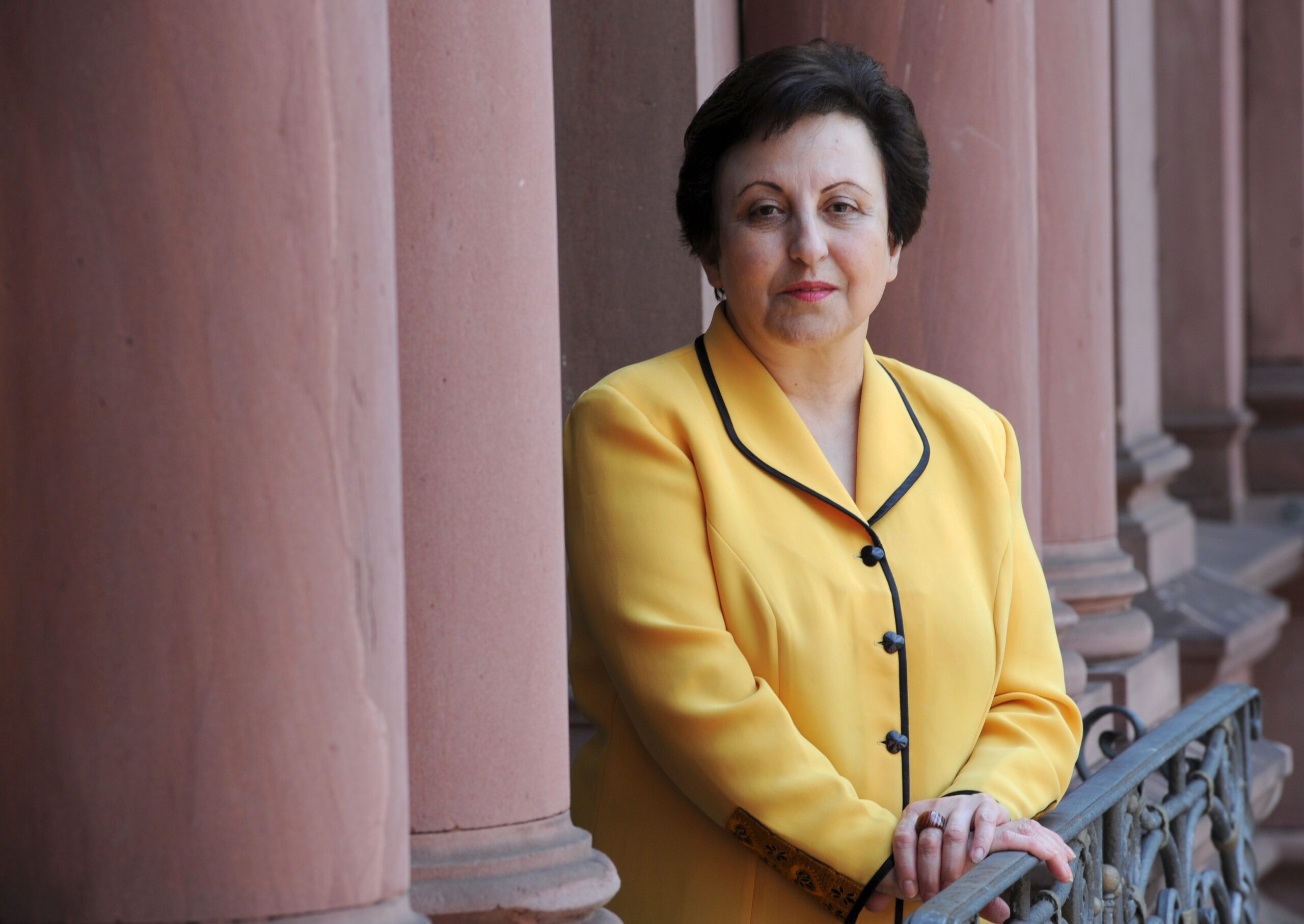
Shirin Ebadi: The seminary does not have the competence to handle student affairs/ Panteha Bahrami
Shirin Ebadi is one of the first female judges in Iran who, after the February 1979 revolution and the changes in the country’s political and social laws, was unable to continue her career as a judge. She is also the first and only Iranian to have received the Nobel Peace Prize. She is also known as one of the most prominent activists for women’s and children’s rights in Iran.
We asked Mrs. Abbadi if education, under the shadow of religion, is compatible with the principles of human rights and what are the consequences of ideological education for society?
He also mentions the freedom to choose religion, which is considered one of the fundamental principles of human rights, and says in the path of peace: “Ideological education is one of the most empty messages that we hear in this era.” He believes that “in the best case, a child should be familiar with different religions and ideologies so that when they reach the age of maturity, they can choose their own path with awareness.”
Exclusive interview with Ms. Ebadi in the monthly magazine “Khat-e-Solh” is coming soon.

Basically, what does the permanent collaboration between the Tehran Education and Training Department and the seminary field mean to you? Does it only lead to an increase in religious education or does it intend to establish a religious culture?
Both aspects have been the focus of government officials, and considering that religious institutions do not have expertise in education and only have knowledge and activities in a specific field, namely religious affairs, carrying out this task will not only fail to achieve their desired results, but in the long run, it will also lead to a decline in students’ academic performance.
In your opinion, does education under the shadow of religion fundamentally align or coordinate with the principles of human rights?
Good, one of the fundamental principles of human rights is freedom of religion, which should be respected even for individuals under the age of eighteen. On the other hand, the Convention on the Rights of the Child, which Iran is a signatory to, emphasizes respect for family traditions. Therefore, entrusting schools to religious institutions, which only teach a part of Islamic jurisprudence (Shia) and specialize in it, causes religious minorities such as Iranian Sunnis and other non-Islamic minorities such as Jews, Zoroastrians, Christians, and even Baha’is to be placed under teachings that are contrary to their family religion. This issue is also in conflict with the International Convention on the Rights of the Child and the International Covenant on Civil and Political Rights.
While this issue is mandatory, there are two possible forms of coercion that may occur; one is overt and obvious, for example, cutting off someone’s privileges for converting to a different religion. The other dimension is hidden, meaning that someone is indoctrinated and brainwashed from childhood against their family’s religion and essentially forced to choose a path that they have been taught and inclined towards, which is also a form of spiritual coercion that is not acceptable in human rights.
Many officials and representatives in the Iranian parliament believe that education and upbringing should be fundamentally ideological. In your opinion, what are the consequences of ideological education in schools for society?
Ideological education and upbringing is one of the most content-less messages that I have heard in this era.
Subjects such as physics, chemistry, biology, and computer science can be ideological. Science is science. What can ultimately be ideological is one or two more subjects, which are fundamentally incorrect and should not be taught to children and adolescents with a specific ideology. Different religions, diverse beliefs, and various ideologies should be taught to students and they should be given the right to choose in the future.
Mrs. Abadi, we are faced with a situation where students are suffering from shortages such as lack of health education and various deprivations in terms of facilities. Do you think prioritizing the religious and spiritual aspects in schools should be seen as an educational initiative or a political move by the religious authorities? What do you think is the reason behind this movement?
If this plan is implemented, it will allocate a budget for education and training, which will create employment and income for a group of people, namely clergy, regardless of whether they have the necessary expertise in this matter. This, in fact, in addition to other disadvantages that I mentioned earlier, is considered a form of discrimination. In other words, in a country where we have graduates who have studied in primary and higher education schools and their expertise is only in the field of education and training for children and adolescents, but these individuals do not have enough jobs and the unemployment rate among them is high; now we prefer another group who do not have this expertise, which is a clear discrimination.
Do you think this is a political move or is it primarily for job creation?
Both for creating jobs and for creating satisfaction among those who consider themselves as a group; naturally, this plan has a political aspect and the issue is not just education.

The head of the collaboration committee for the field of education and training has claimed that investing in pre-school and primary education is the most sustainable investment that the field has been collaborating with education and training for years based on its educational mission. In your opinion, what kind of investment can the seminary field have on children, especially at this young age? Do you find this concerning?
The scientific field does not have the competence to handle pre-school educational matters; just as it does not have the competence to handle student affairs, and naturally entrusting the fate of children to individuals who lack expertise in this field and who are solely focused on education and upbringing from an ideological perspective, a type of ideology that they themselves believe in, will cause problems for future generations and I do not see this as beneficial.
Some religious minorities in Iran, such as Baha’is and Jews, face educational disadvantages due to their religious beliefs. Do you think the presence of clergy in schools, especially for minorities, makes their conditions more difficult?
Naturally, if this plan is implemented, as it will be carried out by Shia clerics, it will be more difficult for religious minorities such as Sunnis, Bahais, Jews, Christians, etc.
In many countries such as Germany, religious education is optional in schools. However, it is up to the parents to decide if their child can choose their own religion after reaching maturity. Do you think this model is acceptable?
As I mentioned, the best situation is for a child to become familiar with different religions and ideologies so that when they reach maturity, they can choose their own path and method with awareness.
Do you support the proposal to ban or make optional religious education in public schools in Iran?
In my opinion, this issue should be left to the parents’ choice; meaning these parents have a seven or eight-year-old child and they must decide whether this child should receive religious education or not. This is not the responsibility of the government and it is not within their authority; rather, it is part of the upbringing and education that the family should provide for the child.
In my opinion, all religions and even socialism should be taught to children in the same way. Instead of prohibiting them from knowing anything and growing up in ignorance, we should introduce them to different aspects of religions and ideologies, including Buddhism, Hinduism, Abrahamic religions, and even atheism. Children should be aware of the various reasons behind different beliefs so that they can make proper judgments. Otherwise, if we keep them in ignorance and say that no religion should be taught to them, it is not right for them to make any choices in the future because they do not know anything. So, as I mentioned, while we should teach them about divine religions, we should also teach them about religions and ideologies that do not believe in the existence of God. In summary, all ideologies should be taught to children during their years of education so that they can make informed choices based on what they like and what makes sense to them.
Therefore, once again in religious families, religious children will grow up because their parents believe that their children should receive religious teachings and ultimately the child will not have the choice to choose their religion.
In any case, a child, whether willingly or unwillingly, is influenced by their family; meaning that a child who grows up in a fundamentalist family will naturally have different thoughts than a child who grows up in an atheist family. Essentially, a child who has been taught from a young age that there is no God will have different ways of thinking than a child who wakes up every morning to the sound of the call to prayer or church bells. This issue exists, but as long as children are under the care of their families and are raised by them, it is not possible or practical to pass a law in a country that would prohibit families from teaching these matters to their children. This is why even in European countries, you do not see such prohibitions; there is no law in Germany that would prevent families from teaching religious education at home to their children.
Thank you for the time you have given to the peace line.
 Panteh’a Bahrami
 October 15, 2015