


Legal issues of the Jewish community in Iran.
With the occurrence of the revolution in Iran and the establishment of a government based solely on religious ideology, specifically of the Islamic type, and the emphasis of the new rulers on laws being based on Islamic law and the Shia religion, one of the ongoing challenges in the behavior of Islamic rulers towards minorities is evident in the issue of legislation. The rights of minorities have been one of the sensitive topics in the field of legislation in the post-revolution era.
The way the government treats religious minorities and their rights and access to basic – and sometimes not even equal – rights and their human dignity, has been and continues to be one of the challenges of recent decades and a constant demand of minority groups living in Iran. Among them, followers of Judaism in Iran, who are referred to as “Kalimi” in the constitution, have faced sensitive and complex issues due to the special view that Shia jurisprudence, especially in the past, had towards Jews, as well as government policies towards Israel as a Jewish state.
Although in principle, the thirteenth article of the Iranian Constitution recognizes the rights of many religious minorities and considers them free to practice their ceremonies and duties, when it comes to performing Jewish religious ceremonies, the issue becomes a bit sensitive. Although they do not actively promote their religion or try to convert followers among other people, due to their religious beliefs, they are always accused of collaborating with their fellow Jews in Israel and, consequently, with the Israeli government.
Also in Article 20 of the Constitution: “All individuals of the nation, regardless of gender, are equal in the eyes of the law and are entitled to all human, political, economic, social, and cultural rights, in accordance with Islamic standards.” Although this article mentions the equality of rights for all men and women, the important and noteworthy point in this article is the final section, which emphasizes the adherence to equality and legal protection for Iranians in accordance with Islamic laws, regardless of the minorities living in Iran, which is interesting and worthy of consideration.
On the other hand, according to Article 14 of the Constitution: “By the order of the noble verse ‘Allah does not forbid you from those who do not fight you because of religion and do not expel you from your homes – from being righteous toward them and acting justly toward them. Indeed, Allah loves those who act justly.’ The Islamic Republic of Iran and Muslims are obliged to act with good morals, fairness, and Islamic justice towards non-Muslim individuals and respect their human rights. This principle applies to those who do not conspire or act against Islam and the Islamic Republic of Iran.” It is so excessive that any form of government can label the actions of minorities, including the Baha’is, as conspiring against the system and Islam, and carry out certain actions such as arrest and trial under the jurisdiction of this constitutional principle, which is a clear violation of human security and is emphasized in the Universal Declaration of Human Rights.
Jews in Iran have a representative in the Islamic Consultative Assembly (parliament) from a legal standpoint, but since the number of minority representatives is very small and they have almost no role in legislation, and the government itself has a specific policy towards minorities, which is to gain international recognition through minorities, usually representatives from minorities who are advocates of this thinking and policy are able to enter the parliament.
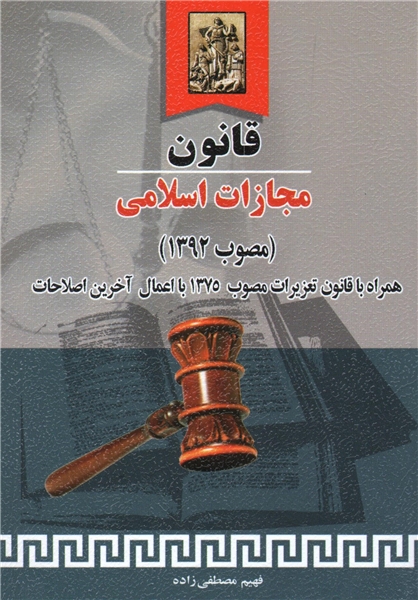
According to Article 382 of the Islamic Penal Code: “If a Muslim woman is intentionally killed, the right to retribution is established. However, if the killer is a Muslim man, he must pay half of the full blood money before retribution. If the killer is a non-Muslim man, no payment is required for retribution. In the case of a non-Muslim man killing a non-Muslim woman, the payment of their respective blood money is necessary.”
Yes, there is a great disparity between the rights of minorities and Muslims, and it is evident in the fact that if a Muslim woman is murdered by a Christian or Zoroastrian, the death penalty and retribution will be carried out; but if the killer is a Muslim man, he must first pay half of the man’s blood money to the victim’s family. The latest example of this is the case of a young man who killed his Christian friend on Farshat Street by shooting him, and after being tried in criminal
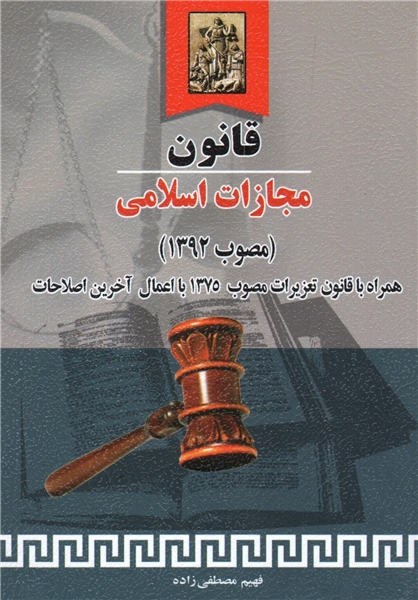
According to article 177 of the new Islamic Penal Code, one of the conditions for being a witness is “faith”, and according to valid and explicit texts of Shia jurisprudence, faith refers to being a “Twelver Shia Muslim”. Therefore, Baha’is, like other religious minorities in Iran, are deprived of the right to testify, or according to what is stated in paragraph P of article 224 and footnote 1 of article 234 and footnote of article 236 of the new Islamic Penal Code, in cases where in adultery (unlawful sexual relationship between a man and a woman), the man is the adulterer and in homosexuality (sexual relationship between a man and another man), the man is the homosexual, and in sodomy (placing the male genitalia between the thighs of another man), the man is the sodomizer, if he is non-Muslim, his punishment is execution; so if a Jew has sexual relations with a Muslim, which for a Muslim
On the other hand, Article 310 mentions another issue, according to which “if a non-Muslim commits a deliberate crime against a Muslim, dhimmi, protected or treaty person, the right to retribution is established. In this matter, there is no difference between religions, sects, and ideological tendencies. If a Muslim, dhimmi, protected or treaty person commits a crime against a non-Muslim who is not a dhimmi, protected or treaty person, retribution will not be carried out. In this case, the perpetrator will be sentenced to disciplinary punishment as prescribed in Book Five, “Punishments”.” This means that if a Muslim commits a crime against a Jew, according to the text of this law, they will be punished, but if the opposite happens, the Jew will be subject to retribution.
It is also necessary to mention that the new punishment law considers the blood money of religious minorities equal to that of Muslims.
One of the other issues that can be mentioned in regards to the violation of minority rights in Iran and consequently the rights of Baha’is, is the issue of marriage. According to the Universal Declaration of Human Rights, marriage is a human right and everyone has the freedom to marry anyone they choose. According to Article 16 of the Universal Declaration of Human Rights, “Men and women of full age, without any limitation due to race, nationality or religion, have the right to marry and to found a family. They are entitled to equal rights as to marriage, during marriage and at its dissolution.” However, according to Article 1059 of the Civil Code, “A Muslim woman cannot marry a non-Muslim man.” This means that if a Jewish man sincerely and emotionally desires to marry a Muslim woman and the Muslim woman also agrees, their marriage is prohibited.
There are other cases in which Jews are deprived of, for example, a Jew does not have the right to hold important positions such as military and national positions, or to run for presidency. Of course, these cases come with justifications, such as these conditions being determined by the constitution and it is natural that in a country where the basis of its constitution is Islamic law, according to the “rule of negation of superiority”, a non-Muslim can never dominate and rule over Muslims.
There are also unofficial reports that indicate that Hebrew language education, which is the religious and official language of the Kalimian community, is also facing restrictions and difficulties, and in addition, in Kalimian schools and educational centers, Muslim administrators and officials are appointed.
Based on real social evidence, today’s Iran and what the Jewish community itself secretly and ultimately conservatively expresses, the Jews of Iran are not in a desirable situation and it can almost be said that they are experiencing the most difficult conditions in at least a hundred years; to the extent that many of them have taken the path of migration and the population of Iranian Jews has decreased to the point that marriages rarely take place, or the few synagogues that remain have been maintained by the efforts of a number of religious Jews as a religious duty.
Sources:
The Law Newspaper, Monday, 26th of Aban month, 1392.
 Admin
Admin December 26, 2013