


Conversation with Dr. Gholamali Baski, the father of nature and environment in Iran.
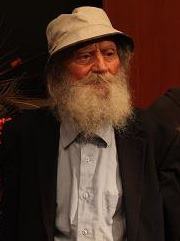
Dr. Gholamali Baski was born in Sabzevar in February 1931. He graduated from Tehran University of Medical Sciences with a specialization in gynecological surgery in 1966. He is the most well-known Iranian environmentalist. In the late 1940s, he left city life and after treating his illnesses, gradually became a strict vegetarian and dedicated his life to protecting the environment and promoting vegetarianism.
Dr. Baski has also donated a large portion of his wealth to charitable causes, including the establishment of Baski Hospital and Maternity Ward, the founding of a gifted students’ school, as well as the construction of a math house in Golestan province and a shelter for the poor in rural areas, known as Gandhi House. He has also dedicated six residential homes in Mashhad as endowments.
He, who is now 80 years old, has suffered a stroke and has difficulty speaking. With the help of his colleagues, he kindly accepted an interview with the “Khat-e-Solh” magazine.
Dr. Baski, you are known as the father of the environment in Iran and we believe that the most attractive aspect of your work is providing practical and individual solutions for optimizing the environment. Your life is a shining example of this harmony with nature… As our first question, we ask you, considering that 1.5 to 2 percent of Iran’s forests are destroyed annually, will Iran be completely deprived of green space in the next 50 years and the years 2050 to 2060 will be the years of complete destruction of Iran’s forests? How accurate is this statistic and what is the responsibility of the government and the people if it is true?
Green space means everything. If the Earth is habitable now, it is because of green space. It is because of forests and trees. Trees absorb carbon from the air and use it to create organic materials and produce oxygen. Photosynthesis is the basis of life. All food is the result of photosynthesis. But then humans come and cut down trees. One of the most important ways to save the Earth is to plant trees. But no one pays attention to it. When you want to build a butterfly or finish a building, they pay attention to everything except its green space. It is not necessary to plant trees; it is not mandatory. But there are a thousand other things that are necessary.
In Iran, with the current situation we are facing, as you say, there will be no forests left after 40 to 50 years. In northern Iran, the area of forests was close to 6 million hectares 70 years ago. Now only 1.8 million hectares remain. These are the Hyrcanian forests. They only exist in this region and in very small amounts in Azerbaijan. These forests are 40 million years old and cannot be found anywhere else in the world. They are called natural museums. They are the genetic reserves of Iran. It takes a lot of time and resources to preserve them. But does greed and overpopulation allow it? Everyone wants to have a villa. The government does not care. They must be preserved for future generations. It is the duty of the government to protect these forests, any government. The government must have a comprehensive plan for preserving the forests and develop it. All issues related to forests must be considered and taken into account in this
As you know, approximately 7.8% of our country’s land is under the control of the Environmental Protection Organization. That is 13 million hectares, which requires a large number of forest rangers to monitor. In some countries, even starting a fire or causing a spark is punishable by imprisonment, but we are negligent because we do not have environmental guards, hunters, or forest rangers. What is the reason for this?
“We have a great shortage in this field. We must allocate more capital and budget for these individuals. To maintain a great wealth, we must spend. We must understand this. Even what we have now is disheartening, as they do not have high wages and are also at risk. Some of them have been killed by hunters and some who have defended themselves now have to pay blood money and are in prison. We must give more power and credibility to these forces.”
Statistics show that during days of intensified air pollution in Tehran, the number of respiratory patients increases by up to 60%. Air pollution is also the most significant factor associated with the exacerbation of cardiovascular, vascular, and respiratory diseases. In your opinion, what is the most important factor contributing to pollution in Iranian cities, especially Tehran; excessive cars, non-standard factories, or other factors? What is an effective solution for combating air pollution at both local and national levels?
The most important factor in air pollution in cities, including Tehran, is the high number of cars on the roads. In 2012, Iran’s car production, due to sanctions and crises, decreased to around 850,000 and this year it has definitely increased. Factories produce nearly one million cars per year. In Tehran, more than 1500 cars are registered daily. No one has asked why we produce so many low-quality cars. Is it to bring foreign currency for us? No; no country buys them. There has been no environmental, social, or health assessment in this regard. Car manufacturers must answer. Is it right for people to get sick and go to the hospital and suffer from dangerous diseases so that a few can make money? This type of production of state-owned and monopolized cars without evaluating the country’s needs and capacities is not acceptable at all. The air pollution in Tehran has reached a dangerous level and Mashhad is almost the same, so continuing this production
The second important factor is the polluting factories such as Abyek cement, Tehran refinery, power plants, etc. They also need to be filtered and many factories have to move out of this area. In Tehran, there are also a large number of non-standard heating appliances, both domestic and non-domestic, which are all sources of pollution.
Therefore, the summary is that firstly, the production of automobiles must be greatly reduced. This means that the supply should be decreased. Instead, there should be a strong investment in light urban trains and advanced BRT buses, using advanced technology. Factories must be filtered and many must relocate. Heating equipment must be used with high efficiency and clean fuel, and many other things must be done. People must also lobby for the use of trains and buses and demand it from the government.
According to global statistics, Ahvaz is one of the most polluted cities in the world. What is the main factor of air pollution in this city? What should people do to solve this problem?
The air pollution in Ahvaz is caused by dust storms. The Turkish government, by building a dam in that region, has diverted 47 billion cubic meters of water from its path. As a result, the lands after the dam have become extremely dry and the wind carries their soil away. This issue should be resolved through diplomacy and by planting more bushes and trees. People can only plant more trees and make more use of traditional Iranian architecture. The main responsibility lies with the government to mobilize the people.
What is your personal experience with peaceful coexistence with nature? For example, in regards to waste, what should people do to produce less waste? Please share your practical experiences with us.
People should live like in the old days. I don’t mean they should go back in time, but rather that they should benefit from the old ways and experiences and be friends with nature, not enemies. They should not be quick to imitate everything that comes from the West and instead try to be themselves and live and consume according to their own nature and climate. In the old days, people didn’t use plastic. Tablecloths were made of cloth. Handkerchiefs were made of cloth and were washed after each use. In the summer, when you went to someone’s house, they would bring you rose water or plum syrup or lemon syrup to quench your thirst. Everything was served in glass or ceramic cups and with metal tea spoons that could be washed. As a result, everything was reused over and over again. Now, they give us Pepsi and Coca Cola and everything is in plastic containers and full of artificial colors, which are all harmful. They also contain a
This lifestyle of ours is harmful for both us and nature. In the past, people didn’t throw everything away, but nowadays everything is discarded. The economy based on waste is now one of the main problems of humanity. Environmental analysts consider three economic factors as the main cause of environmental destruction and the destruction of humanity’s future: an economy based on fossil fuels, automobiles, and waste-producing materials. These three, along with explosive population growth, have turned the Earth into an environment that is no longer suitable for living. Our deserts are now full of garbage, full of plastic. Rivers are full of waste. The shores of the Caspian Sea are full of plastic. The agricultural lands of Sarehsoo are covered in plastic. These things need to be managed. Nature has a certain capacity for absorption. We cannot continuously dump waste into it and expect nothing to change and for it to remain the same. In the Golestan forest, where I have lived for years, there
What does a healthy diet in conjunction with peaceful coexistence and environmental pollution mean for you? What kind of food and plants do you use?
I am a raw plant-based eater. This means I only eat raw plant materials. There is a high tendency of cancer in my family, and after many investigations, I have come to the conclusion that only raw plant-based eating can protect me from this disease. I have been eating this way for almost twenty years now, and I am very comfortable with it. My cholesterol and blood pressure do not increase. Exercise and eating raw plant-based foods such as vegetables, plant-based seeds, and fruits have played a major role in my health. I never get sick like others. My digestive system also works very well. Eating animal-based foods is harmful to humans and also to nature. These large-scale animal farms are one of the main factors in the release of methane gas, which is one of the strongest greenhouse gases and has a much greater impact on creating the greenhouse effect and warming the earth than carbon dioxide. Animal-based oils, which are saturated fats, are one of the main causes of atherosclerosis
Is it even possible to have harmony with the environment you envision in urban life, such as planting plants at home?
I have been living in my own personal house in the garden of flowers for years and I try to not be in the city at night and during sleep as much as possible. But in regards to your question, I must say that your answer is positive. Planting plants in urban homes is not only completely possible now, but it has also become very popular. Trees, plants, and green spaces are something that humans need. Throughout the evolution of humans as a species, they have lived in the heart of nature and nature has taken care of them. In studies conducted in some hospitals in the United States, it has been seen that patients who have a window facing the hospital courtyard and see green spaces, recover faster than those who have a window facing concrete walls (with a similar illness). Trees and fruits should be planted in homes.
This is now happening in many places. In our own Gombad Kavous, we have someone who has planted grapes on the roof of their house and gets close to a ton of produce. In Mashhad, Mr. Sajadi has planted everything on the roof of his house and produces a lot of products. This should definitely be encouraged. The municipality has a thousand conditions for issuing building permits, but tree planting is not one of them. It should be mandatory. All houses should have enough green space and plant trees and fruits and use drip irrigation. I have done this in the north and Golestan and have planted grapes and the result has been very good.
If you want to put your hand on three points of your life that led to a healthy life after the initial turbulent period, when you sought refuge in northern Iran, what are these three points?
Healthy and plant-based nutrition, clean air of the flower garden forest, and exercise and physical activity.
We are infinitely grateful that you have accepted the interview with the magazine “Khat-e-Solh”.
 Admin
Admin March 22, 2014