


Prisoners Rights

Home entertainment series, a way to forget / Ali Hosseini
1. In the movie Once Upon a Time in America, David Aaronson (Robert De Niro) returns to his old neighborhood after years and gives a short and thought-provoking answer to the question “What have you been doing all these years?” He says, “I used to go to bed early at night!” Nighttime sleep is a […]...
Read More Created By: Ali Hosseini
 July 23, 2023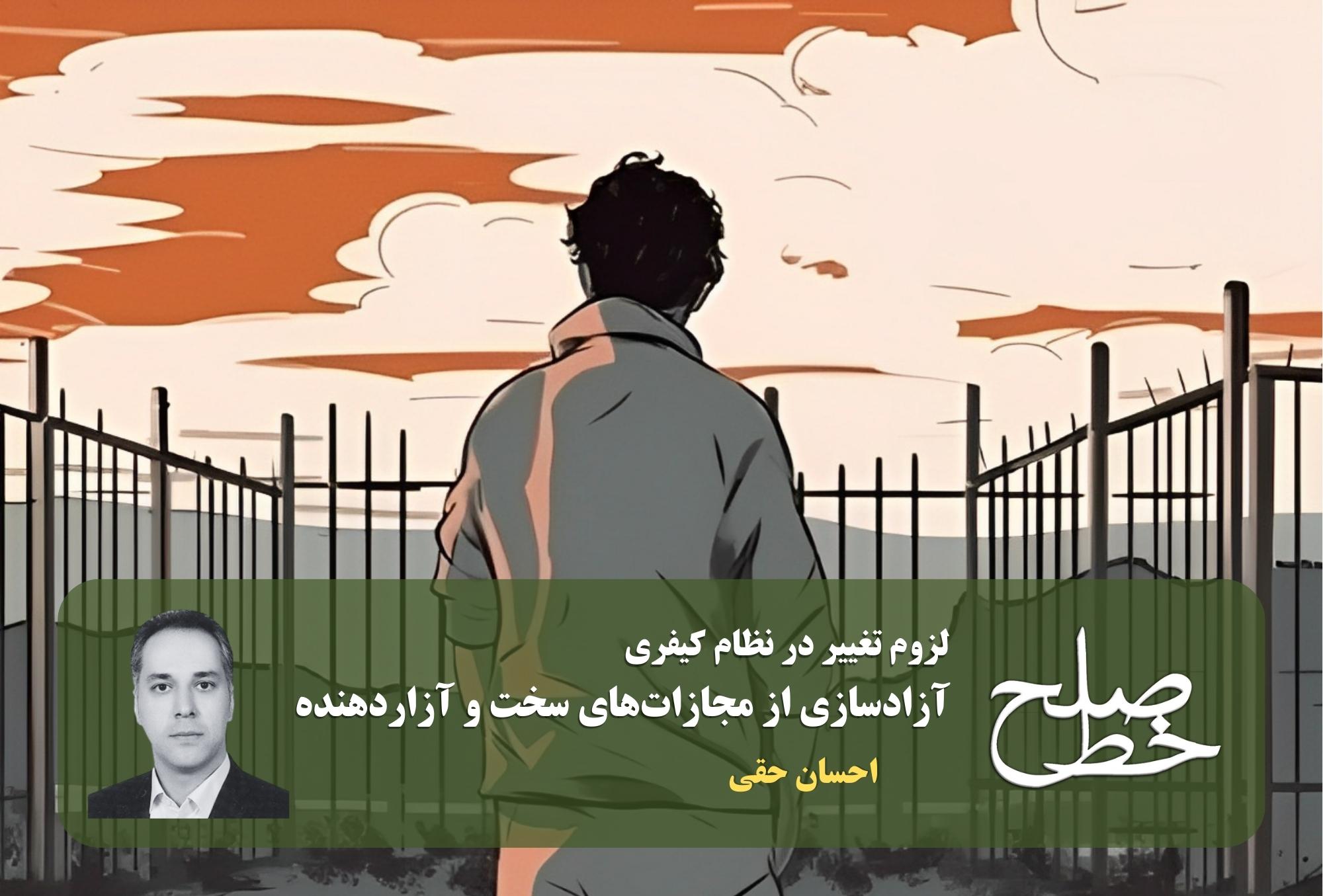
Liberation from harsh and oppressive punishments / Ehsan Haghani
One of the punitive reactions that currently exists in all criminal systems as a legal punishment is deprivation of freedom or imprisonment. This punishment is accompanied by harsh conditions for prisoners and these harsh conditions are considered part of the legal punishment. For example, the legislator has prescribed “imprisonment with hard labor” in the General […]...
Read More
Created By: Ehsan Haghi June 22, 2023
What dreams have they seen for “City Wonders”?; Conversation with Mohammad Ali Pourmokhtar, representative of different eras in the parliament / Ali Kalaii
On the eve of the February 1979 revolution, the construction of a prison on the outskirts of the capital was completed. This prison was ready for operation and launch in Mehr month of 1361 (2). Four decades later, Hamid Sefat, a famous rapper and singer, after the end of his imprisonment and release, released a […]...
Read More Created By: Ali Kalaei May 22, 2023
The relocation of Rajai Shahr prison is a strategy against threatening gatherings; an interview with Nasser Ghavami, former judge of the Supreme Court/ Morteza Hamounian.
The order of the head of the judiciary to release Rajai Shahr prison, which some media outlets have interpreted as an impulsive decision by the head of the judiciary, has raised many concerns. The relocation of Rajai Shahr prison could affect the situation of prisoners, the access of families to the prison, and the remaining […]...
Read More
Created By: Admin May 22, 2023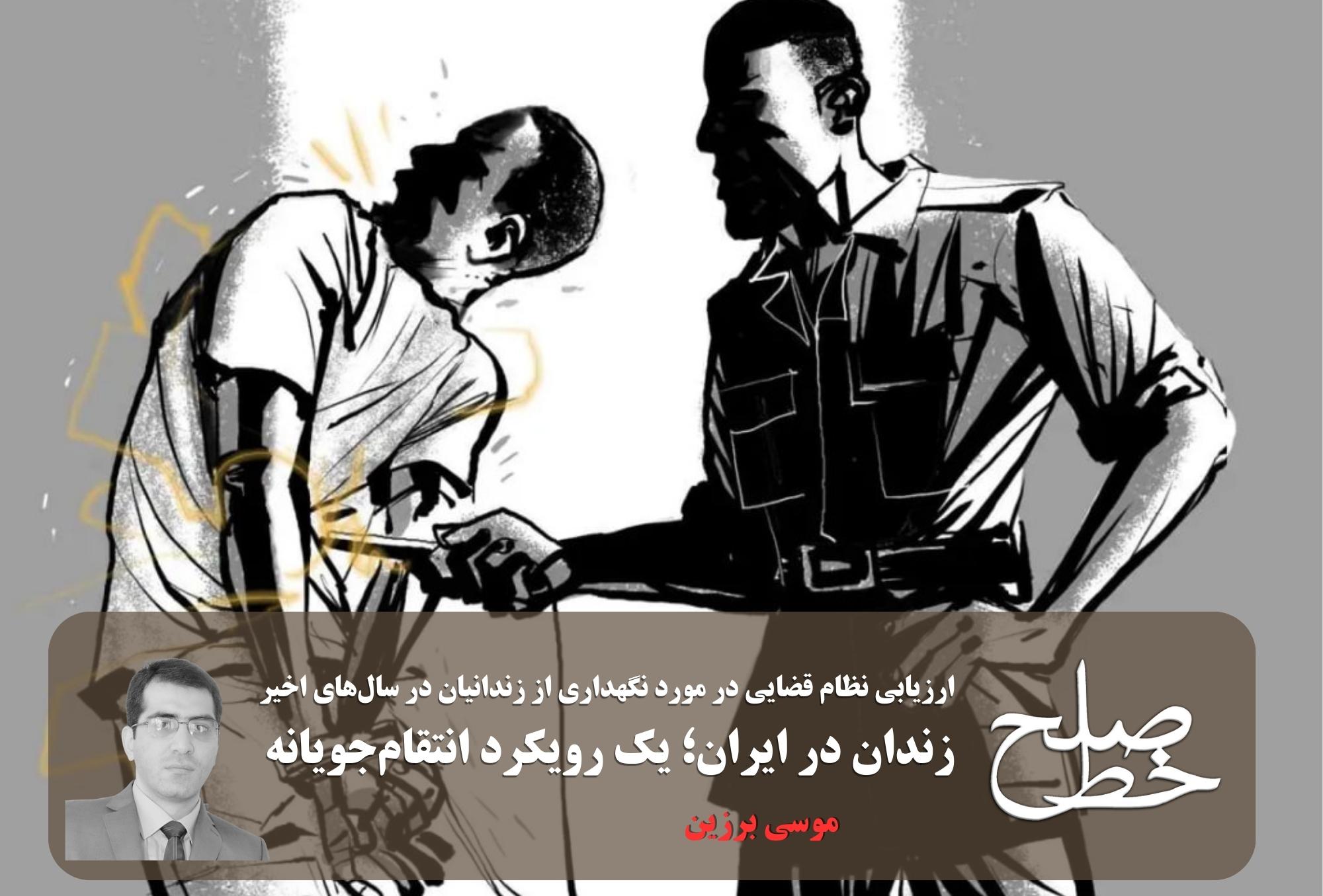
Prison in Iran; A Vengeful Approach / Musa Barzin
On the date of April 10th of this year, the head of the judiciary announced that it is planned for Rajai Shahr prison, located in the city of Karaj, to be closed and relocated to another location. They cited the reason for this decision as the prison being located within the city of Karaj. However, […]...
Read More
Created By: Mousa Barzin May 22, 2023
Islamic Republic and the High Walls of Prison Relocation / Marzieh Mohabi
We must think that prisons and punishments, in general, are not intended to eliminate crimes; they are mostly intended to differentiate crimes and to distribute and use them. Prisons and punishments do not only aim to discipline violators of the law, but they also aim to control violations of the law through a general tactic, […]...
Read More
Created By: Marziye Mohebbi May 22, 2023
The wall surrounding the Islamic Republic in the garden of the Qasr Museum/ Barbad Golshiri.
It is rare for powers to build a memorial in condemnation or even criticism of their own actions. It is a dream if they even whisper a hidden line on a stone in the Vatican. My fault “But is there a small sign of the centuries of crimes of the Catholic Church? Is there a […]...
Read More
Created By: Barbod Golshiri May 22, 2023
“Prisoners’ Transition: Hope or Torment? / Shahriar Shams”
Transfer in prison is considered one of the most distressing experiences for an inmate, and the longer an inmate stays in a prison, the more distressing the transfer becomes – regardless of the destination. In fact, it can be even more distressing than one of the systematic abuses that are planned for prisoners, such as […]...
Read More
Created By: Shahriar Shams May 22, 2023
یIs preserving the historical memory of committed crimes a part of human rights? / Mahnaz Sharayati
Definition of historical memory and its difference from history. If we study “history” officially and systematically through sources and remnants left by people in the past, the “historical memory” is that part of history which is transmitted socially, culturally, and politically through a group or community of people. Two features are mentioned to know the […]...
Read More
Created By: Mahnaz Shariati May 22, 2023
The prison under the microscope shows the state of a society / Kaveh Shirzad
If we want to understand what goes on beneath the surface of a society and what the social, political, and cultural realities of a society are, we can look at its prisons. Prisons are a reflection of the entire society. The behavior that is exhibited in prisons with an inmate deprived of freedom can also […]...
Read More
Created By: Kaveh Shirzad May 22, 2023
Changing prisons and the right to a healthy environment for prisoners/ Abdullah Bai Lashki
“Gholamhossein Mohseni Ejei, the head of the judiciary, recently mentioned in a meeting of the administrative council of Alborz province that the judiciary and specifically the prison organization suffer greatly from overcrowding in prisons. With the high density in prisons, it is no longer possible to carry out effective cultural activities to socialize prisoners. However, […]...
Read More
Created By: Abdullah Bai Lashaki May 22, 2023
The transfer of prisons outside of cities; double suffering for families and children / Hamed Farmand
In the past weeks, the head of the judiciary of the Islamic Republic of Iran has emphasized again on the transfer of Rajai Shahr and Qazalhasar prisons outside of cities. The governor of Alborz province has also identified the presence of four “sensitive and important” prisons in this province and the gathering of families around […]...
Read More Created By: Hamed Farmand May 22, 2023
