


Others

When superstition ties reason down/ Fereshteh Goli
Myth refers to beliefs and actions based on fear, ignorance, or misunderstanding of natural and supernatural causes – often without scientific or logical basis – and can exist individually or collectively. In fact, the foundation of superstitions and magic is built on the fear and ignorance of humans. In the past, superstitions were a part […]...
Read more By: Fereshteh Goli
 March 21, 2025

When hope boils in a cup of coffee/ Alireza Goodarzi
The woman sat down and fear was in her eyes. He was thinking about a cup of tea. He said, “Oh my child! Don’t be sad!” Love is your destiny. Allow me to distinguish between concepts that have no clear boundaries: fortune-telling, palmistry, divination, and astrology. Each claims to have a connection with another […]...
Read more
By: Alireza Goodarzi March 21, 2025
“Ramali in the Digital Era: Violation of Women’s Rights and Reproduction of Vulnerability / Ali Barnaie”
In the chaos of virtual platforms and social networks in Iran, digital fortune tellers and diviners with thousands of followers make colorful promises of changing fate to desperate, vulnerable individuals, essentially launching a “dream-selling business”. Women, especially in marginalized and low-income communities, are the main targets of these promises. In fact, fortune telling and divination, […]...
Read more
By: Ali Barnaie March 21, 2025
Serious Economy/ Ahmad Alavi
Ramali and falgiri, as part of the informal economy, have deep roots in many developing societies, including Iran. This phenomenon, which thrives in a context of economic, social, and cultural crises, not only leads to the withdrawal of capital – both financial, human, and social – from the productive and formal economic cycle, but also […]...
Read more
By: Ahmad Alavi March 21, 2025
Does fortune-telling and divination tarnish human dignity?/ Sina Yousefi
Fortune-telling and divination, as manifestations of superstitions in modern societies, are considered a serious threat to human dignity beyond just a cultural and social problem. These phenomena take advantage of individuals’ psychological, economic, and social vulnerabilities, targeting their intellectual independence and free will, and reducing them from capable and autonomous beings to dependent and passive […]...
Read more
By: Sina Yousefi March 21, 2025
قتSuperstition sales under the shadow of law / Ehsan Haqqi
Humans have always believed in the influence of supernatural and non-material factors on their lives and destinies, from ancient times until the present day as recorded in history and shown by archaeological studies. They have constantly strived to control these factors and improve their lives and the lives of their loved ones by manipulating them. […]...
Read more
By: Ehsan Haghi March 21, 2025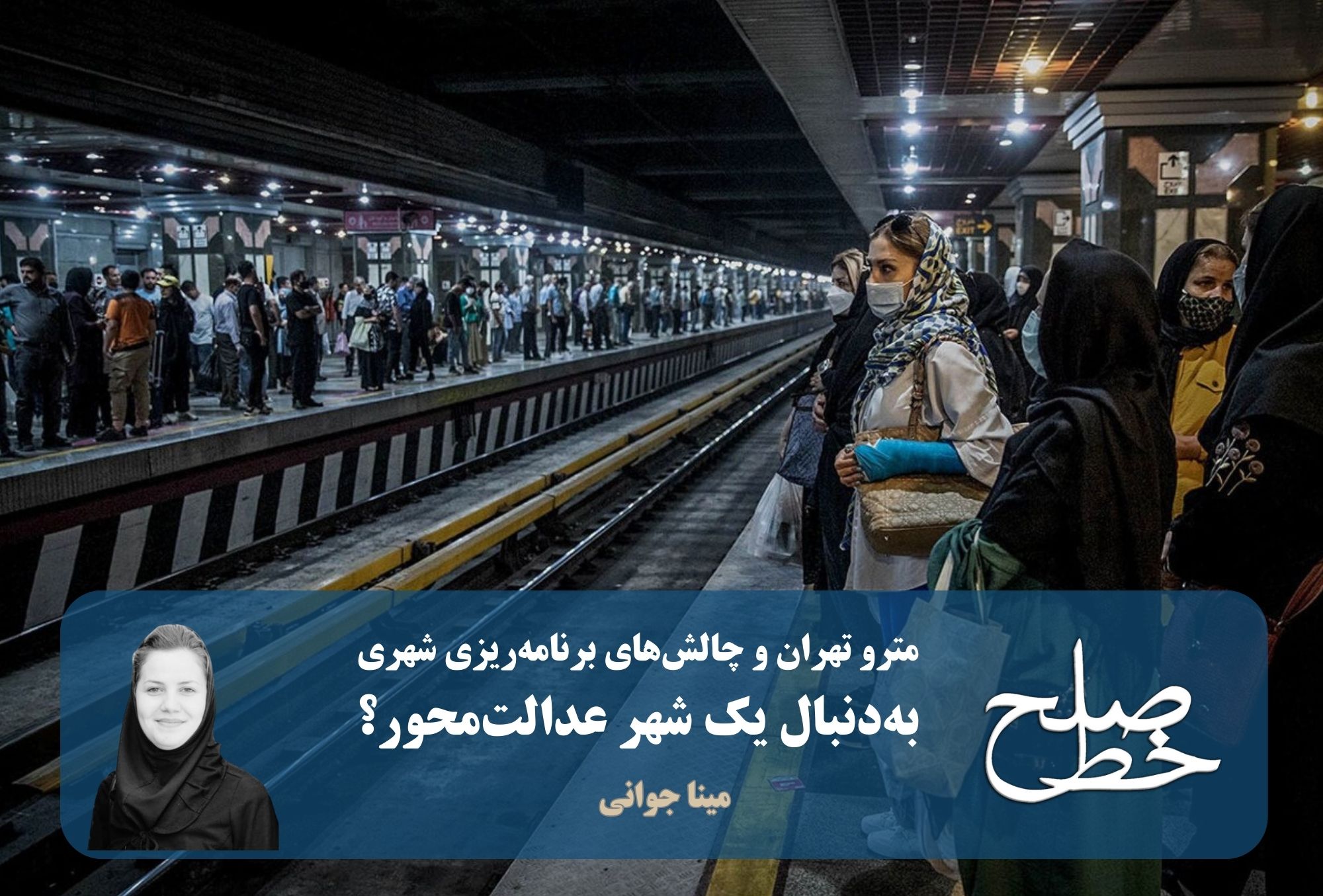
Looking for a justice-centered city?/ Mina Javani
The Tehran metro is no longer just a means of public transportation, but has turned into a battleground where tension, struggle, and survival take place in every corner. Every day, thousands of passengers search for a chance to catch their breath amidst the overcrowding and pressure at stations that cannot accommodate such a large population. […]...
Read more
By: Mina Javani March 21, 2025
Book Introduction: “Aristocratic Management”
Book Aristocratic management. “By the pen of Ahmad Fa’al, a researcher and analyst of theoretical issues in politics and sociology, was published in 1403. The author has written this book based on his experiences in the fields of management, oil industry, and political sociology. His first experience relates to his undergraduate studies in management, which […]...
Read more
By: Ahmad Fa’al March 21, 2025 By: Admin March 21, 2025

The Face of the Capital from the Past to Today / Reza Dehlooi
Tehran has been experiencing unbalanced and chaotic growth since the Safavid period, especially since it was chosen as the capital of Iran by Agha Mohammad Khan Qajar. Despite occasional attempts to establish official boundaries and limits for the city, it has continued to expand and develop without proper oversight or control from national authorities. As […]...
Read more
By: Reza Dehlavi February 19, 2025
City as a Territory: Reproducing Inequalities through Spatial Policies in Tehran / Mina Javani
The division between center and periphery is one of the fundamental mechanisms shaping economic, social, and cultural inequalities in modern societies. This distinction, which is reproduced in historical and structural contexts, is not only evident in macro-level policies, but also in the smallest elements of urban life. The recent decision by the Tehran City Council […]...
Read more
By: Mina Javani February 19, 2025
The Thought of Possible Transfer of the Capital from Tehran to Makran: Opportunities, Challenges / Ahmad Alavi
The idea of relocating the capital in Iran, especially from Tehran to the Makran region, has recently been raised due to environmental challenges, population density, and Tehran’s vulnerability to natural disasters. This plan aims to achieve goals such as balanced regional development, strengthening geopolitical position, and reducing centralization. However, implementing such a plan can have […]...
Read more
By: Ahmad Alavi February 19, 2025
