


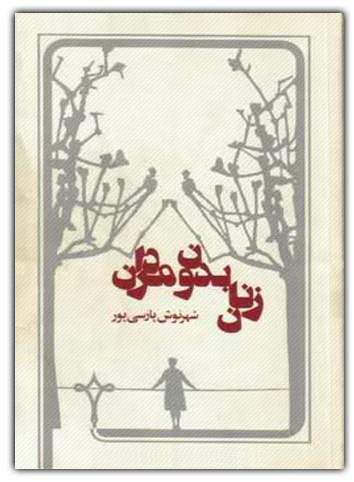
Book Introduction: Women Without Men
One of the novels written about human rights and with a special focus on women’s rights in Iran is the book “Women Without Men” by Shahrnush Parsipur. Parsipur wrote this novel during a time when the social situation in Iran was more turbulent and chaotic than ever before. The book was written in 1978 in Paris. Parsipur, who was living in France at the time, returned to Iran in 1981 and was arrested for false reasons and without any trial. She spent 4 years in prison and upon her release, she revisited the book and published it in Iran in 1990, but once again faced backlash from the government.
The novel “Women Without Men” is written in the style of magical realism, perhaps influenced by the writings of Carlos Castaneda and Gabriel Garcia Marquez. It tells the story of four women with different ideologies and thoughts, all suffering from a common pain – inequality. The central theme of the book, around which all the characters revolve and are influenced by, is the traditional taboos of Iranian women’s dignity, and topics such as virginity and marriage. These taboos have been formulated by the patriarchal society and breaking them is seen as the death of a woman in that society. In the end of this tumultuous story, the characters created by the author find themselves in a dreamy garden and in the ideal city of intellectual and social maturity for women, where they break free from taboos and reclaim their human identity.
In the dream city of Armaneshahr, the city of Persian delights, women are neither happy nor unhappy without the presence of men. Instead, the women of this dream city are respected and dignified based on their own human essence. They are able to display their beauty without being forced into prostitution, and they receive attention without worrying about the injustices of a male-dominated society. They are free without fearing violence from men against their personal independence.
In 1388, a film with the same title was made by Shirin Neshat, based on this book. It was highly praised and won the Silver Lion Award for Best Director at the 66th Venice Film Festival. Although it is not necessary to explain, the screenplay of the film is not exactly the same as the book’s story, but rather an adaptation of the original story. The time period of the story does not go back to August 28, 1332. However, I recommend reading this book to all human rights and women’s rights activists and enthusiasts. In fact, individual and social rights and freedoms are more effectively promoted through understandable means of social communication, rather than through powerful sermons and heavy legal discourse. In other words, as civil society grows from within and provides sustenance, books written with a sociological perspective and in a popular language have a significant impact on raising public awareness of their rights and demands, and have a deeper impact on promoting individual rights
Book Name: Women Without Men
Author Name: Shahrnoush Parsipour
Publication: Negareh Publishing
First Edition: 1368
Print: Golshan
 Created By: Admin
 September 23, 2013
Tags
Monthly magazine number 29