


Spring has gone to the media in an interview with Eisa Saharkhiz.
Isa Saharkhiz, a well-known journalist, was arrested in July 2009 following widespread arrests after the controversial 2009 presidential election. He received his release papers in October of this year while in the hospital, but was sentenced to 3 years in prison by Judge Salavati, the head of Branch 15 of the Revolutionary Court in Tehran, on charges of “insulting the leadership” and “propaganda against the regime”. Despite completing his sentence in June of last year, he was not released and was sentenced to an additional 1 and a half years in prison in another case.
Isa Saharkhiz, the General Director of Internal Media at the Ministry of Guidance in the government of Seyyed Mohammad Khatami, was also the managing editor of the newspaper “Eghtesad” and the monthly magazine “Aftab”, both of which have been confiscated. In addition, he was one of the founders of the Association for the Defense of Press Freedom.
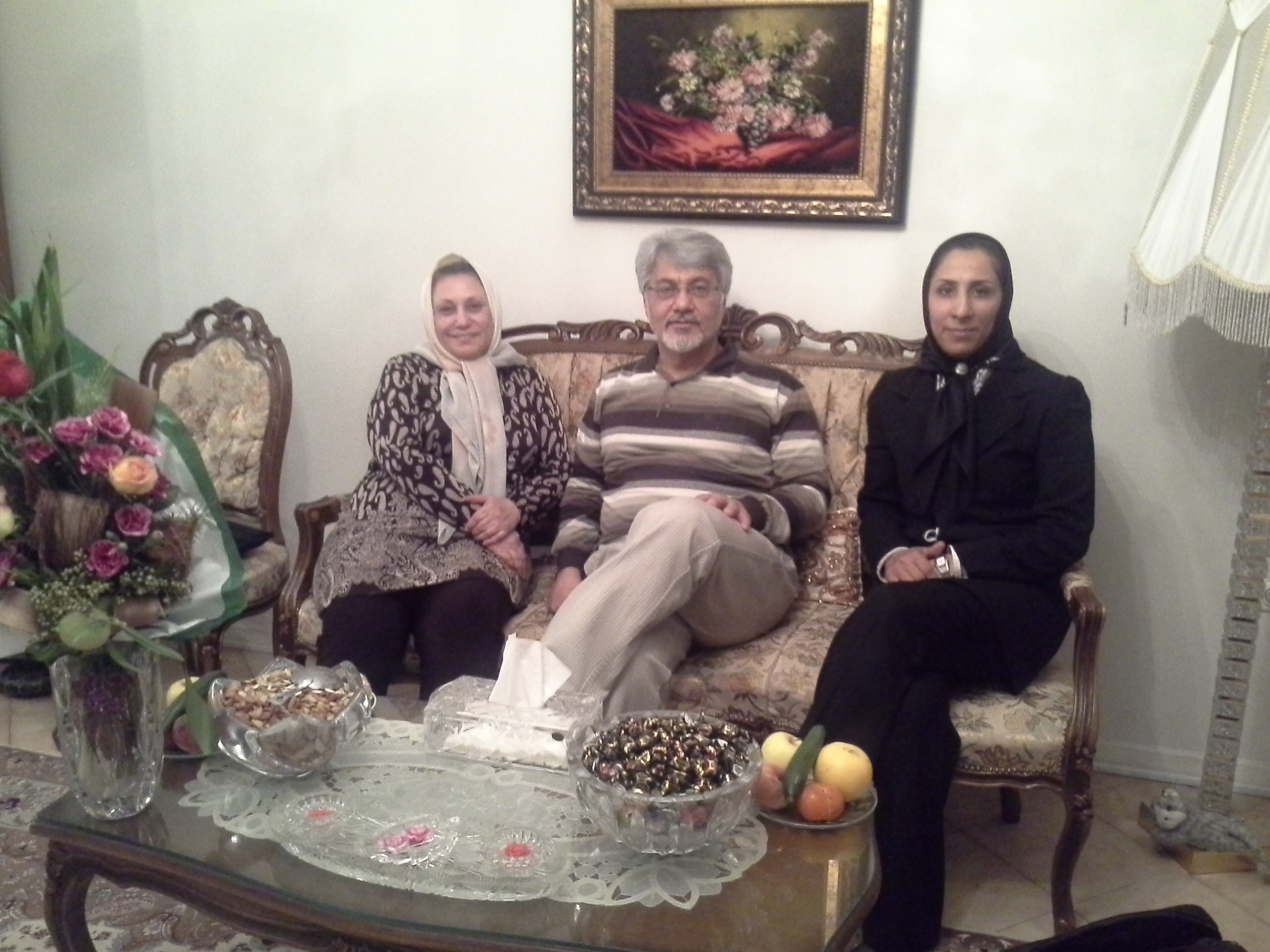
On the occasion of Mr. Saharkhiz’s freedom, on behalf of the human rights activists in Iran, we went to his house and during this visit, our colleague in the peace line also sat down with him for a detailed conversation.
Isa Saharkhiz, in this conversation, while emphasizing that he is owed two and a half months of leave from the authorities, doubts that we will reach the spring season of the media.
Mr. Saharkhiz, before any questions, please accept congratulations for your recent release. As a political prisoner who has suffered greatly from physical and medical problems during your time in prison, please inform us and our readers about your current physical condition.
Thank you. I have multiple difficult-to-treat diseases, some of which are incurable. The most important issue is perhaps kidney failure, meaning that about 70% of my kidneys are not functioning and this non-functioning affects the function of my kidneys and heart, causing fluctuations in blood pressure. Along with that, there are vascular and heart problems; my left ventricle has thickened and my heart rate is such that there is a pause between the blood being pumped and the blood being returned, which sometimes leads to a lack of blood supply to the brain and causes me to suddenly collapse…
Next to these, there is a problem with potassium. My adrenal glands have become overactive and this overactivity has caused my body to excrete potassium. Potassium is one of the body’s sensitive electrolytes that affects the kidneys and heart, and it must be constantly monitored and the medications adjusted accordingly. Having high levels of potassium can lead to blood poisoning and ultimately cardiac arrest, while low levels can result in cardiac death. This must be managed within a specific range. In summary, I have severe fluctuations in these problems; they are both high and low at the same time, and my blood pressure changes every two to three hours, which doctors cannot control. In addition, there are other conditions such as thyroid problems that also need to be managed. Along with these, there is also anemia or a special condition (minor thalassemia) that must always be monitored. There are also other diseases such as herniated discs in my back and neck.

Mr. Saharkhiz has observed that many individuals, before being arrested, were healthy, young, and vibrant, but during their arrest or imprisonment, they become afflicted with various and sometimes serious illnesses. Do you know the reasons and roots of these problems?
See, the prison environment itself is stressful and this stress causes constant fluctuations in blood pressure. We have individuals who, due to the pressures of their interrogation, seeing an officer or an interrogator completely disrupts their system and they become agitated and nervous; that’s why I believe that those who are in prison should seek a psychoanalyst after their release, who with medication or conversations, can erase their memories and mindsets. In fact, until these issues are cleared, there are difficult mental and physical conditions in the unconscious mind of individuals. This is one of the factors itself. Improper nutrition is also a very bad issue; the prison food is not edible at all, there is no chicken, no meat, and no fish in the prison menu, the only thing available is soy, which is also animal-based and they may not even eat that. Imagine that they make “Abgoosht” – a dish made with meat – with soy. In a situation where everyone says not
I am returning to our initial discussion; you see, in prison, before an inmate goes to court, they are transferred to solitary confinement. In solitary confinement, besides the issue of having a toilet inside the cell (which itself brings other problems such as cockroaches and foul smells), going out to use the toilet is a problem. The long hours of holding in urine and not being able to urinate, especially for older individuals with prostate problems, causes the bladder to fill up and the urine to go back into the kidneys, damaging the kidney cells. For example, there have been cases that have affected my kidneys: I was taken to the rooftop as a form of punishment (if I am not mistaken, it was the 17th or 18th of Bahman month in 88, it was a cold night and the temperature in Tehran was six to seven degrees below zero) at 1:30 in the morning, without socks, slippers, or warm clothing, just a
As a result, my point is that prison conditions affect everyone in a certain way, and this issue causes most people, especially mentally, to be under pressure, even if their mental strength is high. For example, look at how some prisoners are constantly told that we want to release you conditionally and this person is waiting for their release. If a person promises themselves freedom or even a furlough, their eyes are constantly on the door, waiting for someone to open it and bring their release order. Well, you see, there are few people who are not affected by these conditions and they just go with the flow and say, whenever the prison door opens and they tell me to go, I think I’m free. Especially many prisoners, like myself, who were not even given a furlough. Well, according to the prison regulations, I was supposed to go on furlough once a year, but in reality, I was a debtor for four and a half months and they
This law exists that a person who has served one third of their sentence can be released. Well, this should be implemented; of course, they implement it for many prisoners such as thieves or drug addicts, but it is not implemented at all for political and ideological prisoners. We have good conditions, look at the ideological prisoners, those who are Baha’i, those who are Kurdish prisoners or Sufis, they have not been granted furlough at all…
What do you think about the recent freedoms that are said to include 80 political prisoners?
“They had prepared these freedoms in three lists, and those who went to apply for furlough were faced with the issue that they were told they were supposed to be released; of course, the higher authorities of the prosecutor’s office were the ones saying these things. One list was about conditional releases and was related to those who had served one-third or one-half of their sentence; well, most of them were also included because even if they had twelve years of imprisonment (like Nasrin Sotoudeh), they had served one-third of their sentence and were supposed to be released. Now we have cases where they have a maximum of five or six years of imprisonment and they are supposed to be released. The second group was for those whose sentence was less than this issue and they had served their sentence and, to some extent, like my case, they were seeking furlough, which would actually lead to their release. There was another list that included prisoners who were sick and had a
Mr. Saharkhiz, during the time that you were the head of the press, is known as the “spring of the press”. Now, considering the limitations that we have witnessed in recent years, do you think that under Mr. Rouhani’s government, the media space in the country will reach a relative freedom? What is your prediction in this regard?
I know it’s far-fetched that we will reach that spring you are referring to, and I have a few reasons for it. One is that the combination that has been chosen and the project that is being pursued are very distant from that time. Look, the current deputy of the Ministry of Culture and Islamic Guidance is someone who was the head of domestic media during Mr. Hashemi’s government and when we took the government from them; meaning I replaced Mr. Entezami. Well, one can compare their time with the present. Now people change, but I doubt that Mr. Entezami, even considering all the changes and developments, would have the courage and bravery to support the media and journalists. I don’t want to boast about myself, but I’m talking about the time of reforms, especially the first two years. In 1977, when we came, only thirty newspapers were published and got a license. Many of the newspapers that are currently being published or are going
I don’t want to be too negative. Anyway, I think as long as it doesn’t cause trouble for them and doesn’t provoke the sensitivities of the central power core, they allow for activities. Surely the level of censorship and self-censorship will not be as much as during Mr. Ahmadinejad’s time. In just these one or two months that have passed, we see that the red lines have been pushed back a bit and newspapers are mentioning names that they couldn’t before and it wasn’t even possible. The same goes for books…
I hope that a space will be created where we can have media and publications that truly represent a moderate government. But look, right now the Neshat newspaper, which was supposed to be published, has run into trouble and I have no information about other newspapers and whether they are under pressure or not. The Rouhani government has emphasized that we support professional organizations, but in practice, nothing has happened for the Iranian Journalists’ Association and their illegal closure has not been lifted. This is happening at a time when someone like Mr. Rabii, who is a journalist himself and is actually one of the founders of the Journalists’ Association, has become the Minister of Labor and the Journalists’ Association is under the supervision of the Minister of Labor and with the cooperation of the Minister of Culture and Guidance. At the very least, it was expected that the Journalists’ Association would be reopened, like the cinema house.
In recent years and following pressures from the security apparatus, we have witnessed a large number of Iranian journalists leaving our country in order to survive. In your opinion, what impact do these migrations have on the media landscape in our country in the short and long term?
During that spring, we witnessed a very high volume of media, especially from the young and new generation, who wanted to enter the profession of journalism. The School of Journalism and special courses held by the Ministry of Culture and Media, even courses held with the help of foreign journalists in Iran, provided a generation of journalists who were active in a large number of publications. Well, as you say, many of them left the country, or a very large number of these individuals who are still in Iran are unable to do any work; they are officially or unofficially banned from writing or working. Some have been sentenced and banned from media activities, and when some of them intend to collaborate with a newspaper, they contact the newspaper’s officials and say that this person should not be used. Some prefer low-risk work and have gone into public relations, for example. In any case, the profession of journalism is a risky one and these years have shown that the highest number of prisoners are from this profession.
With all of this, in my opinion, we are not facing a shortage of journalists. Just today, when I went to the office to visit some newspapers, I witnessed that people were calling and offering jobs, and the editor-in-chief was saying that we have closed our staff and we are not facing a shortage of manpower. The reason for this is that, in addition to the increase in the number of journalists, we have also had an increase in the number of newspapers that have actually closed down, compared to the spring of 1979 when there were massive closures of media outlets and about 20 newspapers and magazines were shut down overnight. Well, those journalists became unemployed and naturally, in these years when our number of newspapers is limited, we are not facing a significant shortage, although we may have some quality issues; especially in the past year when journalists were arrested for being members of the Iranian Journalists’ Association, we faced a shortage of editors and officials who have the ability to guide and
Thank you very much for giving your time to the monthly magazine “Khat-e-Solh”.
 Admin
Admin February 3, 2014