


Latest Posts

A Critique of “Ouj Media Organization” / Ali Kalai
From the very first months after the leadership of Ayatollah Khamenei, he tried to implant a concept called “cultural invasion” in people’s minds. A concept that reflected his way of thinking and his approach towards modern human lifestyle. In Azar 1368 (November/December 1989), he stated in a speech, “Now in our schools, streets, frontlines, and […]...
Read More Created By:
Ali Kalaei
Created By:
Ali Kalaei July 23, 2023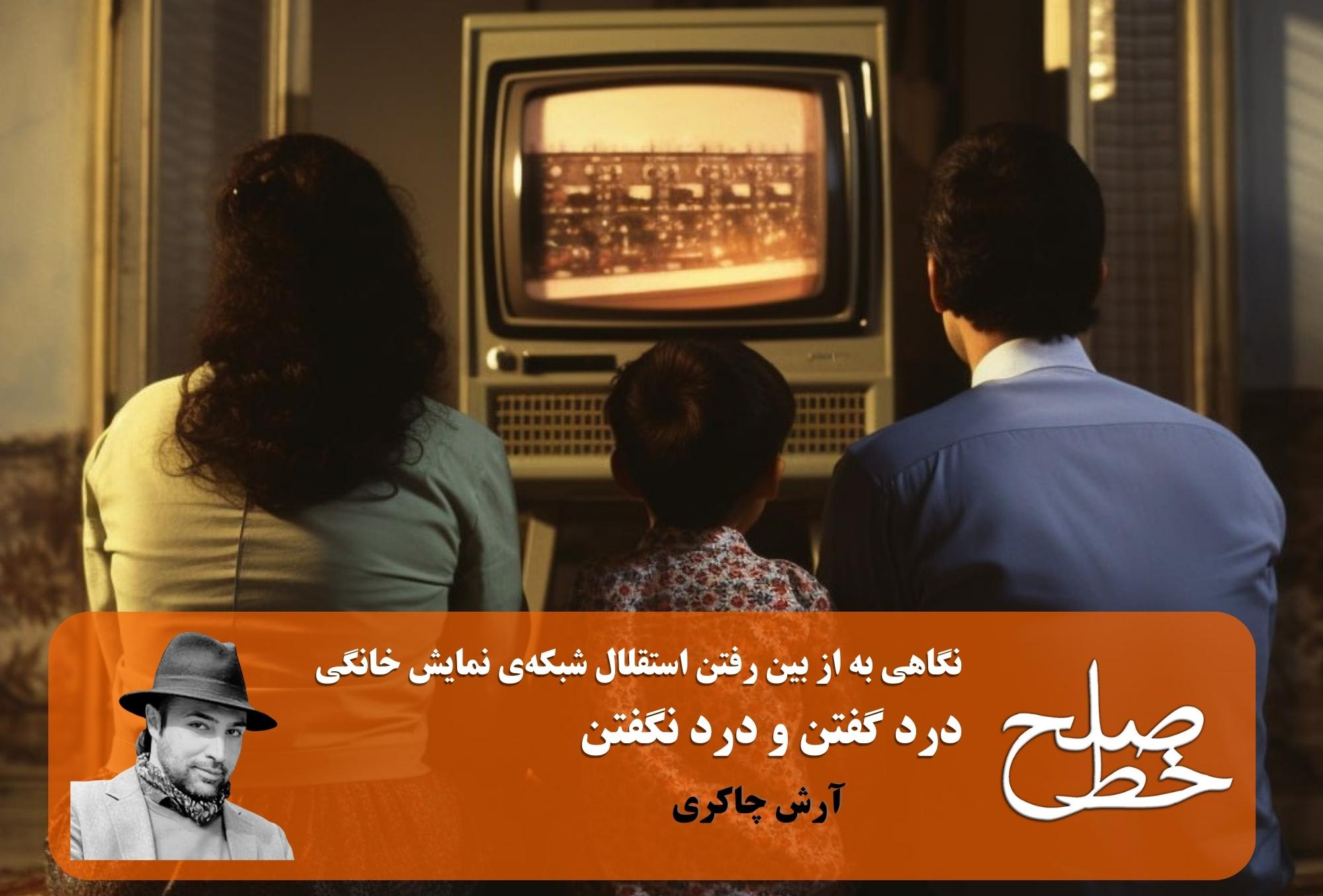
A look at the disappearance of independence in the home entertainment network / Arash Chakari
If we want to summarize the history of Iranian television after 1357 in one sentence, we can write: A huge cultural and artistic gap between the reality of society and the programs produced. A gap that was mostly evident between the years 68 to 78. The atmosphere of revolutionary society and the subsequent eight-year war […]...
Read More Created By:
Arash Chakeri July 23, 2023
Created By:
Arash Chakeri July 23, 2023
The heavy shadow of ideology on the fate of celebrities / Keyumars Amiri
“Celebrity” is a title that is used today for many artists and generally prominent and well-known individuals. These are people who are sometimes known and recognized in society for their talent and art, and due to their artistic and literary activities and presence in both physical and virtual spaces, they have a considerable number of […]...
Read MoreCreated By:
Kiomars Amiri July 23, 2023
The home viewing network, the latest victim of suppression / Marzieh Mohabbey.
In Iran, when television was under the monopoly of the government, all windows of critical thinking were closed and all avenues of influence for thoughts, beliefs, and existing discourses were obsessively blocked. As an arm of the security apparatus, it also took on the mission of suppressing the government’s opposition. Some speakers and journalists were […]...
Read MoreCreated By:
Marziye Mohebbi July 23, 2023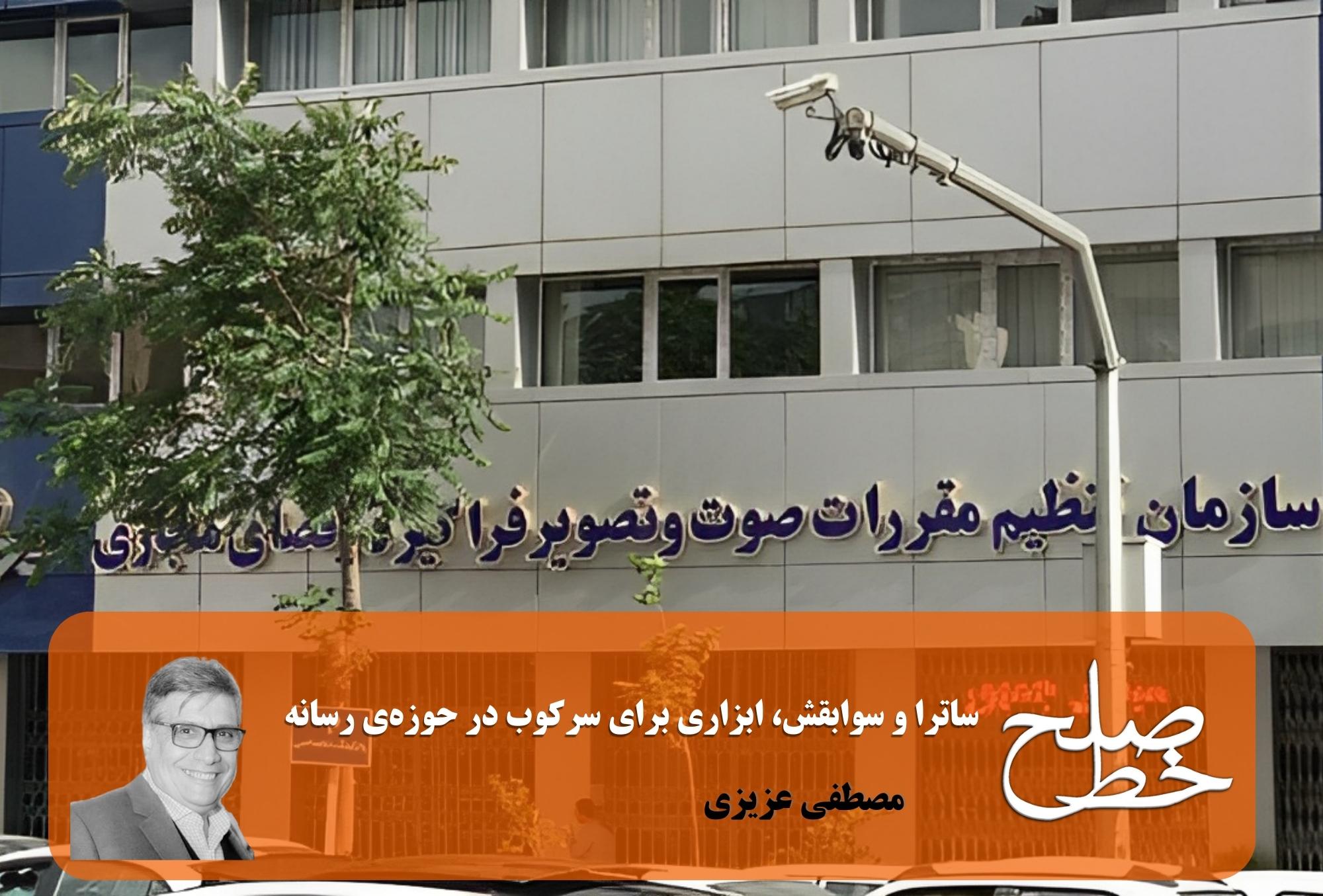
“Satra and its history, a tool for suppression in the media sphere/ Mostafa Azizi”
To suppress visual media, the Islamic Republic has taken different approaches. They used to think that their control over the radio and television would be permanent and all they needed was to have control over it and exercise complete supervision, and even if they loosened restrictions in cinemas, suppression would still be carried out. At […]...
Read More Created By:
Mustafa Azizi July 23, 2023
Created By:
Mustafa Azizi July 23, 2023
Repeated censorship of visual media and its impact on human rights / Abdullah Bai Lashki
Human rights and visual media play a vital role in a free world and act as powerful tools for promoting transparency, accountability, and social justice. In countries that uphold the principles of freedom of expression and information, individuals have the right to produce, access, and share visual media, which can expose human rights violations, document […]...
Read MoreCreated By:
Abdullah Bai Lashaki July 23, 2023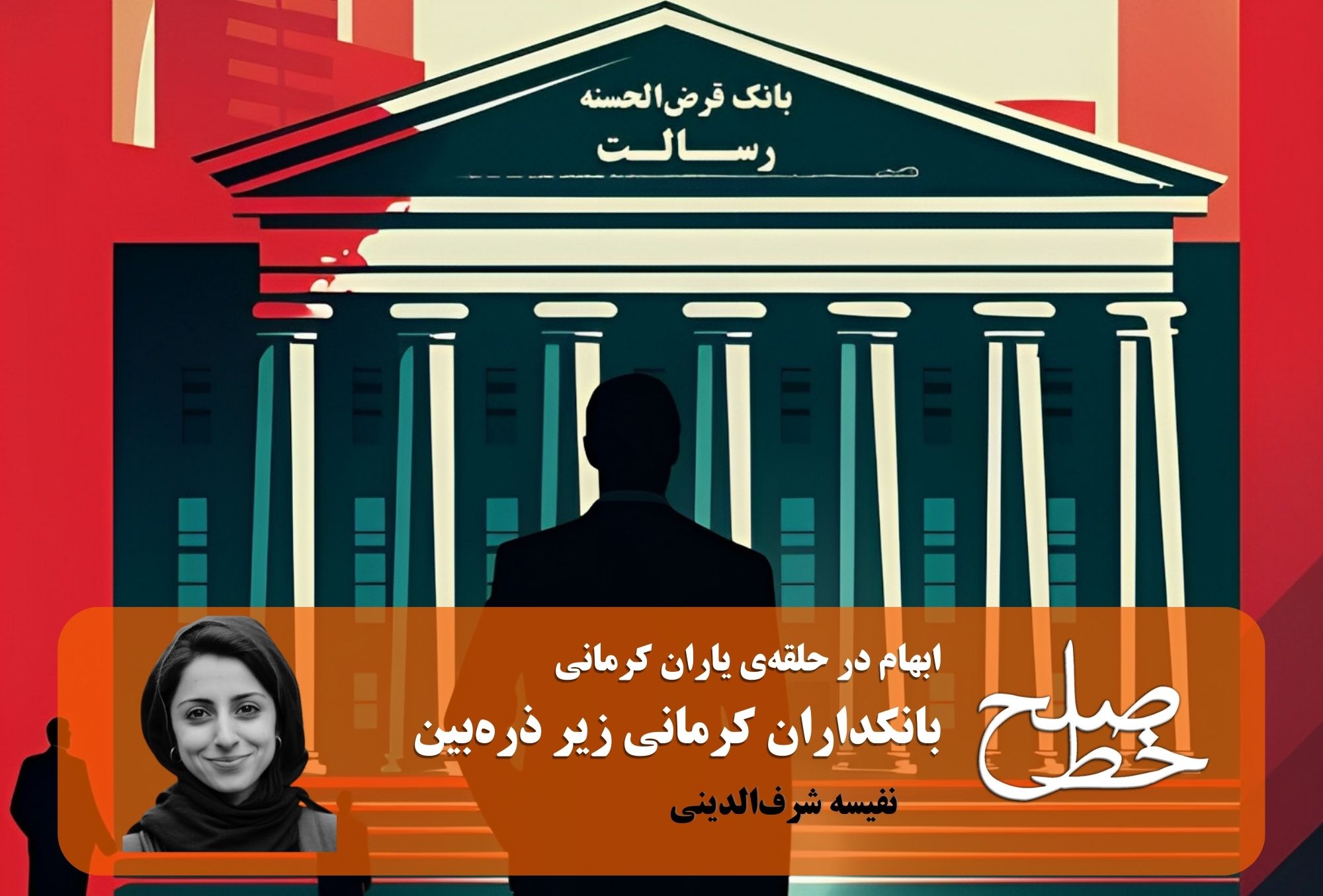
Ambiguity in the circle of Kermani friends; Kermani bankers under scrutiny/ Nafiseh Sharafaldini
The Resalat Qarz al-Hasaneh Bank emphasizes its role in providing interest-free loans and receiving a two percent profit in its advertisements. These advertisements have led to long lines in some provinces of the country to receive these facilities, but this is not entirely true. The use of cheap money and depositing with a rate of […]...
Read MoreCreated By:
Nafiseh Sharafaldini July 23, 2023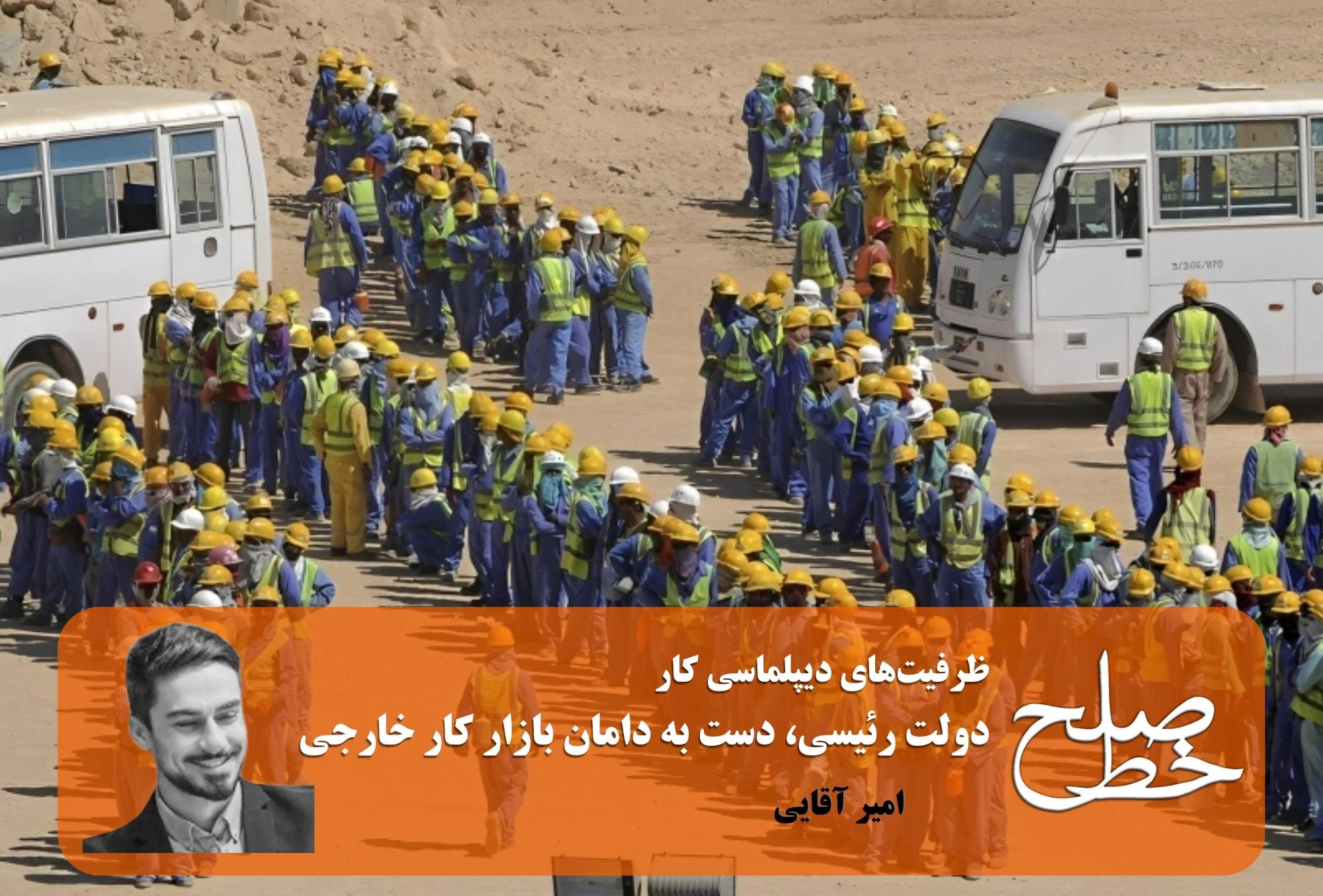
The government is trying to open up the foreign job market/ Amir Aghaei.
The Deputy Minister of Employment of the Ministry of Cooperation, Labor, and Social Welfare announced the launch of “Labor Market Diplomacy” for the deployment of skilled workforce to Qatar. He added, “In the past six months, Qatar has issued 500 work visas for Iranians and negotiations between the two sides are ongoing.” According to the […]...
Read MoreCreated By:
Amir Aghayi July 23, 2023
The Role of the Government in the Sequence of Honor Killings in Iran / Elaheh Amani
Is “honor killing” on the rise in the world and in Iran? With a brief review, we find that in Iran and other Western Asian countries (Middle East) and South Asian countries, news of honor killings is also the top headline on websites and newspapers. Human rights groups say that every year, around a thousand […]...
Read MoreCreated By:
Elahe Amani July 23, 2023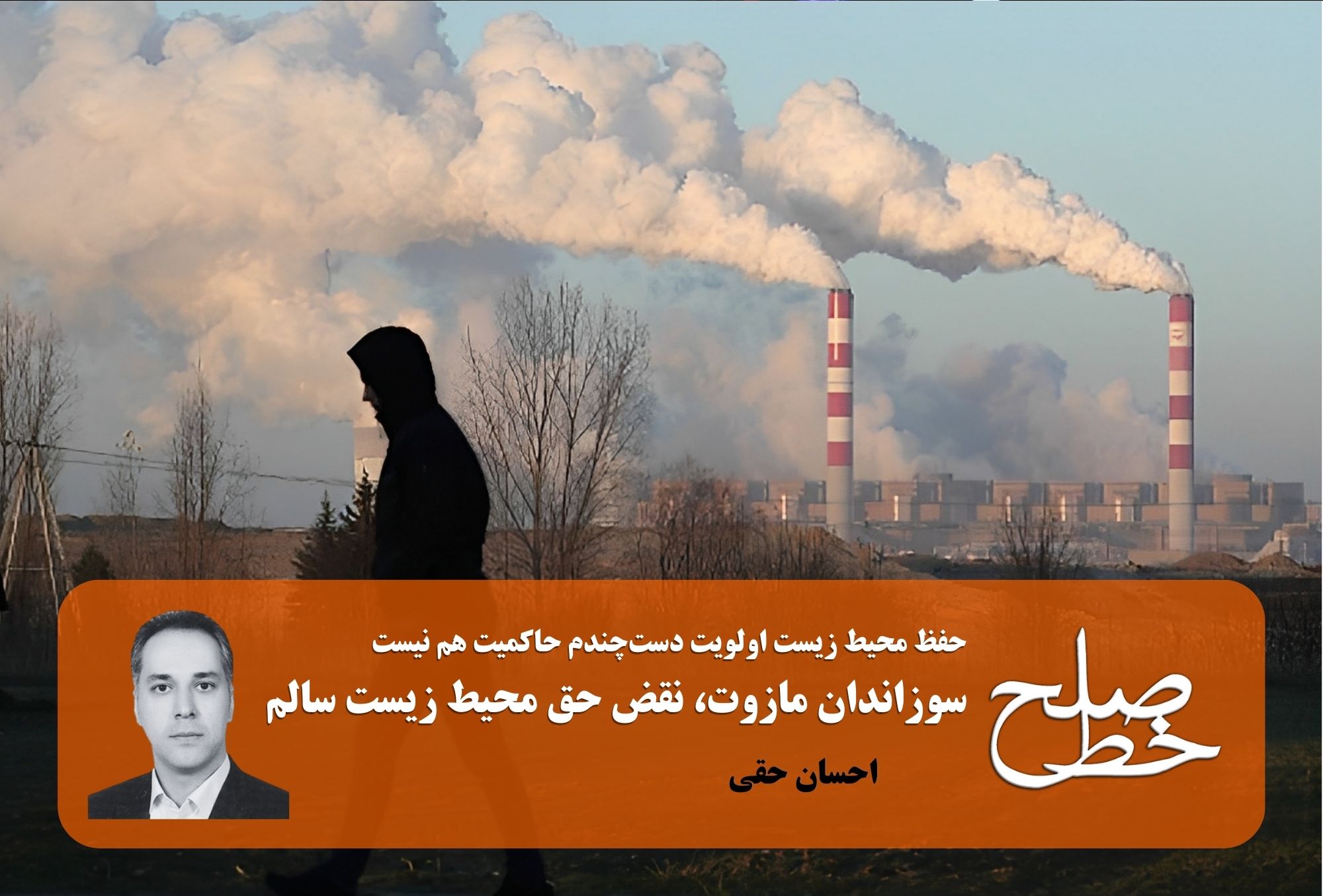
Burning diesel, violation of the right to a healthy environment / Ehsan Haghi
The right to a healthy environment is one of the examples of human rights that legal experts in this field consider as part of the third generation of human rights. According to the “United Nations Conference on the Human Environment” statement, adopted on June 16, 1972 in Stockholm, Sweden, the preservation of the human environment […]...
Read MoreCreated By:
Ehsan Haghi July 23, 2023
