


Can labor movements reclaim social space from oppressive institutions? / Ahmad Alavi
“این تصویر نشان دهنده یک کوهستان زیباست”
This image shows a beautiful mountain.
Ahmad Alavi
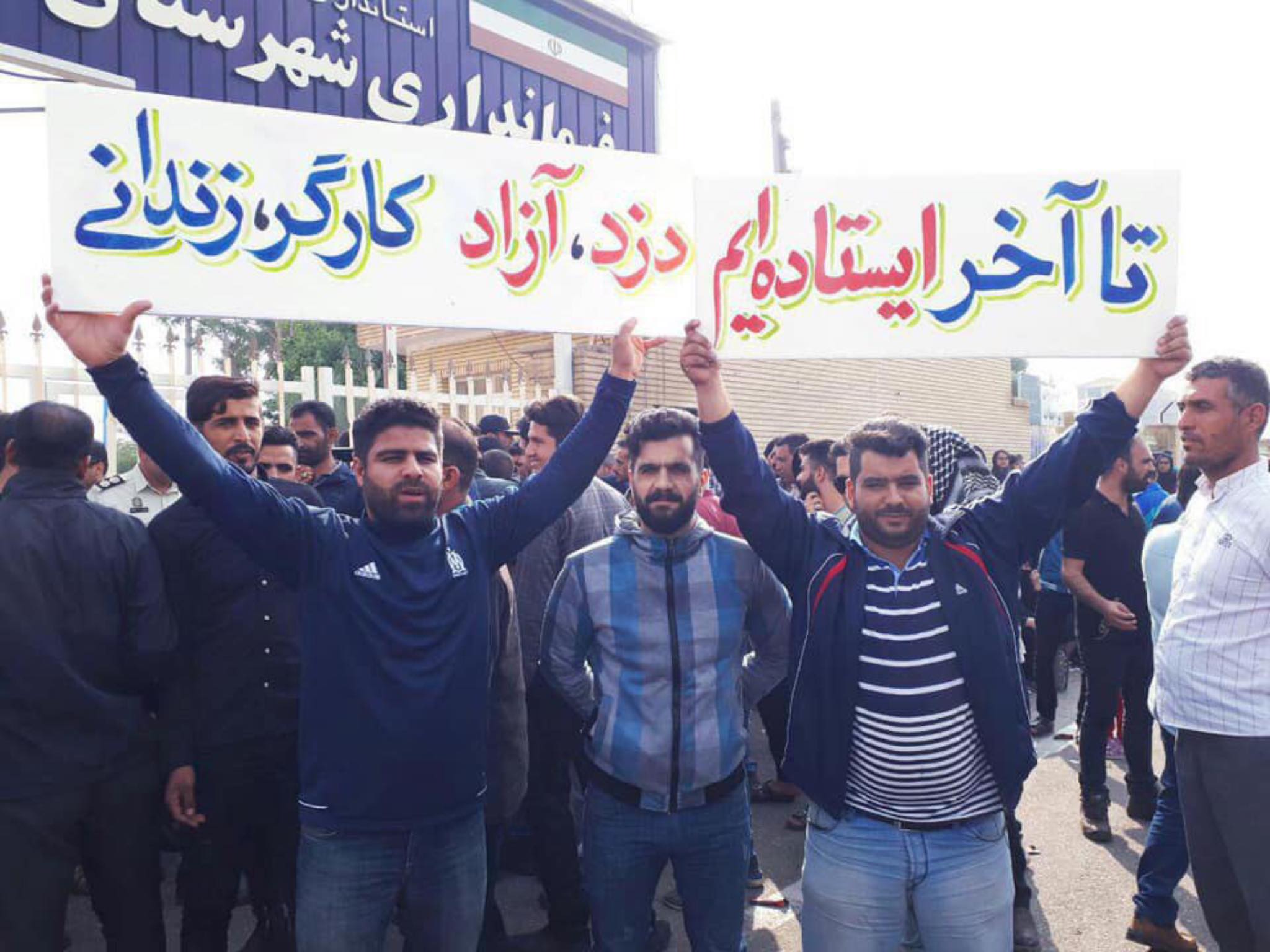
Strikes and protests by sugar workers and trade union activists during the Tappeh Week, as well as by Ahvaz steel workers, once again demonstrated that if trade and civil society organizations become active, they can take control of the social-political space – even temporarily – and push back repressive institutions and authorities. This pushback allows other social movements to grow and voice their demands in the public sphere. However, this does not mean that the social space is permanently and widely under the control of active trade and worker organizations as part of civil society (people’s organizations), because repressive forces can use police and security measures to prevent the spread of strikes and protests by intimidating or arresting activists. The establishment of civil society – at least in the form of trade and worker organizations – is only possible when these organizations expand, collaborate with other civil society institutions, and officially and openly represent the social space, ultimately leading to changes in power structures and laws. In contrast, repressive institutions, led by
Why is the development and stability of civil society important?
Given the economic and social crisis in Iran, society is facing a delayed or imminent confrontation with a power vacuum. There are several options for filling this power vacuum in Iran. Repressive forces within the government, especially the Revolutionary Guards, political factions, movements, and political forums without a social base, as well as individuals and groups supported by international organizations, or even a combination of these options, can fill the power vacuum. The fall of the Pahlavi dynasty was an example of a combination that gave power to individuals and groups who did not represent civil society and at most, represented limited political or religious tendencies that had no roots in society. The filling of the political space by any of these options has its own specific consequences. However, the process of transition in society can lead to structural changes towards public participation in power and a form of citizen empowerment and stability, where civil institutions can take self-management in various aspects of social and political life. The optimal transfer of political power to civil society instead of
Destruction of the creative civil society.
Civil society, in its various forms such as labor and trade unions, environmental movements, women’s movements, teachers and students, and social media, can disrupt the process of creative destruction by replacing old behavioral and institutional patterns. In this process, social and political spaces gradually come under the control of civil society institutions. The transfer of political power with the participation of organized civil society institutions is cost-effective and shortens the path to crisis resolution. This process also creates more favorable conditions for the distribution of power, social status, and wealth.
How is the expansion and consolidation of civil society achieved?
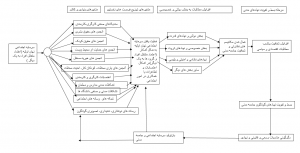
People’s institutions, as the foundation of civil society, first intertwine with each other and then go through a process of consolidation. By gaining access to the socio-political space, the relationships between power institutions and civil society institutions gradually transform in an informal manner. However, until these transformations become formal and legal, the achievements of civil society will not be solidified. Therefore, in the current situation in Iran, labor movements, with the help of civil society organizations, can make fundamental changes in the power distribution system, social status, and power, as long as they cooperate extensively with each other and gain access to the socio-political space. The following index illustrates the current process of civil society, from its emergence to consolidation and transformation.
 Created By: Admin
 December 22, 2018
Tags