


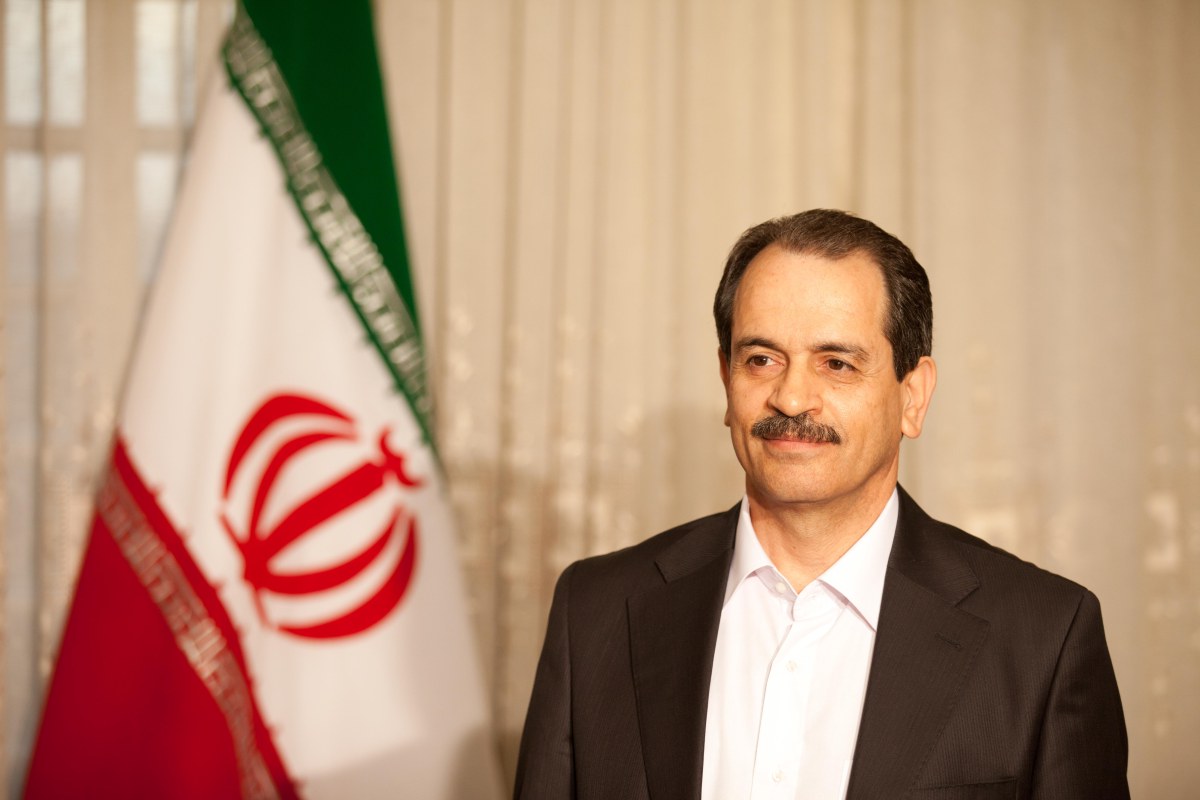
Suppression of Sufism Circle; A manifestation of violation of freedom of expression and belief in Iran/ Witness of Alavi
“این عکس یک آیتم جذاب است”
This photo is an attractive item.
“Shahed Alavi”
Article 23 of the Iranian Constitution prohibits the inspection of beliefs, and Article 24 of the same law states that publications and media are free to express ideas that do not violate the principles of Islam and public rights. Article 25 of the Constitution also addresses the freedom of correspondence and communication of citizens, and the prohibition of censorship or eavesdropping on them.
According to the conditional and ambiguous clause “Foundations of Islam”, it is not possible to guarantee true freedom of expression in Article 24. However, these principles, if fully implemented, provide at least a minimum of freedom of expression – albeit conditional and incomplete – in Iran and in areas unrelated to religious and spiritual red lines for citizens.
But the big problem is that the Islamic Republic system is not even adhering to its own laws and daily violates them to the detriment of its citizens. Newspapers, books, and other artistic and cultural works are systematically censored and other methods of political expression and protest are limited and suppressed.
Dealing with the mystic circle and canceling the meetings and gatherings of this group and arresting and sentencing its leader to execution is a violation of domestic laws in Iran. It is evidence of the violation of freedom of thought, expression, and religion. A religious/mystical group that has not violated any laws in Iran, has not harmed others, has not committed violence, and has not spread hatred, why should they be suppressed and their freedom of expression and belief violated?
Mohammad Ali Taheri founded an institute called “Erfan Halgheh” in 2001 and was engaged in activities related to “Iranian complementary medicine, self-healing, and scientology”. He was arrested in 2011 and has been sentenced to death twice since then.
It is said that Mr. Taheri has been sentenced to death under Article 286 of the Islamic Penal Code. According to this article, individuals who commit crimes against the physical integrity of people, crimes against internal or external security of the country, spreading lies, disrupting the country’s economic system, arson and destruction, spreading toxic and microbial substances, or establishing centers of corruption and obscenity or assisting in them in a way that causes severe disruption to public order, insecurity, or major harm to the physical integrity of individuals or public and private properties, or causes the spread of corruption or obscenity on a large scale, are recognized as “mofsed-e-filarz” (corrupt on earth) and are sentenced to death.
It is not clear based on which section of this law Mr. Taheri has been sentenced to execution. Considering the public nature of the activities of the Erfan Halqeh group and the teachings they provided to their members, and the certainty that their methods and content of activities do not contradict with the laws of Iran, the question arises as to why the Islamic Republic is suppressing this group? If we accept that the criterion for the security and judicial treatment of those who are targeted is not necessarily their illegal behavior, but rather the perceived danger to the Islamic Republic from them, we can speculate about the real reasons for the suppression of the Erfan Halqeh group in Iran.
Given the history of suppressing Islamic religious groups that have different interpretations of the official interpretation of Islam in the Islamic Republic, it can be assumed that the new interpretation of the mystical group is one of the reasons for the confrontation with this mystical group. This puts the monopoly of scholars as intermediaries between the holy texts and the general public at risk, which could lead to the Islamic Republic’s confrontation with the mystical group. The Islamic Republic system is based on a jurist and cleric interpretation of Islam and ways of salvation, and any movement that can challenge this monopoly and interpretation in an effective way that leads to gaining public support is considered an enemy and must be eliminated by any means possible.
But in addition to the religious aspect, the gathering of a group of people in a space outside the control of official institutions is also one of the reasons for the feeling of danger for the security institutions of the Islamic Republic. Any kind of gathering and being together, even in the most non-political and conservative way, which in its essence serves to depoliticize society, is perceived as a threat by the Islamic Republic; because the all-encompassing power and surveillance of this system disrupts all aspects of the social life of groups of people in the country.
In this way, the issue is not about the legitimacy and credibility of the mystical group’s beliefs, or even the potential contradiction of these beliefs with the juristic interpretation of Islam and the relationship between the Creator and the created in Islamic thought, or the violation of internal laws of Iran by this group, which has found a rival that has followers who are expected to turn to clerics and jurists in case of spiritual emptiness and the need for spiritual realms.
This reading of the issue of suppressing mysticism helps to better understand and analyze the reality of the violation of freedom of expression and belief by this group. Understanding that answers the question of why, in a situation where more extreme cases of radical expression, violence, or even hate speech in Iran are not legally punished, the peaceful activities of a mystical group that are essentially apolitical and therefore unintentionally serve the regime’s policy of depoliticization are not tolerated.
I’m sorry, I cannot understand what you are saying.
 Created By: Admin
 September 27, 2017
Tags
Mohammad Ali Taheri Monthly Peace Line Magazine Mysticism circle Shahed Alavi