


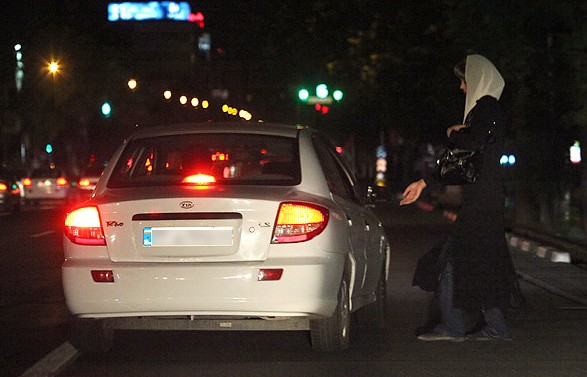
Instances of slavery and the legal structure in Iran / Hossein Raeesi
This is a caption.
Hossein Raeisi
Indeed, the history of slavery in the world does not need explanation or proof, and other esteemed writers in this issue of the peace line also present various aspects of it. Therefore, in this writing, we only focus on some obvious and hidden examples of it in our own society, Iran, and let us not forget where we stand in history and find a way to eliminate its various problems.
The term slavery carries such a heavy and shameful historical burden that its traditional forms hinder our understanding of existing forms of slavery around us. In this writing, we attempt to shed light on the slavery present in our surroundings.
Although the use of human integrity for sexual and economic exploitation is not limited to specific terms, the dominant terms in this literary circle have solidified the concept of modern slavery, which, according to the author, understanding them can assist in defining and understanding legal rights. Work and worker, marriage and woman, high-income and low-income, sexual exploitation, migration, internal crises, and disabilities are some of the terms and phrases that demonstrate human exploitation in favor of certain classes and societies, against poor classes and societies. These examples are mentioned in some human rights documents, such as Article 4 of the Universal Declaration of Human Rights, Article 8 of the International Covenant on Civil and Political Rights, and Article 27 of the International Convention on the Rights of Persons with Disabilities. In the following, we will briefly examine the position of our legal system in dealing with these terms and, of course, organized crimes.
Work, labor, and servitude.

Although the prominent symbol of slavery has been the exploitation of labor, it should be noted that this has never been controlled in a proper manner and the exploitation of labor in both small and large scales is constantly being realized in various forms of modern or contemporary use of labor. There are numerous examples of this, the most regrettable being the fact that Iran has been turned (in the words of a friend) into a paradise for the wealthy and a hell for the poor. Despite the fact that slavery has been prohibited in Iran since the time of Reza Shah (Article 1 of the Abolition of Slavery Law in Iran, passed in 1307), and the Labor Law of Iran has attempted to eliminate clear forms of exploitation (Article 1 of the Labor Law which considers all forms of labor exploitation subject to this law), exceptions to this law on one hand, and a lack of will to enforce it precisely, have made it practically impossible to abolish modern forms of slavery. The umbrella of
Children and modern slavery.

The most dangerous threat that children face in Iran is the Iranian Constitution and Civil Law, especially Article 1210, which in the first part of all sections of the law, according to Article 4 of the Constitution, must be in accordance with Islam, and slavery and sexual exploitation are not prohibited in Islamic regulations. In the second part, the basis for defining childhood is based on Islamic regulations, with discrimination between girls and boys, and for both, the age of childhood is less than the global standards (15 full lunar years for boys and 9 full lunar years for girls). On the other hand, the basis for defining childhood is the gender of the child. In the Labor Law, an attempt has been made to eliminate this gender bias, but the umbrella of the Labor Law only covers official work and does not see non-official sectors and exceptions, and on the other hand, all forms of exploitation of children, especially girls, are not caused by work relationships. The traditional gender definition of
Forced marriage or planned marriage.

The laws governing marriage do not transform the traditional cultural aspects of society: First, because the nature of marriage in today’s society is considered an Islamic exchange contract, in which the woman is exchanged for sexual gratification by one of the parties (the contracting party) and the other party receives a dowry and alimony from the man. This method is most evident in temporary marriages (mut’ah) in Shia jurisprudence and in marriages during travel (nikah al-misyar) in Sunni jurisprudence. The provisions of the new Family Protection Law, especially articles 50 and 51, with the approval of articles 1041 and 1060 and other sections of the Civil Code in the marriage and divorce section, have set the marriage age for girls and boys at 13 and 15 respectively, and have prohibited marriage with foreigners without the permission of the government. In this way, women are treated as commodities subject to the marriage contract in all its forms, and as long
Secondly, marriages that take place with the decision of families in different circumstances, especially in marriages between relatives such as cousins, nieces, and other relatives – sometimes at a young age – and also the necessity of father’s involvement in the marriage of girls at all ages, have made it possible to plan and force some girls and boys into marriage. This happens due to the lack of real will from both parties, and in some cases, one party’s marriage becomes a form of slavery.
Sex workers
Whatever happens without the true consent of individuals or in emergency situations, is indeed a form of exploitation and modern slavery.
Poverty, social problems, and lack of proper support for vulnerable groups in society have turned some women into sexual workers. These individuals not only face various diseases, but may also resort to selling sex in normal circumstances. However, no matter how poverty-driven, this is a form of sexual exploitation. Some girls’ destinations are the Arab countries of the Persian Gulf, and within the country, from marginalized and poor areas to affluent areas and homes in the city. They turn to slavery to escape economic problems, but they do not receive legal protection against diseases and, of course, do not escape these conditions.
Modern economic problems of exploitation.
With the establishment of weak and resource-dependent governments, and the rise of religious classes and their direct and indirect exploitation of oil resources, a new affluent class has emerged in Iran that lacks moral values. The reliance of politics on ethics in Iranian society is so detrimental that it makes any corruption possible, as we have witnessed over the years with assassinations, political assassinations, and other forms of corruption. As a result, the decline of moral values and the corruption of religious values for this group, who only pretend to be religious (although religious ethics itself does not deny selfishness, especially through multiple and temporary marriages), makes all kinds of exploitation possible. Regardless of these values, with the emergence of new classes and the use of rent and power resources for large-scale economic corruption, to the misuse of bank facilities by taking advantage of public resources, such as deceiving people into using their properties as collateral or paying bribes to bankers and economic brokers, a significant portion of economic exploitation, along with other forms
Smuggling of drugs, goods, and currency and economic exploitation.
In the past years, we have witnessed numerous cases of “smuggling guarantee transportation” in various criminal cases, and I have represented several victims as their lawyer. For example, there are many women in prison or have been executed simply because of poverty or to fulfill their basic needs, they were forced to carry drugs on their bodies. These individuals are more likely to be exploited in the modern route of transporting valuable drugs from east to west of the country, as it is easier to pardon female drug prisoners and it is less likely for female anti-drug agents to be suspicious compared to men. Children and men who are facing financial problems and personal and social crises are also found in this category. The excessive use of drugs in major cities and the thriving market for this industry undoubtedly requires the employment of workers who come from marginalized communities and poor families. The regulations for fighting against drugs do not clearly address this issue and there is a huge difference between the owners and so-called lords of drugs and the drug-carry
The lack of stability in society has also made it possible for the widespread smuggling of goods and currency. For example, if we consider Aladdin Bazaar on Jomhuri Street as a destination for luxury mobile phones and have the opportunity to see behind the scenes, we will see how smugglers based in Dubai and Tehran exploit various men and women to transport their goods and only share a small portion of the profits with them. In case of loss, the carrier alone bears the burden. This issue includes not only the smuggling of medical supplies and hospital equipment, but also the smuggling of gold and currency, and the unstable economy falls victim to this type of exploitation. All workers in these sectors are at the service of small and large profit-seekers in this economic sector.
***
What has emerged above are parts of the misuse of power, law, economic resources, and traditional rights that have led to widespread corruption and enabled modern exploitation and oppression from within families and farms to government and non-governmental organizations. The repetition of these various forms of corruption reveals a lack of necessary will to combat all the new manifestations of this evil phenomenon. It is necessary to add that the will to react or not to various forms of corruption only presents a small portion of them. It is obvious that what has been stated here is just an example that I share with my dear readers to familiarize them with this subject and to develop the concept of exploitation. It is possible that with the development of this concept, we may find numerous other examples around us.
 Created By: Hossein Raeesi
 July 24, 2016
Tags
Child labor Hossein Raeisi Iranian laws Magazine number 63 Monthly Peace Line Magazine Narcotics Servitude You have a modern slave. ماهنامه خط صلح