


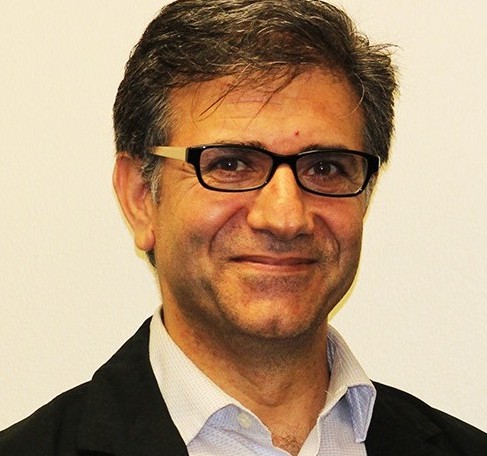
Civil institutions, the needs of society and the necessity of today / Hossein Raeisi
Undoubtedly, the complexity of social relationships and the diversity of individual and social needs have long emphasized the necessity of strengthening society. Without civil institutions, society is unable to meet all its needs, overcome all its problems, and establish public trust within itself.
The necessity of having social institutions has been emphasized by philosophers such as Hegel (1770-1831). According to this philosopher, “the family and civil society are the two main pillars of a rational and ideal state, and the realization of a rational state is not possible without passing through the moral life of the family and civil society.” He also believes that “the relationship between civil society and the state is an absolute relationship between the general and the particular, which, while having differences, also have commonalities that make the path of individuals towards the moral whole easier and teach them what stages they must go through and how to perfect themselves and move from individuality to joining a rational state.” In Hegel’s theory, civil society is a combination of classes and groups in which individuals come together based on their independent will and desire for some personal and individual interests; however, through interaction and communication with each other, they temporarily learn not to use these relationships for their personal benefit and to consider more
The current 100-year history in Iran, especially before and after the 1357 revolution and the failure to achieve democracy in society, has made it difficult to achieve a civil society in the country. Despite the difficulties, the necessity of it will never disappear. Totalitarian systems always hinder the realization of a vibrant and dynamic civil society; because in these types of systems, people’s participation and collective cooperation to achieve important social goals are not valued. Despite all of this, no government in the current society will be able to effectively govern without the public’s participation. In this regard, no matter how much effort is put into establishing civil institutions by the ruling authorities through strict and rigid laws, some institutions may not be able to come into existence; but this does not mean that they are not necessary.
“این عکس یک منظره زیبا از کوهستان است که در آن آسمان آبی و ابرهای سفید قرار گرفته اند.”
This photo is a beautiful landscape of a mountain where the blue sky and white clouds are placed.
Printing books related to women’s rights in Iran by Collection – 1378 – Photo from the archive of human rights activists in Iran.
Imagine that in the country, the issue of desertification is going to be addressed, and it is only possible to solve this major ecological problem with the participation of the people and civil institutions. As the vastness of the deserts is beyond the government’s capacity to afford the cost of human resources to increase vegetation cover in millions of hectares of desert areas. In this situation, only an organized civil society can mobilize people in a city or neighborhood to plant millions of trees in desert areas in just one day, to fight against desert expansion and the destruction of natural resources.
Consider this example for the change in other unjust conditions and the establishment of the idea of goodness and the provider of collective happiness in society for other matters. The government may see itself as the representative of society, but it does not realize the collective good and cannot promote it in society. In our current society, due to the independent nature of the government from the people, having a rational government according to Hegel’s interpretation or having a true republic according to Kant’s interpretation and achieving civil society has become very difficult. As a result, numerous social problems have also been placed in front of the government. This government will not be able to address social problems without the development of civil institutions. To achieve this, it is necessary for people to gain motivation and willingness to participate in the collective good. In a situation where the biggest banking corruptions occur in government-affiliated rent-seeking networks, the highest number of cases exist in the country’s judiciary; only a powerful police force can control the people through
During the 1960s, when I was a high school student, on several Fridays, I participated in a mass tree-planting event with all the other high school students in our city, at the invitation of the local natural resources department. We planted trees in areas surrounding our city that had turned into deserts. The large number of students and their quick movements to plant the saplings created a sense of hope and excitement in us, the youth of those days. The sight of us turning the dry desert into a green land is unforgettable to me.
This is a picture of a beautiful garden.
Distribution of Educational Brochures – 1387 – Photo from the archive of the Human Rights Activists Collection in Iran
For the aforementioned reasons, despite the fact that all people, if conditions permit, try to engage in public desertification, the involvement of people in this important matter and similar affairs requires coordination with coordinating institutions. However, extremist centralization, lack of mutual trust between government and people, oil-induced money and government’s disregard for the necessity of delegating many affairs to the people, not only did not increase desertification activities, but also people’s activities without government support have been destroyed by intimidation, accusations, and injecting seeds of pessimism among the people. Not too long ago, young members of the civil society in Marvdasht, Fars, spent some time in the mountains around Laristan, Fars, in the spring season to keep the pond animals alive, but from that same society, only a trace remains today.
Civil activities, especially after the controversial presidential election in June 2009, faced serious suppression in the country. Many members of civil society, like many others who had left the country in the past, were forced to leave and engage in civil activities abroad. This group of people use the opportunities provided by social networks, satellite and internet to carry out their activities. Therefore, it is essential to attract and encourage all people to cooperate with civil institutions and use public resources. For example, an Iranian-Canadian businessman is willing to spend a large amount of money to change a law that violates some citizens’ rights in Canada and proudly announces it on television, but does not spend any money publicly to change any laws in his home country. Some of these institutions sometimes approach the people and meet with major Iranian investors, but do not receive any assistance from this group of citizens. Therefore, the formation of collective good is not possible only with human resources of civil society, but with the use of all civil resources,
What has not happened in our country is gaining public trust; because the government always tries to have enough control over all affairs and manage all small and large matters, even economic and cultural ones. In this situation, it becomes independent from the services of civil society and keeps them at the level of small charities. In the post-reform era, especially after the 2009 domestic movement, the majority of government budgets are allocated to organizations such as Basij and resistance bases, and in these organizations, all matters are ordered and lack the idea of collective happiness. In addition, the government has sometimes and specifically in the late 1990s and early 2000s, established seemingly civil institutions that are actually government institutions (parallel civil institutions) to infiltrate and deviate or destroy their activities.
“این عکس یک منظره زیبا از کوهستان است که در آن آسمان آبی و ابرهای سفید پر از نور قرار دارند.”
This picture is a beautiful landscape of a mountain where the blue sky and white clouds are filled with light.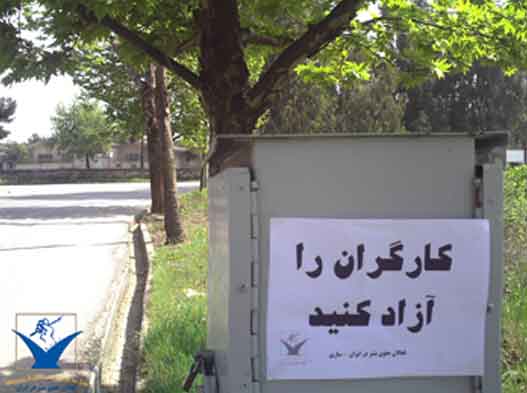
Street Activities of Gorgan Collection – 1384 – Photo from the Archive of Human Rights Activists in Iran.
Therefore, our historical horizon in the past hundred years in the civil arena has not been able to evoke public sentiments for collective good due to government interference, lack of public trust in society, and a lack of sense of belonging to the community for each individual (lack of democracy). Many civil institutions have been suppressed by the government and their forces have been forced to leave the country. In such circumstances, there is no solution for civil activity and the responsibility for the destruction or deviation of civil society falls on the government; because we are not faced with a government that has emerged from the realization of civil society.
Given the impossibility of achieving a civil society in current conditions, the vacuum caused by the lack of civil activity, or its weakness, cannot be eliminated in any way in society; because civil institutions have activities outside the government’s sphere and the government is in no way capable of doing them well. Instead of supporting civil institutions, the government, distrustful of civil society, has turned all civil activities into quasi-governmental through control and supervision of their establishment through the management of public places by law enforcement and governorates, and has made efforts to obstruct the growth of civil movements in society. For example, attributing civil society to foreign relations is a tactic of the government to escape forward, which has resulted from the weakness of the government and the lack of proper understanding of the necessity of civil activities in society.
This is a picture of a beautiful sunset over the ocean.
Street activities of the collection – Gorgan 1384 – Photo from the archive of human rights activists in Iran.
Civil activities outside the country are also divided into different categories, and in practice, all civil and political sectors are working towards a common goal of helping civil society within the country to create a platform for change in the civil-political sphere of the country. This is done in order to enable the return of civil forces, foster a sense of belonging to the community, and increase the sense of collective good in the country.
Among these, the human rights activists in Iran are one of the important examples of establishing a civil institution within the country that has faced severe suppression. This institution was founded in 1384 (2005) within the country and has been more active in the process of registration and following legal procedures. In December 2009, following the closure or, better to say, the death of many internal people’s organizations, which were clearly controlled by the Ahmadinejad government with a seemingly legal approach, this institution also faced severe pressure and suppression; to the extent that it gradually became necessary to tolerate severe suppression and even engage in secret civil activities. With the intensification of suppression, a part of the institution’s activities were transferred outside the country and its external activities continued with the aim of strengthening the internal civil society.
Other examples of civil activities can also be found outside the country, which are producing educational, scientific, or civic content for the country, in order to help increase public awareness in a heavily censored space.
A specific measure of this is that suppression does not destroy Iranian civil society and ultimately the idea of collective happiness will find its way in the civil path. For example, in my belief, without civil institutions that can have a healthy civil activity in society and be safe from government suppression, the possibility of increasing public participation in political affairs in its true sense will not be provided. The intensification of suppression of civil institutions after the 1388 movement was due to the fact that the forces of this movement were mainly formed within civil society and active civil institutions at that time.
What is important today is that civil institutions outside the country do not miss the opportunity to examine their weaknesses and always strive to review themselves so that the civil space can continue and not turn into a pseudo-civil or political space. By pseudo-civil or political, it is meant that despite the importance and need for all kinds of activities, a distinction should be made between political and non-civil matters, and that they do not continue their activities with non-civil motivations and without collective good intentions.
Today, international civil institutions have developed the concept of global citizenship through the expansion of the idea of universal goodness. Citizens of all countries are not indifferent to events and violations of human rights in all countries, such as violence, torture, human rights violations, and political rights, and can question authorities. The global community is not only made up of governments and political agendas, but also includes citizens of the world who are involved and responsible. What causes suffering for people in any part of the world is important to everyone, and paying attention to it is not limited to the idea of my country, my land, my religion, my people, and my city; all humans are partners and responsible for each other’s destiny, and the idea of citizenship of a country, tribe, group, or nation has changed to the idea of equal humanity, and the concept of human against human has gained value, and a global collective goodness has been born.
The text is not provided. Please provide the Farsi text for translation.
Collecting signatures to stop the execution of Farzad Kamangar – 1388 – Sweden – Photo from the archive of human rights activists in Iran.
In the end, civil activity in Iranian society is neither born today nor has the possibility of complete death, but there is the possibility of reducing public trust and sensitivity towards civil activity. Considering that the structure of civil activity has transformed in current times and has evolved from a religious to a civil structure, it is necessary to expand the idea of collective good with the efforts of all individuals who strive for a better social life for themselves and their fellow human beings. Therefore, it is possible to think, like institutions such as the Human Rights Activists Association in Iran, about improving civil activity and helping people to live better lives without succumbing to suppression and ridicule. In conclusion, the realization of a civil society is a necessity for a democratic society based on respect for the rights of all and is also in need of a civil society.
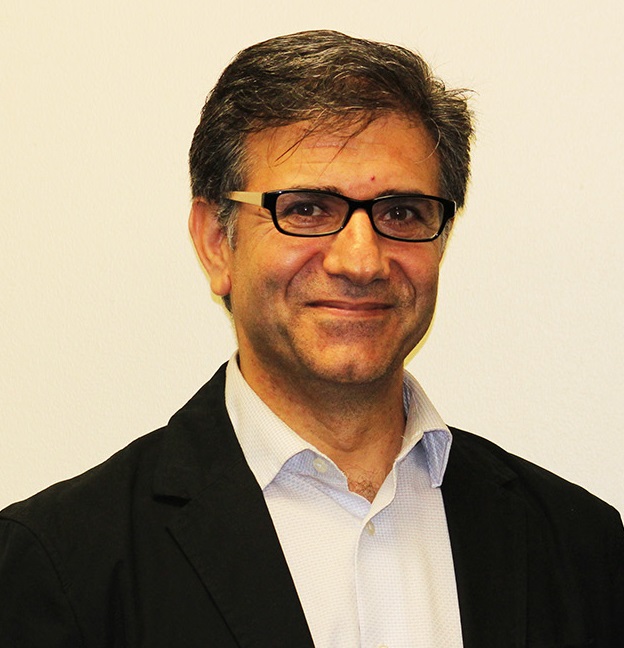 Created By: Hossein Raeesi
 March 10, 2016
Tags
Civil society Hossein Raeisi Monthly Peace Line Magazine The human rights activists group in Iran.