


The Incomplete Footprint of Women’s Sexual Reformation in Minab/ The Scent of Mozaffarian
On the occasion of February 6th, World Day of Action against Female Genital Mutilation.
This is a caption.
The scent of victory.
Minab is one of the eastern counties of Hormozgan province located in southern Iran. The main religion of the people in this county is Shia, while due to its proximity to Sirik county, some of the residents also follow the Sunni religion.
Hama Ahadi and colleagues conducted a research entitled “Prevalence and Awareness of Female Genital Mutilation among Women of Reproductive Age in Minab City” (1381) in the field of medical sciences and health services. In this descriptive-analytical study, 400 women aged 15 to 49 who visited health centers in Minab city were selected through non-probability sampling method based on the researcher’s goal. Necessary information was collected using a researcher-made questionnaire, measuring awareness and attitudes through semi-structured interviews, and also using an observation checklist. The data were analyzed using t-test, chi-square test, and one-way ANOVA.
The findings of this study show that the prevalence of “female genital mutilation” was 70%, with 4.87% of women having undergone type 1 FGM and 6.12% having undergone type 2 FGM. The average score of knowledge about reproductive health in the FGM group was 6.1 ± 1.2 out of 13, compared to 7.1 ± 0.5 out of 13 in the non-FGM group, and this difference was statistically significant (p < 0.001). The average score of attitude in the FGM group was 9.10 ± 5.36 out of 10, compared to 0.9 ± 7.47 out of 10 in the non-FGM group, and this difference was also statistically significant (p < 0.001). There was a significant positive correlation between knowledge and type of FGM, as well as between attitude and type of FGM
The result of this research
The weakness of awareness and attitude of the individuals under study highlights the necessity of educating the people in the region and the importance of health-care centers in increasing awareness and changing people’s attitudes.

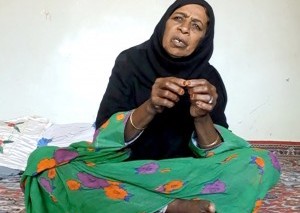
According to this research, the author traveled to several villages in this region to investigate the prevalence of female genital mutilation among Shia communities after 13 years. The most influential factor in promoting this tradition is the presence of local women known as “daieh” and the desire of mothers to have their daughters undergo the procedure. However, there are many inhibiting factors that can help stop this practice in certain areas, such as public awareness through media, doctors, teachers, and most importantly religious leaders.
Although female genital mutilation is still being practiced to varying degrees in the cities of Hormozgan province, some local midwives are no longer performing this procedure. In interviews with some midwives, they stated that about thirty years ago they were enthusiastic about performing this procedure, but with the presence of doctors and Shia clerics, it is no longer common. However, they still use their skills to provide care for pregnant mothers before childbirth.
Most midwives demonstrate the method of performing the operation with their hands and estimate the amount of clitoral cutting by the tip of their index finger. The prevalence of female circumcision among Sunni people is higher than Shia. In Sunni villages, most girls are still circumcised under the name of tradition. The highest rate of female circumcision in the province of Hormozgan is related to the island of Qeshm. In most villages on this island, there is at least one midwife who, with enough experience, circumcises girls at different ages.
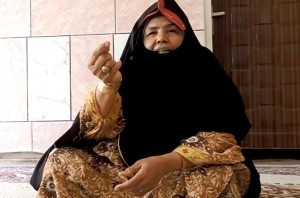
During my search, I found out that the wife of the driver, who were both Shia, has taken her 4-year-old daughter to her aunt twice to be circumcised. However, her aunt refused to perform the procedure both times because she believed that the girl’s clitoris is too small and she is not ready for it yet.
We went to a local midwife with my husband, who is a driver, and our young daughter. This midwife is old and still performs circumcision on girls. She believes that even though there is no mention of circumcision in the Quran, since boys are circumcised, girls should also be circumcised. Her tool for this procedure is a knife. She explains that she removes a small piece of skin from the clitoris and there is minimal bleeding. Then she cleans the area with alcohol-soaked cotton. The cut area will burn during urination for about three or four days. The reason for circumcising girls, according to the midwife, is so that they can become true Muslims and recite the Quran, and the food and water they touch will be considered halal. She has also circumcised her own daughters, saying “I first circumcise my own daughter, then the daughters of others, and then my granddaughters before the granddaughters of others
Most aunts have learned from their own mother or grandmother because in the past there were no doctors or physicians. The age of circumcision is different for girls and this difference depends on the size of the clitoris.
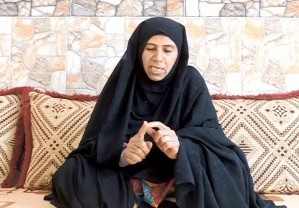
I ask the driver’s wife why she insists on having her daughter circumcised to such an extent. She explains that it is because this tradition has been practiced for a long time and she wants her daughter to be circumcised like herself. She also believes that this tradition prevents girls from engaging in promiscuous behavior. She says, “Just like giving a shot to a sick person, circumcising girls also requires trust. The person must be willing in order to be able to perform the procedure. All of my sisters and nieces have also been circumcised.”
On February 6th of every year, the World Day to End Female Genital Mutilation is observed. So far, 29 countries have been identified as still practicing this act. Iran and more than 10 other countries are not included in the global list by the World Health Organization and UNICEF. In some areas of western and southern Iran, girls continue to fall victim to genital mutilation. However, there are provisions in the Islamic Penal Code that can be used to prosecute those who falsely accuse girls of committing a crime.
Article 704: Eliminating the power of ejaculation or reproduction in men, or pregnancy in women, or eliminating the pleasure of sexual intercourse for women or men, leads to severe punishment.
Article 707: Complete elimination of the power of intercourse results in complete compensation.
Article 708: Elimination or permanent or temporary impairment of senses or other benefits such as touch, sleep, and monthly habits, as well as causing diseases such as trembling, thirst, hunger, fear and delusion, is considered a crime.
Article 449: “Arsh” is an unspecified amount of compensation that is not determined in the law. The court, taking into account the type and severity of the crime, its impact on the health of the victim, and the amount of damage caused, determines the amount of compensation by considering the specified compensation and consulting with an expert. The regulations for specified compensation apply to “Arsh”, unless otherwise specified in this law.
“این عکس یک پاییز زیباست”
This photo is a beautiful autumn.
Photos from the campaign to cancel the step-by-step incomplete sexual correction of women.
In Article 664 of the Islamic Penal Code approved in 1392, it is stated that: “Cutting off or destroying any part of a woman’s reproductive organs results in half of the full blood money (diyah) and cutting off a portion of it has the same proportion of blood money.” This ruling does not differentiate between virgins and non-virgins, minors and adults, or healthy and disabled individuals such as those who are sterile or impotent.
Retaqaa = a package and qarnaa = a bone in the vagina that prevents intimacy, and al-aflaa, aflaa, is a type of disease that occurs for a woman after childbirth in a place that is not usable, although some have taken aflaa with qarnaa, but these two are not the same.
 Created By: Rayeheh Mozafarian
 January 25, 2016
Tags
February 6th Female circumcision 2 Female sexual dysfunction International Day for the Elimination of Sexual Violence against Women Minab Monthly Magazine Issue 57 Monthly Peace Line Magazine The scent of saffron.