


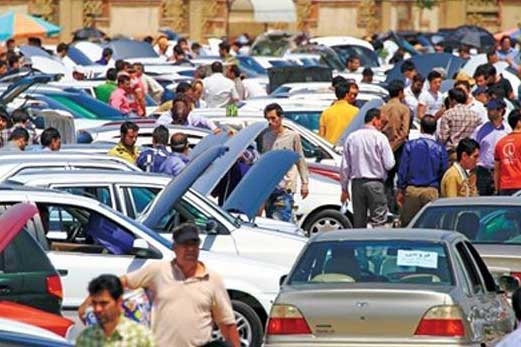
Major cities and the importance of cars/ Amir Razaqi
The text cannot be translated without the actual Farsi text. Please provide the Farsi text for an accurate translation.
Amir Razaqi
With the rapid expansion of cities in the country and their transformation into metropolises, and alongside this, the lack of growth in urban culture and the existence of cultural lag, today urban society is faced with an issue that, although considered an environmental problem and discussed in terms of technology, also has social and cultural roots.
Today, in major cities, polluted air is taking the lives of hundreds of citizens and causing the spread of diseases such as cancer, respiratory diseases, eye diseases, skin and hair diseases, and so on. Deaths and illnesses are a threat to the social health of the community. Every year, large amounts of money are spent on treating diseases caused by air pollution, which in turn leads to a decrease in financial power, purchasing power, and the elimination of goods from the community’s shopping basket. It could be said that air pollution is a factor in the spread of poverty in society.
The use of motor vehicles by certain classes and groups in society is one of the factors that contributes to social inequality, as those who do not have access to personal vehicles and rely on public transportation suffer from illness and damage that is imposed on them by the users of personal vehicles.
Uncontrolled urbanization and lack of urban management and planning in Iran, the car-centered nature of cities, and the lack of human-centeredness have led to the daily construction and expansion of road networks in cities and consequently an increase in personal vehicles. This has been a recurring issue for decades and only adds to the problems of urban transportation.
Urbanization, car-centricity, and policy-making and planning based on these factors have led to a change in the lifestyle and behavior of citizens. Urbanization and focus on cars have motorized society and limited the culture of walking and using clean means of transportation, such as bicycles.
As cities expand, our urban culture has not grown in the same proportion. Cars have become a status symbol, used to display financial capability and showcase wealth, and as a symbol of social status. Street racing is a reflection of the changing values in society. Car owners believe they have the right to use their car however they please, seeing it as a form of freedom and liberation because they have invested in it and purchased it, and can use it in any way they want.
In the use of vehicles by society, we witness a lack of social capital; we see less respect for citizens’ rights towards each other and less socialization of individuals in this regard. The consequence of this phenomenon can easily be observed in the type of driving and the disregard for traffic laws, etc.
Lack of proper management and planning in the construction of cities, the non-centralization of neighborhoods and districts, lack of necessary infrastructure, and inadequate public transportation have led to the spread of the culture of using motor vehicles. When a person cannot meet most of their basic needs in their own neighborhood and district, they are forced to use motor vehicles to travel long distances and provide for their basic needs.
Therefore, considering the mentioned factors, it is necessary for responsible institutions to pay special attention to society and cultural development, in addition to technological factors, and to develop a comprehensive plan for the progress of urban culture and citizen rights. It is important for officials to build trust with the community and strengthen public institutions in the field of transportation, and involve them in urban planning and shift the focus of urban transportation from vehicle-centered to human-centered.
 Created By: Amir Razaghi
 January 25, 2016
Tags
Air pollution Air pollution in Tehran Amir Razaqi Citizens' responsibility Monthly Magazine Issue 57 Monthly Peace Line Magazine