


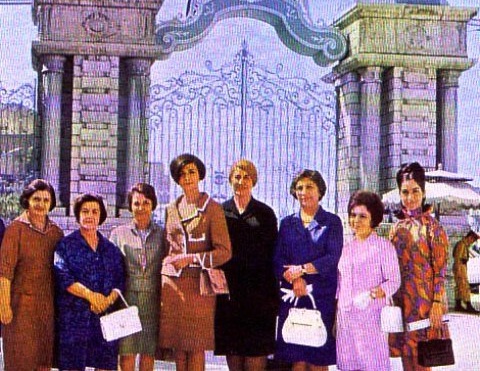
The history of women’s presence as representatives in the parliament in Iran / Mohammad Mohabi
After the victory of the Constitutional Revolution and the establishment of the first National Consultative Assembly, women, along with bankrupts, children, and the insane, were deprived of the right to vote and be elected.
During the Constitutional Revolution, even the very progressive views of the late Akhund Khorasani and Naini have a significant difference from today’s concepts. Those who were deprived of the right to choose and be chosen after the Constitutional Revolution, including prisoners, minors, women, and bankrupt individuals, were blamed for their own shortcomings, as no one talked about these issues during that time. According to them, it was natural for women to not have these rights, and even intellectuals like Seyyed Zia were against women’s civil participation. The reason for this was that there was no definition of rights; the right that the people have over the government and the right that the government has over the people.
Following this deprivation, they began to take action and started extensive efforts to assert their rights. In the 1341 month of Dey, when a 6-article plan known as the White Revolution was proposed by the Shah, women were granted the right to vote. In 1342, for the first time, six women were elected to the 21st National Council. From 1342 until now, women have been present in various periods of the National Council and the Islamic Council and have fulfilled their responsibilities as representatives of the Iranian nation and especially the women’s community. During the various periods of women’s entry into the council, numerous laws and regulations have been passed, amended, and reviewed, some of which were passed during the pre-revolutionary era and a large number of laws were passed after the revolution. In addition to issues related to society, the activities of elected women have mostly revolved around women’s problems and their solutions.
Women have had different situations before and after the Islamic Revolution. Before the revolution, during the modernization process adopted by the Pahlavi regime, some reforms were made in the status of women. Although these reforms brought some changes, they were insignificant, forced, and superficial. In the February 1979 revolution, women, along with other segments of society, participated and fought against the Pahlavi regime. However, after the victory of the revolution, their situation did not see significant progress, and in many areas, they faced setbacks and were suppressed by the new government’s ideology. In the post-revolution government, women’s role in the family is defined and their physiological roles and duties are emphasized. In the new constitution, women’s duty is recognized as raising educated individuals.
Valentine presents two models for revolutions in terms of gender and revolutions, from the perspective of women’s status: the patriarchal revolution (woman in the family) and the women’s liberation model (modernization). The model of the woman in the family or the patriarchal model emphasizes gender differences and the role of women in the family.
The status of women’s rights in Iran before the revolution.
During the reign of Reza Shah (Pahlavi I), there was no movement towards fulfilling women’s demands. However, during the rule of Mohammad Reza Shah (Pahlavi II), this issue was brought up; although it should be noted that the issue of women’s rights was never brought to the forefront of social movements during this time. Political elites and government officials (like many third world countries) considered all movements as a threat to the government, regardless of their motives, and practically did not allow any independent activities without government supervision.
However, the situation of women was of interest to the government and actions were taken towards political participation and legal reforms, as well as efforts to facilitate education and higher education for women. During this period, the most important action towards women’s political participation was granting them the right to vote and the right to be elected and to enter the parliament and cabinet. For example, until 1974, there were 18 female representatives in the parliament, 2 senators, 2 deputy ministers, and 28 female lawyers in Iran. In 1977, several hundred women were among the 5,000 members of the local councils. 5 female members were on the board of the Rastakhiz Party and 2 women were active in the political office of this party. International and national conferences had also become popular. Although the number of women in important political positions was small, it gradually increased and these women, like their male counterparts, worked under existing obligations and restrictions.
It must be said that women’s political activity was limited to participating in politics under the control of the government; in the absence of independent organizations and parties, women opposed to the government were attracted to opposing political parties. Many of these women were pursued, imprisoned, and tortured.
During the Pahlavi era, legal reforms were also made regarding laws related to women, including the passing of the Family Protection Law. This law, which was first passed in 1346 and then amended in 1354, reviewed and revised some laws that were based on Islamic jurisprudence. Although these reforms were partial and did not ensure equality between men and women, they did provide some improvements in women’s rights. These included limiting men’s ability to have multiple wives and creating barriers to the legal right given to men. Additionally, the legal age for marriage was increased to 15 in 1346 and then to 18 in 1354, which was another reform in favor of women. Facilitating education for girls and sending them to universities, as well as sending female students abroad, were also among the government’s efforts to improve women’s rights during the Pahlavi era.
“Female representatives in the Iranian parliament before the revolution.”
The first group of women in the 1342 parliamentary elections were elected as candidates of the “Congress of Free Women and Men” to the parliament.
In fact, some political historians believe that certain women were allowed to participate in both the Senate and the National Council, as long as they were in line with the policies of the ruling regime. Many of these women were considered to be the wives and relatives of influential men or military commanders.
The first female representative of the National Consultative Assembly was Farrokh Rou Parsa, who later became the first female minister of the Pahlavi government.
In terms of the number of female representatives in Parliament, it should be noted that until the 20th term of the National Consultative Assembly, which was dissolved by the Shah following the events of 1340 and land reforms, no female representatives were seen. However, from the 21st term, which began in 1342, until the last term of the National Consultative Assembly in 1357, female representatives found their way into Parliament. In the 21st term of the National Consultative Assembly, there were 6 female representatives, and in the 22nd term, there were 7. In the 23rd term, this number increased to 18, and in the 24th term, which has had the highest number of representatives so far, it reached 20.
In the 21st term of the National Council and in the year 46, with the efforts of female representatives, the Family Protection Law was approved. However, since the majority of female representatives were affiliated with the government, apart from a few amendments to the laws, no tangible progress can be seen.
After the revolution, women representatives in Iran.
After the revolution, women were present in the first term of the Islamic Consultative Assembly. According to the report of the Statistical Center of Iran, out of 231 representatives in the first term of the Islamic Consultative Assembly, only 4 were women. This number remained the same in the second term, increased to 5 in the third term, 11 in the fourth term, 14 in the fifth term, 11 in the sixth term, 12 in the seventh term, 8 in the eighth term, and 9 in the ninth term. In total, out of 2372 representatives in the nine terms of the Islamic Consultative Assembly, only 74 were women, which means that women held less than 3% of the seats in the Assembly.
In the first term, 4 female representatives named Azam Taleghani, Gohar Al-Shari’a Dastghaib, Maryam Behrouzi, and Atiye Sadiqi (wife of Mohammad Ali Rajai) were all active in the revolution. In the second term, the number of female representatives remained the same with the addition of Marzieh Hadidchi Dabagh replacing Taleghani in the first parliament. Behrouzi, Dastghaib, and Sadiqi were also re-elected for a second term. In the third term, the number of female representatives increased to 5. However, in these three terms, besides discussions about war, revolution, and women affected by war, mothers of martyrs, and wives of martyrs and their housing, no other topics were raised by female representatives. Of course, Azam Taleghani also spoke about issues such as motorcycle and car imports and social issues like addiction.
In the fourth term, unlike the previous three terms, representatives from cities other than Tehran also made it to the parliament. For example, Tabriz had two female representatives named Fakhrataj Amirshaghaghi and Fatemeh Homayoun Moghadam, and Akhtar Derakhshandeh from Kermanshah also made it to the parliament. Parvin Salimi, the representative from Isfahan, and Ghodsi Seyedi Alavi from Mashhad were also among the representatives who made it to the parliament in this term.
If the number of female representatives is a sign of their political participation, their role in the political arena is very insignificant and faint; but more important than the number of female representatives, especially when the issue of trust in women’s presence in political affairs is raised, is their performance. The parliament, as the main pillar of legislation in the country, is composed of representatives of the people. Clearly, anyone who enters the parliament as a representative must be the representative of all the people in their electoral district and not give up any effort to uphold their rights. Unfortunately, in recent years, we have seen female representatives in parliament support the passage of laws that not only did not serve the rights of women in society, but also caused trouble for them in some cases.
It must be said that, considering the legal structure of Iran after the revolution, the movement of women representatives in the parliament has not been very effective in reforming laws.
The presence of women in the presiding board of the first to ninth parliament has only happened once. Until the fifth parliament, due to the low number of women in the parliament, there were no female representatives in the presiding board. For the first time, Soheila Jelodarzadeh (representative of the fifth, sixth, and seventh parliament) became the secretary of the sixth parliament’s presiding board and attended all four sessions of this term. Female representatives in the parliament have had a greater presence in the Health and Treatment, Cultural, and Article 90 Commission; on the contrary, their presence has been less in commissions related to construction, housing and urban development, budget, energy, and economic affairs. Instances such as chaos, disruption, lack of etiquette in speaking, and many other incidents in the parliament have made it difficult for women to find their rightful place and have a less prominent role in commissions and boards. These circumstances have resulted in less active participation of women
Obstacles to the advancement of women’s share in parliament
It seems that since the establishment of the parliament and legislative institution in Iran, the potential of half of the population has not been properly utilized and the representation of women in parliament and legislation has always been limited. In fact, in the 9 terms of the Islamic Consultative Assembly, the women’s faction has not even been able to independently propose a bill that requires at least 15 signatures to be brought up in parliament.
Despite the increase in women’s social participation in recent years, their share of power in the government and even in parliamentary spaces has remained limited. In fact, we have witnessed a decrease in their presence in the parliament in recent periods. Now, only a few months remain until the end of the ninth term of the Islamic Consultative Assembly and election movements are gradually beginning.
There are several fundamental obstacles regarding the presence of women in parliament: first, unfortunately, women do not have the necessary power to be included in electoral lists, nor do they have equal economic capabilities as men in electoral competitions. In single-member cities, this inequality is undeniable (more than 70% of electoral districts in Iran have only one representative). This goes back to the patriarchal structure of political parties. This structure screams silently that political participation in our country is masculine. If we examine the structure of political parties in Iran, we can see this issue not only in numbers, but also in the leadership and executive positions of these parties. Some parties do not even have a member responsible for women’s issues. This shows that the majority of political parties in Iran do not see the necessity for women’s political participation. In elections, this issue is often raised as a slogan, but after the elections, it is no longer a priority. It is clear that with this situation, there will be no change
The second reason for the lack of structural growth in society for increasing women’s presence in positions of power is that with this attitude, nothing new will happen in future elections. So far, 9 parliaments have been formed in Iran after the revolution. Although our belief system explicitly emphasizes the role of women in fulfilling human, social, and political responsibilities, this has not been put into practice. According to the resolution of member countries of the Inter-Parliamentary Union, which was held in 1975, member countries have committed to increasing women’s political participation to a maximum of 25%. But why has this goal not been achieved? Why has there been no program or effort to implement this decision?
The third reason is also an attitude that is fundamentally opposed to the presence of women in power structures. This attitude believes that women should be limited to the home and family. Its basis is a one-sided, superficial, dogmatic and conservative interpretation of religion, and it has a very loud and influential platform. Of course, until these obstacles are removed and this path is not provided, we cannot expect the level of women’s political participation in Iran to increase.
 Created By: Mohammad Mohebi
 December 2, 2015
Tags
Mohammad Mohabbey Monthly Peace Line Magazine