


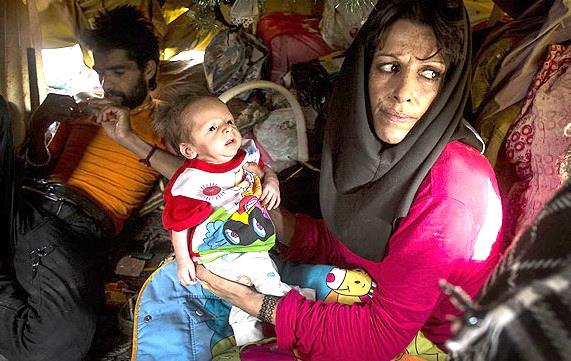
A tragedy called “buying and selling babies” / Samuel Bakhtiyari
The spread of news about buying and selling newborns in Iran is more than just a news. The issue of selling newborns around the hospitals in Iranian cities is so disturbing that even the pen cannot write about it. But this is also a terrible phenomenon that must be addressed. Newborns who are supposed to go home after being discharged from the hospital are being sold for a small amount of money, instead of being welcomed into their homes. This is a new bitter game for them to face.
These children are often born to mothers who don’t even have money in their pockets to pay for their hospital discharge. They sleep in cardboard boxes, are unmarried, have no birth certificates, are addicted, and their parents provide for their addiction by selling their newborns for a few days.
Recently, the head of the Social Committee of the Islamic City Council of Tehran emphasized on the buying and selling of infants around some hospitals in southern Tehran, stating that these children are sold for 100 to 200 thousand tomans due to various illnesses.
Fatemeh Daneshvar, referring to the buying and selling of infants in southern Tehran, stated: “Unfortunately, reports show that some women who are cardboard sleepers and Russian women go to some hospitals in the south and center of the city during childbirth and after giving birth, they sell their babies for 100 to 200 thousand tomans.”
A while ago, Qasem, one of the residents of the Cave Gate, where buying and selling babies is a normal thing, had answered this question whether he had ever seen the buying and selling of babies and children: “Yes, I have seen it. I saw it at the Cave Gate. The woman didn’t have money to give to the hospital for her baby or for her own expenses, so she sold her baby. For the hospital expenses, for her own expenses. She didn’t have money, so she sold her baby…”
In response to the question of whether he also sells his own child, Qasem had said: “Yes. Why wouldn’t I? I have expenses… I don’t have money. He goes to a good father and mother and ends up somewhere. Some children are taken abroad. Some children are taken to their own homes and looked after.”
These are the naked realities of the capital and major cities of Iran, which are confirmed not only by ordinary citizens, but also by officials.
Children with an uncertain fate, children who face numerous problems such as malnutrition, inadequate hygiene, and lack of education and upbringing. Children who are at risk of joining the army of street children. Since these children do not have the opportunity to learn and acquire social skills, they are not only exposed to many harms, but also create a potential for victimization of others.
One of the major dangers threatening the lives of street children is their involvement in criminal gangs. Since these children do not have the opportunity to receive proper mental and physical care, they are pushed towards these gangs to use them for distributing drugs and committing various crimes.
In addition to the mentioned problems, according to published reports, the majority of newborns are born with HIV. Ms. Daneshvar, a member of the Islamic City Council of Tehran, points out: “Newborns born to addicted mothers and cardboard box sleepers are purchased by various gangs, including drug addicts, who, due to their many illnesses and lack of proper care, do not have a long life.”
While the news of selling babies draws attention towards the unfortunate childhood with a dark future, the discussion among the mothers of these children is of great importance.
Khadijah Moghadam, a women’s rights activist and advocate for women’s economic empowerment, says: “Years ago, I had prepared a report on maternity wards where babies were left behind after being born. This means that after giving birth, the mothers would leave or be taken out of the maternity ward, and the management there would take over and hand the babies over to welfare services. What I mean is that these mothers have always been unintentionally pregnant, and because there is no legal option for abortion, the baby is born without a birth certificate and faces a thousand other problems due to discriminatory laws against women. The mother is then forced to leave the baby somewhere. Now, the economic pressure in society has reached a point where these babies are not taken to the maternity ward or orphanages, but are sold; this is truly a tragedy.”
The news indicates the critical conditions of street women and addicts across the country. However, each relevant organization blames another for the lack of action. Sajjadi-Nia, the commander of the law enforcement forces, stated regarding the number of these addicts: “This is not the first time this issue has been raised, but if we look back at the not-so-distant past, about four years ago, there were not even close to 100 women who were addicts, openly addicted and sleeping in cardboard boxes in Tehran’s parks. The total number of openly addicted people in Tehran was close to 5,000; after four years, I can say with certainty that we have 1,500 openly addicted women and more than 15,000 male addicts.”
Khadije Moghadam, a women’s rights activist living in Germany, believes that class and gender discrimination are the main causes of social issues and that social justice is the solution to these problems in the country. She states, “This issue must be addressed from its roots. In addition, mothers who are in this situation and facing multiple problems should be supported. NGOs working in this field should be strengthened, established, and allow women to have their own independent organizations to support vulnerable women.”
While children born to addicted mothers suffer from serious illnesses, the absence of the Ministry of Health and Medical Education in helping these women is noticeable. As Jalal Ghohari, a doctor and human rights activist living in Vienna, says, both the mother and the child should be under medical supervision before and after birth: “The issue is the spread of diseases that are truly devastating for a society; for example, AIDS and various types of hepatitis B and C, are not things that can easily be ignored. There should be a project and a program in place for these women to be tested, and if the virus is detected, necessary attention should be given during childbirth.”
Perhaps among responsible organizations, the role of law enforcement and welfare forces is more prominent than others.
Police encounters with such issues are often aggressive and security-oriented. This behavior has resulted in the opposite effect in most cases. In fact, street children are the main victims of criminal gangs.
Perhaps if the police dealt with the main factors of this phenomenon instead of dealing with the secondary factors, this phenomenon would not grow at such a rapid pace. It is necessary for law enforcement personnel, especially female police officers, to be familiar with the psychological issues of runaway girls and their subculture, which can also be effective in reducing this social problem.
Of course, the government’s role cannot be forgotten. The government can address issues such as livelihood, housing, employment, marriage, and improving capabilities by providing for the cost of living, solving social and economic problems, and effectively combating addiction and drug abuse to prevent the emergence of these issues.
Excessive strictness of the Welfare Organization towards the adoption policy is also a contributing factor. In a part of her speech, Fatemeh Daneshvar criticized the Welfare Organization for their strictness in handing over children and infants to prospective families and reported the daily sale of a child in Tehran.
Sources:
Hirana News Agency
Radio Tomorrow
Fars News Agency
 Created By: Samuel Bakhtiyari
 December 2, 2015
Tags
Monthly Peace Line Magazine ماهنامه خط صلح