


The impact of nuclear negotiations on the issue of human rights in Iran / Hossein Raeesi
“متن فارسی را به انگلیسی ترجمه کنید”
“Translate the Farsi text to English”
Hossein Raeisi
In order to address the human rights situation in Iran, it is necessary to have a precise understanding of human rights and their mechanisms, both with and without the current nuclear negotiations between Iran and Western countries. It is also essential to elevate political attention to human rights to legal and civil attention.
Without a doubt, one of the major challenges facing the rulers of Iran is the issue and status of human rights in the country. Despite the fact that political suspicions or behind-the-scenes deals can have an impact on the issue of human rights, human rights are not separate from the fundamental rights and legal system of society. However, just as legal mechanisms in countries are unable to function without political support, the mechanisms for enforcing human rights also have this dependency.
With careful consideration, we do not reduce our analysis of human rights to a political analysis, as human rights are not a result of political pressures or for the satisfaction of negotiating parties who do not have a direct interest in the realization or non-realization of human rights in Iran. Therefore, the success and benefit of citizenship will not be achieved. In this regard, we do not reduce our analysis of human rights to a political analysis and briefly examine this issue in three parts with legal reasoning. First, we look at the state of human rights in the legal sphere of Iran, then we analyze the impact of external political pressure on the implementation of human rights principles, and finally we consider the realization of human rights principles in the current legal system in Iranian society. In these three parts, we will also see the impact of nuclear negotiations on the issue of human rights.
a) The situation of human rights in the legal sphere of Iran.
Almost all current societies are governed through laws, and the Iranian society has also followed this path since the Constitutional Revolution. What is produced through the administration of society through laws, on one hand, cannot fully lead to the realization of the people’s will through the law without the necessary political and social conditions; on the other hand, the implementation of human rights principles and their addition to the constitution and then ordinary laws does not require a revolutionary action, but rather a civil foundation. The 36-year experience of the legal system in Iran has shown that legal policies, including criminal policies, are much more difficult and rely on a jurisprudential foundation in the executive branch. Therefore, all legislation does not take place in the context of understanding the needs of society; rather, in the judicial legislation structure and its implementation, interests and needs of the people are not the criteria, and the so-called divine limits are the focus in the four corners of judicial theology. With this situation, there is no place for
After World War II and the establishment of the United Nations, the idea of human rights began to gain momentum in the executive and legal bodies. Different countries and the global civil society came together to establish international and domestic legal structures in line with this concept. These structures, in the form of actions, led to the creation of the Universal Declaration of Human Rights and other international conventions.
Iran was one of the first countries to give a positive vote to the “Universal Declaration of Human Rights” adopted on December 10, 1948, and immediately after the adoption of the International Covenants on “Civil and Political Rights” and “Economic, Social and Cultural Rights” in 1966, they accepted them and passed them through their legislative bodies. In Article 9 of the Iranian Civil Code, adopted in 1928, the mechanism for implementing the government’s international obligations is set out in the domestic legal structure, stating: “The provisions of treaties concluded in accordance with the Constitution between the government of Iran and other countries shall have the force of law.”
According to the mentioned laws, the Iranian society before and after the 1979 revolution has not faced and does not face any obstacles in implementing the principles of human rights with a legal mechanism. However, although some laws close to human rights principles such as the law abolishing flogging punishment or the law of women’s suffrage and similar laws were passed and implemented in Iran before the revolution, most human rights principles regarding the elimination of torture, political freedoms and freedom of expression are not only not realized, but also accompanied by serious restrictions and suppression.
After the 1357 revolution and the establishment of the Islamic Republic, the law of abolishing the punishment of flogging is also invalidated and laws violating human rights, along with a culture of opposition to its principles, are more widely established in the political and legislative sphere.
What we have witnessed in Iran in the years following the adoption of the Universal Declaration of Human Rights is a movement in the social, cultural, political, and legal spheres regarding the implementation or violation of human rights. For example, the right to access a lawyer at all stages of a legal case, access to free legal services, and the abolition of corporal punishment are considered indicators and principles of human rights. In Iranian society, there has not been widespread discussion about these two issues in the public sphere regarding social, political, and legal demands. In various legislative bodies and governments that claim to be principled or close to the religious rule of the people, the abolition of corporal punishment and the right to access a lawyer without exception at all stages of legal cases are not raised among political and legal demands. The limitations in these two issues can be seen in the Iranian constitution, particularly in Article 4, which considers the application and generalization of all laws to be based on Shia jurisprudence.
At the same time, among the people, the necessity of paying attention to human principles and human rights, including these two issues, is not considered as an absolute principle. The legal structure does not teach people that having a lawyer is necessary; it also does not want to use the whip as a tool for implementing Islamic limits and direct suppression, which creates immediate pain. This platform still does not have a good and systematic approach towards improving and creating human sensitivity towards human suffering. Other human rights principles also face a similar fate to these two indicators.
As a result, without a change in the political structure, it will not be possible to improve human rights on one hand and increase civil demands on the other.
B) The impact of political pressures on human rights reforms in Iran.
Nuclear negotiations do not include any program or even a window for addressing human rights violations in Iran, and it is natural that they do not; because what is the basis for political negotiations are 5 specific resolutions of the United Nations Security Council that have led to extensive economic sanctions against Iran. Human rights are not mentioned in these resolutions, so there are no negotiations to address them. However, the political gains resulting from the lifting of sanctions can be used by major powers to pressure against not regulating or improving economic relations before human rights reforms. This is unlikely because there is global coordination to resolve the nuclear issue, but there is no such coordination to address human rights violations, not only in Iran, but in any country.
Therefore, one cannot be too pleased with international pressures to improve the human rights situation in Iran, and should not have such satisfaction. Because human rights violations are mainly carried out by important commercial partners of Western countries.
What can result in the lifting of economic sanctions and lead to movement and change in Iranian civil society is not unexpected. This change has no short-term prospects and will not be realized, and it will be accompanied by a repressive political and security environment. The continuation of the ideology of the Supreme Leader with various political, legislative, judicial, and military tools at its disposal, as well as the division of the Middle East into Shia and Sunni poles, along with the intensification of recent military developments in the region, shows that the lifting of sanctions will not have any result other than strengthening the repressive machine. As long as the Iranian government has access to one of the world’s largest oil resources and is one of the important markets for various goods with a population of around 80 million, oil lobbies and economic lobbies have no concern or knowledge about human rights. As a result, there is no serious external pressure to change the human rights situation.
What exists as the behavior of the United Nations and its affiliated organizations at the international level to pressure governments to improve human rights will not lead to the necessary pressure for improving human rights relations. The reason for the failure of these actions in the short and medium term is not due to three important reasons: first, the non-binding nature of decisions made by the General Assembly and the Human Rights Council of the United Nations; second, the lack of legal mechanisms in the Constitution and other laws in Iran, especially those governing the judicial structure; and third, the non-democratic nature of the minimum structure of the judiciary in the country.
In the event of global pressure through United Nations mechanisms, significant changes and stability cannot be expected. This is because, due to Iran’s constitutional commitment to the Twelver Shia jurisprudence, the punishment of flogging, which is defined and enforced for Islamic offenses such as adultery, homosexuality, and other illicit relationships, can never be abolished. It is also not possible to expect equality of rights between men and women, the expansion of public freedoms, and the freedom of religious minorities and the like.
C) Ensuring the principles of human rights within the scope of the current legal system.
Ensuring the principles of human rights in the legal structure of a country is dependent on two serious actions: first, legislation based on human rights principles, and then indigenous selection and transformation of global human rights principles into national laws that can be implemented at the community level.
Lifting sanctions by the United Nations and Western countries alone does not provide any essential tools for achieving a society based on respect for human rights principles.
Iranian society, and even the legal society, have become accustomed to laws based on a system of oppression. Even in university courses, all principles and texts of jurisprudence, which have legal applications, are taught and numerous books are written to analyze them. Without even paying attention to universal principles of human rights, or critically examining cases of human rights violations in jurisprudential methods and laws derived from them.
Despite all of this, the continuation of a system based on suppressing citizens’ rights, discrimination, and various inequalities has made the need for the realization of human rights for the people more evident than ever. As a result, demands for human rights have increased. Due to these increased demands, the rulers of Iran have no choice but to pay attention to human rights principles. This has led to Iran not outright denying human rights principles, but instead actively participating in the United Nations’ Third Committee on Human Rights and answering questions from civil society representatives and various countries, and even attempting to join the UN Human Rights Council. However, this behavior is not aimed at improving human rights within the country, but rather at reducing the impact of international mechanisms that create legal pressure, as a strategic measure, and the goal is to neutralize the effects of pressure from the minimum mechanisms of the United Nations.
With the above discussions, it can be said that reaching a conclusion in nuclear negotiations between Iran and the West in the short term and directly will not in any way lead to an improvement in the human rights situation in Iran.
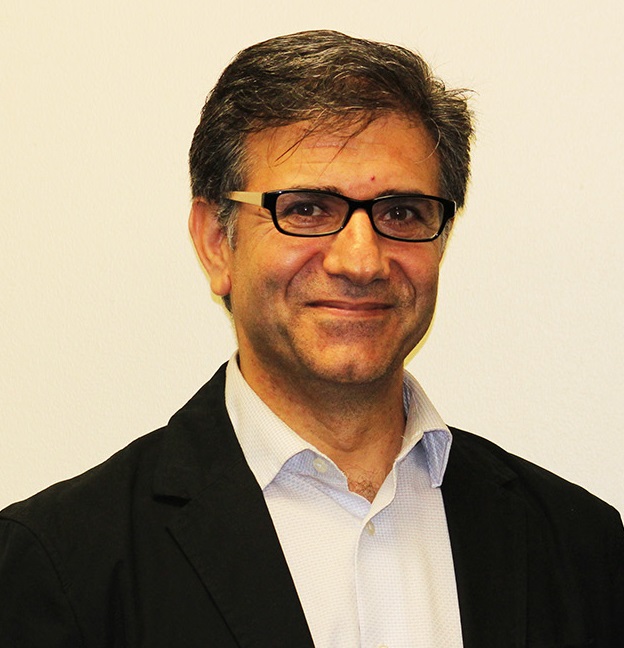 Created By: Hossein Raeesi
 June 27, 2015
Tags
Hossein Raeisi Monthly Peace Line Magazine