


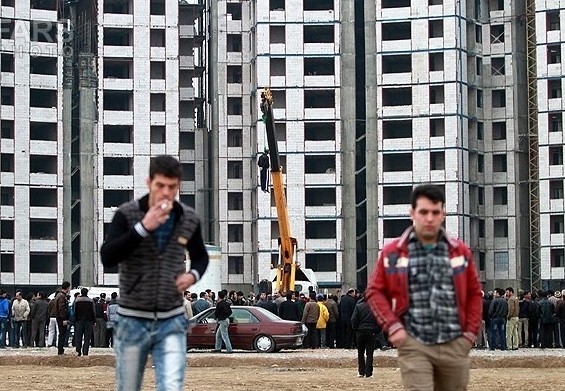
Execution; State Killing and the Flawed Cycle of Violence/ Witness Alavi
The death penalty, which involves taking away a person’s life, is an irreversible punishment. This irreversibility of the punishment, in situations where there is always a possibility of a mistake in judgment, turns it into the worst form of punishment. However, this is not the whole story. Neither the arguments of opponents of this execution end with this major and fundamental flaw, nor do the supporters rise to defend “legal murder” with empty hands.
In this short article, I try to address the issue of the death penalty by providing an overview of both the arguments for and against it. In connection with the issue of executing drug smugglers in Iran and considering the possibility of abolishing the death penalty for them, I will also discuss the negative aspects of this punishment and demonstrate its unfair, inhumane, and harmful nature.
Execution means killing someone by the order of the law or by the command of a power that has the authority of the law. It has a long history throughout human life. There has always been an interest or contract that, if violated, would result in punishment for the offender. Someone who has crossed the red line, the line of blood, must pay for it with their own blood. Execution is an easy and inexpensive punishment. An axe, a rope, a sword, or just a height and the will to kill. Of course, if possible, one could set fire or seek help from hungry lions.
The expression is easy and of course the terrifying subject is that with these lifeless words, one can easily write about an event that “although his hands are more fragile than absurdity,” it is the end of the road. One can not be afraid of death and face it with open eyes, but by doing so, death does not become humiliated, the executioner is afraid of the courage of the victim and such a confrontation humiliates him, but the “fulfilling truth” deals with open or closed eyes equally, death is not afraid. Death becomes a barrier between the executioner and the victim. Someone dies with courage and someone kills with humiliation, but death is still death, neither less nor more. The end.
The power of the ruler/forceful is exclusive to himself and he kills those who violate his rules. Because other methods of punishment are costly. But the issue is not just about cost, killing a guilty person also plants the seed of fear in the hearts of others. The clear message of this story is: the ruler; decisive, merciless and unforgiving, and it is better to bow down and submit to his rule than to face death.
But why does killing continue? Has the message not been conveyed effectively or is the perpetrator of the crime left with no other choice but to face death? And most importantly, sometimes the criminal is a proud leader who has chosen not to bow down and instead faces the laws in order to overthrow a new order at the cost of his life. The circumstances may be different, but the result is the same: the governing message has not been effective enough.
However, executions in various forms and for different reasons continue to persist. Why, while execution has not reduced the commission of crimes, is it still used as a punishment for many crimes in many countries around the world, including Iran, for drug-related offenses?
Execution supporters
In addition to the deterrent role mentioned, supporters of execution refer to the compensatory and security roles of the death penalty.
Inhibition role;
The upward trend in the rate of committing crimes that carry the death penalty indicates that more consideration should be given to the deterrent role of execution. In connection with the death penalty for buying, selling, and trafficking drugs, as mentioned earlier, either criminals are not aware that the punishment for the crime they commit is execution, or they have found loopholes in the judicial system and hope to take advantage of these loopholes and escape execution if caught, thus committing a crime punishable by death. Sometimes, the individual knows that their actions are illegal and there is a possibility of being caught and executed, but this knowledge does not have any effect on their criminal behavior. This third point, in my opinion, is the key.
The point is that although punishment in any form is a deterrent and fear of punishment, whatever it may be, prevents many actions from being carried out, but the deterrent effect of punishment is not always effective and does not necessarily have a correct meaning on its own. The deterrent effect of punishment will only have the maximum desired effect when it is reinforced by other inhibiting factors. Other inhibiting factors must exist in the social and economic system of society, and when these factors are absent or not functioning properly, it cannot be expected that the rate of crime will decrease with the punishment of the criminal. Minimum social security, free healthcare and education, access to employment and guarantee of minimum wages for a dignified life are some of the factors that to a large extent prevent an individual from committing a crime for the sake of filling their stomach or satisfying their temporary desire for wealth.
In all the years after the revolution of Bahman 57, the tendency towards drug consumption has increased every year and as a result, its trade has also flourished. Part of the thriving drug market is related to the inefficient education system, corrupt economic system, sick social and political system, and poverty and unemployment in society. As long as the demand for drugs is not controlled by improving living standards and creating employment, this profitable trade will continue to thrive by attracting some of the same frustrated job seekers, and this vicious cycle will continue to harm the most vulnerable segments of society.
The Gibranian role;
Although the concept of retribution or revenge for execution is generally related to intentional murder and is not directly relevant to our discussion of drug trafficking, a brief mention of it is necessary. According to this principle, it is claimed that by taking the life of someone who has taken the life of another, we are compensating for the right that was lost from the first victim through this second murder.
This argument is flawed because ultimately, execution for murder, which is called retribution in Islam, can cause further distress for the surviving family members who may only find peace by killing the murderer, but the life of the first victim cannot be brought back by executing the killer. Retribution does not bring justice, as the person who is dead cannot be brought back to life. The only result of retribution is the reinforcement of violence in society and legitimizing the law of “an eye for an eye”.
Security pattern;
In explaining the role of security, it has been said that as a result of executing dangerous killers or criminals who have been sentenced to death, society becomes safer and cleaner. This argument also has its roots, because although killers may commit murder again if they are alive, the only way to prevent them from committing murder again is not to kill them. It is possible to keep a killer who is afraid of committing another crime forever in prison, and society must pay the cost of keeping them in prison. Because a criminal is ultimately a product of society and social relationships, and society must pay the cost of its actions and products.
The same argument applies to other criminals as well. By killing a drug trafficker, another person immediately takes their place due to the social and economic conditions. The reason for drug trafficking is not the lack of danger in this activity, but by killing a trafficker, we do not make it more dangerous. Killing a trafficker does not make a society with high demand for drugs any safer. The result of continuing this trend is only an increase in the line of those who should be executed for drug trafficking. The statistics of executions in this regard and the reality of Iranian society support this claim.
Opponents of execution
Opponents of execution, in addition to emphasizing the public aspects of the inefficiency of the death penalty, which were mentioned above, also focus heavily on the individual rights of the victim in the issue of execution. One of the reasons for this connection is the painful and brutal nature of the death penalty. In a conscious and premeditated decision, society takes the life of one of its citizens, inflicting the highest possible pain upon them. It is an irreversible punishment in a situation where there is always the possibility of error in police calculations and tampering with evidence.
Opponents of execution always suggest alternative forms of punishment. The issue of opponents of execution is never the principle of punishing criminals. The main issue is the method of implementing punishment and the punishment that is determined.
In summary, opponents of execution are against killing, regardless of who is being executed and for what reason. They argue that the death penalty is, in fact, a violation of fundamental human rights (Articles 3 and 5 of the Universal Declaration of Human Rights). They are also against execution because they see it as a cruel punishment that inflicts great mental and emotional suffering on the condemned, from the time of sentencing until the execution, a form of torture.
The death penalty also provides the opportunity for improvement and true reparation for the criminal, who, no matter the reason for committing the crime, is still a human being and deserves a chance for change, reform, and being different.
Execution in the world
Currently, in 58 countries, the death penalty is still being issued and carried out for various crimes. In 9 countries, this sentence is only issued for murder and only in specific cases. In 35 countries, although the death penalty is still legally in place, it has not been issued for any criminal in over ten years. In 106 countries, the death penalty has been completely abolished from their laws, and no criminal, regardless of the type of crime committed, is sentenced to death.
Execution in Iran
The execution rate in Iran is high and based on the overall number of executions per year, we can say that almost every day, we witness two cases of executions being carried out. Executions, using ruthless methods and for political and religious reasons, have made Iran an exceptional country in this regard. Iran is exceptional in the world, because in Iran, people are executed for committing acts that are not considered criminal in many other countries.
Some cases such as extramarital sexual relations for married men and women, changing religion, male homosexuality for the first time and female homosexuality for the third time, and drinking alcoholic beverages for the third time in Iran can lead to the issuance of a death sentence. I would like to remind you that none of these cases are considered a crime in many countries around the world.
Execution in Iran is also a political act, as the courts are heavily influenced by the political climate of the society. Judges have close relationships with security officials and it is these officials who dictate their desired sentences to the judges, even in cases of political prisoners. As a result, Iran violates Article 6 of the International Covenant on Civil and Political Rights, to which it is a signatory, and is among the few countries that issue and carry out death sentences for political activities and different religious beliefs.
The abolition of the death penalty for drug traffickers is a subject that is scheduled to be discussed and examined among members of the United Nations in 2016, and if agreed upon, it will be accepted and implemented as a principle by the United Nations. The Iranian government has repeatedly expressed its opposition to the removal of the death penalty for drug traffickers during various positions.
In official announcements, the execution of over 2,000 cases related to drug crimes has been confirmed. The Iranian Minister of Foreign Affairs has also defended the executions for drug trafficking in an interview with BBC and has praised Iran’s efforts in combating the issue of drugs.
But does executing drug smugglers really have any place of pride as a solution to the drug problem? In my opinion, considering the lack of reduction in drug consumption and the increase in drug trafficking, there is not much room for pride in legally killing humans for drug-related crimes. The economic and social factors that lead to an increase in drug-related crimes still exist in society and it cannot be expected that the problem will be solved through punitive measures.
But not all news is bad. Sometimes a faint light can be seen at the end of a dark tunnel, and this itself gives hope. The spokesperson for the Legal and Judicial Commission of the Iranian Parliament, referring to the Criminal Procedure Law which will be implemented from July of this year (2015), had announced a reduction in punishment for drug-related crimes in this law. On the other hand, according to IRNA, recently Mohammad Javad Larijani, the Secretary of the Human Rights Headquarters of the Judiciary, had announced the possibility of changing the laws related to the execution of drug traffickers. However, it is said that the proposed bill by the Human Rights Headquarters has not yet been presented to the Parliament.
It is hoped that the proposed bill by this committee includes suggestions for reducing the death penalty for drug offenders. This reduction will be met with great reception and gives hope that gradually, alternative punishments will take precedence over the high number of executions in this area.
 Created By: Admin
 April 25, 2015
Tags
Execution Magazine number 48 Monthly Peace Line Magazine Narcotics Promotion of violence Right to life Shahed Alavi Violence