


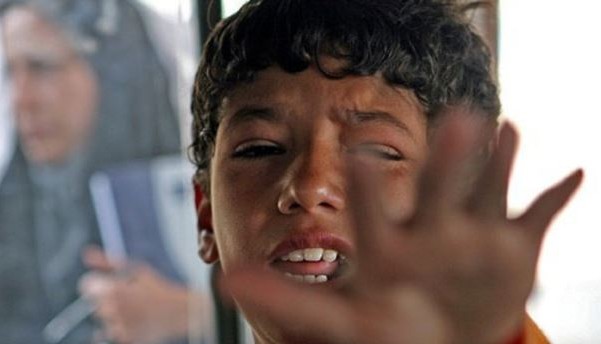
“Hidden AIDS and lack of sexual education in schools/ Mohammad Habibi”
Like previous years, this year too, numerous news about education and schools in Iran were published on news agencies’ telegrams and caught the attention of experts. However, a bitter and shocking news that was expected to attract more attention, was soon removed from the media’s attention circle due to the efforts of education officials to cover it up.
On the 19th of Ordibehesht month, a 33-year-old man, the caretaker of a boys’ elementary school in the Tehran University campus, was arrested on charges of sexual harassment and abuse of one of the students. The parents of the mentioned student had stated in their complaint to the court that they had noticed a change in their son’s behavior: “Our son is an elementary school student. For a few days, his behavior had changed. We became suspicious of this change and after talking to our son, we realized that he had been harassed and abused by the school caretaker.” After some time, it became clear that the issue did not end with just one student. Following the arrest of the caretaker, other parents also filed complaints to the court and some even turned to the Association for the Protection of Children’s Rights and the Ministry of Education. It was then that more cases of child sexual abuse by this 30-year-old caretaker were exposed. And
Although cases of sexual abuse against children in educational environments are not uncommon and limited to schools in Iran, there are two important points that stand out in this shocking news. The first is the type of response from educational authorities to the tragedy that has occurred, and the second is the type of response from student children when faced with inappropriate behavior from the school supervisor, which speaks to another major problem in the country’s educational structure, the lack of appropriate sexual education in schools. So much so that the victimized children were not even equipped with the most basic education on safeguarding their own privacy. One of the members of the legal committee of the Association for the Protection of Children’s Rights, who has spoken with students from this elementary school, describes the students’ reaction to the supervisor’s inappropriate actions as follows: “We have talked to some of these children. They say they have seen some of their classmates being abused by the school supervisor in a part of the school, but because these children did not know
This is while in industrialized countries such as Germany, students are usually familiar with these issues from around the age of ten and schools are responsible for the main sexual education of students. In these countries, efforts are made to raise awareness and sensitivity towards these issues through open discussions in society, while also increasing a child’s ability to defend themselves against danger. In fact, in these countries, schools and formal education play a key role in shaping the individual’s character and preparing them for society. According to scientific definitions, providing knowledge in life skills is one of the duties and goals of educational systems worldwide, and teaching sexual issues to children and adolescents is one of the most important aspects of this knowledge. However, unfortunately, due to cultural and social problems on one hand, and the inefficiency of the educational system on the other hand, there is no news of such education in schools in Iran. In addition, the response of responsible authorities in cases such as the tragedy of the elementary school in Shahrak
On the other hand, while there should be counselors in schools for students to turn to when they have problems, there are no counselors for children in elementary schools. Despite all the shortcomings and deficiencies, there is a reluctance to cooperate with civil activists and non-governmental organizations in such matters. According to education officials, there is no place for teaching sexual issues in schools. According to the deputy for education and cultural affairs of the Minister of Education in the Rouhani government, “In Iran, we cannot include sexual issues in textbooks or teach them directly to students. Instead, we should think about educating the families of students.” He justifies this approach to teaching sexual issues in education and says, “Look! Our country is the Islamic Republic of Iran; it is neither Western nor European. In a thousand places, they claim to teach things that we teach in schools. For example, the research organization came to the field a while ago to teach about AIDS prevention and immediately many people from different places raised their
This is while according to official statistics, we witness an increase in the rate of sexual relationships among students every year. The Research Center of the Parliament presented alarming statistics in this regard in its latest report this year. The center, in its report, announced the results of a study on 141,555 students, according to which 17.5% of students were homosexual and 74% had sexual relationships with the opposite gender. According to this study, 80% of girls surveyed in several girls’ high schools in Tehran said they had experienced a relationship with the opposite gender. This report also indicates a decrease in the age of puberty to 15 years. On the other hand, the Deputy for Youth Affairs of the Ministry of Sports and Youth had also stated on April 30th of this year that according to reports from the Ministry of Education, 40% of students start having relationships with the opposite gender at the age of 14.
Presenting such alarming statistics in the absence of sexual education in schools, is a sign of another horrific event. In such circumstances, the growth and spread of sexually transmitted diseases, including AIDS, among students is not unexpected. According to experts, the pattern of HIV transmission in Iran has shifted towards sexual relationships in recent years. According to UNICEF, the awareness rate of AIDS in schools in Iran is less than 20%. According to the head of UNICEF office in Iran, “Based on a study conducted by the Ministry of Health in 2010, only 16% of adolescent girls and 20% of adolescent boys are aware of the modes of HIV transmission. Therefore, 80% of the youth in Iran are unaware of the ways HIV can be transmitted.” These statistics, which are apparently government statistics, show that the future generation of Iranians lacks knowledge for preventing AIDS. This is despite all the global warnings in the past year or two to protect children and adolescents from AIDS.
On the other hand, although statistics show that 24% of working and street children have never attended school and only 34% of them are currently enrolled in education, research shows that one of the reasons for the high prevalence of HIV among these children is the lack of relevant education in the Iranian education system. The head of the AIDS Research Center in Iran says, “Most working and street children are infected with HIV due to sexual abuse, and among older children, addiction is another way of transmitting the virus.” (5)
Regarding street children, Dr. Khosro Mansourian, founder of a society for the support and assistance of social victims, recently presented alarming statistics in an interview with the media: “The rate of HIV infection among street children is over 40%.” This statistic was previously announced as 5% by the Minister of Health.
While experts believe that lack of awareness and knowledge, among other factors, is one of the main reasons for adolescents’ susceptibility to AIDS, the Iranian education system lacks the courage to address such critical issues that are relevant to the present and future of young people. If schools do not address these issues, there is no other way to approach them scientifically and with an open, critical, and distant perspective. As a result, it seems that in such circumstances, the danger of AIDS is lurking for many students.
Sources:
Official confirmation of the school supervisor’s assault on 6 students in Tehran, Entekhab website, June 10, 2014.
2- Violation of students, in the absence of education and hidden from public opinion, Deutsche Welle, June 11, 2014.
When 80% of Iranian teenagers do not know what AIDS is, the news website Khabar Online, December 19, 2013.
4- Statistics from the Research Center of the Iranian Parliament on Homosexuality in Schools, Radio Farda, August 8, 2014.
The main cause of children’s HIV infection in Iran is drug abuse, ISNA, September 19, 2014.
6- The rate of AIDS prevalence is higher than the inflation and housing rates, News Online website, December 1, 2013.
 Created By: Mohammad Habibi
 January 23, 2015
Tags
AIDS Magazine number 45 Mohammad Habibi Monthly Peace Line Magazine Sex education in schools ماهنامه خط صلح