


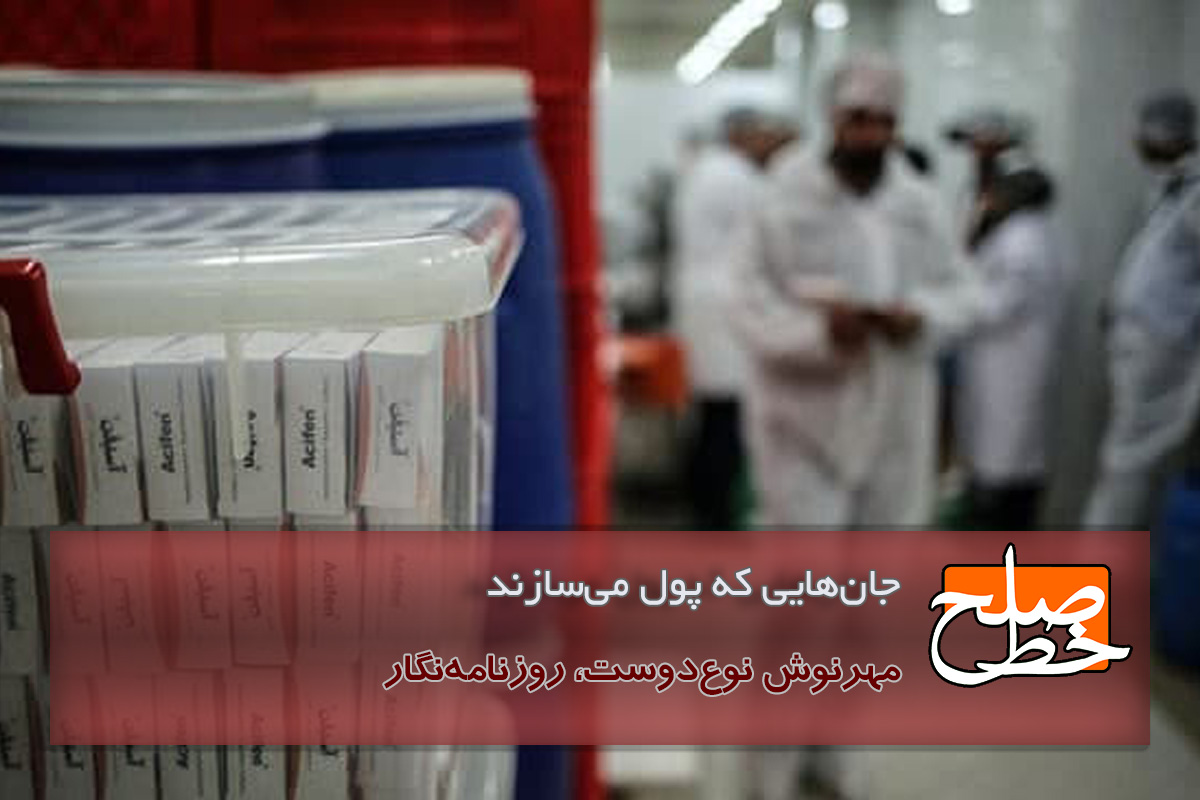
Souls That Make Money; A Field Report on the Process of Treating Corona in Iran / Mehrnoush Noudoost
The Corona vaccine arrived late in Iran under the shadow of the Islamic Republic, and the fifth wave was more severe than previous waves, engulfing the entire country in less than a month. However, apart from negligence in vaccination, another issue that the government plays a role in exacerbating is the treatment of Corona. The process of treating Corona in Iran, disregarding domestic and international protocols and under the influence of the pharmaceutical mafia, has become complicated and difficult for patients. Each doctor and hospital has their own approach and based on personal experience, prescribes treatment for the patient, which sometimes leads to their condition worsening. This report is a firsthand and field experience of the treatment process for three critically ill Corona patients.
The first five days
The first patient is a forty-seven-year-old woman who on the first day, with symptoms of fever, sore throat, and cough, went to a general practitioner and received medications of “Naproxen” and “Diphenhydramine” for body aches, sore throat, and cough, and “Acetaminophen” and “Azithromycin” as antipyretic and mucus-drying drugs. After three days, more severe symptoms and loss of appetite, loss of smell and taste, nausea, and weakness are added to the patient’s condition. The second patient is a sixty-year-old man and the third patient is a fifteen-year-old girl who have been in contact with the first patient and their symptoms begin on the third day of the first patient’s illness. The general practitioner prescribes the same prescription for the second patient, but in addition to that, the drug “Hydroxychloroquine” is also given to the third patient
Disease symptoms appear weak to moderate in the first three days for all three patients and intensify from the fourth day. With the worsening condition, the first patient goes to a government hospital near Vanak Square in Tehran on the fifth day, but after three hours of waiting for a general practitioner, they do not receive any results. Eventually, after repeated calls to various hospitals for a chest CT scan and a follow-up visit, they go to a private hospital on Motehari Street. The emergency physician at that hospital sees both the first and second patients. They diagnose mild lung inflammation and involvement for the first patient and prescribe a similar prescription for both of them with stronger medications. After going to the hospital, the patients start taking eight tablets of “Favipiravir” on the first day and three tablets on the following days, “Prednisolone” as a cortisone and anti-inflammatory, “Doxycycline” as an antibiotic, “Famotidine
Day Two
The symptoms of the third patient decrease from the fifth day of the illness. The fever subsides and their general condition improves, but the symptoms worsen in the other two patients. The second patient experiences respiratory inflammation and an increase in fever from the same day, but their general condition is better than the first patient. The first patient, who starts the eighth day, also experiences severe shortness of breath and a decrease in oxygen levels. After the respiratory emergency, the Tehran Emergency Department visits the first patient at their place of residence and due to the overcrowding and critical condition of hospitals, refrains from transferring the patient to a hospital. The emergency doctor suggests obtaining oxygen generators or oxygen capsules for the patients and initiating serum therapy for all three patients. After multiple follow-ups with private healthcare companies and contacting various hospitals, the general practitioner visits the patients at their homes again. The doctor prescribes serum, injectable vitamin C, injectable “dexamethasone,” and another injectable dry powder
The preparation of serum and oxygen generator marked the beginning of the crisis for these patients. Only five government pharmacies in Tehran provided serum to patients with a prescription from a specialist doctor. However, serum was abundantly available in the open market; all one needed was a connection in a private pharmacy to obtain a serum for 100 to 120 thousand tomans, in a discreet manner and away from the eyes of customers. This was also true for injectable vitamin C and vitamin B-complex. On the other hand, purchasing an oxygen generator cost around 100 million tomans. The large oxygen capsule, priced at 4 million tomans, was rare and required hours of waiting in long queues across the city to obtain. The only immediate option was to rent an oxygen generator, which cost 13 million tomans per month. It should be noted that these patients had the financial means and connections to obtain serum and an oxygen generator and were able to provide these facilities within a few hours.
On the next day, all three patients go to the clinic to see an infectious disease specialist. This doctor stops all medications and prescribes the use of an oxygen machine, serum therapy, and injectable vitamins and oral zinc. The fever of the first patient stops after receiving the serum and their condition improves from the tenth day of the illness. The symptoms of the third patient, except for weakness and fatigue, also stop after stopping the serum, but the second patient, after ten days of illness, still has a fever, chills, and severe shortness of breath, and their condition worsens. It should be noted that this patient had received a dose of the Sinopharm vaccine one month before being infected. Also, the wife and daughter refrained from taking and injecting corticosteroids, but the man had used all prescribed medications due to a history of allergies and asthma.
These three patients, in the first ten days of the illness, were severely confused and distressed due to various prescriptions from doctors and critical treatment conditions in the fifth wave, as well as the use of opinions from others who had experience with COVID-19. There was no specific and consistent protocol for dealing with the Delta variant, and instead of alleviating their concerns or providing a clear solution, multiple follow-ups only made them more anxious.
The third day
The second patient begins the twelfth day in a very critical condition, while two other patients have improved and are showing signs of recovery. He goes back to the infectious disease specialist and is sent for another CT scan of the lungs and blood tests. The process of getting the CT scan and test results takes another day, and on the thirteenth day, the patient is given a prescription for “Remdesivir” medication for a forty percent lung involvement, according to the infectious disease specialist. The patient, who is concerned about the side effects of this medication, goes to a pulmonary specialist after receiving the prescription. Eventually, after a few hours of delay in the crowded clinics, he is sent to the hospital for admission, as per the instructions of the pulmonary specialist, and the search for a hospital with an available bed begins again. A private hospital in western Tehran agrees to admit the patient with the condition that the cost of admission and treatment will be around two hundred million tomans. Finally,
Each emergency nurse was responsible for four to six patients. Patient visits were mostly done by interns and specialized doctors would come to the emergency room once or twice during their shift. Non-COVID patients, mostly with organ transplants, were kept alongside COVID patients. The emergency room was never quiet and many patients would use the heart rate monitor and oxygen saturation device. Sometimes, there would even be arguments over blankets between patients, their companions, and staff.
Coronavirus; Trade or Disease?
The events that have happened to these three patients are a handful of examples that raise many questions. Why has the treatment of COVID-19 become complicated in Iran? Why do healthcare workers or the healthcare system in Iran not follow a specific protocol? Why are healthcare workers more confused in dealing with this disease? Is there a unified protocol in place? If so, why is it not being used? Do doctors read the protocols? Are the protocols in Iran in line with international protocols and regularly updated? Is Iran using the experiences of other countries in treating COVID-19? The answers to these questions are different and conflicting for every person who becomes infected with COVID-19 in Iran. For example, one infectious disease specialist responds to the question of whether they prescribe medication according to the protocol by saying, “I am my own protocol.” Or a doctor gives their patient a prescription according to the protocol, but the patient refuses and insists on taking their own medications, but the experiences of patients show that some healthcare workers
The fifth wave of advertising for the injection of “Remdesivir” and the use of “Favipiravir” in the virtual space has begun. Many doctors and pharmacists have started promoting these drugs; even some doctors were prescribing this drug for a five percent commission. A few weeks later, news of a one billion euro expense from the National Development Fund for the treatment of COVID-19 emerged and it became clear that the purchased drugs must be used by patients in any way possible so that this expense can be returned to the fund or the pockets of the mafia by the people.
All of these cases increase the society’s lack of trust towards the government and the healthcare system. It is certain that some people did not trust the government before, but the coronavirus crisis caused the healthcare workers to be respected among the people and perhaps become a source of reliance for them. This reliance and trust have faded in the past two years and today, a group of people who have been affected by the coronavirus no longer trust the healthcare system, especially the doctors. In the recent crisis, many patients chose to stay at home and self-treat instead of trusting the healthcare system, which resulted in tragic consequences. Some patients either became victims of poverty while trying to obtain treatment for coronavirus, or they blindly trusted doctors who were profiting from this market.
The vaccination process has accelerated and the fifth wave has declined, but what remains are families in distress, exhausted people, and recovered patients with endless side effects from medication. Perhaps one day the end of COVID-19 will come in Iran, but the damages of mismanagement will continue for years.
 Created By: Mehrnoush Noudoust
 September 22, 2021
Tags
Corona Drug trade Iranian healthcare system Medical staff Mehrnoush is a type of friend. Monthly Peace Line Magazine Peace Line 125 ماهنامه خط صلح