


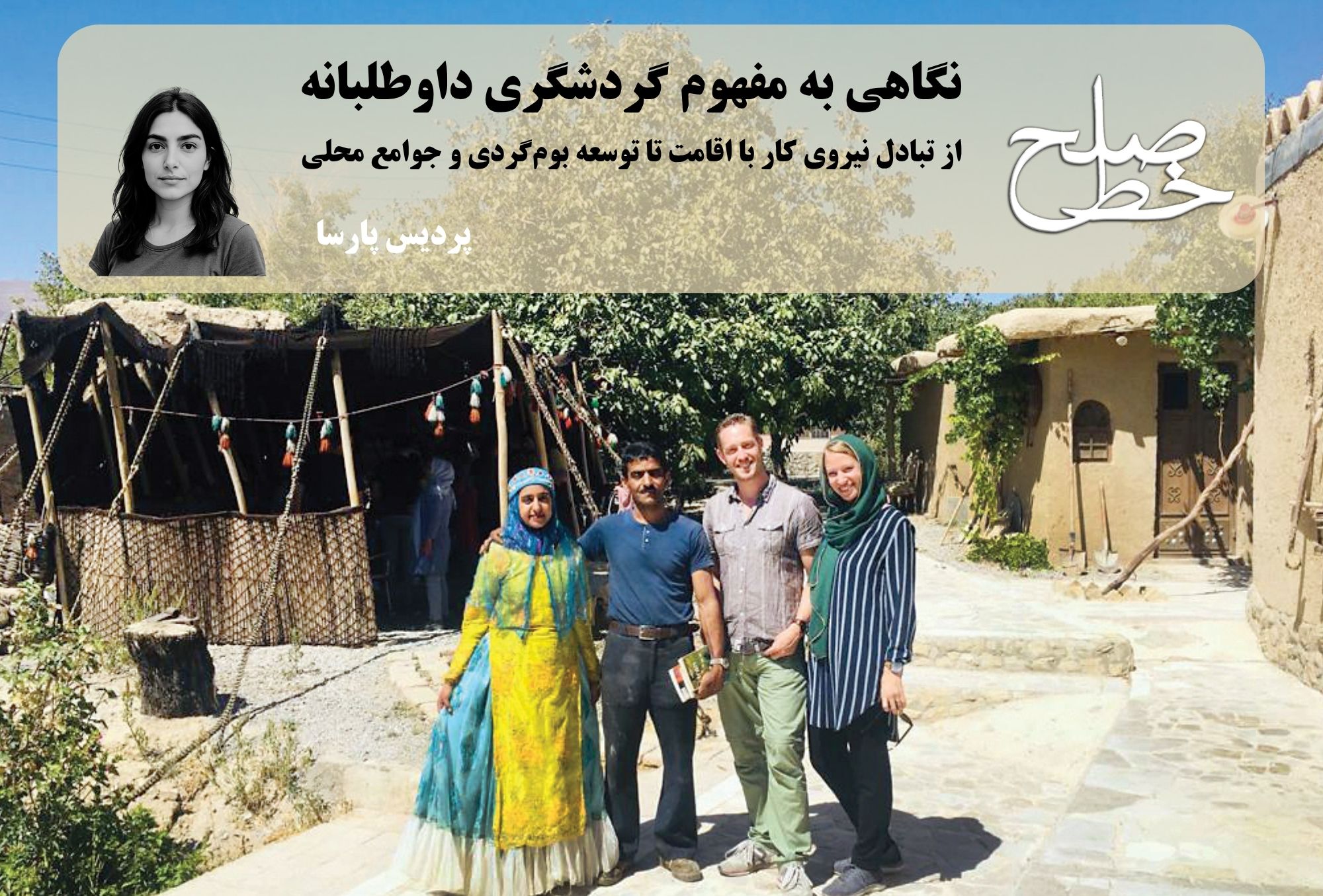
A look at the concept of Volunteer Tourism/Pardis Parsa
While traditional models of mass tourism are largely based on consumerism, a particular approach to volunteer tourism has expanded in recent decades, founded on non-monetary exchange.
Under this structured approach, rather than acting as a passive consumer and paying for accommodation and food, the tourist contributes part of their time, expertise, and physical or intellectual labor to the host community. In return for this participation, the traveler’s basic needs, such as accommodation and food, are provided free of charge by the host.
This modern model is not only a structural response to travelers’ economic needs during periods of global inflation, but has also attracted the attention of sociologists as an effective tool for cultural development, skills exchange, and the sustainability of small local businesses.
To better understand the current place of the barter economy in travel, we must return to the final decades of the twentieth century. The emergence of this concept in a structured and modern form has its roots in the early 1970s and the formation of the WWOOF movement (Worldwide Opportunities on Organic Farms) in the United Kingdom. At that historical juncture, when the destructive effects of mass tourism on the environment had become apparent, the movement introduced a simple yet revolutionary framework aimed at promoting sustainable agriculture: travelers received free accommodation and food in exchange for approximately 20 to 30 hours of work per week on farms.
With the beginning of the third millennium and the widespread penetration of the internet, this concept moved beyond the exclusive domain of farms. The emergence of digital platforms and global networks such as HelpX and later Workaway created an unprecedented revolution in the accessibility of this type of travel. These networks began operating as powerful facilitators, connecting the needs of small businesses, non-governmental organizations, hostels, and local families with travelers’ expertise and labor. In this way, volunteer tourism evolved from a marginal activity specific to environmental enthusiasts into a strategic choice for many travelers. Today, the types of work tourists can choose from also cover a very broad range, from teaching different languages to assisting with construction or managing social media.
A look at statistics from facilitator networks shows that volunteer tourism is no longer confined to any particular geography. For example, the Workaway platform alone has more than 50,000 active hosts in over 170 countries worldwide. This remarkable reach demonstrates that demand for this form of cultural and economic exchange has taken root across all continents. The primary participants in this global network are students, backpackers, and, most importantly, travel influencers (Digital Nomads), for whom travel is a way of life. This mechanism allows them to travel around the world for months and even years without worrying about exhausting their savings.
Constructive Consequences and Developmental Functions
Academic studies and field evidence in the sociology of tourism show that the model of exchanging labor for accommodation, provided that it is based on transparency and mutual respect, brings multifaceted positive consequences for both sides of this interaction:
- Cultural Immersion and the Creation of Social Capital:
The most important identity-related and social achievement of this type of tourism is facilitating intercultural communication at the deepest and most authentic level possible. Unlike ordinary tourists, who often stay in simulated and isolated spaces such as international hotels, volunteer tourists are directly integrated into the social structure and daily life of the destination. Living under the same roof, sharing meals with local people, and working side by side with them break down the thick walls of racial, linguistic, and cultural prejudice. This form of interaction organically teaches travelers the local language and customs and creates a powerful network of solidarity and social capital at the international level.
- Economic Sustainability:
Eliminating the substantial costs of hotels and restaurants transforms travel from a luxury commodity exclusive to affluent classes into an experience accessible to broader segments of society. On the other hand, this model is also an economically lifesaving solution for hosts. Many newly established local businesses, such as farmers or owners of small accommodations, do not have the budget to hire skilled workers. By accepting volunteers, they significantly reduce their operating costs and demonstrate greater resilience in the face of economic fluctuations and inflation.
- Exchange of Specialized Skills and Development of Local Capacities:
The presence of international volunteers opens a vital channel for transferring knowledge and expertise to remote areas. The arrival of a traveler with skills in digital marketing, programming, visual content production, or even modern agricultural techniques can transform the infrastructure of a rural community. In return, by learning practical local skills such as preparing traditional foods, wilderness survival techniques, or local handicrafts, volunteers contribute to their personal development, increase their self-confidence, and enrich their professional résumés.
The Manifestation of Volunteer Work in Iran’s Ecotourism Accommodation Ecosystem
In recent years, the concept of volunteer tourism based on the barter economy has gradually but steadily established its place within Iran’s tourism landscape. Within the country’s domestic ecosystem, this phenomenon has developed a structural and profound connection with the growing expansion of “ecotourism accommodations” in rural, desert, and forest regions.
Iran’s ecotourism accommodations, whose primary objectives are preserving local traditions and architecture and maintaining sustainable coexistence with nature, provide a highly suitable setting for accepting volunteers. The tourism economy has significant potential to empower local communities and alleviate poverty. In this context, ecotourism accommodations, as the principal hubs of this development, have an urgent need for motivated and skilled human resources.
Today, many young Iranians, travel influencers, photographers, and enthusiasts of budget travel establish direct contact with the managers of these accommodations and enter into mutually beneficial agreements. Since using international platforms such as Workaway to pay membership fees in foreign currency may involve challenges in Iran, many of these connections are established through various social media networks such as Instagram, Telegram, and Facebook, domestic intermediary platforms, or direct agreements.
Under this localized model, volunteers provide hosts with a variety of services, ranging from producing content for the accommodations’ Instagram pages and professionally photographing the premises to providing physical labor for restoring adobe buildings, helping in kitchens, and participating in the agricultural harvest season in villages. In exchange for these specialized or physical services, hosts reduce travelers’ travel expenses by providing accommodation and food.
This synergy not only compensates for shortages of capital and human resources in Iran’s rural and newly established tourism businesses, but also leads to the more standardized and appealing presentation of Iran’s lesser-known attractions online. In addition to ecotourism accommodations, active environmental projects in Iran have also benefited from this model. The participation of volunteer travelers in cleaning up natural areas, planting saplings in damaged regions, and educating local communities in exchange for accommodation in rural homes has, in addition to preserving Iran’s fragile ecosystems, increased awareness and concern among villagers themselves regarding the importance of protecting the natural resources surrounding them.
 Created By: Pardis Parsa
 August 23, 2026
Tags
Consumerism Development Ecotourism Social capital Tourist Volunteer tourism