


The lack of security and law enforcement in Iran today.

The pages of the history of various countries have shown that governments have used multiple mechanisms and diverse strategies to ensure their maximum interests and survival by exerting maximum power within their political borders. A quick review of history from the 18th century onwards reveals that, as Michel Foucault (1) demonstrated in 1968, one of these ways of securing maximum power by governments is through the use of “order, law, and security” as the “government paradigm.” This means that governments, without preventing disasters and crises and in fact by allowing them to occur, try to guide these disasters towards a direction that secures maximum interests for the government, under the name of security, through the implementation of order and law.
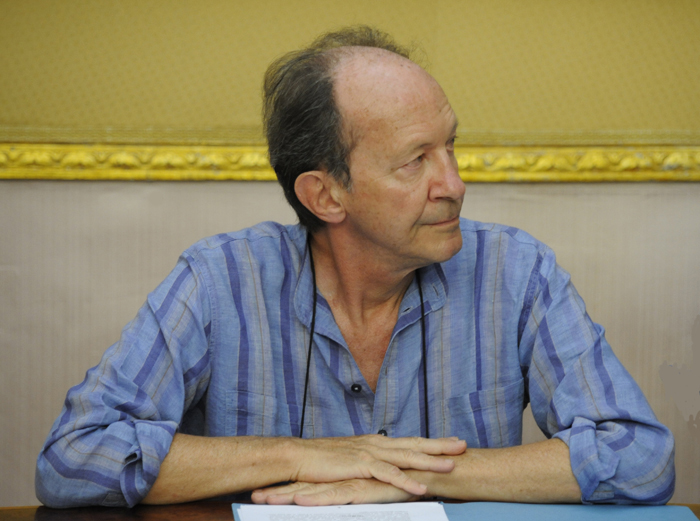
Another way of securing power and survival of governments, as Italian philosopher and writer Giorgio Agamben has pointed out, is through a process called “crisis building” or “securitization”. According to Agamben, “crisis building” is a process in which the government designs challenges related to “national security” and presents them as crises. Then, in order to deal with these crises, the government calls for the suspension of existing legal norms and the establishment of a state of exception. In fact, “crisis” is not a tangible concept or reality, but rather an analysis of a social reality or simply a political orientation, and therefore lacks objective conformity with a legal definition. Similarly, the state of exception resulting from a crisis is a state of legal absence that is in conflict and contradiction with the fundamental hierarchy of law and regulations in the constitution. In such a situation, which is the product of the securitization process, certain individuals are first labeled as
A part of the author’s research on the role of law and rights as a mechanism of suppression for the survival of the ruling power in Iran, which examines the relationship and proportionality of legal concepts, especially the concept of “security prisoner” with its manifestations, shows that many “security prisoners” in Iran are journalists, human rights defenders, civil activists, members of opposition political groups, and members of ethnic and religious minorities who are labeled as “crisis agents” or even just for their religious beliefs and practices that are not favorable to the government, and are charged with crimes related to “national security” by the judicial system. In other words, the government portrays their activities as a “crisis” and through state media, “nationalizes” them and then deprives them of their citizenship rights. In fact, the government is trying to create a legitimate justification to treat “security prisoners” in any way it wants in order to “resolve the security crisis” it has created.
Holding secret trials, denying access to lawyers, long periods of solitary confinement, and practices such as torture and coercion for forced confessions are all examples of the process of “national cleansing” that is part of a larger movement known as “humanity cleansing” (3) in Iranian prisons. This process, carried out by the ruling power, legitimizes the use of force in the absence of legal order and turns it into a “lawful” act. In fact, examining the process of “national cleansing” among “national security prisoners” who come from diverse backgrounds in terms of their religious, political, human rights, etc. affiliations reveals the presence of both overt and covert conflicts within the ruling political system in Iran, characterized by a coexistence of maximum “lawfulness” and “lawlessness”.
A look at the stages of litigation and the issued verdicts for many defendants of “national security” crimes shows that in the absence of legal order (4) in this security space, the judiciary has utilized a special type of legal literature, especially the “National Security Laws” (1) which have been expressed ambiguously, without precise definitions and specific examples, and (2) consider the use of fundamental rights such as freedom of expression, assembly, association, and freedom of thought and religion, which are protected by international laws, as crimes. These crimes include “conspiracy and collusion against national security”, “propaganda against the system”, “disrupting public order”, “membership in illegal groups”, and “participation in illegal gatherings”.
Therefore, the ruling system creates a security space between “law” and “absence of law” in which it establishes new laws with unlimited powers that it considers its rights in exceptional situations. These laws lack transparency and create ambiguity in the definitions of many legal concepts and their applications, giving the government maximum maneuverability for “managing in the absence of law” and exercising illegitimate power under the guise of “national security”.
There is a need to create a secure space by securing crimes attributed to many prisoners for the survival of the ruling power, to the extent that Mr. Mohammad Javad Larijani, Secretary of the Human Rights Headquarters of the Judiciary, has emphasized that there are no political prisoners in Iran. Despite Article 168 of the Constitution, which defines political prisoners, the Judiciary has even avoided defining it. Despite valid documents and evidence, (5) officials of the Iranian judicial system claim that no one is arrested and prosecuted in Iran solely based on their religious beliefs. (6)
This brief demonstrates that the policy of exercising power and maintaining sovereignty in Iran is a special type of security policy that is based on a vacuum between law and the absence of law. Where both sides of the classic conflict between law and lawlessness lose their reality and cannot be distinguished, the legal order is suspended and a new space is created in which maximum disorder coexists with maximum legislation. This coexistence can be seen as an interesting feature of the Iranian political system, which is a dual system based on “tense bipolarities”. The examination of the situation of many “national security prisoners” in Iran shows that during the process of alienating them from their nationality, the continuation of the rule of the rulers has only been possible through gradually distancing themselves from the application of “law” and therefore through managing in the absence of law. And the government has always tried to normalize this through the use of repressive and legitimizing mechanisms during a historical cycle from the time of the revolution in 1979 until
Foucault, Michel, Care and Punishment: Birth of the Prison, translated by Nikoo Sarkhosh and Afshin Jahandideh, Tehran: Nashr-e Ney, Tehran 1378.
2- For further reading, you can refer to “Naked Life” and “Exceptional Situation”, two works by Georges Agamben. These two works have been published by Stanford University Press and University of Chicago Press.
3- Dehumanization is a psychological process by which individuals are reduced to being non-human or subhuman, and therefore not considered deserving of basic human rights. The behavior of the Nazis towards Jews is an example of dehumanization.
4- A system that defines the precise instruments of crimes and their instances, as well as adherence to the provisions of the International Covenant on Civil and Political Rights, of which Iran is also a signatory.
Some of these documents are available at the Iranian Human Rights Documentation Center. The author has personally collected the other documents during their research.
6- This refers to the remarks of the Secretary of the Human Rights Headquarters of the Judiciary, stating that in Iran, no one is deprived of their citizenship rights due to their economic status.
 Created By: Admin
 June 23, 2014
Tags
Monthly magazine number 38