


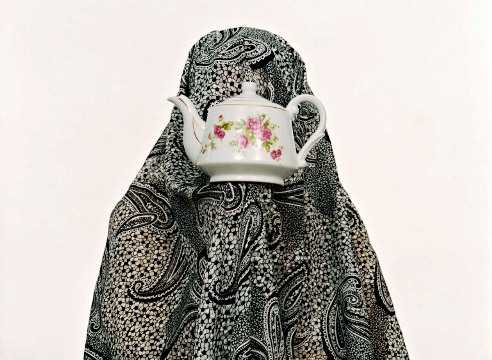
The bodies of women are the battlefield of Iranian political men.
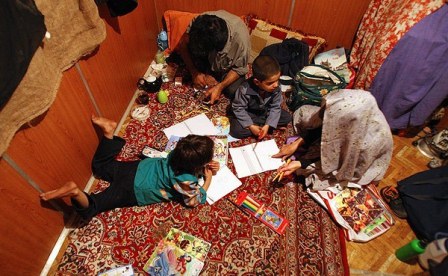
A country where contraception methods are illegal is a country that is an enemy of women. The Iranian parliament has passed a law that considers abortion, sterilization, and any permanent contraception methods such as vasectomy as a crime. This fundamental move is designed to combat the significant population growth in the country, with long-term prisons for offenders.
The decrease in Iran’s population has an interesting point to note, which is unlike Western countries experiencing the same recession, the majority of Iran’s population is very young. Almost seventy percent of the 77 million population is under the age of 35 and until recently, the birth rate was very high.
“Undoubtedly, it is not the only news that women’s bodies are constantly becoming a battlefield in politics. Just a few days after the approval of such a law in Iran, the Supreme Court of the United States issued a ruling that anti-contraception companies are not required to include free birth control services in their employees’ health insurance plans based on religious grounds, as mandated by Obama’s public health policy.”
This is happening while in New South Wales, Australia, women are still waiting for the Supreme Court to decide on the “Zoe’s Law”, which if passed, will grant “personhood” to a 20-week-old fetus. Increasingly, it seems that human rights will be granted more to corporations and fetuses than to women.
Interesting here is that, the new movement in Iran against sterilization, the cancellation of a past campaign called “Fewer Children, Better Life” which was first initiated under the rule of Mohammad Reza Shah Pahlavi. However, the population did not see a significant increase until the 1980s, during the years after the Islamic Revolution when people were still enthusiastic about the new regime and the future.
Currently, Iran is facing a declining population and the government is doing everything it can to double the population by 2050.
In the beginning, this movement started with creating motivation, such as free childbirth, longer maternity leave, and canceling birth control subsidies; but quickly turned into a more forceful and concerning path and resulted in the approval of such a law. Although technically, abortion was already illegal in most cases, it was widely practiced. This prohibition, along with the ban on sterilization and prevention of pregnancy, will now be enforced with even more determination.
The danger here is that this law does not specify which party is considered the criminal; the person or the doctor? However, it is not difficult to see where this action will end. Anywhere that abortion and methods of preventing pregnancy are prohibited, oppressed women will resort to other actions that put their lives and safety at risk, and this will mean that women will suffer disproportionately.
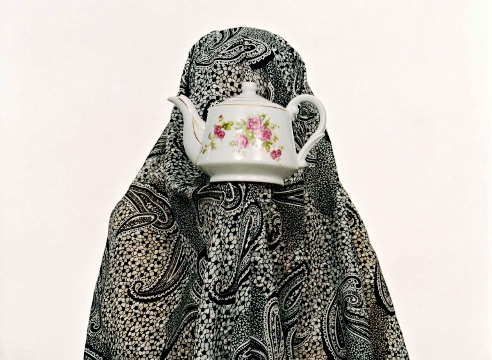
Mehdi Davatgari, one of the representatives in parliament who is opposed to this law, says: “Passing this law will surely lead to the rise of illegal methods in dark alleys and unsanitary centers.” He warns: “We must educate and I will tell the head of parliament that we cannot force people to have children with prisons and lashes.”
Furthermore, there is a fear that the government is in the process of confining women to their homes. A sociologist expresses their concern in this way: “This action further ties women economically to their husbands and the political system. Prioritizing a good family over the health and education of women will only make women’s struggle more difficult.”
Undoubtedly, Iran is not the first country to interfere in the choices of its people to have children, with disastrous consequences for women. China’s one-child policy, when combined with the cultural preference for sons, resulted in a shortage of girls. As a result, a black market for thousands of girls emerged, sold to families who could not find brides.
It seems that the people of Iran are not satisfied with this government’s actions. Hadi Najafi, a 25-year-old Iranian, who says he is unable to afford the costs of marriage, let alone having children, tells The New York Times: “We have always been told that there is a bright future ahead of us. But now we don’t even have the right to live. If my living situation was better, I would have liked to have twelve children so we could be happy together.”
In recent years, Iranian women have organized protests against the strict government, including the “My Stealthy Freedom” campaign on Facebook, where thousands of Iranian women share photos of themselves without hijab in protest against the mandatory hijab law. This time, their protests have taken a more personal and individual form.
Bita, who has just graduated from university, says: “I don’t want to bring a child into this hell.” She mentions the interference of the government, her radical ideologies, as well as the political and economic instability in the country as reasons for her and her spouse’s reluctance to have children.
Not only do these actions not create any disruption in the process of women’s freedom, but they are likely to fail. Because they do not take into account the economic reasons behind people’s reluctance to have children. This issue has also been mentioned in the New York Times report.
Mohammad Jalal Abbasi, the head of the Sociology Department at Tehran University, says that the most important factor is the economy. A young girl or boy who does not have a stable job and lives on temporary contracts, does not have the courage to get married or have children. This is because it puts their job security and life at risk. The solution is both simple and at the same time, very complex. We must strive to create jobs so that people can feel secure and pursue their plans.
Of course, many of the economic problems are caused by Western sanctions to cripple Iran’s nuclear program. However, with a projected population growth of zero in the next 20 years, Iranians are finding ways to ultimately prove that there is a more effective way to punish the regime. Nevertheless, a population that does not exist cannot be suppressed.
 By: Admin
 July 24, 2014
Tags
Issue number 39