


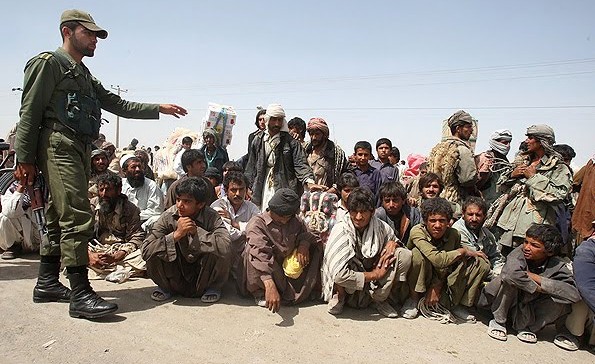
The Dynamic Relationship between Poverty and Drug Crimes in Balochistan / Mahmoud Barahouei Nejad

Economic poverty in any society is directly related to problems, difficulties, diseases, and crimes. The poorer a society is and the more deprived it is of welfare, security, and tranquility, and the further behind it is in development, the more it will be affected by the negative effects of social problems and difficulties. Drug trafficking, both in terms of sales and distribution, and consumption, is directly related to economic poverty in some areas of Iran. Although some believe that there is no direct linear relationship between economic poverty and drug abuse, economic poverty can be a contributing factor to drug abuse and the tendency towards its trade and trafficking through its impact on intermediary variables.
By examining the reasons for crime in society, we find that the culture of crime is a product of poverty and despair in a society that also involves buying, selling, and consuming drugs. According to many researchers, social issues such as poverty and social deviance, like drug use, are closely related. Even in religious and spiritual communities, religious beliefs have not been able to prevent the motivation for crime caused by poverty, and the well-known religious narrative that says “poverty brings disbelief” is a result of this reality.
Discrimination and national and religious prejudices have led to neglecting the development of many ethnic regions in Iran and as a result, poverty and deprivation have taken root in these areas. Ultimately, this has resulted in an action that is referred to as a step towards destroying the dynamic of society.
Sistan and Baluchestan province is one of those regions that has been affected by its own destructive dynamics. For many years, this region has not received attention for development due to political, religious, and ethnic reasons, and as a result, it has not been able to keep up with other provinces in terms of development.
The Zahedan-Kerman railway took more than thirty years after the victory of the Islamic Revolution to finally be launched. Gas has only recently reached Iranshahr after 36 years. The province still lacks active large factories, economic centers, and other employment opportunities and development tools. Despite having long borders with Afghanistan and Pakistan and being the only province with access to the ocean, these opportunities have not been utilized for trade and improving the economy. Sistan and Baluchestan is a province rich in natural resources, agriculture, tourism, fisheries, and more, but the necessary investments have not been made to activate these sectors.
This province, although the largest province in the country and with abundant opportunities and resources, has a small population of around two million people who could easily live in very good conditions with proper planning and without prejudice or discrimination. Despite being one of the least educated provinces in the country and facing occasional insecurity for specific reasons, Sistan and Baluchestan ranks much higher in terms of security indicators compared to many other provinces. However, what has happened is an increase in poverty and deprivation, especially in the outskirts of cities and rural areas. The long borders of this province, which could have been opportunities for economic growth and development, have become a threat due to high unemployment rates and the consequences of it, being used as a route for drug trafficking into the country. Even the construction of walls and blocking the borders with millions of dollars and aggressive policies to combat drugs have not been able to prevent this disaster from entering the country; because there is no substitute to satisfy the hunger of the people in the region.
 By: Mahmoud Barahoui Nezhad
 July 24, 2014
Tags
Issue number 39