


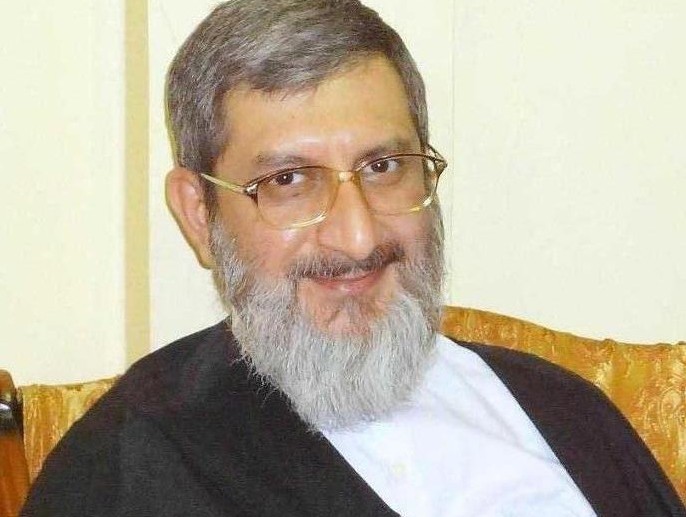
Violence and Spirituality/ Abdolhamid Masoumi Tehrani
At first, it must be emphasized that the individuals who currently hold power are promoters of violence among the people. However, if we look at our cultural past over the past few decades, we will find that the righteousness of religion and faith has essentially lost its meaning and significance in our culture, and unfortunately, in the not-so-distant past, the situation was the same. Did the more traditional clergy not dislike speaking badly of the caliphs or issuing fatwas for the killing of individuals without trial? Did a fatwa not come out during the time of the Shah to kill Razmara or Kasravi, and did they not use the same justification to assassinate him?
Error: cURL error 52: Empty reply from server
The root of this violence must also be sought in the thoughts of Muslim spirituality; thoughts that do not allow any interaction with their opponents. In fact, the level of intellectual and cultural tolerance among Iranians has decreased significantly; even if we say it has been low, we are not mistaken. We always judge those who are different from us with a pessimistic view, and with this mindset, we cannot expect to not fall into the delusion of being threatened and not develop a tendency towards violence and aggression. Of course, it must be said that a society that experiences psychological problems cannot be controlled. Just as the violence that has taken shape in our society is uncontrollable. The people of our society (we have nothing to do with other societies because our discussion is not comparative) are nervous and show a reaction and response to the smallest issue.
The issue of enjoining good and forbidding evil, although it is a Quranic recommendation, is not as it is expressed today. Among the verses in the Quran regarding enjoining good and forbidding evil are: “And let there be [arising] from you a nation inviting to [all that is] good, enjoining what is right and forbidding what is wrong, and those will be the successful.” (3:104, Al-Imran) and also “The believing men and believing women are allies of one another. They enjoin what is right and forbid what is wrong and establish prayer and give zakah and obey Allah and His Messenger. Those – Allah will have mercy upon them. Indeed, Allah is Exalted in Might and Wise.” (9:71, At-Tawbah) Different interpretations have been made and unfortunately, there are also misuses taking place. The late Ayatollah Montazeri said in one of his speeches about the interpretation of this

In 2009, some believers mistakenly thought that they had authority over the people and commanded them to do good and forbid evil, even if it was against their will. Therefore, we should not mock or belittle those who command and forbid good and evil, even though no one has authority over anyone else and even the Prophet did not have authority over the believers. “Priority” is different from “authority”. Especially when it comes to verse 71 of Surah Al-Tawbah, it is about friendship. It means that I should have a close friendship with someone and then advise them to do or not do something. Not that I should command and forbid a stranger on the street whom I know nothing about. Unfortunately, some people always interpret the issue of “command and forbid” as a form of oppressive power, while in this context, it clearly means requesting something in a friendly and compassionate manner. In verse 90 of Surah An-Nahl, it is stated: “Indeed,
Most Shia scholars interpret “awliya” in verse 71 of Surah Tawbah as “guardian” or “holder of authority”, while the word “wali” and its derivatives do not have such a meaning in the Quran. It either means kinship and closeness, or it implies friendship. Even when it says “Allah is the wali of the believers”, it refers to the friendship of God with the believers, which is the reason for His intention to guide them from darkness to light.
So in my opinion, these words are not in accordance with the Quran and are personal interpretations of individuals and manipulation of the meanings of words. In addition, our Islamic thoughts should be examined in terms of linguistic, interpretive, and contextual aspects, as well as the time and place, in order to reach a correct and tangible conclusion. In summary, the “straight path” that the Quran refers to has been deviated from its truth throughout the history of Islam due to these manipulations and interpretations.
“We must follow the foundations of our religion based on the Quran. The tradition of the Prophet is also based on this foundation; just as he did not have the right to issue a fatwa, this right is explicitly reserved for God in the Quran. What is known today as “enjoining good and forbidding evil” and the wide and lengthy organizations and institutions that are established under this name have no basis in Islam. Ultimately, each person can only ask their own acquaintances to do good and stay away from undesirable actions.”
While it should be considered that enjoining good and forbidding evil, which includes wearing hijab and covering one’s head with a scarf or chador – which are outward behaviors – is not limited to these issues and more important matters should be taken into account. Is lying, abuse, fraud, embezzlement, and hypocrisy not considered among the evils? Why do they not pay attention to these issues and only focus on appearances? The Quran does not provide a specific definition for enjoining good and forbidding evil; it defines what is good and what is evil based on time, place, and circumstances. So when the Quran does not provide a definition, we cannot only consider a specific example and define it. This issue also has cultural, social, and historical examples that must be taken into account. For example, sneezing in public may be considered good in Iran, but in a specific culture it may be seen as a bad social behavior and considered evil. A prominent example is that

The problem is that these days some scholars are trying to eradicate superficial corruption (if we can call not wearing hijab corruption, and of course I do not believe in such a thing) in society, while corruption within is rampant.
The aggressive positioning in platforms such as Friday prayers will not have any other result than making the negative view of society towards the clergy even more negative. In any case, when something is said, one should also expect its consequences. What does it mean when they come and say “blood must be shed for the hijab; and that too, pure blood”? Is the speaker recommending that the assassination of religious and political figures should happen again in the country? It seems they do not understand what they are saying.
Before the revolution, mosques were full and people paid more attention to religious matters, but now, due to the massive advertisements on radio and television, hypocrisy has increased and heartfelt beliefs have decreased. This shows that when we use political power as a means of explaining and promoting religion in society, the result is reversed. The face that used to be accepted as a religious person is no longer accepted and people do not like it. And if these gentlemen were to appear among the people without bodyguards and the people did not fear them, then they would realize what the people’s opinion is. If we pay attention to the verses of the Quran, the Pharaohs during the time of the captivity of the Children of Israel were, in a way, a religious government. When you listen to the words of the Pharaoh, you will understand what I am saying.
By: Abdulhamid Masoumi Tehrani December 25, 2014
Tags
Abdulhamid Masoumi Tehran Acid spraying Enjoining good and forbidding evil Friday prayer Magazine number 44 Monthly Peace Newsletter, Issue 44 Spirituality Violence