


Discrimination between Iranian women and men with the taste of politics in the situation of citizenship/ Hossein Raeisi
This is a caption.
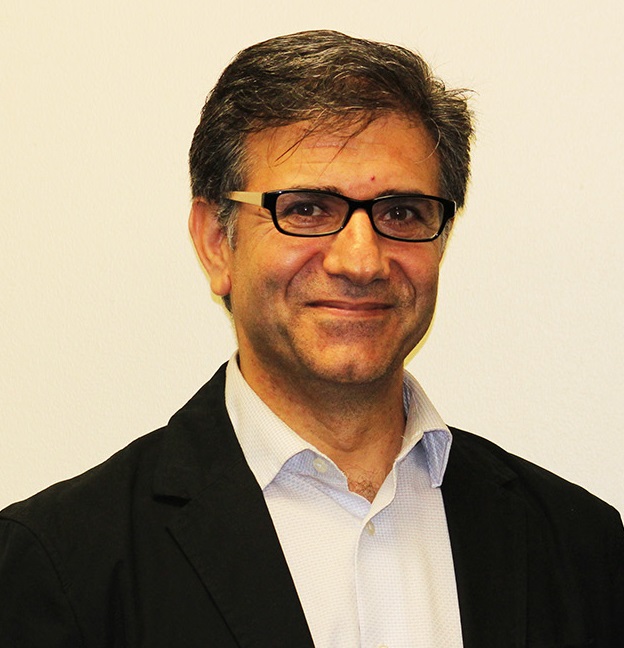
Hossein Raeisi
Identification of legal personality of all individuals in society is considered a fundamental right, and as a result, the possession of rights derived from it grants equal status to individuals in society. Therefore, the lack of recognition of some individuals born in society due to political or ideological behaviors provides the basis for violating fundamental rights and causing social harm to them. Access to the right of identification and acquisition of citizenship in society, due to its political and civil nature, is recognized as one of the first generations of human rights, and there is no need for positive and material action by the rightful owner, and all individuals must benefit from this right immediately after birth. Usually, citizenship laws or civil laws identify who has the right to citizenship in society.
The Civil Law of Iran, which is one of the oldest laws in the country, contains a very traditional and primitive structure regarding the rights of citizenship and children’s rights in this regard. Access to fundamental rights such as the right to identification and citizenship for children is possible with the help of this law. In contrast, this law also denies these rights to individuals, especially newborn children. In the current situation and with global standards, this right is denied to a group of citizens in Iranian society and faces a serious challenge.
With the continuous presence of a large population of Afghan and Iraqi immigrants in Iran over the past three decades, a significant number of Iraqi and Afghan men have married Iranian women. The Iranian Civil Code, passed in 1313, does not recognize these types of marriages in Article 1060 and has declared them prohibited in practice. This law states: “Marriage between an Iranian woman and a foreign national is subject to special permission from the government, even in cases where there is no legal barrier.” The Family Protection Law, passed in 1391, also emphasizes the need to enforce the provisions of this law and allows for legal action to be taken against those who violate it in Article 51, stating: “Any foreign individual who marries an Iranian woman without obtaining the permission mentioned in Article (1060) of the Civil Code or in violation of other legal regulations will be sentenced to a maximum of five years in prison.” Despite all the legal opposition for various reasons, countless marriages have taken place
Imagine a child is born in Mashhad, from an Afghan father and an Iranian mother. His life, from the very first moments of birth, is influenced by the rules and principles stated in this law. Comparing the rights of this child with a child born to an Iranian father and mother, or simply an Iranian father and a foreign mother anywhere in the world, reveals a great challenge for the first group of children. The first group of children, born to an Iranian mother, even if in Iran, are not considered Iranian and do not have civil rights, but the second group of children are considered Iranian and are entitled to all civil rights (Article 976 of the Civil Law); even though the Civil Law considers all children, and even fetuses, as entitled to civil rights in the case of being born alive (Articles 956 and 957 of the Civil Law). This difference has caused many problems for at least one million children born to Iranian mothers and Afghan or Iraqi fathers in recent years
According to Article 976 of the Civil Law, children born to an Iranian mother do not have the right to acquire Iranian citizenship. This right is only granted to children born to an Iranian father.
Due to the major problems in this section of society, which can be seen in large numbers in Zahedan, Mashhad, and the surrounding areas of Tehran, efforts were made to remove the obstacles to obtaining identity for children born to Iranian mothers and non-Iranian spouses by granting them citizenship. However, in the first attempt, which took place in April 2006, it was met with opposition from the parliament. Due to the persistence and widespread nature of this issue, on September 27, 2015, after continued coverage by various newspapers and civil activists, it was put on the agenda of the parliament. However, with 84 votes against and 74 votes in favor, and 12 abstentions, the parliament failed to reach the necessary votes to grant citizenship to the children born to Iranian mothers. Once again, the government in Iran will continue to systematically and officially violate the basic rights of these citizens. In my opinion, no parliament in any country has the right to use
What concerns civil activists is that on one hand, this system of governing society perpetuates discrimination between Iranian men and women, and on the other hand, children born in Iran from Iranian mothers are still being neglected. These individuals have neither the possibility to go to Afghanistan or Iraq, nor the opportunity to benefit from social rights in Iran as immigrants or citizens. They are essentially stateless and lack any form of Iranian or foreign identification documents, making them vulnerable to various social harms and currently at risk.
As a result of not addressing societal issues, the denial of fundamental rights and its continuation, in important laws such as civil law and the rights derived from it, discrimination between men and women continues even in matters unrelated to religion, clearly manifested in the structure of legislation and implementation in society, without any intention of flexibility towards principles, ethics, and human values.
Sources:
Newspaper of Law, issue 430, 24 Dey month of 1393 (January 14, 2015)
 Created By: Hossein Raeesi
 October 30, 2015
Tags
Hossein Raeisi Monthly magazine number 54 Monthly Peace Line Magazine ماهنامه خط صلح