


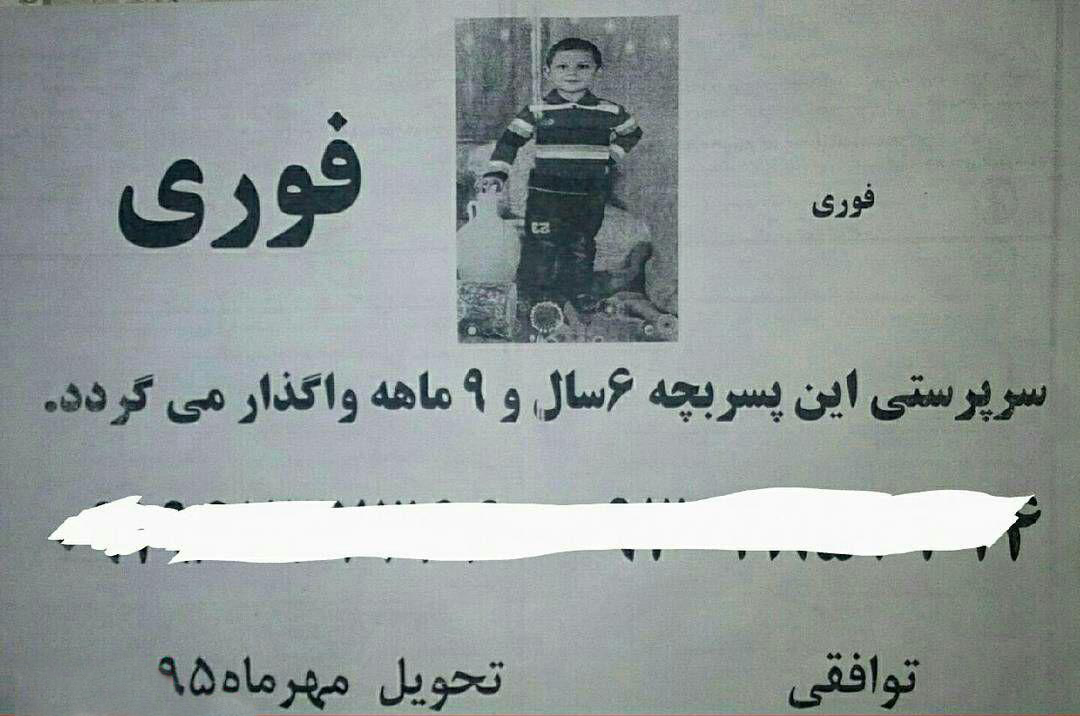
“Children of the flea market, product of the modern world/ Amir Chamani”
This is a caption
این یک عنوان است.
This is a caption.
Amir Chamani
Slavery is a history of using and depriving humans of their freedom and will. The material glory of human civilization owes much to slaves. Since humans began to use other humans as tools for their own benefit, slavery began. The system of slavery was formed in the early stages and based on the unequal economic growth that resulted from individual ownership. The issue of slavery had become so ingrained in human life that philosophers like Plato and Aristotle considered it an inseparable part of social life. During the 17th to 19th centuries, slave rebellions in the United States and Britain and the emergence of civil movements in this regard led to victories in the abolition of slavery, but this did not mean the end of slavery. Making something illegal does not mean its destruction, it only hides it from view. In the modern world, speaking of slavery may not seem believable given the historical and ancient mindset of slavery, but the reality is that today more than 46 million people are still enslaved. This statistic
Slavery in the modern era
In the 2016 report on the Global Slavery Index published by the Walk Free Foundation in Australia, slavery is described as follows: “Situations of exploitation where a person cannot refuse or leave due to threats, violence, coercion, deception, or abuse of power.” According to this definition, slavery can include forced labor for debt repayment, forced labor, child trafficking, child slavery, forced marriage, servitude, sexual slavery, bonded labor, and domestic servitude; in a way that the victim is forced to remain in the current situation under violence and intimidation. According to the International Labor Organization’s estimate, 80% of the world’s slaves today are exploited by individuals and 20% are under the control of governments or insurgent military groups.
The concept of modern slavery has various forms and goals, but its constant characteristic is exploitation. In the definition of slavery, it is described as “taking away one’s freedom and the rights of others”; when an individual loses control over their body and is deprived of the right to choose or refuse, for example, forced labor. Individual freedom is taken away through coercion, violence, threats, abuse of power, and deception, preventing the individual from changing their circumstances or escaping from an undesirable situation.
Children as servants of the modern world
Among the issues raised in modern slavery, what is more tragic is the slavery of women and children. Children are more vulnerable in modern slavery. Child labor in the home is one of the most widespread and exploitative forms of child labor in the world today and is very difficult to combat. Access to child domestic workers is difficult; on one hand, they are behind closed doors in their employers’ homes, and on the other hand, society considers their work to be normal. In fact, child labor in the home and many of its practical features are similar to slavery.
Currently, 4.8 million children are involved in what is known as the “worst form of work”; namely, bonded labor and the system of master and servant, forced labor including recruitment for participation in armed conflicts, trafficking, production of pornography and illegal activities, particularly production and trafficking of drugs. In terms of gender, boys are more involved in agriculture, petty crimes, and drug trade, while girls are trapped in sexual exploitation and domestic services. 2.1 million of these children are victims of trafficking, either being kidnapped or sold by their families.
In Thailand, women and children are forced into prostitution and sold to tourists and Thai men. Following the sex tourism crisis, another crisis arises, which is the existence of a large number of children who are the result of relationships between these women and children with tourists, whose fathers are unknown.
In India and Pakistan, 800,000 children are engaged in the carpet industry. Some of them have been kidnapped, and others have been handed over by their parents to work as bonded laborers in workshops in exchange for the promise of fair wages. These boys are forced to work 18 hours a day, 7 days a week without receiving any wages. They are beaten, tortured, burned, left hungry and naked, and are usually forced to sleep in the same workshops.
Modern slavery and child labor in Iran
The situation of child slavery in Iran is almost similar to global cases. Some examples that exist and are addressed in daily reports by journalists or social activists in the field of child labor include: child labor in brick kilns, child labor in informal workshops of small industries and home workshops, selling or renting children to individuals or mafia groups for activities such as begging, drug distribution, forcing them into activities such as street vending or selling flowers at intersections, and ultimately trafficking them to other countries for the purpose of selling body parts or sexual exploitation and workshop labor.
Unofficial statistics estimate the number of child laborers in Iran to be up to 7 million. The Research Center of the Parliament has announced the number to be 3.2 million. According to Article 79 of the Labor Law in Iran, employment of children under the age of 15 is prohibited. This law also sets special conditions for children aged 15 to 18 who are allowed to work, but these legal provisions are often overlooked. The children we see every day on the streets and in the metro are unable to read or write, as they have only been taught to work from a young age. They work from morning until night, while their fake parents or their own parents comfortably sell drugs. These young workers, if they work well, have many buyers. The price for these child laborers ranges from 100,000 to 5 million tomans. In addition to being deprived of their childhood and rights to education, these children are also at risk of sexual and physical abuse
On the other hand, “baby selling” has become a new social phenomenon in Iran and some families are giving up their babies for millions of tomans. This amount is between 4 to 10 million tomans in Tehran. In the meantime, brokers and intermediaries buy and sell unwanted or illegitimate babies. Recently, a picture of an advertisement posted on the walls of Tehran city went viral on social media. The content of the advertisement was selling a 6-year-old boy at a negotiable price. Shahindokht Moulaverdi, the deputy of the President for Women and Family Affairs, said in an interview with ILNA news agency in early July of this year: “Today, we are witnessing the sale of babies in their mothers’ wombs. The phenomenon of child selling is not caused by a single factor, but a combination of factors such as economic poverty, cultural poverty, addiction, homelessness, and child marriage can push women towards selling their children.”
Mothers and fathers who sell their children are often addicts and homeless. Not only do they not have the means to care for their children, but they also make money by selling them. Some justify their actions by saying that their children will not have a future with them and may have a better life with a new family. However, only a small number of these children are bought by families who have fertility problems, and they are often purchased by various gangs, including drug addicts. The type of addictive behavior that takes place by the new owners of these infants and children is different. Some are left in a normal state, some are played with, and others are constantly crying to evoke sympathy from passersby. But in most cases, in order to get rid of the natural crying and misbehavior of the infants, they are given a small amount of opium to make them sleep.
Fatemeh Daneshvar, the head of the social committee of Tehran City Council, said on 16 Aban last year that some women were selling their newborn babies for “100 to 200 thousand tomans” after giving birth. Although the General Office of Legal Affairs of the Judiciary has declared the buying and selling of children, even under the guise of adoption, as a “criminal act”.
Ahmad Delbari, the director of the Welfare Organization of Tehran Province, announced in an interview with MIZAN News Agency on June 20th that 220 children at risk of being sold to welfare centers in Tehran have been identified and transferred. Last year, 550 children were also handed over to the country’s Welfare Organization for care, of which approximately 40% were children brought to the centers through social emergency services.
“Mustafa, one of the child laborers at the cave gate, says in an interview with Etemad newspaper: “At the age of eight, I started working as a fortune teller, tea seller, syrup seller, and things like that. My brother and I eventually helped each other with the cost of school and homework and such. Because my father has had diabetes for eight or nine years and cannot work. In the end, I had to… either myself or my brother… find a halal way to provide for the cost of school, homework, and our home.”
He answers the question of whether he knows what happens to the children who are sold by saying: “They want them to do something for them… send them to work or use them for sexual exploitation or other illegal activities… They raise them to, for example, do illegal things for them or in many other ways. They rent out breastfeeding babies and take them around in subways and here and there. They go and say, ‘This is my child, we don’t have dinner.’ Eventually, they want to make some money through them and get it in their hands. Through these children. I have heard that they charge 30-25 tomans from each child to make them work and introduce them as their own son to people. So that people can help them with something.”
During an interview, a social worker told Etemad newspaper: “Last year, a house was discovered at the entrance of Tehran’s cave, where 40 to 50 children were being kept. They would take the children out every morning and bring them back late at night.” Those who bought or rented these children not only distributed drugs, but also used them for begging, fortune-telling, and selling flowers in teams or individually in different parts of the city. In exchange for their labor, they only provided food and a place to sleep for the children who were bought, and for the rented children, they paid their parents a monthly amount of money or drugs.
The Etemad newspaper published a report on 29 Bahman 92 (February 18, 2014) about the sale of a 13-year-old girl named Rahaleh. Her mother, a drug dealer, is in prison and her brother is responsible for her. Rahaleh does not have a birth certificate. Her brother does not want to hand her over to a charity organization and tells welfare officials, “She has a buyer who will pay up to two and a half million tomans for her. Why should I give her to you? Give me two million and take the child wherever you want.” In the auction for his sister, Rahaleh’s brother even gives a discount of half a million tomans to the buyer!
Sources:
“Bills, Kevin and others, Modern Slavery, translated by Mohammad Kazem Shojai, Sabzan Publications, 1385 (2006).”
Etemad Newspaper, 29 Bahman 1392
Websites: Radio Farda, Deutsche Welle, Asr Iran, ILNA
 By: Amir Chamani
 July 24, 2016
Tags
Amir Chamani Child labor Compulsory work for children Magazine number 63 Monthly Peace Line Magazine Selling children Servitude Vak Free Foundation You have a modern slave.