


Death of humanity
Simin Dabiri: The resistance prisoners of the Shah’s prisons were released in the 1960s.
In the previous issue of the monthly magazine “Face to Face”, which aims to discuss and document the torture of prisoners, especially the use of white torture, we turned to Hossein Ghabraei.

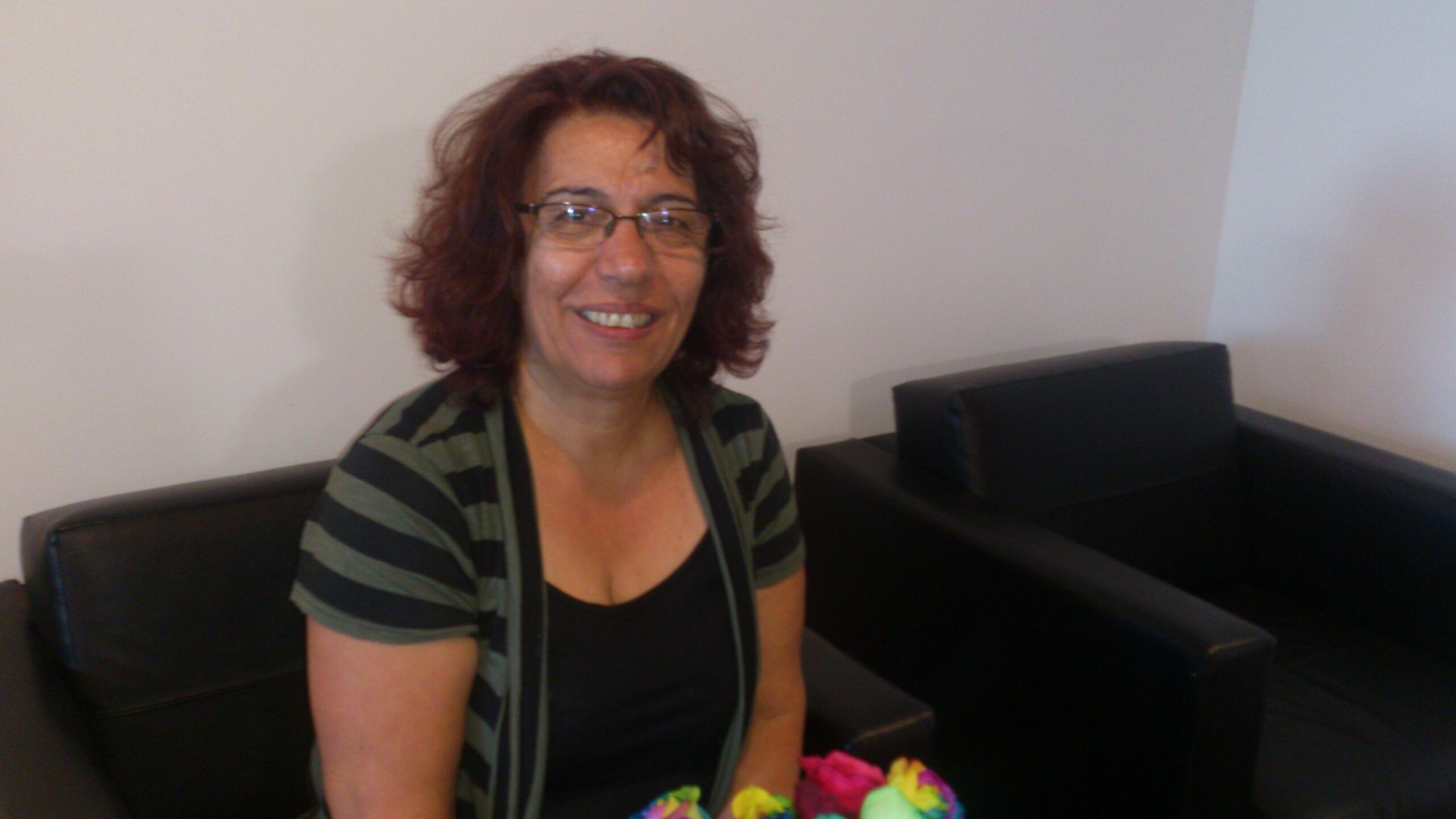
In this issue, we have a conversation with “Simin Dehghani”, a former member of the Fedaian Khalq Organization. Mrs. Dehghani was born on May 31, 1954 in a large family in Tehran and later became a math teacher at a school in Shemiran-e-Nou. At the age of ten, she lost her mother and, according to her own testimony, became politically active after her mother’s death. “I had a privileged family and had never seen the south of the city, but after my mother’s death, who was buried in Ibn Babawayh, we used to go to those areas often to give charity. On one occasion, when we went to give charity to Shah Abdol Azim (I was about thirteen years old), people rushed to our car for some meat and fruit, and within seconds, all the food was gone. A woman who had a child with her near our car didn’t get anything
Simin Dabiri, referring to her becoming a student in Khordad of 1352, became a supporter of the Fedaian Khalq organization and began her activities. She continued her activities with this organization until 30 Khordad of 1360. However, after the separation of Ali Keshavar from the Fedaian majority, the Fedaian Khalq organization split from the Tudeh Party in the midst of efforts for unity. Ali Keshavar joined the group and regarding her own arrest, she says: “In Khordad or Tir of 1361 (I don’t remember the exact date, but I am sure it wasn’t too hot outside), while driving on the street, a Benz car cut me off and stopped my car. Without any explanation, they pulled me out of my car and threw me into their car by pulling my hair from under my scarf (I had long hair at the time). Two guards sat in front and another
He continues like this: “The path we took wasn’t long because they stopped me in front of the Hilton hotel, which wasn’t far from Evin, but they still started asking me questions. However, I told them that I wouldn’t answer any questions at the moment and I was just looking outside (they hadn’t blindfolded me on the way) and they laughed and said, “So you know you won’t see outside anymore.” I remained silent, but the reality was that it felt like I was saying goodbye to the outside world. When we arrived at Evin, they took me to a small room and stripped me naked and searched my whole body in a humiliating and degrading manner. I think they were looking for cyanide. From there, they blindfolded me again and took me out of that room.”
He responds to the question of what charges he was arrested for by saying, “At that time, it wasn’t like they would bring up charges. In fact, from the 60s onwards, anyone they saw on the street and suspected, they would take and interrogate. This issue was not just about me. There was no opportunity or courage to ask these things. For example, during my detention, I would often hear the screams of people (mostly men) who had come to Tehran as workers and were being tortured, saying that we were from the countryside and came here for work, we were just ordinary travelers who had rented a room in Naser Khosrow… and there was no lawyer involved. When I read about the current conditions of prisons, I can’t imagine anyone being able to endure that time again.”
This former political prisoner adds: “On the first day, they took me from that small room to a place that was muddy and rainy. Along this short path, walking behind someone, I fell to the ground several times because I was not used to moving with my eyes closed and with a blindfold; for example, you cannot walk with a blindfold. They took me to a place that I think was part of the courtyard (because I could feel the open air and there was water up to my knees) and they didn’t come back to me until night. I only realized the presence of another boy there and I don’t know if there was another person there or not! Because in the first days, when you take off your blindfold, you don’t know what kind of world you will face. During that time, because we were not given any food and we couldn’t go to the bathroom, we hit the iron door that was closed after we entered and said that we need
Mrs. Davari, emphasizing once again that walking with blindfold was very difficult, especially in the first days, says: “Eventually, the night raids came for me and took me to a place called the branch. Before entering Evin, they would take everyone to the branch, where all the interrogation rooms were located. In the hallway, you could hear so much screaming and commotion from torture that it would make your brain stop working and you couldn’t even recognize human voices. It was astonishing how a human could produce such sounds from their throat! They kept me there for hours, listening to the sounds; sometimes hearing those sounds would crush one’s spirit.”
He stated about his treatment of his interrogators: “After they took me to the interrogation room, the interrogator stood behind me and every time he asked me a question and I didn’t answer, he would hit me with a cable on my back and head. The interrogations were mostly related to the school where I taught in 1979 and had become a member of the teachers’ association. The main reason was that they didn’t have any evidence of my involvement in any political party. The interrogator said my crime was that I had taken one of the members of the school’s Islamic association to Kurdistan and assaulted her. I knew this story was completely fabricated and baseless, so I didn’t know how to respond. Of course, the interrogator repeatedly asked which organization I was working with and I would answer that I wasn’t politically active until 1982 and after that, I only worked with the majority party, but only as a simple supporter and my activities were limited to distributing
I ask of him to speak more about his interrogation torture: “See, the children of Branch 5, who were mostly made up of the majority, the killers, the masses, and the sufferers, their torture was limited to just beating and whipping, and the more severe torture was inflicted upon the minority children, the fighters, the warriors, the laborers, and worst of all, the Mujahideen; the torture they inflicted upon the Mujahideen children was unimaginable. It was completely different and they would truly beat them to the point of death. For example, when I was taken to the cell, they brought a 16-17 year old Mujahideen girl to our neighboring room, who was covered in blood and bruises, and they had beaten her so much that she couldn’t even stand! The girl was saying to herself: “Oh God, help me keep my mouth shut tomorrow…” In the middle of the night, the cell suddenly became crowded and
He says that there were also other tortures that, because they saw the communists as a bunch of infidels, were allowed to do to them. For example, on the first night of his interrogation, his interrogator, Keshvari, would say vulgar things to him and ask how he remained a virgin until the age of 26 and never had sexual relations with his comrades. He continues, saying that during these statements, the interrogator would get closer to him while being heavily agitated… He believes that the things said to him were even worse than what was said to Saeed Emami’s wife.
It was around 10 PM when the power went out. Despite having blindfolds on, we could still see a little bit of light from below. We had to fill out interrogation forms using this light. A man named Rahimi was interrogating me. He said, “Aren’t you afraid of me? We’re alone and I can do anything to you.” I replied, “If you mean you want to assault me, go ahead. It’s just another form of torture.” He fell silent after that.
Simin Dehghani, in response to the question of why, according to her, members and supporters of the Mujahedin organization were subjected to the most severe tortures, says: “The reason was that the Mujahedin were an Islamic organization and the regime saw them as a threat to the part of the population that believed in religion; but the communists, because they claimed not to believe in God, may not have been as dangerous to them. In any case, the people of Iran were religious. If they turned against the regime, the first force they saw as close to themselves was the Mujahedin. In any case, the main goal of the government was to eliminate organizations through disclosures and identifying individuals, and they were successful in doing so until 1983. These tortures led to the destruction of the organizations.”
I knew someone who was arrested during the time of the Shah. They were initially sentenced to death, but then it was changed to life imprisonment. They were severely tortured, for example, their nails were pulled out to the point of turning into poison. Despite all of this, they resisted, but this same person repented after their arrest in the 1960s. During the time of Shah Savak, they knew that if they didn’t get information within 24 hours, the information would be destroyed and the torture would stop. But after the revolution, their activities were public and even took place in middle schools…
He emphasized that the mental tortures were getting worse and worse, because for example, when the children returned from being whipped, they would laugh after a few minutes and after a few days the pain of the torture would go away, but the pain of the mental tortures affected a lot of people mentally. This continued: “One night they came and gave the wedding ring of one of our fellow prisoners to her husband, and well, this meant that her husband had been executed; this was while a few days later they took her and executed her. So by giving that ring, they wanted to torture her in the worst way possible before she died.”
Or in another case, they would take those who had been sentenced to death to the top of the hill and blindly start shooting and raining arrows, but intentionally not hitting one or a few people; they would leave them alive. One of our cellmates was one of these survivors who became insane after this incident.
I ask of him to tell me how often he was able to visit his family: “We had a monthly visit for ten minutes, and six months after my arrest I had my first visit, but it depended more on the files and disciplinary matters; there were those who were banned from visits and had not seen their families for three years, meaning they had never had a visit. Regarding this, I should mention that there was a TV program at 4-5 pm that showed pictures of missing persons and we would laugh because we often saw pictures of some of our cellmates among them.”
This former political prisoner speaks about the prison environment and its hygiene conditions, saying: “Those who were kept in solitary confinement for long periods of time were usually not allowed to use the bathroom and when they were brought back to their cells, they would bring lice with them. The officials would then spray us with DDT, a chemical used to fight pests, to kill the lice.”
We also lived in a room where the children who were imprisoned during the time of the Shah used to say that after the United Nations visited Evin, when there were only 12 prisoners in that room, they criticized that the room was only suitable for 8 people. However, in our room, we reached 186 people and there was no space to sleep in the overcrowded room. I can confidently say that I never felt the ground beneath my body and we actually slept on top of each other. Due to physical torture during interrogations, most of the children had kidney problems and had to go to the bathroom at night. Going to the bathroom was truly agonizing and if someone was feeling unwell and had to go at night, they would be kicked by at least ten people until they reached the door. During the day, only a few people could sit, while others had to stand and this created a dizzying atmosphere.
On the other hand, we could only go to the bathhouse twice a week. The time when they kept the water warm was limited and because we were communists, they would say that we were impure and had to go to the bathhouse last. For all the prisoners, there were only 5 showers available (three cabins and two showers in the hallway) so we had to go under each shower with 6-7 people and take a shower in five minutes. Of course, I shouldn’t even mention the shower, we would just splash ourselves like cats! Despite all this, the water would always turn cold and some people had to use the same cold water that felt like a razor on their hands. During the New Year’s holiday in 1362, they locked us in our room as punishment and we didn’t have a bath for two weeks.
The condition of the toilets was even worse than the bathrooms; for nearly 600-700 prisoners, there were only six toilets and we always had to stand in line for hours. (We made exceptions for those who had kidney problems and they were allowed to use the toilet out of turn.) And even then, not all of the toilets were functioning properly. Then they would give us a small shovel and we had to do our business right there and then lift the shovel, take it to the open-air area on the lower floor, empty it in the courtyard well, and then return. Imagine having to hold a shovel full of waste…
He mentioned the difficult situation of women in prison, saying: “Having a period was truly torturous. In the beginning, they didn’t give us any sanitary pads and we had to tear up our clothes and use them instead. Then we would wash the same pieces of cloth in cold water and dry them on the radiator. We would use these dirty cloths over and over again. That’s why more than half of the population in the room suffered from women’s diseases and had itching, burning, and pain… Later, when they started distributing sanitary pads, they would only give our room thirty packs, which still wasn’t enough for anyone.”
He points to the Iran-Iraq war and says, “They didn’t give us enough food and sometimes we protested because of extreme hunger, but Lajvardi said that even this amount is too much, because your families outside of prison are using your coupons!”
Ms. Davari states that at the end of “listening to the sounds of mourning and songs of blacksmiths from 5 am to 12 pm”, “not having the right to use the air conditioner for several months” and “nighttime patrols of their belongings” are among the major sources of mental distress for the officials.
Simin Dabiri became ill with a severe disease for unknown reasons after the court hearing and before the verdict was issued. Prison health officials diagnosed her with blood cancer. Her condition was so critical that she constantly lost a large amount of blood from her body for two months. According to her, she was released in late summer of 1984 (Shahrivar month) due to the doctors’ diagnosis of the disease’s progression and her imminent death. Her unexpected release surprised her cellmates, who thought she had been executed or transferred to Gohardasht prison in Karaj until her next visit when the mother of one of the prisoners informed them of her release. The treatment process of this former political prisoner, despite being twenty years ago, is still ongoing….
 Admin
Admin September 6, 2013