


Lessons from the 1957 Revolution and the current economic crisis.
According to the beliefs of Jan Diewert, a pragmatist philosopher, education is the reconstruction or reorganization of experience that adds meaning to it and provides the necessary ability to guide future experiences. Family, school, and media, especially television, are the main agents of the educational system in society. In many Iranian families, we are faced with a large amount of unfulfilled promises towards children; the result of this issue is a lack of confidence and reliance on false promises to advance the current affairs of the child in the future.
Is truth something separate from humans? From the perspective of pragmatists, every idea and belief is neither inherently true nor false as long as it remains in the realm of that belief; pragmatism examines the practical application of that belief and idea, considering the results that come from it, and determines its validity. In fact, pragmatism can be seen as the opposite of idealism, where there is no room for purely rational explorations and idealistic approaches.

More than a hundred years have passed since the Constitutional Revolution; a revolution that can be seen as a combination of modern ideas – the result of Iranian intellectuals’ encounter with the Western world – and traditional and religious approaches – influenced by the roles of clergy and merchants.
The Constitutional Revolution, with all its ups and downs and criticisms, was a turning point in establishing the ideal of constitutionalism in the intellectual realms influenced by religious perspectives, through the experienced activism in circumstances such as the tobacco boycott.
In all the years after the Constitutional Revolution until today, Iranian society has been significantly exposed to progressive thoughts and ideas compared to the past. This process became more serious with the emergence of the middle class in Iran, to the point that its continuity was also evident in the years after the 1957 Revolution.
In the occurrence of the Iranian revolutions, both in the Constitutional Revolution and the 1957 Revolution, the fight against tyranny was one of the most evident points. For example, during the Pahlavi era and after the August 28 coup, the progressive roots of the revolution took shape in society and despite idealistic political and social ideologies, it was able to realize its practical aspect with the occurrence of the revolution in 1957.
Now let’s return to the initial proposition and formulation of pragmatism in the social relations of contemporary Iranian society, which undoubtedly can shed light on the path of society towards development to a great extent.
Reference to the historical narratives of Iranian activism in major social and political movements in the past century is noteworthy from this perspective, as a re-reading and careful examination of them can reveal the emergence of activist thought structures in the micro-narratives of social life. From women’s participation in the tobacco boycott to the sit-ins of clergy and merchants during that period, these are examples of activism at various levels of society in pursuit of their social and political goals.
What we should focus on now are the mechanisms for realizing many ideas, both individually and socially, in today’s society.
According to Jan Diewert, a pragmatist philosopher, education is the reconstruction or reorganization of experience that adds meaning to the experience and provides the necessary ability to guide future experiences.
Family, school, and media – especially television – are the main responsible parties for the educational system in society. In many Iranian families, we are faced with a large amount of unfulfilled promises towards children; the result of this issue is the formation of a non-active and reliant personality on false promises for the future of their children.
Media, and especially visual media programs such as television, often have a significant distance from existing social realities, and as a result, a type of frustration arises in achieving what has been depicted, leading society towards a direction where mere verbal promises replace any effort to fulfill expectations.
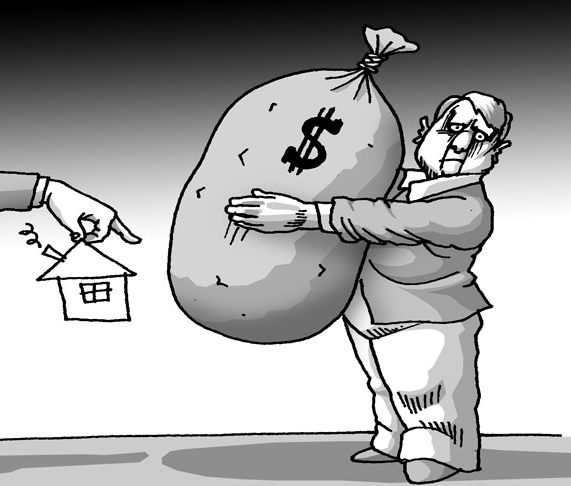
Such a situation is also seen at a macro level; relying on slogans to gain popularity in various fields, presenting unrealistic statistics at different levels of the country by the highest political authorities, and ultimately replacing current demands with unattainable ideals to shirk responsibility, all create a fertile ground for the spread of opportunism in society.
This also applies to ethical issues, in a way that most of us in our society adhere to fundamental moral principles such as honesty and repeatedly disregard them in practice without any hesitation.
Without a doubt, neglecting the fading of pragmatism and the society’s tendency towards baseless promises and empty slogans is a harm in all fields. Therefore, it is necessary to reconsider this matter and pay special attention to the existing voids, which are increasingly felt.
Reducing this situation is a result of reasons imposed by the government on the structure and formation of social and political actions, disregarding other factors. In the social aspect, activism in Iranian society is greatly influenced by the policies of the ruling class at various levels, which I have previously mentioned, but facing this situation requires contemplation on ways to actualize many progressive theories.
Political mechanisms for changing the current trend likely require practical plans to be implemented in order to transform abstract structures into tangible and concrete forms, in order to meet the demands of groups seeking to improve conditions – or at least take steps in this direction.
If some social dissatisfactions and their reflections in everyday dialogues of people (such as dissatisfaction with economic and security situations, etc.) are perceived as symbolic actions for the continuation of an ideal until the concrete demands are not provided and the ability to institutionalize it in society does not exist, it remains a dead end that contradicts the claims of conflicting political currents; an event that was partly realized in Bahman 57 and led to the downfall of the Pahlavi regime, but from the perspective that other aspects of political and social protests and dissatisfactions of other groups in society were not concretely provided, we witnessed the seizure of all power domains by one current in the Islamic Republic.
Without a doubt, revisiting the history of Iran’s revolutions, especially the 1957 revolution, is necessary because the current conditions of the country are heading towards economic instability, such as inflation, high unemployment rates, and reduction of government welfare support. This has created a fertile ground for protests and there is fear that groups who have a significant distance from democracy may take advantage of these protests to achieve their own demands.
 Admin
Admin September 24, 2013