


“To live” is the right of every human being to have a conversation with Dr. Kamyar Alaei/Delbar Tavakoli.
Every year on April 7th, in different countries around the world, a celebration is held to commemorate World Health Day. Additionally, each year, the World Health Organization announces a specific theme or slogan based on global health priorities and concerns. “Small organisms, big threat.”
It is a slogan announced by the World Health Organization in April 2014 to draw countries’ attention to the prevention of diseases transmitted by vectors.
In Iran, every year, along with this important event, the Ministry of Health and Medical Education also holds “Health Week” in various sectors. But the trend of health indicators in Iran, is the subject of discussion in this issue of “Peace Line” with Dr. Kamyar Alaei.
The researcher is from Harvard University and is an international health expert who is coming to pursue his work.
It should be mentioned that this international health expert is accompanied by his brother, Dr. Arash Alaei.
“من میخواهم بهترین ورژن خودم باشم”
“I want to be the best version of myself”
The founders of the “Triangle Clinics” program are responsible for preventing the spread of AIDS in Iran.
Dr. Alaei, as you know, every year in Iran, “Health Week” is held simultaneously with World Health Day. Please tell us, in the World Health Organization’s ranking, what is Iran’s position in terms of health, and overall, what is your evaluation of the level of health and well-being in the country?
Iran has different rankings in various areas of health and hygiene. Each indicator has a score and a specific indicator is defined for each disease. For example, Iran has a ranking of “one” in terms of drug consumption, with 3.7 million people in Iran using drugs, and a score of 67 in cigarette consumption. However, it does not have a high ranking in terms of HIV prevalence, as the spread of AIDS in the overall society is not as widespread.
In terms of access to sanitation, among 130 countries, Iran ranks 22nd. I must say that in some indicators, the Iranian health network has a good status, although part of it goes back to a plan that was established 30 years ago. In the Iran-Afghanistan region, there were two pilot projects, which unfortunately were stopped in Afghanistan due to continuous wars, but continued in Iran. We can see that even rural areas in Iran now have access to health centers.
We have 30,000 health houses in Iran, with two people present in each health house. (In most cases, these two people are a couple). We also have 60,000 “Behvarz” (community health workers) and rural health centers where there is always a midwife and a doctor present.
On the other hand, the medical and free medical education system is such that we know medical students must go to rural areas at the end of their course and at the beginning of their official work.
In rural health centers, primary services are provided to patients and if necessary, secondary services are also available. If needed, patients are transferred to hospitals for treatment. The “Support for Mother and Child” program was also implemented in Iran, which has reduced the mortality rate of children.
The “Oral and Dental Health Control” disease and school health education have been successful.
However, in the cultural index section, there are weaknesses, and there is no specific system for preventing infectious diseases.
The population system of Iran from the 1960s to the early 1970s, meaning the year 1373, has been on a growing trend and now the majority of the country’s population is made up of young people aged 20 to 30. In fact, 70% of Iran’s population is under the age of 35 and on the other hand, the age of marriage has also increased. Between the age of puberty, which starts at 15 years old, and 35 years old, these individuals are at risk of engaging in unprotected sexual behaviors.
On the other hand, necessary education for preventing sexually transmitted diseases is not widely available; even parents do not talk to their children about this issue and this young population is at risk of contracting infectious diseases. Diseases that can lead to infertility and HIV infection.
Of course, we still have regional diseases such as “malaria” in southeastern Iran.
As you know, this year the World Health Organization’s slogan was announced on April 7th as “Small Bite, Big Threat” and the Ministry of Health and Medical Education objected that the World Health Organization ignored countries like Iran in choosing this slogan and it applies to African countries. On what basis are these slogans chosen?
The World Health Organization has more than 200 member countries and there may be a common disease in every region and country. Of course, the slogan chosen may not be true for a particular country and it is natural for this organization to show attention to a country in choosing a slogan every year.
“Malaria” is at the top of the list of diseases transmitted by mosquitoes, which claims the lives of over 650,000 people annually.
Although “malaria” is a controllable disease, the United Nations wants to say that it is not receiving enough attention and has dedicated the slogan of 2014 to it in order to prevent better prevention of this disease and attract more attention from countries to this issue. On the other hand, this slogan is from the United Nations, which says: Think globally, act regionally.
The topic varies in different regions of Iran. Currently, the issue of access to clean water in Iran is being discussed for the next 5 years. This is because our country is located in a semi-arid region and is also exposed to changes in the ecosystem.
The border regions of the country are bordered by Zabol with Afghanistan and Lake Hamun, which is facing drought. We also have drought in Lake Urmia and on the other side, we have a border with Iraq. Now, the dust and sand storms from the Arabian region have also affected the southern part of the country. In Tehran, we are witnessing air pollution.
I emphasize that access to clean water is a critical crisis facing our country, part of which is due to the improper use of water by the people and part is due to the wrong policies of officials and lack of investment. In some countries, they desalinate seawater to address this water crisis. I believe that the next war between countries may be over access to water resources.
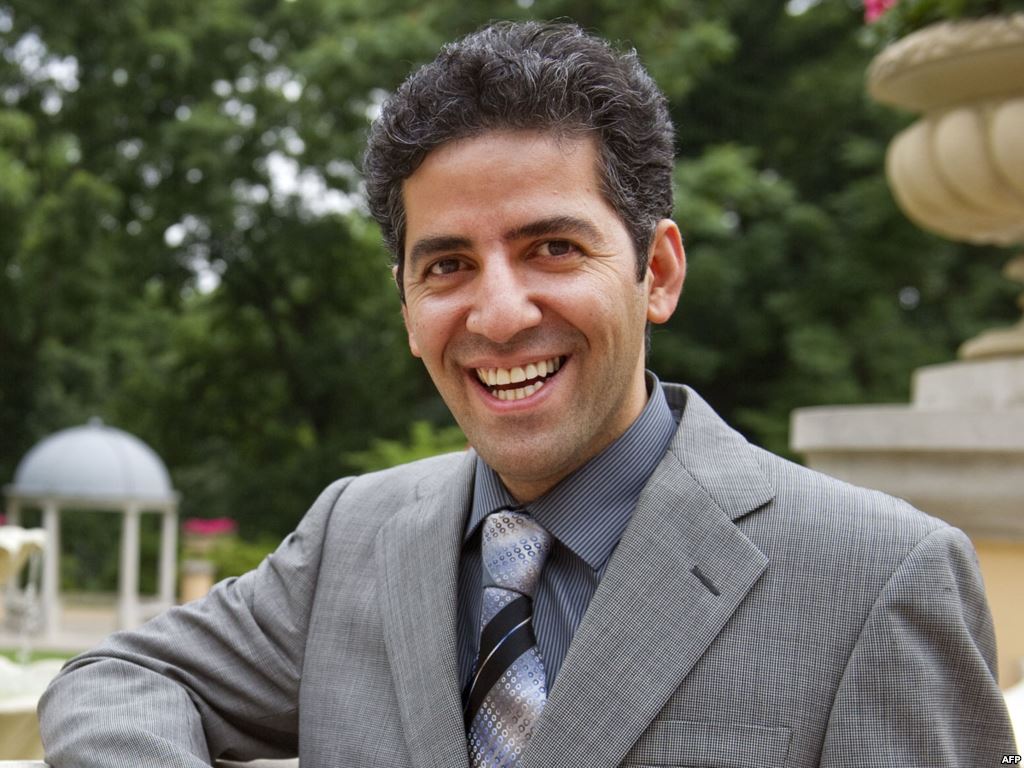
“One lifetime of health with self-care” is the slogan for this year’s Health Week in Iran. In your opinion, how can this slogan be implemented in society and which institution or organization is responsible for it?
For the discussion of health, responsibility does not solely fall on one organization or the Ministry of Health. Rather, various government organizations and institutions, such as the Ministry of Health, Higher Education, Judiciary, Prison Health, Anti-Drug Headquarters, Ministry of Welfare, and all individuals are responsible. Non-governmental organizations, such as the Red Crescent and the Imam Relief Committee, are also responsible, as well as the private sector, such as private hospitals.
On the other hand, the family institution, which is the smallest institution in every society, also has responsibilities. I believe that in the discussion of “self-care”, everyone should start taking care of themselves and create a healthy environment and enjoy it.
We are witnessing that smoking has increased even among students, and it is not just the person who smokes who is at risk, but sometimes indirect exposure is even more dangerous; someone who does not smoke can also inhale cigarette smoke and one of the main reasons for lung cancer is secondhand smoke.
On the other hand, deaths and injuries caused by road accidents in Iran annually reach between 25,000 to 28,000 victims and result in over 100,000 disabilities, which are preventable. It is true that the Ministry of Roads has responsibilities in this regard, but people themselves must also follow traffic laws and regulations, and car manufacturers must also adhere to safety standards. Similarly, executive bodies such as traffic police and judicial institutions that have supervisory roles are responsible.
Waste management is also an issue and people should observe proper waste disposal and keep the environment cleaner. I mention these simple examples to emphasize that each individual should start with themselves.
But among all of this, the discussion of living happily is of great importance, and any activity that leads to a person’s happiness…
We talked about health and wellness indicators, please explain the definition of “health and wellness” (such as different types of physical and mental health).
According to the definition of the World Health Organization, health is not just the absence of illness, but also “the state of complete physical, mental, and social well-being.”
Currently, I see that depression and anxiety have become widespread in Iran and the issue of mental health needs to be taken seriously. Just as we go to a dentist for oral health, we should also go to a therapist for mental health, but this topic has not yet been addressed in Iranian society.
From the perspective of the United Nations, health is the most fundamental and essential right of every human being, and as a result of being human, every person has the right to enjoy good health.
Humans are entitled to full and equal rights based on human rights, regardless of their political views, and this applies regardless of age, religion, gender, or race.
Of course, you know that this year “National Environmental Health Day” was removed from the country’s calendar; how much does neglecting such matters affect the lack of development in environmental health culture?
I am surprised that despite the efforts made to include events in the national calendar, we are still witnessing such incidents. This also happened in regards to the “HIV” disease.
There are two perspectives to look at this: one is that the issue should not be limited to just one day and every day should be National Health Day, because humans should be healthy every day.
But one day, it is a symbolic day and different organizations interact with each other on that day and its placement on the national calendar causes different organizations to gather and exchange ideas and work between different agencies.
This removal of the sign indicates that giving importance to the issue of health has diminished among the country’s officials.
You and your brother have been working for years on preventing the spread of AIDS in Iran. Please explain the latest statistics on the growth rate of AIDS in Iran.
In Iran, 27,000 cases have been identified and reported so far, but the World Health Organization estimates that more than 100,000 people in Iran are living with HIV, meaning that over 73% of those affected are unaware of their condition and may be transmitting the virus to their spouse or infant. This is in contrast to other countries where approximately 20% of HIV-positive individuals are unaware of their status.
In America, this percentage has reached 73% to 20%, meaning 80% of those infected know they have contracted HIV.
90% of the infected individuals in Iran are men, which was previously 95% among men. This indicates that the prevalence of HIV in women in Iran has increased in recent years. Generally, the highest number of cases have been identified among the age groups of 25 to 45 in Iran.
New cases of HIV were identified from 2000 to 2005, showing an increasing trend. However, between 2006 and 2011, this trend decreased due to the government’s political approach towards the issue. This led to suspicious individuals avoiding seeking treatment, and on the other hand, the government announced that the spread of AIDS in the country had decreased. This was while the government’s security approach caused individuals to refrain from seeking identification.
I am happy that in the new government, there is a renewed anti-political and security approach to this issue.
Please explain about the clinic that you have established in America to help Iranians who do not have health insurance. What was the purpose of setting up this clinic?
8% of Iranians living in America do not have health insurance and 30% live below the poverty line. However, we have 10,000 Iranian doctors and psychiatrists in America and we have tried to introduce these two groups to each other. Therefore, before 2012, we spoke with Dr. Kavian Milani and some other Iranian doctors living in America to establish the “Health and Human Rights Center” in Virginia, which Dariusheghbali also supported us in this matter so that we could activate this group.
Now, in collaboration with the “Bita Daryabari Center”, we are launching other sections in Los Angeles. On the other hand, we have 20,000 refugees and Iranian asylum seekers in Turkey, 94% of whom do not have insurance. We have spoken with a network of psychologists to join our group and provide more services in the field of network counseling.
But the last question; please tell us what you see as the most important health issue in Iran and what is your solution to address it?
It is a difficult question, because there are problems that can be prevented and some that cannot be prevented.
Preventable factors such as environmental health and air pollution, as well as deaths caused by controllable road accidents, are responsible for the loss of 25,000 young and productive individuals annually.
The third topic is about heart diseases that can be prevented by following a proper diet and consulting a doctor.
We thank you for the opportunity you have given us to be featured in the monthly magazine of “Khat-e-Solh” (Line of Peace).
 Delbar Tavakoli
 October 15, 2015