


A Look at the Phenomenon of Anti-Semitism in Iran
Explanation: This text is simply an introduction to the topic by an Iranian Jewish social activist. For a detailed discussion on this subject, there is a need for multiple articles and even books.

One of the significant outcomes of the change in government in Iran during these hundred and twenty years has been that Iranians, as intellectuals and politicians, have been compelled to review and question their own perspectives and beliefs. The contemporary and even past history of Iran must be reconsidered and beliefs that have never been questioned before must be seriously examined. In any case, a dynamic and progressive society must be able to criticize itself and if this criticism is present, it is in the position of improving itself.
One of the taboos that is less openly discussed in Iran compared to Western societies is the issue of anti-Semitism. This is a topic that has wide dimensions due to the historical and long-standing presence of Jews in Iran and the current issue of Iran-Israel relations. It is necessary for those interested in democratic Iran to know, talk about, and listen to this issue.
From the perspective of the writer of these lines, the Iranian Jewish community, especially those who are living abroad and could speak more freely, should have dealt more decisively with such an issue. Perhaps historical considerations have played a role in the negligence of Iranian statesmen who have always used our vulnerable community as a propaganda tool and have not hesitated to harm them in the past.
It is also necessary to mention that there are among Iranian intellectuals who always deny the existence of “antisemitism” among Iranian politicians and consider it a purely Western phenomenon specific to Christian societies. This claim is based on ignoring the realities of Iranian society and its past history. There are certainly differences between the anti-Jewish sentiments in Iran and Europe, but one cannot deny the existence of this social illness.
Definition of anti-Semitism
Anti-Semitism means harassment, persecution, and false and unfair propaganda against Jews, solely because of their religion.
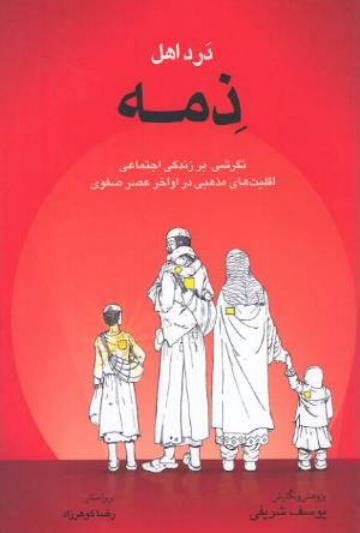
Undoubtedly, the emergence and influence of Islam as the dominant culture in Iranian society, especially after the Safavid’s rise to power and the recognition of Twelver Shiism as the official religion of the country, marks a turning point in the situation of Jews in Iran. Although there were instances of mistreatment towards Jews before the reign of Shah Ismail and the elimination of his opponents, it is during this time that the fatwas of Shia clerics are declared against non-Muslims and they are required to pay jizya (tax) and are subject to laws of diya (blood money) and qisas (retaliation), which have their roots in this era. During this time, those who did not accept the Prophet of Islam as the messenger of God were considered enemies of Islam and were forced to live under the banner of Islam. Negative propaganda began in Iran, and false claims such as not allowing Jews to enter public places on rainy days due to their supposed impurity became
A part of Shia clerics who have always been a center of political and social power among Iranians, have advocated for the restriction of Jews in their list of orders to their followers in opposition to the central or local government. In important documents during the Qajar era, European travelers’ travelogues were used to better understand the situation in Iran, where they wrote about their observations of the conditions of Iranians. In these notes, Iranian Jews in the 18th and 19th centuries were considered the weakest social class at the time. During this period, reports from international representatives such as England, Russia, Ottoman, Germany, as well as memoirs of those involved in Iranian political affairs confirm this reality.
The novel “Jahud Kushan”, considered the oldest Persian novel, and its handwritten version found in the Marashi Library in Qom, depicts the period before the Constitutional Revolution in detail. It shows the abnormal treatment of Jews by both government officials and clergy, including the planning to incite unaware masses to attack the Jewish neighborhood, looting their homes, and taking their daughters and women.
Perhaps the most famous example of anti-Semitism in Iranian religious and political culture can be found in the famous speech of Mr. Khomeini in Khordad 1342. In his protest against Mohammad Reza Shah, he asks him: “Are you a Jew?” Meaning, because you are a Jew, you are causing these troubles for the people of Iran. Let us not forget that just a few years ago, during the presidency of Mahmoud Ahmadinejad, someone raised the baseless issue of Ahmadinejad being of Jewish origin, purely for the sake of promoting himself among the reformist spectrum. It’s as if among all the damage and harm that Ahmadinejad has caused to the Iranian nation, whether economically, politically, or in terms of civil liberties, it is his Jewish origin that has caused these issues.
Nowadays, anti-Semitic remarks are easily made by many officials of the Islamic Republic, television series in the media of the Islamic Republic that are made in opposition to Jews, are no longer a coincidence and have been repeated many times; and with an empty apology and sometimes nothing, the issue has been resolved.
What is mentionable is the change in the attitude towards Jews in Iran; meaning that if in the dominant Islamic culture, a Jew, like other non-believers, had to endure difficulties and pay jizya (a tax), now with the influence of European anti-Semitism in Iran, we are witnessing a different form of anti-Semitism, which is showing a distorted and false image of our compatriots as conspirators and greedy creatures who have a plan to control the world; he is essentially leading imperialism and world domination and starting wars and crises to seize the wealth of third world countries. The same Jew who was supposed to be silent and accept restrictions to “stay” in this country, has now changed his status and is ruling over the entire Western world, its politicians, banking system, and culture with a special and hidden conspiracy. The widespread printing and distribution of the book “The Protocols of the Elders of Zion” by the Islamic Republic must be seen in this context. A book
Another example of the manifestation of anti-Semitic thoughts and consequently, behavior of the government or semi-governmental entities, is the promotion of the historic tomb of “Esther and Mordechai” in Hamedan. This site, which reflects the long presence of Jews and their close relationship with Iranians, as stated in historical writings, has been introduced and advertised as a symbol of “Jewish enmity towards Iranians” by some opportunistic individuals; to the extent that it has incited a group to take action and cause damage to this historic site.
In Iran, what has caused thousands of people from this society not to immigrate is the boundless love for Iran and Iranians, and the pride of being Iranian, which may have never been worthy of attention, but it is hoped that it will be in the future. Iranian Jews are the oldest, most law-abiding, and most friendly towards Iran and it is good to allow them to live in peace and tranquility. The issue of Jews in Iran is not separate from the desire for democracy and respect for the rights of all individuals. When tolerance and acceptance of diversity is accepted as the norm in society, then the elimination of any discrimination and the establishment of understanding among all members of the nation will become possible.
 Admin
Admin December 26, 2013