


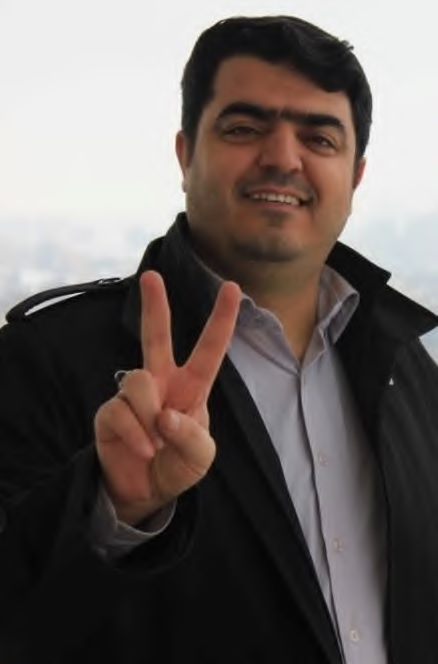
Ismaeil Abdi: The continuous presence of clerics in schools is an insult to teachers.
The education system in Iran is facing serious problems such as budget shortages and a lack of health and sports instructors; however, according to a recent agreement between the Tehran Education Department and the Tehran Seminary, the education system has committed to accepting the costs of religious instructors in schools and allocating a separate budget for this purpose.
We have had a conversation with Ismail Abdi, the Secretary-General of the Iranian Teachers’ Association (Tehran), regarding the subject of this memorandum of understanding.
Mr. Abbadi says about this agreement: “It seems that the system believes it can strengthen the conditions ideologically, which I doubt will be successful in this regard.”
He believes that the continuous presence of spiritual leaders in family gatherings, among students and teachers, is considered as justification and insult to teachers.

Mr. Abdi, Education is an educational institution. To what extent do you believe that religious teachings should be included in the education system of Iran?
See, considering that the educational approach in our country and in schools has shifted towards ideological discourse since the early days of the revolution, and many elements such as Islamic and religious insight and teaching of the Holy Quran have been included in the curriculum, and also in some stages of education, the deputy of education has been appointed; the government has shown its intention to create this ideological discourse in schools. However, the studies they have conducted themselves indicate that they were not very successful in this process, and it is even estimated that students in schools, compared to before the revolution, have not only not improved in terms of religious beliefs and anti-religious discussions, but have also worsened.
As someone who holds a position in the education system of Iran, do you know the reason for this? Why should subjects like religion, Quran, and morality be taught to children, but not receive the necessary feedback?
Due to the fact that there was no proper planning in line with technological advancements, our education system is outdated and follows a Western model. However, instead of updating our schools with technology, they were simply given a laptop or computer and labeled as “smart”. As a result, we are falling behind in modern sciences and our fundamental beliefs are not being properly taught to students. They are being introduced to these beliefs in a narrow and biased manner, and as a result, we are not seeing success. This is because the system did not invest in what was predicted and instead, due to the mismatch between behavior and structure, we have not reached our goals.
We have educational, religious, Islamic insight, and such lessons in our education system. In your opinion, what shortcomings do these lessons have that lead to the presence of clergy in schools? Is it necessary for this to happen and for there to be direct interaction between clergy and students?
I think that this is not necessary because at the national level, the clergy has access to around seventy or eighty thousand mosques, there are more than eleven thousand Imamzadeh shrines in our country, there are Friday prayer centers, and various newspapers and publications through which the clergy can advertise. Additionally, with the allocated budget for advertising in the religious sector, they can also promote themselves through national media and even social media. However, they are already doing this, but because they have not been successful, they should not come and directly enter the field of education. This agreement, signed between the Tehran Education Department and the Tehran Seminary, aims to place government schools under the coverage of a plan called “Amin Schools affiliated with the Seminary”. According to this document, the educational management of these schools is supposed to be established by the clergy, and the Tehran Education Department has made commitments to the Seminary, including the issuance of notifications by the deputy and their distribution to different regions and schools
According to this plan, will clerics be recognized as teachers or will they enter schools as assistant coaches?
No, unfortunately in every school, clerics are defined in a fixed manner and continuously, families and teachers must be covered and the education system promises to provide a platform for clerics to continuously justify themselves in meetings, families, students and teachers. In my opinion, this is an insult to teachers. On the other hand, according to the question you asked, they do not perform the role of a teacher in a verbal and traditional manner and only have a supervisory role, which is a clear insult.
Is this plan only going to be implemented in Tehran?
Yes, the agreement between the Ministry of Education and the seminary is specific to Tehran and is being implemented within Tehran, currently at the high school level. However, according to the approach outlined in the national education document, this plan will be extended to middle and elementary schools and gradually, in my opinion, will be implemented at a national level.
I would like to explain some of the contradictions that exist to you: Firstly, our schools are facing problems in terms of health and sports coaches. For every approximately four thousand students, we have one health coach. Now this number may be a bit lower, for example three thousand and five hundred. This means that one health coach has to teach four thousand students! While in the world, there is at least one health coach for every five hundred to seven hundred students. Currently, we have all these health problems and specific diseases, and education does not address this issue. Now they also want to introduce religion into education and give them control. On the other hand, we have a defined organizational position for this part in schools and there is a deputy for education for this purpose, and in any case, there is a conflict between the performance of the clergy and the education coach. They have not specified how the performance will be. That is, whether the clergy is above the deputy for education or vice versa
In addition, we also have doubts about the legality of this agreement, because the regulations of education do not allow the Minister or the Director General to convert a public school in any way they want, and the opinions of parents and students about the conversion of these schools have not been taken into account. In my opinion, a scientific survey should be conducted and international organizations should monitor it and the rights of students should be considered, as students have the right to have a say in this matter. Also, a survey should be conducted among parents and teachers to determine how many people in our country are satisfied with the idea of clergy entering education in a fixed and uncertain manner, even though there is certainly a motivation among the clergy to come and take control of the overall management of education.
I wanted to know if, in your opinion, the presence of clerics in schools is a political move to take control of schools by the seminary or, as claimed, it only has an educational aspect?
This plan was formed four years ago with the intention of establishing a series of pre-seminary schools, meaning that clerics would enter schools to promote the seminary and transfer talented students there. On the other hand, this agreement seems to have a political aspect to it. Perhaps the ideological aspect is more prominent, but it still has a political direction and it seems that the authoritarian movement is pleased with this issue and you can see this in their discussions.
Do you know or can you estimate where the budget for such programs will be provided from and whether allocating such budgets to these types of cases can be a priority for the Ministry of Education?
The order of the clergy is from the Ministry of Education and in clause 3, note 9 of the agreement it is mentioned that special financial support and provision of needs and facilities should be provided for the clergy and the costs should be borne unilaterally by the Ministry of Education in collaboration with the clergy. Considering that the Ministry of Education is currently facing budgetary issues, it seems that this plan will not be successful as the costs will surely be high.
The field of seminaries has established a number of non-governmental schools called “Sadra” and there are about one hundred to two hundred high schools in the form of pre-seminaries that are currently carrying out this work. This has probably motivated them to come and also do this work at the government level, which undermines the independence of the education system and even the independence of the seminary itself. It is not clear if even the seminary itself, at its highest level, agrees with this movement, as the direct presence of clerics may harm their own reputation and is also an insult to teachers, school staff, and even middle managers. In my opinion, this agreement should be canceled because its implementation and mechanism are not clear.
Dear Mr. Abbasi, does the Ministry of Education collaborate with other organizations such as the Ministry of Health or the Red Crescent, which are also responsible for educating children in areas like this? Or is this type of collaboration only specific to your department?
I think the approach to education and upbringing has not been in a way that they work in the fields of environment, health and historical issues. For example, they can now make a contract with the environment of Tehran and have environmental experts come and talk about health and related issues. They can also make a contract with cultural experts, considering that Dr. Najafi himself has separated from the body of education and has been the Minister of Education for several years and is popular among the cultural community. They can use his capacity. I even think that if this proposal is presented to Mr. Najafi, they can ask for a discount from cultural experts to come to schools and explain the historical situation of our country and the heritage of our ancestors to students from different areas and familiarize them with it. Other activities can also be done with other institutions, but unfortunately, the approach is ideological. It seems that the system thinks that by doing this, it can strengthen the situation ideologically, which I doubt will be
Dear Mr. Abdi, you brought up a discussion about ideology; Mr. Rouhani has stated in his speeches that there is an ideological approach to education. How much do you agree with this statement? If you agree, don’t you think Mr. Rouhani’s words have strengthened this issue?
I doubt this process will be dependent on the opinion of the honorable president; as I mentioned, this approach has been in place for four years and has become more prominent and public this year; meaning they have already made this decision beforehand. In fact, this approach has existed since the early days of the revolution; now some of our colleagues who are going backwards and say that even before the revolution, the clergy had collaborated in writing textbooks… In any case, it is these types of collaborations that balance the work, not direct interference from the clergy.
Of course, it is possible that the pressure for its development is based on the same thing. Mr. Rouhani said during the elections that I agree that every political-social system should emphasize its ideological and political beliefs on education and upbringing, but in our country, this ideological and political process is very intense in education and upbringing. Well, the power-oriented and in fact dogmatic currents have reacted to Mr. Rouhani’s statement. If you look at social media or newspapers, you will see that there has been a very explicit reaction to this issue. But I doubt that this agreement is exactly related to Mr. Rouhani’s statement, although it may have catalyzed it, meaning that it has accelerated it to some extent.
Do you have any other specific conversation?
To conclude, I would like to add that there are some issues currently happening in education that have caused some concern among our colleagues. These include the sudden closure of schools on Thursdays, which was not clearly explained and is now being debated for reinstatement. Another issue is the four-bell system in schools, which is really damaging to the educational process, as students do not receive any academic instruction after the fourth bell at 1 PM. In addition, there have been constant changes in the curriculum and structure of education, with the old system being replaced by a new one and thousands of different plans being implemented within it. The 6-3-3 plan was not evaluated and there is no strong will to organize and standardize schools. The Shina Abad incident, the Shift incident, and the deaths of students during non-expert educational trips should be eliminated. All of these issues require expert attention and cannot be solved by the clergy. The structure of education must have an approach that is
I hope that the future will provide a suitable platform for respected educators and students to experience positive changes.
Thank you for giving your time for the peace line…
 Admin
Admin February 21, 2014