


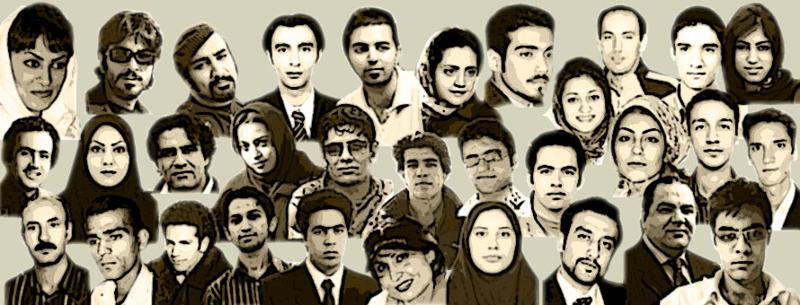
A general overview of the events of 11 Esfand 88.
In modern and contemporary societies, two factors are considered as indicators of progress and prosperity of a political society: first, freedom of news and circulation of information, and second, respect for fundamental human rights, known as “human rights”.
The connection between these two factors in ensuring security and well-being of a society is so great that nowadays the media is referred to as the “fourth pillar” of democracy and the concept of “democracy” as the ultimate goal of all human societies is manifested in the respect and observance of human rights in governments. In fact, the existence of individuals and organizations working in the field of human rights is one of the essential tools for intellectual, political, cultural growth and the development of democratic foundations in a society, without which all freedom-loving activities will undoubtedly go astray. On the other hand, contrary to the claims of dictatorial governments, the existence of such activities makes them at least adhere to minimum standards in dealing with people and opponents, so as not to provoke human rights activists more than ever before. This last point is enough to emphasize the importance of the existence of such activities and activists.
It is obvious that one of the best factors for informing people about their rights and preparing them to assert their rights and familiarizing them with the human and legal foundations that every individual should have based on modern political and legal philosophy, is information dissemination about human rights by institutions and individuals active in the field of information dissemination and human rights. Undoubtedly, “The Collection of Human Rights Activists in Iran” is one of the few collections that, with faith in its mission, without any specific political spectrum and affiliation, has fulfilled its sacred and crucial duty of informing in the areas related to human rights and its foundations, and the violations of it in the current regime of Iran.
In the midst of all this, governments and political regimes that are run by a small group of people based on authoritarianism and power concentration, consider the two mentioned factors, namely “human rights” and “free press”, as their biggest enemies and use all their power to restrict, control, and even suppress these two factors; because they are certain that these two titles are the biggest threat that can shake the foundations of their authoritarian rule.
Given the above introduction, it is very natural that those who are active in areas related to both issues are more closely monitored by governments such as the Islamic Republic and are subject to more careful control and suppression in an attempt to limit and control them.
On the other hand, in Iran, due to the sensitivity of the government towards the activities of human rights activists, these activists have not had the slightest margin of security; because they are not affiliated with any specific group, party, or movement, and only based on their humanitarian mission, they speak out about what society needs to know. They consider their goal to be defending the rights of citizens, who easily have their rights violated by the government, and in all cases where unrest has occurred in the country or the government has wanted to show its power, the first victims have been the “human rights activists” in Iran and will continue to be so.
The best example and indicator in this field was the unprecedented security and intelligence attack by the Iranian government in February 2010, which was carried out using all means of advertising and all software and hardware facilities. This event can be seen on one hand as the government’s reaction to tactical actions after the unrest of that year and covering up for the unrest that ended that year, and on the other hand, as the biggest confrontation of the Islamic Republic government with human rights activists since its establishment.
In fact, what makes the volume of 11 Esfand important is the clash of the dominant ideology with the topic of “human rights” and its activists in this field, not a simple clash that the government usually has with its opposing groups; because on one hand, the nature of human rights activists’ activities is different from other political and party activities; meaning that they are not seeking to introduce a replacement for the government and overthrow it, but they are seeking the respect of human rights by that government and any other government, and on the other hand, the impact of these individuals’ activities, due to their lack of political and party nature and lack of affiliation with a specific movement or ideology, makes these types of activities acceptable to the general public.
What happened in December 2009 was a well-planned and extensive operation by the Sepah (Iranian Revolutionary Guard) that had been preparing for it for a long time. On the 11th of December 2009, they launched a coordinated attack and arrested a large number of human rights activists. This operation has continued until today, four years later, in other forms and dimensions.
The series of actions that began with the arrests on February 11th and in the following stages, the information activities of the Islamic Revolutionary Guard Corps, the websites belonging to the group, and their emails were hacked by the cyber army on February 23rd. The purpose of this was to identify forces that did not openly cooperate with the group and on the other hand, by destroying the group’s bases, they attempted to prevent the group from disseminating information and timely responding to the allegations raised in the next stage, and also to showcase their capabilities.
In the third stage, which continues in various forms until today, the government, using its immense media power in television networks, newspapers, and affiliated websites, engaged in negative advertising. By connecting these young groups to political or violent organizations, or other countries’ institutions, they attempted to discredit them through these controversial actions. These actions continued for years, with several hours of video and multiple pages of content published under different titles on internet media and domestic newspapers. Even in photo exhibitions, images of organizational charts designed by Sepah experts were displayed as the achievements of this security institution in the field of soft war. They also published a book titled “Passing the Sedition” which dedicated more than 13 pages to introduce and destroy this group.
An interesting point to note is that some of the detainees were labeled as “members of the human rights activists group in Iran”, even though they had no connection to this group and were not actually members. However, under the guise of combating this group, these individuals were also arrested or even simple colleagues who were active in the country were introduced as senior officials of organizations outside the country.
After the arrest of the members of the group, all efforts and attempts of security forces and the Revolutionary Guard were focused on publishing their confessions in line with their own agenda and presenting it as evidence of the truth of their claims to the public. Now, four years after those events, Mr. Mehdi Khodai, Abolfazl Abedini, Nasour Naghipour, Eqan Shahidi, Navid Khanjani, and Mohammad Hassan Yousefipour are currently in prison, and some of them have been pressured by security authorities to request amnesty.
In any case, what is certain is that according to the beliefs of human rights activists, the path they have chosen and the sincere efforts they make in this regard, it seems that actions of this kind can never hinder Iranian human rights defenders from fulfilling their mission.

 Admin
Admin March 22, 2014