


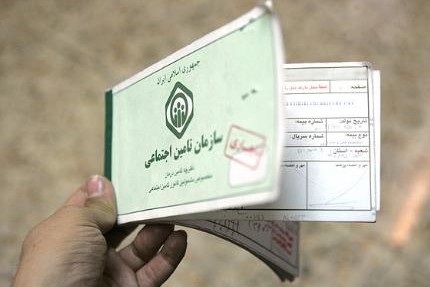
Challenges facing the Social Security Organization / Panteha Bahrami
Iran is considered one of the countries where not all individuals are covered by health insurance. According to Article 29 of the Constitution, all Iranians must be covered by health insurance. Despite the fact that 2 years have passed since the establishment of the Health Organization, which was supposed to allocate 10% of the subsidies to its budget, many people in the country are still deprived of health insurance. However, for example, armed forces are covered by the Health Organization. Another organization that is responsible for providing health insurance to a portion of Iranians is the Social Security Organization, which covers 12.8 million people, including 38 million individuals when considering their families, for medical services. Out of the 12.8 million individuals covered by the Social Security Organization, 8 million are workers and the rest are from various other sectors, such as employers, students, self-employed individuals, etc. The Social Security Organization insures two groups: wage and salary workers (mandatory) and self-employed individuals (
However, the Social Security Organization, which was formed with the contributions of workers in 1968, is now heavily indebted and on the verge of bankruptcy. This has become a source of protest for many workers.
The tasks of the Social Security Organization
Medical expenses for insured individuals and their families, including medication and hospital costs, are among the responsibilities of the Social Security Organization. However, in hospitals outside of the Social Security Organization, 70% of medical expenses are covered by the organization and 30% by the insured individuals (workers). Jafar Azimzadeh, a labor activist, tells us: “The number of hospitals under the Social Security Organization is so low that workers are forced to use private facilities near their place of residence, and now we must reverse this; meaning 70% should be covered by the insurer and 30% by the Social Security Organization, which is truly burdensome.”
Some of the responsibilities of the Social Security Organization include retirement, disability and survivor benefits, unemployment insurance, compensation for sick leave, compensation for maternity leave, and payment for medical aids. Providing financial assistance for marriage, and even covering funeral expenses are also among the duties of this organization.
Employers are required to insure their workers and employees; for various insurances, the Social Security Organization deducts 7% of workers’ wages, the employer pays 20%, and the government contributes 3%. In total, this 30% is paid to the Social Security Organization for workers’ insurance.
In 2013, the government did not pay its 3% share and in this year, the government owes 60 billion tomans to the Social Security Organization. In 2014, this amount will reach 90 billion tomans.
Complaint regarding embezzlement in the Social Security Organization.
In the month of Esfand 91 (February/March 2013), finally the protesting workers were able to present their collective protest to the judiciary by their lawyer, Dr. Khalil Bahramian. This complaint, filed by approximately 1500 employed and retired workers, was based on a 146-page report prepared by the investigative committee of the Islamic Consultative Assembly. It should be noted that various petitions of protest against the violations of the Social Security Organization had been received from all over the country.
Workers from various factories complained in this plan; including factories such as petrochemical factories in Mahshahr region, Kian Tire, construction, metal industries, Tehran Bus Company, Kurdistan textile and others.
The accusations in this case include embezzlement, fraud, bribery, unjust enrichment, and disrupting the country’s economic system. The defendants in this case are Babak Zanjani, Saeed Mortazavi, Sheikh Al-Islami, 37 members of the Islamic Consultative Assembly, the former board of directors of the Social Security Organization, and dozens of others whose names are mentioned in the report of the Investigative Committee of the Islamic Consultative Assembly. This complaint has been filed by workers’ representatives against all those who have illegally taken control of the assets of the Social Security Organization since the war.
One of the demands of the workers is to investigate the embezzlement charges of this organization in previous years. Jafar Azimzadeh says in this regard: “It is not fair for the retired employees to be paid from today’s revenues. The workers have paid money to this organization for 30 years and they have invested in various companies, so the bankruptcy of this organization is related to the looting of workers’ property.”
Reasons for workers’ objections
The parliamentary investigation committee has revealed the reasons for embezzlement in the Social Security Organization, which is considered a major cause of its bankruptcy. The National House News Agency has reported that after the publication of this committee’s report, the payment of billions of dollars in gift cards to 37 members of parliament and some government officials, including the former First Deputy President, has been announced.
The Parliamentary Committee on Investigation and Inspection has reported on the violations of the Social Security Organization in the transfer of 138 monopolized companies worth 4 billion euros to Sorinet Qeshm Holding Company, managed by Babak Zanjani. These companies include Iran Air, Khuzestan Steel, Isfahan Mobarakeh Steel, Export Bank, Homa Hotel, Ghadir Petrochemical, Tabriz Petrochemical, National Iranian Tanker Company, Iran Wood and Paper, various insurance companies (Mellat, Mihan, Dana, Parsian), Islamic Republic of Iran Shipping Lines, and various banks such as Pasargad, Tat, Parsian, and Dey.
Jafar Azimzadeh, one of the representatives of protesting workers, believes that the investigation and examination of the parliament regarding social security has no relation to any structural changes in this organization, but rather is more about political competition. He says, “This organization belongs to the workers, it is not a branch of the government and its management has no connection to the government.”
In 2010, when the first investigation and examination of the Parliament regarding the Social Security Organization took place, Jafarzadeh, the head of this committee, announced in an interview in Mehr that from the first day, this issue was faced with political pressures, including from the Parliament’s presiding board, Mr. Larijani. Jafarzadeh says, “If the presiding board of the Parliament did not prevent us from continuing our work, we could have disclosed more than 3 trillion tomans of documents and evidence of violations in more than 150 retirement companies in Shasta.”
The second stage of investigation and examination begins when the government separates the Social Security Organization from the Ministry of Cooperation and brings it under its own jurisdiction, appointing Saeed Mortazavi as its head.
Workers do not have direct access to the documents of the Social Security Organization. All information about workers comes from the report of the Parliamentary Investigative Committee, which refers to the violations of this organization during the presidency of Saeed Mortazavi. Some worker representatives say that these reports are politically and factionally biased, and for this reason, they do not mention embezzlement and violations before 1990 and previous governments.
New challenges: Separation of treatment section
One of the major challenges of this organization is having abundant resources and the government’s desire to merge it with other organizations, such as the Ministry of Health.
The Social Security Organization is considered one of the largest economic organizations in the country. This organization has 9 companies and organizations under its umbrella, one of which is the Social Security Investment Company, also known as Shasta, which was established in 1365 (1986).
In 1376, the Welfare and Social Security Expansion Company was established to plan and manage tourism, pilgrimage, and welfare affairs for retired employees. In addition, the Social Security Real Estate and Property Institution was also founded in 1366 to provide services for the maintenance of properties and buildings belonging to the organization.
It is worth mentioning that there is no industry in which Shasta has not invested, from oil and petrochemicals to pharmaceuticals and cement, agriculture and animal husbandry, metal industries such as steel and copper, and non-metal industries such as ceramics, tiles, transportation, construction, shipbuilding, etc. It is not without reason that investors and different factions compete to take control of managing this organization.
According to its charter, the Social Security Organization is an independent organization that is managed by the government, but it is not considered a government asset.
One of the new challenges of this organization, which has also sparked protests from many workers, is separating the medical insurance section and merging it with the Iranian Health Organization and transferring it to the Ministry of Health.
One of the reasons for the opposition of workers to this merger is the issue of the government’s indebtedness of tens of thousands of billions of tomans to the Social Security Organization, in which case the government becomes indebted to itself. We remind you that the government has not yet paid its three percent share in 1392, which amounts to over 60 billion tomans.
In the new plan prepared by the new CEO, Mr. Noorbakhsh, of the Social Security Organization, the plan is to transfer or hand over the medical insurance affairs of this organization to the Ministry of Health. According to this plan, the medical affairs will be separated from the insurance department of the Social Security Organization and will become a subsidiary of the Ministry of Health. If this plan is implemented, the provision of medicine will be a very profitable sector for the government. The monopoly of production and distribution of medicine, if the plan is put into action, will directly fall under the control of the Ministry of Health and pharmaceutical companies, which will be a profitable and monopolistic field. For this reason, workers and retirees have widely protested against this plan. Even the voice of the Workers’ House, which is not considered an independent organization, has risen in protest against this plan.
Hassan Sadeghi, from the Workers’ House, in a conversation with ILNA, says: “Today, the efforts of the parliament and the Ministry of Health to re-separate the responsibility of managing the medical sector of the Social Security Organization are taking place while the Ministry of Health has not spent even one rial of its resources in these centers in all these years. If it is intended to provide equal and equal medical services to all citizens, then why do insured workers of the Social Security Organization pay more insurance than other citizens who use the services of various national, military, and rural health funds?”
 Panteh’a Bahrami
 December 13, 2015