


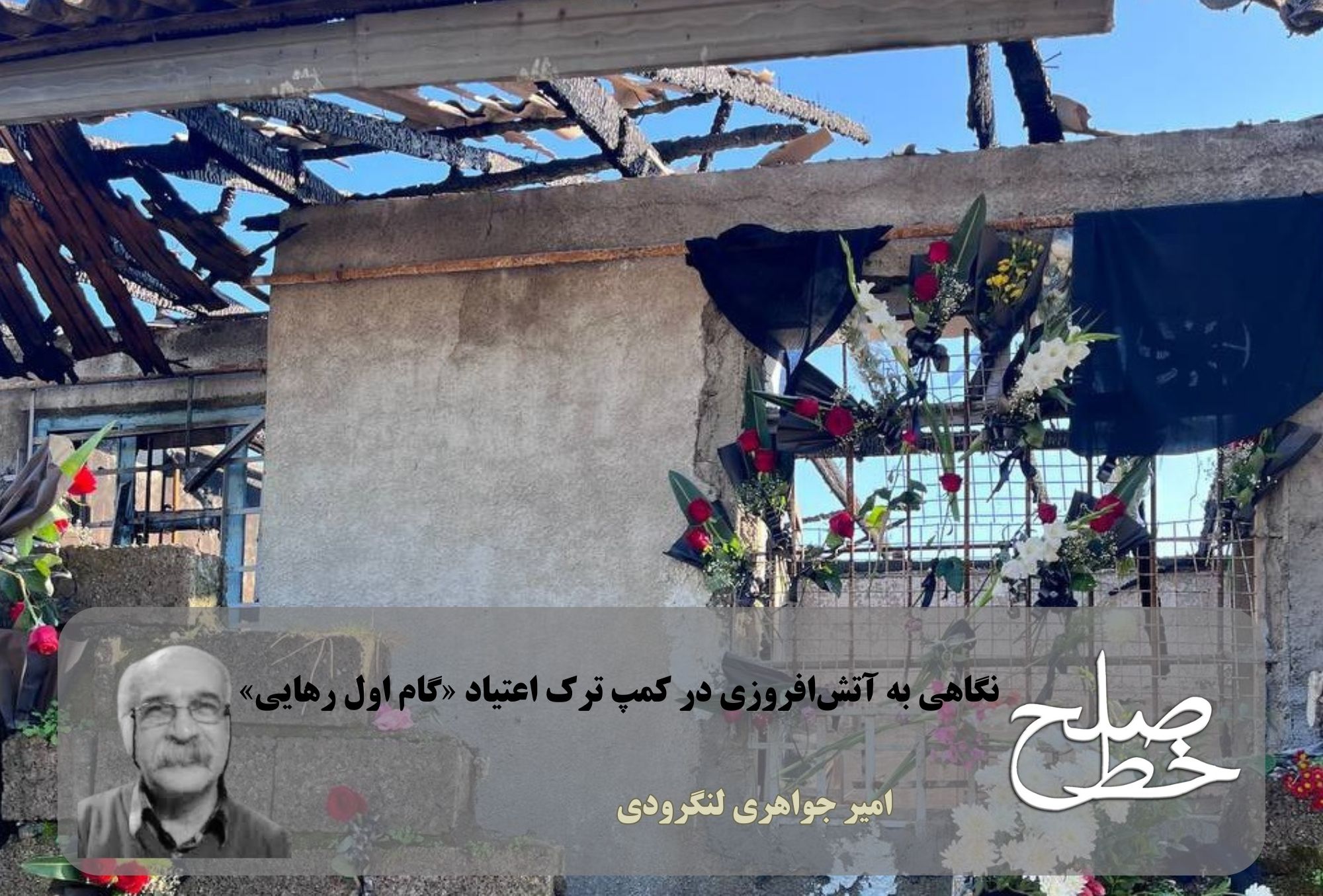
A Look at Fire-Building in the Addiction Recovery Camp “First Step to Freedom” / Amir Javaheri Langroudi
The city of Langroud in Gilan province is one of the prominent cities in terms of cultural and social issues, with dozens of enduring figures in the lush green region of northern Iran. However, like many other cities and provinces in the country, concerning news can also be heard in this city; including the tragic fire incident on Friday morning, 12th of Aban 1402, in the “First Step to Freedom” addiction camp, which resulted in the loss of 32 lives and 4 injured individuals who later passed away in the hospital, bringing the total number of victims of this unforgettable tragedy to 36 deceased and several injured and wounded.
“Unbelievable reports of this incident, including the overnight arrest, imprisonment and overcrowding of the rural population (who were trapped) and the delay of firefighters due to lack of water in the fire truck, the closure of the camp and similar circumstances, led to an increase in the death toll. It’s as if, if it was daytime, this tragedy would not have happened!?”
After more than a month has passed since this tragic incident, it seems that all efforts to investigate the matter have been completed. The uproar, displays, and back-and-forth of the selected parliamentary commission, the judicial system and the Ministry of Interior, the governor and the mayor, the city council and the Friday prayer leader, and most importantly, the Welfare Organization of the province – which was responsible for managing the camp – have all come to an end with no effect or result. In the midst of all this, only the families were not kept in the dark and no one is expected to answer their numerous questions.
Many families wanted and still want to speak out, but doubt and the difficult circumstances prevented them from expressing their opinions. Everyone, without considering the depth of the events, only looked around. Each person was thinking about receiving the body of their beloved lost one, and no one thought that in addition to their own beloved body, thirty other bodies were also left in the same burning hall. As an excuse that society does not approve of addiction, the burnt bodies were immediately buried without even being properly identified. Their burials took place in various villages and neighborhoods, including Komeleh Kolak Mahalleh, Shalman, Bala Rud Pasht and Payin Rud Pasht, Ataghur, Papkiyadeh, Maridan, Naser Kiadeh, Chaf, Sultan Moradi Village, Dastak, Rankuh Amlesh, Lat Lile Shastan Rud, Ashkoorat Rahimabad, Chaf Jir Rudsar, Gavah Sar
Several issues have remained unanswered for the public and families of victims in Langroud city until now. This “Addiction Treatment Camp” or the “First Step to Freedom” institution was under the management of a person named “Mohammad Heydari”, who himself had a history of addiction and then started a non-standard camp in a dilapidated and revived school from the Reza Khan era with the desire to make money through addiction treatment. This old building, without any proper facilities, was being run by Mohammad Heydari with various connections, bribes, and corruption, and it is said that he made a profitable business by charging young people from 200,000 tomans to 20 million tomans for staying in the camp. Others either joined him or received a share from him. But where are those people today?
There are two points we must remember about addiction treatment camps:
First: According to Article 4 of the Executive Regulations of Authorized Treatment and Harm Reduction Centers, the “National Supervisory Committee on Authorized Treatment and Harm Reduction Centers” consists of a combination of representatives from the Ministry of Health, Ministry of Labor, Medical Council Organization, and the Secretariat of the Drug Control Headquarters.
Second: Regarding the incident of “Langroud Addiction Camp”, the lack of precise supervision by the monitoring committee on the illegal behavior of this camp – which has led to the death of 36 people – can be considered as an example of abandonment of action and participation in the commission of a crime, in accordance with Article 295 of the Islamic Penal Code. Therefore, the judicial investigation into the negligence of government agencies in this case is crucial.
This camp had neither a permanent doctor, nor a psychiatrist, nor a healthy counselor (who was not forced to quit addiction) and it has been said that eight people had the key to that fateful night and managed to escape with their lives; but where are they now and how do they answer for this great crime?
If we don’t speak out against indifference, it must be said that the disciplinary plans and “organizing” programs that have been opened in the media have deafened the ears of the heavens. What happened during the bloody crime and arson in the “Zardab neighborhood of Langaroud” is a part of the daily lives of thousands of homeless and addicted people who are wandering between camps, care centers, or on the streets. Neither society nor the government wants them; because the government does not have a basic roadmap to eradicate this devastating disease. Everyone prefers to be rid of such people without any fuss. Polls show that many people do not want to see addicted individuals, many agree with their collection and punishment, and of course, their death is not important. Right now, the police and judicial forces are following the unsuccessful and ineffective plans in China and Machin, to pass a law in parliament to extend the mandatory stay in camps from six months to two to five years; lest it
These are the layers of chaos in this community. Nevertheless, let us not forget that today’s blatant murder of 36 people – whose only crime was their addiction – has choked us and has caused a wide city and region to mourn. Let us not forget that the murder of an ordinary citizen by any criminal in public is more than just a denial of humanity in the eyes of the public and must be recognized accurately and not denied. We must not normalize this crime and be proud that some addicts have been removed from society. In a society where addiction is rampant, all families are worried that tomorrow it will be their turn to mourn the loss of their loved ones.
Based on what we have brought, today is the time to urgently consider solutions for these so-called addiction treatment centers, in order to prevent such horrific and devastating crimes. We must learn from the tragedy of the fire in Langaroud and make it our guiding light, and not trust anyone blindly as the responsible manager, so that we do not become the hot silver of our children forever.
 Created By: Amir Javaheri Langaroudi
 December 22, 2023
Tags
"Addiction Recovery Camp" "Leaving addiction" 1 The Treaty of 1521 Addiction Amir Javaheri Langroudi Camp fire of addiction withdrawal Gilan Province Langaroud Ministry of Health Ministry of Labor Narcotics Supporters The first step of liberation. Usual