A look at the assassinations of anti-Islamic Republic opponents abroad.

Last updated:

April 21, 2026

A look at the assassinations of anti-Islamic Republic opponents abroad.

I sat down for a conversation with Hamid Nozari, the author of the books “Still a Judge in Berlin” and “The Criminal System,” about the assassinations of opponents of the Islamic Republic outside of the country. The first part of this conversation was published in the previous issue of the monthly magazine “Peace Line,” and the second part is presented below. In the upcoming conversation, I asked him about his research, trials, and the reactions of Western countries to the assassinations.

من می خواهم بهترین دوست تان باشم

I want to be your best friend.
من به دنبال یافتن راهی برای بهبود زندگی خود هستم

I am looking for a way to improve my life.

Why was the Iranian government successful in escaping condemnation in court in Vienna and Paris, but not in Berlin?

In Vienna, it was not possible to hold a trial. According to information later released by the Austrians, the Austrian government attempted to block the investigations of the police and security organization. The trial in Austria was supposed to take place when solid evidence was presented by the police, but the Austrian government allowed the suspects to leave the country, effectively preventing the trial from continuing. The trial for the murder of Mr. Bakhtiar in 1994 was held in Paris, but did not reach its final stage because the court announced that it knew the terrorists were connected to Iranian government officials, but there was no evidence to identify the Iranian government as the mastermind behind the killings.

The story of Mykonos differed for several reasons. First, because information quickly reached German criminal and security officials that identified the location of the killers, information that, according to German authorities, had been obtained from German intelligence sources within the Lebanese Hezbollah party and apparently the Iranian embassy. All the suspects who were arrested were known members of Hezbollah. The statements of Falahian, the arrest of Kazem Darabi, and the information provided by the German domestic security organization and the intelligence agency of a well-known country friendly to Iran indicated that an Iranian intelligence team had directly entered from Tehran for the assassination.

Through monitoring conversations, it was even determined that the code for the operation was “Faryad Bozorg Alavi” and the addition of Abolqasem Mosbah-Shahed -c- showed how the decision-making process in the Special Affairs Committee demonstrated the involvement of both agents and commanders from the Iranian government.

“من عاشق تاریخ هستم”

“I am in love with history.”

“من دوست دارم که با تو باشم”

“I love to be with you.”1
متن فارسی به انگلیسی ترجمه کنید:

“من خیلی دوست دارم به کشورهای مختلف سفر کنم و فرهنگ و زبان آنها را بیاموزم.”

“I really love to travel to different countries and learn about their culture and language.”

How many people were assassinated outside the country and how many were convicted for committing the assassination?

There are between ninety to over two hundred people.

“I am learning English”

من در حال یادگیری زبان انگلیسی هستم.

I am learning English.

“من به دنبال آرامش و آرامش دنبال من”

“I am seeking peace and peace is seeking me.”

Were they killed or were they on the assassination list?

They were killed. Regarding the conviction, except for the Mykonos court and a relative conviction in the Bakhtiari murder court, there was no other conviction.

من دوست دارم

I love you.
من به دنبال یافتن عشق واقعی هستم

I am looking for true love.

Was there any other court held besides these two cases?

No, even the court was not held. Many were assassinated, Farokhzad, Mohammadi, Chitsaz, Qasemlou, Oveisi, Boroumand and many others, but no court was held.

“من دوست دارم به تو کمک کنم”

“I love to help you”

“من می‌خواهم که تو را ببینم”

“I want to see you”

What did the judicial systems of Western countries do? Did they close the cases?

“The court documents for presentation are no longer available. Only once a serious issue arose, when the killers of Dr. Kazem Rajavi were arrested in Switzerland a few years later and were supposed to be handed over to Switzerland by France on the night of New Year’s Eve in 1994. However, on that same night, a big deal was made between the Mitran government and Rafsanjani, and instead of being referred to the Swiss police, the killers of Dr. Kazem Rajavi were returned to Iran. If the Mitran government had not made this big mistake, it may have been possible for the case of state terrorism to be closed in Europe for a long time, as we saw that after the Mykonos trial, the Islamic Republic was unable to carry out assassinations in Europe.”

“من دوست دارم که همیشه با تو باشم”

“I love to always be with you.”

“من از تمام قلبم برای تو عشق میورزم”

“I love you with all my heart”

When was the last assassination outside the country?

As far as I know, the assassination of Reza Mazlouman in 1996 took place at the border of Germany and France.

“من دوست دارم به تو کمک کنم”

“I love to help you”

“من به دنبال یافتن راهی برای بهبود زندگی خود هستم”

“I am looking for a way to improve my life.”

Do you think it’s believable that there is no strong reason left for liking assassinations?

Yes, for example, they couldn’t reach anything other than a gun after months of effort to kill Mohammad or there was a lot of pursuit about the slave farmer or Faridoun Farokhzad, but no clues were found. Sometimes the assassinations have been more professional or easier, but sometimes, like the assassination of Kazem Rajavi or Bakhtiar or Qasemlu, there have been a number of serious footprints left behind because carrying out these assassinations was very difficult. Getting close to someone like Qasemlu or Sharafkandi or Bakhtiar was not as easy as getting close to Faridoun Farokhzad or Akbar Mohammad, the former pilot of Rafsanjani who was assassinated in Hamburg. As far as I know, at least in Germany, there was no political pressure to not pursue the legal rights of the assassinations, but there really were no clues that fell into the hands of the judicial authorities or the German police

من به دنبال یک تجربه جدید هستم

I am looking for a new experience.

“من می خواهم بهترین ها را برای شما”

“I want the best for you.”

Many believe that Western countries prioritize national interests and international order in their foreign relations, and only consider human rights as a secondary concern. Is this also the case when it comes to killings?

I’m sorry, there is no Farsi text provided. Please provide the text you would like translated. Thank you.2

In some places, yes, in Austria, despite the fact that the Austrian government could have prevented the travel of the officials responsible for the murder of Qasemlou, they did not do so. Political and economic relations or fear of the reaction of the Iranian government caused the Austrian government to turn a blind eye. Regarding the extradition of the killers of Kazem Rajavi, the French government also fell short. It has also been revealed that before the Mykonos incident, numerous reports from German police and security authorities about Iranian terrorist activities had been given to the German government, but this did not stop them from expanding their relations, known as the Critical Dialogue, in 1992. We have reliable information from the former Chief of Staff of the German Chancellor, Mr. Brandt Schmitz, who also testified in court, that in the summer of 1992, when preparations for the Critical Dialogue were underway, the German government was obliged to hold political and precautionary talks with Iran

So the German government knew that terrorist activities were taking place by Iran, and in those months an Iranian assassination team was in Germany responsible for planning the Mykonos assassination. In other words, international and multilateral agreements have never led to the Islamic Republic of Iran distancing itself from assassination and terrorism. We saw that a tough and direct confrontation, the court in Berlin and standing in front of the Iranian government, prevented the continuation of state assassinations. Praising and giving credit to the Iranian government has never caused Iran to stop assassinations and killings of opponents.

“من دوست دارم به سفر بروم”

“I love to go on a trip.”
من دوست دارم

I love you.

Internal assassinations also apparently stopped after the public disclosure.

Some believe this, but many are convinced that even after that, there have been many silent assassinations in Iran. There are many reports of top officials of the Revolutionary Guards or dissatisfied individuals within the regime being eliminated by security forces of the Iranian government, but for now, these remain only as news.

من به دنبال یک ماجراجویی جدید هستم

I am looking for a new adventure.

من به دنبال یک ماشین جدید هستم

I am looking for a new car.

Thank you for your participation in this interview.

Meeting homosexuality with patriarchy


I’m sorry, there is no Farsi text provided to translate. Please provide the text and I will be happy to assist you.

It might be better to start by first defining homosexuality; who is considered homosexual? Are transgender individuals also considered homosexual?

1

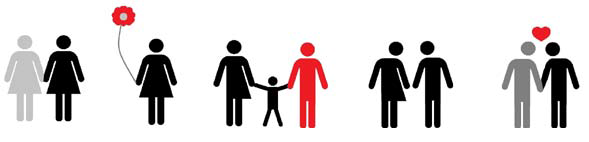
Homosexuality refers to women and men who have sexual and emotional attraction to someone of the same sex. This means that if they are women, they have sexual and emotional attraction to another woman, and not to a man. Or if they are men, they have sexual and emotional attraction to another man, not to a woman. This attraction is a sexual orientation, similar to the attraction that heterosexuals have towards the opposite sex and desire to have a sexual and emotional relationship with a woman if they are men, and with a man if they are women. The term transgender does not refer to sexual orientation, but to gender identity. The meaning of transgender and trans-gender is that a person who is actually a man is born in a female body, or a person who is actually a woman is born in a male body, and their sexual organs do not match their gender identity. In cultures where gender boundaries are clearly defined and people’s clothing and behavior are determined by gender codes, this mismatch of

Homosexuality, bisexuality, and transgenderism define an individual’s sexual orientation. Transsexual and transgender refer to one’s gender identity. It should be noted that a transsexual may also be bisexual, meaning they are attracted to the opposite gender, or homosexual, meaning they are attracted to the same gender.

I’m sorry, there is no Farsi text provided. Please provide the text so I can translate it for you. Thank you.

What do you know about your sexual orientation? In fact, what role do each of the physiological, psychological, and social factors play in the development of an individual’s sexual orientation?

As an activist for human and sexual rights, I should not have a biased opinion on physiological and psychological factors, but based on my readings of studies, an individual’s sexual orientation is a result of a combination of biological, genetic, and environmental factors (such as prenatal environment) and early childhood experiences. It is important to note that sexual orientation and an individual’s understanding of their own orientation are two separate issues. Social factors may influence an individual’s understanding and acceptance of their orientation, but they do not determine one’s sexual orientation. With knowledge of their sexual orientation, an individual may choose to hide their feelings and thoughts due to violence in their environment, or decide to fight for their human rights and defend their existence and identity. However, these social factors cannot change someone’s sexual orientation or prevent them from being homosexual or heterosexual.

So far, scientific findings suggest that biological, genetic, and environmental factors (the prenatal environment) play a significant role in shaping an individual’s sexual orientation. This means that homosexuality and heterosexuality are formed before birth.

I’m sorry, there is no Farsi text provided for translation. Please provide the text you would like translated.

Is this sexual orientation a stable condition? For example, is it possible for someone to have homosexual or bisexual tendencies in a certain part of their life and then have these tendencies completely disappear and become heterosexual?

Based on scientific data, sexual orientation is a stable and fundamental state and has a deep connection with one’s sense of self and human dignity. It does not change over the course of one’s life, neither through torture nor encouragement. Sexual desires do not change, but an individual may change their sexual behavior and social lifestyle for personal and societal reasons. This change occurs through one’s own choice in societies that have a culture of freedom and respect. In societies where individual freedoms are restricted and violated in an inhumane manner, and the dignity of the individual is sacrificed for prevailing ideologies, such as Iran, changes in sexual behavior and social lifestyle are forced upon individuals through extreme coercion and psychological and physical torture, ultimately leading to a widespread societal illness and an explosion of individuality in the community.

I’m sorry, there is no Farsi text provided. Please provide the text so I can translate it for you.

Homosexuality is not considered a sexual disorder in many countries such as the United States. What process did these countries go through to reach a point where they could accept homosexuality?

Through the experience of methods such as humiliation, belittlement, and isolation of homosexuals, through the use of conversion therapy, electric shock, and deprivation of basic human rights such as the sense of belonging, the right to life, security and peace, education, housing, employment, sexual and emotional relationships, it has finally been concluded by the medical and psychiatric community, families, and the governing system of society that there is no other way but to submit to the laws of nature and the most advanced scientific data. These countries have a history of persecution and elimination of homosexuals to get to this point. It has been realized that silencing a part of society is not possible and as a result of this practical experience, gradually and one by one, the rights of homosexuals have been considered in their social laws. The removal of homosexuality from the list of mental illnesses follows the findings of reputable researchers who have spent decades conducting various experiments on homosexuals and factors such as genetics and social behavior. In a text published on

This forum confirms the theory adopted and published by the American Psychiatric Association in 1973. According to this theory, homosexuality has been removed from the official list of mental illnesses/disorders by this association. As a result, the American Psychiatric Association has concluded that homosexuality, in and of itself, has no connection to lack of ability to diagnose and judge, balance, reliability, and other general social and professional abilities and capabilities. In this regard, the American Psychological Association recommends that all mental health professionals take the necessary steps to remove the stigma of mental illness associated with homosexuality.

Regarding discrimination against homosexuals, the American Psychological Association has adopted the following judgments: The American Psychological Association condemns all forms of social discrimination and invasion of privacy in relation to employment, housing, and access to social services, and stands against all discrimination against those who engage in or have engaged in homosexual behavior. It declares that homosexuals should not be forced to prove any ability or competence in areas of diagnosis and judgment, capacity and capability, and reliability, as a test against heterosexuals. Additionally, the American Psychological Association recommends to all local, state, and federal institutions that individuals who engage in homosexual behavior be given the same level of legal protection and care as other members of society, regardless of race, color, creed, etc. The American Psychological Association also recommends that all legal discrimination that specifically targets homosexual behavior be eliminated.
3

I’m sorry, there seems to be no text provided in Farsi to translate. Could you please provide the text so I can assist you with the translation? Thank you.

When we come to Iran, how are the social and cultural coordinates of Iranian society defined in the face of homosexuality?

Until 1978, according to the law, no one in Iran was punished for homosexuality. Although since the beginning of the century, when we were used to and wanted to know the twentieth century, homosexuals and transsexuals became secluded and at the same pace that large and inner houses and outer houses became small and one or two room houses and multi-generational families, homosexuals and transsexuals were also pushed into seclusion or went into hiding. But no one would pursue or harass or kill homosexuals and transsexuals. (The distinction between homosexuality and transgenderism is a recent concept that has been understood even among the Iranian sexual minority community). Homosexuals lived among the normal people, depending on the resources they provided for themselves, and responded to their own desires. Those homosexuals who belonged to an intellectual, literary, or artistic society considered their homosexuality as a sign of their intellectual, literary, or artistic nature and both themselves and the people considered it a form of artistic or intellectual behavior.

I’m sorry, there is no Farsi text provided. Please provide the text you would like translated. Thank you.

What role do legal laws play in the acceptance of homosexuality among the people of society?

2

People, by necessity, and according to the laws of any country, are obliged to follow these laws to the same extent that they are involved in determining and approving them. Just as currently, families with a mindset similar to the extremist regime and Islam, or those suffering from homophobia, use the laws to kill their homosexual children and are confident that they will not be punished, but rather encouraged by the government and the system, if the laws in Iran were to change and punish families who kill or harm their homosexual children, like all other citizens who are punished for harming another citizen, these families and individuals would not easily harm homosexuals. The punishment for homosexual relationships in Iran is execution. This punishment, along with designating the father as the owner of his children’s lives, has turned the entire society into enemies, torturers, and killers of homosexuals. Now, if these laws were to change and defend the human and citizen rights of homosexuals, not only could homosexuals use the law to protect themselves,

But if you are a homosexual, you cannot have a lawyer to defend you as a homosexual. In the Iranian society of sexual minorities, we believe that homosexuality should be removed from the category of crime. A homosexual relationship, with mutual agreement, should be respected as much as a heterosexual relationship. A homosexual should be punished if they commit a crime, such as theft or murder, not because of their homosexuality. Although the laws in Iran, despite the current regime, do not guarantee enforcement, changing the current anti-homosexual laws to humane and just laws that eliminate the criminalization of homosexuality, removes the shadow of fear from the sexual minority community and creates the possibility of mental and physical safety for our children at home, in schools, at work, and on the streets. The tragedy is that the homosexual and transgender community is under pressure from sexual, physical, and psychological abuse from heterosexuals, and the laws of the country do not protect our children and adults from this abuse because they are the source

I’m sorry, there is no Farsi text provided. Please provide the text that needs to be translated. Thank you.

Given that the legal and judicial laws in Iran are based on Islamic laws, do you think it is possible to have a different interpretation of these laws for accepting homosexuality in society?

Yes, it exists. The legal and judicial laws of Iran should not be based on Islamic laws. First, this issue must be corrected. There is no reason for us to amend Islamic laws. We must draft the legal and judicial laws of Iran in accordance with internationally accepted legal and judicial principles. Islam can do whatever it wants outside of the framework of national laws. The main problem is that Islam has become the source of legislation. Why?

I’m sorry, there is no Farsi text provided. Please provide the Farsi text to be translated.

How does a homosexual person define their identity in Iran? In fact, to what extent does homosexuality affect their personal and social identity in Iranian society?

In Iran, a homosexual person does not define their identity. Because they are not allowed to. To prevent harassment from their surroundings and police officers, they hide their identity. But in general, a homosexual person, or an Iranian homosexual, defines themselves with their homosexuality. Homosexuality, as much as it has a strong resemblance to heterosexuality, is equally different from it. On the other hand, homosexuality is in strong opposition to patriarchy. This means that the identity of a homosexual is defined by their homosexuality, a criterion that is not limited to strict and rigid gender roles and breaks down the binary of patriarchal black and white into a colorful spectrum of sexual diversity. This is not just a slogan. This is a social experience that has happened in the world, until now. This means that if you are homosexual, just as much as your sex with a partner of the same sex, which in your case, if you are also homosexual, determines your identity, your interest in masculine social

I am sorry, there is no Farsi text provided. Please provide the text for translation.

How do you see the role of tradition and culture in stigmatizing homosexuality?

Customs and culture, although strong and resilient, are no match for enlightenment, awareness, and everyday experiences. They change. Customs and culture make homosexuality taboo, but as they themselves become faint in society and culture, their influence on the taboo of homosexuality can also become faint. What I mean is that you talk as if everything is made of stone. Even if it is made of stone, what do we do if we don’t carve it to break this taboo? Iranian society in the past century has been like a willow in the wind, bent and changed shape. It bends again.

I’m sorry, there is no Farsi text provided. Please provide the text for translation. Thank you.

What is the theory of relativity?

Queer theory, based on a critical approach to studying and examining, step by step, other theories that each took a step towards criticizing the existing system and culture and one step away from certainty. The roots of Queer theory can be found in structuralism and post-structuralism, deconstruction, and later in women’s studies and feminism. It emerged and was named in the early 1990s. Queer, in the clearest way, compared to other intellectual frameworks until then, raised the issue of uncertainty and succeeded in valuing multiplicity. Although Queer theory focused on education and expression of homosexuality and transgenderism, it was vital for looking at the world in other social and cultural areas. Simply put, with the expression of Queer theory, for the first time, Galileo succeeded in saying: the Earth is round.

I’m sorry, but there is no Farsi text provided to translate. Please provide the text you would like translated. Thank you.

What is the basis of this theory?

Kovir theory, based on its explanation of sexual diversity, has brought attention to the existence of various sexual orientations and gender identities in society. It was first introduced by individuals who identified as homosexual, emphasizing the uncertainty and multiplicity of sexual orientations and gender identities at a scientific level. Later, it also highlighted the presence of homosexuals (as well as bisexuals and transsexuals as one of the branches of sexual orientations, not the only possible form of sexual orientation) and transgenders in society, making them visible and legally recognized as citizens with rights.

I am sorry, there is no Farsi text provided to translate. Please provide the text for translation.

Can this theory be a solution for homosexuals inside Iran?

Of course, I don’t think in Iran, we have been able, or can, reach human rights and citizenship for homosexuals by relying on queer theory. In our country, first we need to establish understanding and tolerance for human rights. Unfortunately, knowledge and awareness in our culture are like decorative objects. We see that just as easily as a person takes off their shirt, pants, and shoes when they come home and throws their bag on the ground, they also bring their scientific knowledge and theories and leave them on the shelf. We have not yet seen from the younger generation, who are widely members of the “student” class and believe in having knowledge and being progressive, that they have understood and internalized queer theory, or in the same way, women’s rights, or the rights of minorities, without using code words and debating. I still encounter people who understand homosexuality as being loving and worrying for homosexuals, and see themselves in a position of power that allows them to show a little compassion for

In any case, the Queer theory has helped us to open up a layer of society that considers itself enlightened and advocates for human rights, to accept and understand homosexuality and transgenderism. I am not going to talk more about Queer than just a few sentences. In Persian, many articles have been written and translated, introducing the opinions, writings, and artworks of Queer theorists, which anyone can search for and read. The problem here is that Queer theory should not be written and read, it should be consumed, in all its forms of consumption.

azife

Task4

من به مدرسه می روم

I am going to school.

In addition to legal and Islamic punishments, the majority of people in Iranian society view individuals who identify as homosexual with disdain and ridicule, especially when it comes to men. What do you think are the underlying factors behind this issue?

Cultural and social values, which believe in the value of men and women, depend on beliefs such as morality, integrity, and loyalty to teachings that consider gender roles mandatory. Loyalty to laws, such as the intersection of social roles, such as being a woman and being a man, and each playing their own role, is like the discussion of social classes that Iranians still look at with love. The aristocracy and the powerful class still have weight and value for the people of Iran. The Prophet, the shepherd, the leader, and the one who holds the iron fist still have value for our people. We have not yet been able to reconcile ourselves with these values. Being a man is a story that is always defined as the act of a man putting his sexual organ in a specific hole in the center of a woman’s body. People are afraid of not being a man. Fereydoun Farrokhzad, in one of his interviews with a women’s magazine reporter,

I’m sorry, there is no Farsi text provided. Please provide the text so I can translate it for you.

What actions need to be taken for liberation from it?

We must help men and women expand their values and symbols of being. Culturalization and education are ways to promote the countless ways of being human and enjoying the identity that is clearer to an individual than a story, a path that can lead to liberation sooner. A story in which humans are defined by their fallen tools and organs, breasts and shrinking cavities, where men are seen as husbands, even among enlightened and politically/socially active spouses, and their women are enamored with this pattern, is a story that must be made clear that it has no function in real life, and if it does, it is painful. Culturalization must start from somewhere. We do not have access to the entire society for culturalization. The whole society cannot be changed in one day. But we can spread an idea, a path and a way of life among the current population to open up space. Our access to the middle class, which is now known as the middle class in Iran, is not only for


I’m sorry, there is no Farsi text provided for me to translate. Please provide the text and I will be happy to assist you.

Is there a specific political-social model for preparing Iranian society for destigmatizing and accepting homosexuality?

I am in contact with other communities because of my connection with them. I am also in contact with other families. With a large number of people, I am in contact because of our shared perspective and viewpoint. People, meaning those who have no power and do not receive money to oppress, easily let go of the taboos against homosexuality after just a few simple and explanatory conversations. The only change in laws, which not only allows for execution and allows for the killing of children, but also allows us to speak on public platforms, express our opinions, publish our articles, and have scientific and social enlightenment programs on television, will help to remove the taboo of homosexuality in a short period of time. Just as quickly as the law to protect families was implemented in Iran during the Shah’s reign, and just as quickly as all the rights of women were taken away with the support of the laws of the Islamic Republic, destigmatizing homosexuality is not something that requires a complex model. If they allow

I’m sorry, there is no Farsi text provided for translation. Please provide the text so I can assist you.

Can the demands of the LGBT community currently be included in the social-political movement inside Iran?

In my opinion, the demands of the LGBTQ+ community have been included in the social-political movement in Iran right now. What are the demands of the social-political movement within Iran? Besides amending the constitution? Ensuring democracy? Ensuring the rights of ethnic, linguistic, religious, gender, and sexual minorities? Freedom of speech and freedom of association? Providing jobs, housing, and social welfare for all segments of society? Changing the government from an Islamic Republic to a Republic, not just in words but in action? In the movement that started in Iran two decades ago and also two years ago, LGBTQ+ individuals were activists and that is why their demands are now included in all human rights activists’ statements and demands. Have you read the letter from LGBTQ+ students at Iranian universities? It says, “In the past years, we have been by your side. We are still by your side. If you don’t know our names, it’s because of the secrecy surrounding us due

Dealing with women is a political matter.

  • من یک دانشجوی رشته مهندسی هستم

    I am a student of engineering.

    Do you know the origin of mandatory hijab in the 1957 revolution?

In my opinion, it is not possible to answer this question in this way; because in the success of the 1957 revolution, various groups played a role, from religious forces to secular forces. Although ultimately the revolution under the leadership of Ayatollah Khomeini was victorious, the role of other political and social groups cannot be ignored. Even among the religious forces, there were those who did not agree with the forced imposition of the hijab.

  • من یک دانشجوی رشته مهندسی هستم

    I am a student majoring in engineering.

    In any case, what became mandatory was the result of the influence of religious leaders, especially Ayatollah Khomeini. In your opinion, what caused the ultimate fulfillment of the demands of religious groups regarding the hijab, despite the participation of various groups in the revolution?

See, it cannot be said that the imposition of hijab as the ultimate result of an Islamic revolution, while I have mentioned that among the religious forces there were also people like Ayatollah Taleghani who were against any kind of coercion in dress, and remained silent in the face of the mandatory hijab order against a group of secular forces. Perhaps we should look for some of the roots of this type of behavior elsewhere.

  • من از تو متنفرم

    I hate you.

    Do you believe that the issue of hijab and its enforcement after the revolution has historical roots in Iran?

In fact, I do not intend to talk about the coverage and hijab in ancient Iran or in the past centuries, but I want to go back to the issue of unveiling during the reign of Reza Shah. The official recognition of unveiling on the seventeenth of Dey month in 1314, which was strongly opposed by traditional groups in society, especially the clergy, was considered by some intellectuals as one of the most fundamental conditions for the growth and progress of Iranian women. However, the story of unveiling does not easily release the grip on Iranian society. For years after 1320, debates and actions continue over this issue. The reaction of traditional gatherings after 1320 is a return to religious principles and resistance to change in the status of women, and its continuation has led to a religious force taking revenge in the form of an old wound by forcing women to wear hijab after the 1957 revolution.


  • I’m sorry, I cannot translate this text as it is not provided. Please provide the Farsi text for translation. Thank you.

    Do you believe that the issue of unveiling Reza Shah was retaliated against by religious forces as a mandatory hijab law after about 40 years?

If the case of the discovery of the veil and some hostile actions of Reza Shah towards veiled women was closed for secular intellectuals, religious tendencies would never forget this action until 1978 and their animosity towards Reza Shah, including this event, is related to him. A Shah who should have paid for his sins of unveiling in Iran.


  • I’m sorry, but I cannot see any Farsi text to translate. Please provide the text so I can assist you.

    Why couldn’t secular forces prevent the compulsory hijab after the 1957 revolution?

At the beginning of the revolution, many political groups remained silent in the face of the extremist religious groups’ actions regarding the issue of hijab, as they considered the fight against imperialism to be their top priority. However, in the following years, either the ability to protest of some groups had disappeared or it was not strong enough to confront Ayatollah Khomeini’s orders in 1359 (1980) to deal with unveiled women. It is also important to remember that a significant portion of society held religious beliefs and the government’s actions were in line with the revolutionary and popular sentiment of that time.

  • من به دنبال یافتن عشق واقعی هستم

    I am looking for true love.

    Since the beginning of the revolution and the atmosphere of war, if we go outside, but in the following years, especially during the presidency of Khatami, significant social changes were felt in the area of society’s need for certain freedoms. However, the government again showed aggressive behavior in dealing with the hijab of women?

In any case, the laws of the Islamic Republic are based on the principles of jurisprudence and Shia principles. In Islam, there is a term called “tabarruj” which means showing off and displaying adornments. In another context, tabarruj is interpreted as self-display in front of men. According to this writing, “Your adornments have been made apparent to men”, unveiling is considered as one of the forms of tabarruj. Traditional forces within the system are not willing to compromise their religious principles in governance.


  • I’m sorry, but I cannot see any Farsi text to translate. Please provide the text so I can assist you.

    Can it be said that all interactions of the government with women and girls regarding the hijab are a result of traditional beliefs at the forefront of power?

In fact, I must say that part of these behaviors stem from the concerns of traditional and religious forces of the ruling class, but another part is attributed to the components of authoritarian rule. The Iranian government has a paternalistic nature, exerting its control over the bodies and all aspects of people’s lives in any way possible. This issue is even more deeply rooted when it comes to women, as they are seen as tools for displaying power, still defined by the ruling class as weak beings and for the pleasure of men.

  • این یک متن فارسی است

    This is a Persian text.

    If the concern is the traditional forces’ adherence to religious principles and the people’s inclination towards Islamic values, then why not take action through cultural measures?

First of all, as a sociologist and someone who lives in Iran, I must say that among the ruling forces and in fact the current fundamentalists, there is a common saying: whenever cultural work is mentioned, it means that nothing will actually be done. This approach shows that aggressive and military actions are preferred over cultural actions in achieving their goals. However, we cannot turn a blind eye to seemingly cultural actions. Huge costs are spent annually to promote the culture of hijab, from organizing conferences, seminars, and festivals to providing financial support for groups working in the field of hijab. In the Hijab and Chastity Law, which was passed in 2005, many institutions were obliged to support organizations promoting Islamic hijab.

  • من می‌خواهم به دانشگاه بروم

    I want to go to university.

    The government’s approach to the issue of hijab through the guidance patrols was such that in specific times, such as summer and spring, the confrontations were taken more seriously. However, in the past year, the continuity and presence of these forces has not only been limited to certain periods, but also the quantity and intensity of confrontations has increased every day. Do you know the reason for this?

In my belief, the issue of hijab is not currently a matter of belief and religion, especially after the events of 88. It is a political issue. The decision-making groups within the ruling body believe that the more pressure there is on the people, both socially and economically, the less they will be able to think about their situation and ultimately protest. The recent actions of the Iranian government and their intensification towards women and girls are a political issue and a clear manifestation of totalitarian and patriarchal rule.

  • این کتاب یک راهنمای جامع برای یادگیری زبان انگلیسی است

    This book is a comprehensive guide for learning English.

    Do you think these types of interactions can lead to a change in the type of society’s clothing and observance of hijab by women and girls?

It may happen in some cases, but it will be short-term, while the main result is the accumulation of public dissatisfaction and its emergence in platforms such as the Green Movement in 2009, in which women actively participated.

1

The story of hijab and the Islamic Republic.

On February 5, 1979, Kayhan newspaper published the following headline: “Women must go to offices with hijab.” In fact, it had only been a month since the victory of the 1357 Revolution when Ayatollah Khomeini, in a speech at the Refah School, criticized the government of Engineer Bazargan for not being revolutionary enough and said: “There should be no sin in the Islamic ministries. Naked women should not come to the Islamic ministries. Women can go, but they must have hijab. There is no obstacle for them to work, but they must have religiously appropriate hijab.”

Women on the eve of celebrating March 8th, International Women’s Day, were faced with this news and showed various reactions to it. Some women gathered in hospitals and high school girls formed protest gatherings in schools. Approximately 15,000 women from the University of Tehran marched in protest against compulsory hijab.

Women were chanting slogans: “We oppose tyranny”, “We don’t want compulsory hijab.”

1

However, many intellectuals and political activists adopted different approaches during that period. For example, Homa Nategh, a prominent intellectual and member of the Writers’ Association, in her speech at Tehran University in February 1957, questioned all the activities of the Pahlavi government for women and called them superficial. She declared that the freedom of women is dependent on the freedom of the whole society and that when a true revolution takes place, women will also be liberated. Referring to the issue of hijab, she strongly criticized the unveiling of Reza Shah and said: “A woman who cannot freely choose her own clothing cannot freely choose her own beliefs. This is self-contradictory and goes against the principles of freedom.”

Maryam Firouz, a member of the central committee of the Iranian Tudeh Party, had declared in response to those who were concerned about women’s rights: “In the history of Iran, no one like Khomeini has been found who holds women in such high esteem as befits their position.”

Of course, two weeks after the victory of the 1957 revolution, the cancellation of the law supporting families, as the first law cancelled by the office of Ayatollah Khomeini, was a clear sign of the sensitivity of the clergy and religious revolutionaries to the issue of women. Although this action faced criticism, intellectuals still preferred to remain silent or justify it and pass by it.

A large portion of parties, organizations, and intellectuals close to them who were involved in the struggle against “anti-imperialism”, “dependent capitalism”, or “anti-revolution” and “mullahs” in practice considered the fight for defending women’s freedom of dress and veil to be minor and even insignificant.

Some of the conflicts also revolved around the issue that the chador is not the Islamic hijab and that the headscarf and other forms of hijab also play a role in Islamic hijab. This may have caused the main issue – which was the compulsory hijab – to be forgotten.

The main official reaction at that time was shown by the interim government; Abbas Amir Entezam, the government spokesperson, announced: The Prime Minister and all the ministers believe in the holy verse “There is no compulsion in religion” and do not issue orders to force women.

However, protests against mandatory hijab also took place in other cities such as Sanandaj and Shiraz, and ultimately government officials indirectly ignored this issue.

Ayatollah Khomeini, who in 1978 after his only official statement on the issue of hijab, did not take any other position, strongly criticized the government in a speech in July 1980 for not removing signs of monarchy in government offices. He gave the Bani Sadr government 10 days to make the offices Islamic.

But this time, unlike in 1957, there was no widespread and intense protest against these statements. Perhaps one of the main reasons for this silence can be attributed to the political climate of that time. The unrest in Kurdistan and Turkmen Sahra, as well as the beginning of clashes between leftist forces and Hezbollah in Tehran and several other cities, had taken away the opportunity for people to focus on the issue of hijab. Furthermore, many intellectuals were either killed or imprisoned at that time, and some had also left Iran.

Finally, the Iranian Islamic Consultative Assembly passed the Islamic Penal Code in 1363. According to this law, anyone who does not observe the hijab in public places will be sentenced to 72 lashes.

From this date, pressures on women’s clothing increased and during the post-war period and the presidency of Hashemi Rafsanjani, severe restrictions were imposed on women’s clothing in society.

2

With the arrival of Khatami as the president of reforms, to some extent, the discourse of religious intellectualism with secular approaches brought about a more open social space, which to some extent faced less restrictions on women’s clothing.

Since 2004, with the launch of “Guidance Patrol”, the crackdown on hijab in the streets of the capital began, but not officially and continuously. It was in 2007 that this plan resumed with more seriousness in Tehran and major cities, with a wider scope of authority – dealing with hijab, fighting against thugs, collecting street addicts, etc. – with the enactment of new laws.

In December 2005, the Executive Measures for the Promotion of Chastity and Veil Culture was announced by the President. This law specified obligations for more than 20 different organizations regarding the promotion of chastity and veil. However, it was never seriously monitored and accurate reports on its implementation were not published.

The moral security plan was implemented in various intervals and with different methods since that year. Some fundamentalists opposed the selective implementation of the plan and demanded continuous action against immodest individuals in society.

After the 2009 elections and the formation of the Green Movement, the issue of hijab was forgotten to some extent for the government; but after the suppression of opponents and the relative calmness of the public space, we are once again witnessing severe confrontations, this time continuously, between the law enforcement forces and women and girls under the pretext of morality patrols.

New mechanisms for dealing with those who do not observe the hijab (Islamic dress code) start with detention and written commitment and end with monetary fines and even imprisonment.

Although in the process of warning and detention, violent and sometimes insulting actions of law enforcement have caused more dissatisfaction in society.

This is happening while some of the conservatives within the system have recently taken a stance against military confrontations with the issue of hijab. The website Alif (Ahmad Tavakoli’s news and analysis website) has criticized the mechanisms of compulsory hijab in its notes.

We need to see what new plans the Islamic Republic government has for dealing with women and how the role of protest movements will be in confronting these hostile actions.

Hijab is a tool for suppressing femininity.

2

Some religious and conservative forces in the Iranian government, whenever the issue of hijab and chastity is raised, speak from a woman’s instinct and rely on statistical or psychoanalytic analysis of a single case, rather than a discourse analysis of women’s text. They use a lazy source that refers to the text “Narina – Axis”: religious texts, without being able to find their references or speak with them. This is where sacred texts become important because their assumptions are not to be questioned and their rulings are untouchable taboos.

In fact, the government believes in its own anonymous resources that women are inherently rebellious and self-promoting. Women constantly strive to attract male attention in competition with other women and feel the need to display themselves and their sexual attractiveness. (Of course, this discourse does not allow any sexual pleasure for women and considers women who seek pleasure and satisfaction as promiscuous and immoral. This is where understanding the desire to offer one’s body to men becomes difficult and may have masochistic aspects.) Women need to be seen. Iranian religious rulers believe that men are also inherently voyeuristic and seek to see women. These are two instincts that God has bestowed upon humans, but in two different forms in the two genders.

According to the rulers of Iran, as we are followers of Islam, we believe in sexual satisfaction only within the framework of our family, whether it be through verbal, visual, or physical means. As women are only allowed to display themselves to their husbands, we choose to wear the hijab and defend it, and we do not condone the use of force or coercion in this matter. We seek security in our society and do not want our society to become westernized or Europeanized. Now, keep in mind all the questions such as whether the state of security in families and society is different in Islamic Iran and Western countries. I will not address these points and arguments in this text. Such points are often seen in the policies of the Islamic Republic.

“What I am pondering is this question: What do all the devices and tribunes of authority and clergy, who have become united in calling for guidance (from the fear of earthquakes to concerns about societal security, especially for women), and the government that resists with a “defiant!” say?”

3

From the perspective of religious forces, a woman is most likely nothing but a sexual object, which can of course be manipulated by her desires and wrapped up in her own desires, placed on the stage of her body, and torn and removed from various aspects of society and returned to her kitchen. In this view, a man is nothing more than a primal animal, whose eyes are probably fixed on his unquestionable rights. He does not possess even a particle of will to control these instincts, so it is necessary to clean up the problem and keep sexual objects away from his claws. This right to uncontrollable gazing can be understood in various forms, respected, and even satisfied through temporary marriage and polygamy for the sake of satisfaction and the veil of women for the sake of control.

In fact, the government says that we change and manipulate the position of women so that things are according to the desires of men. The point here is that the rulers of Iran believe that just as controlling the gaze of men is difficult, not showing off is also difficult for women.

And what about men? This insect-like creature that cannot control its own instincts and cannot see women as anything other than sexual objects. This objectification is not important at all if you are just a man on the street or online. The religious, cultural, and political system in Iran has been trying for years to cultivate this disgust towards women in men, from childhood to old age.

But let me clarify our task here. I do not want to portray women as passive and fixed in the role of innocent victims of promiscuity, and accuse some women who may enjoy some of these verbal and visual actions of being something and impose a label on them in the moral system. Women are not creatures without desires and sexual desires that are always victims in any situation, nor are men always the dominant and aggressive subjects, and they will not always be the victims and possibly the oppressors in this discourse.

The Iranian patriarch wants men and women to play these conflicting and static roles. He wants them to understand each other on a sexual level. There are also men who are capable of enjoying dialectical pleasures. They are capable of understanding the aesthetic beauty of bodies, speech, and writing, and accepting the otherness of others. However, we are familiar with this “phallocentric” and divisive perspective. A perspective that deprives women of many human experiences and considers objectification as their right, leading to the elimination of others. They gaze at women’s bodies, make them “honorable,” and keep them hidden and satisfied for their own pleasure, while boasting about the security they create for their women.

1

We are familiar with poverty that has been imposed upon us through our education, experience, and subjectivity in the positions of our homes. This result has been our domestic security. This result has been inevitable and has been caused by the constant surveillance of our “beloved enemies” who have preserved it and have considered the dark corners and hidden corners of our homes as a better place for us. Despite all this, there have been women among us who have remained. They have stood in this narrow field to bring about a change in our way of life and current situation. What elevates the gaze of the ruling powers over this street literature is a position that some traditional and religious forces hold, in the position of someone who can exert power and impose their systemic gaze on the woman’s body and subject it to scrutiny and criticism. Both in words in the media and in practice in institutions and on the streets. They can exile a woman from her own body. They can create a legal system of surveillance and

The government can defend the society’s security in the position of a legal entity, and eliminate the issue and remove women from the sight of [sexual predator animals] in a manly manner, in order to restore security. This interpretation signifies the meaning of woman and man in a binary exchange, similar to other language binaries such as private/public, general/particular, white race/black race, etc.

Here, in the midst of these dual conflicts, is where, as Socrates puts it, violence is born. This essential perspective believes in a linear linguistic system for the man who is its explainer and enforcer. In Morteza Motehary’s view, by returning to the essence of these conflicts, it is like femininity, where one can take a stance against gender equality and speak of similarities and differences, with reference to the same eternal sources that were mentioned.

This is where the dignity of a woman lies in “hijab, polygamy, the honorable roles of motherhood, sisterhood and wifehood” and not in “being a woman”. The dignity of a man is also secured under the shadow of “hijab, polygamy, temporary marriage, motherhood, sisterhood, and worship of the husband (chastity) and rivalry at the same time”. This is the result of an essentialist perspective. The traditional and religiously-oriented dominant perspective in Iran invites women to inner seclusion and self-denial of their bodies, portraying the female body as a hidden secret. This taboo would likely label a woman who wants to explore and recognize it as promiscuous, obscene, immoral, and shameful.

Gosht-e Ershad: Mandatory Hijab or Imposition of Power by the Ruling Class

When ideology penetrates into the core of truth, we witness the emergence of phenomena that demand deep contemplation independent of preconceptions. Laws and their enforcement are used by the mechanisms and power relations to control and monitor individuals in society, which in itself is a source of numerous challenges and conflicts.

In fact, the implementation of laws by the police is a form of displaying the violence of the ruling class and exchanging this violence with a law that finds its basis in ideology and societal norms. When an individual is introduced by police institutions as an enemy of society and morality, it is not likely that they will be met with a military response at first, because the collective consciousness of society reacts to police violence with a kind of irrational avoidance, and the negative struggle of individuals in some cases becomes the opposite point of origin for social subjects. In this context, government enforcement institutions first remove the enemy from the scene of civil rights and create social cohesion in a form of harmony and embodiment that is accepted by the ruling class, and anything else is seen as an enemy of society.

1

What we are facing under the title of managing chastity and public chastity is exactly a form of suppressing discourse that is trying to break free from the domination of all aspects of life by a dominant discourse.

In the midst of this, the female body is in the position of the most submissive and comfortable place for the exercise of power and control by the dominant discourse, which uses an ideology-based morality to legitimize its suppression of its own system. The political system, through surveillance and control of the most personal aspects of people’s lives under its rule, seeks to expand its control and exercise power over all aspects of people’s lives in order to maintain its dominance and conceal its inefficiency in other areas. This results in critical thinking being replaced with passivity and submission, as the system strives to maintain its power and portray those who oppose it as sterile and submissive.

In this order, the political monopoly of the body system takes shape with all its characteristics in a kind of discourse that seeks to dominate individuals in all aspects. To address the issue of inclusion, consider the following phrases:

“We live in an Islamic country”, “Earthquake is a divine punishment”, “Corruption, immorality, and burden on women and girls lead to the descent of divine punishment”, “Tehran, waiting for an earthquake”, “The plan for hijab and moral security will be implemented more seriously this year”.

Organizing the modern system of government discipline and control by establishing a high-level relationship between phenomena leads to the interpretation of a concept called public morality and paves the way for control, supervision, and enforcement of violence by the ruling class, and in some cases unconsciously legitimizes it in the minds of society.

3

This approach, even if it does not lead to success in action, but in terms of controlling personal ownership, it is the most significant sign of individual civil identity, which is the body, and at the level of language, it is subject to obedience. Because the government gives itself the power and right to control institutions for the preservation of social cohesion – which it itself has created and strives to stabilize – to control bodies and cover them, which, through the discourse of patriarchy and a combination of ideological interpretations regarding the view of women and the female body, directly affects women.

We are all familiar with the words “invisible control”, speed control cameras on roads and highways, surveillance cameras in organizations and companies, etc. All of them share the common purpose of seeing and being seen. Being seen is necessary for control and monitoring, which is often applied in an invisible manner. But imagine if an institution is established by the government to take on the responsibility of seeing, relieving men from the burden, and taking the initiative to control. In this way, we are faced with the legitimate and legal phenomenon of “seeing” in order to protect society from collapse and prevent falling into the abyss of decadence and moral corruption. This type of seeing brings double pleasure; the sadistic pleasure of exerting power and forcing change in clothing styles, and the visual pleasure of discovering the erotic attractions of the female body for the purpose of suppression. Therefore, a form of pleasure-seeking and suppressive abstraction is involved in encoding the style of life and the clothing of women – as a means of

In this hierarchical control system, similar to a multi-power system, it operates through a network of actions. We see that there are women who, despite not fitting into the definitions and frameworks of ideology in terms of lifestyle and clothing, still support the surveillance and control of government institutions. This not only shows a lack of legitimacy in the control system, but also reveals systematic hypocrisy in body politics.

On the other hand, the power system indulges in its own dual pleasure – as mentioned above – and disregards the role of men in society, reducing them to mere spectators influenced by desires to see. Its aim is to guide society towards happiness by eliminating these desires.

Nationality discrimination requires considering the power system as a whole, which strives to control and monopolize bodies, pleasures, and subsequently legitimize the power structures in a way that the only path to human happiness passes through the barriers of the ruling class.

With such an attitude, it will no longer be surprising if the government’s efforts to prevent natural disasters and protect against earthquakes are titled as “Guidance and Moral Security Plan”.

History of Labor Union Activities in Iran / Part 1

The labor movement and unions in Iran during the Constitutional Revolution were established by workers who had worked in Baku and Ashgabat and had returned to their homeland. These workers, who were mostly familiar with socialist democratic ideas, also had a profound influence on other Iranian workers. The revolutionary movements of 1905 and 1907 also brought about a tangible transformation in Iranian workers. In 1905, the first labor union was founded in a small printing house in Tehran. At the same time, this trend also spread to other factories, until workers in Mashhad, Tabriz, Anzali, and other parts of the country joined in. Slogans for fair wages, an eight-hour workday, land for farmers, and a republic were raised.

The term “syndicate” seems new and modern to many, especially the young generation of our country, while in reality, it has been over a hundred years since its inception in Iran. This is, of course, thanks to the efforts of its own writers, historical institutions, and both large and small imperialist and satellite academies throughout the world, wherever the seed of resistance has taken root. It is not strange that in Iran, with such a great history of syndicalist struggle, the topic of syndicates still seems new and modern. The history of the workers’ and laborers’ movement and the struggles of the oppressed classes in Iran is the same as the history of all popular movements in the world.

Undoubtedly, it will be interesting for readers to know that the labor and union movement in Iran used to have such power that it was able to impose an 8-hour work day and similar laws on the government. It is not a coincidence that young people today have no interest in reading history, because every moment and every fistful of repeated distortions are presented as the history of their country, and they will surely learn a lesson from this bitter injection, as they confront the bitter reality of their history with the limited help of remaining documents from the past.

1

They will learn a great lesson, as Goethe says in Faust: “Evil writes history and goodness chooses silence.” They will learn that in their distorted history, most events have been portrayed in reverse or completely fabricated. Truly, the powerful do not want the young generation of human societies to become aware of the heroic struggles and resistance of their ancestors in the bloody past, and they use all their material power to muddy the historical reality of revolutionary movements and gradually erase them from the pages of history.

Distorting the history of workers’ movements and the currents and parties supporting the rights of this class is an important part of the psychological warfare of global capitalism imperialism against oppressed classes. Every day, this is added to by universities, academies, and scientific institutions that are tasked with implementing this evil project.

The military governorships of Timur Bakhtiar and Savak were the first academies of social sciences in Iran, which began to distort the history of left-wing parties and the labor movement. The following are just a small part of these groundbreaking historical distortions before the revolution:

The rise of communism in Iran, from September 1320 to March, Tehran 1336.

The Black Book about the Organization of Mass Officers, with an introduction by Timur Bakhtiar, Tehran, 1334.

Communism in Iran (A Brief History of Communists in Iran), attributed to Colonel Ali Zibaei (infamous Savak crime worker), Tehran 1344.

The magazine “Lesson”

“And…”

Furthermore, the valuable role of the poisonous left-wing currents should not be disregarded, which have been and continue to be a part of the project of destroying the history of the workers’ movement. The project they have accomplished is nothing but creating division and weakening the foundations of the workers’ movement and justice seekers. Their main motive is hatred, and in all of their writings and statements, one cannot find even a single page that shows seriousness. Their work is nothing but tarnishing the history of the workers’ movement and all its fighters.

Imperialism and its satellites, with the help of simple-minded individuals, have organized their destructive project. They have intentionally or unintentionally distorted the history of the workers’ movement in Iran. Undoubtedly, history will reveal their true identity and expose their extensive conspiracies and collaborations with imperialist forces.

The first labor union in Iran, which was born in the simplest and most humble form in a small printing house in Tehran in 1284, gradually gave way to the immense movements of trade unions from 1320 to 1325. During this short period and with the political organization of the Tudeh Party of Iran, this movement grew in the form of the “Central Council of Professional Unions” and organized widespread strikes both in terms of quantity and quality.

Many of these epic events are not seen in most historical books, and if it weren’t for the valuable efforts of Professor Abrahamian in creating the book “History of Iran between Two Revolutions”, it cannot be said for sure how long this thuggery would have continued. These union, labor, and political movements were crushed on August 19, 1953.

Members and organizers of these movements were sent to execution squads with charges such as “uprising against constitutional monarchy”, “preparation for armed uprising”, “coup conspiracy”, “violation of military discipline and establishment of military organizations”, and the like. Not long passed before these bloody crimes, the tide turned; this time the shape of the charges changed. They said they were defenders of constitutional monarchy, they had built and established the government, they were reactionary, they were afraid of weapons, and…

Today, despite the passing of time and the valuable experiences of class struggle movements around the world, the story continues in Iran. Lies upon lies. Hatred upon hatred. Therefore, I repeat once again, the important point to note is that we must realize that these are not just a series of personal and random animosities. This is a project that spans the entire 20th century and the early years of the 21st century, with the goal of destroying and distorting the history of the workers’ movement and its supporters and fighters around the world. It is up to us to gather historical documents and evidence to prevent this widespread distortion and to inform future generations of the true history of their country.

In the years following the suppression of the workers’ and syndicate movement, after the 28th of August coup, fewer groups criticized themselves and the events of that time gradually faded into obscurity. This was not a coincidence, as it was preferred by many to keep the issues of that time in a haze of ambiguity. Most of the remaining members of the National Front, who were trying to preserve the front after the coup, did not make any effort to shed light on the mistakes of the front during that time. Many of these individuals sought political gain from their close relationship with Mossadegh and did everything they could to promote their own agendas.

After the coup, these individuals formed two congresses and declared the second and third national fronts outside the country, but remained silent about their own mistakes and blamed the left-wing movements, especially the Tudeh Party, according to the Savak’s method. The Iran Party published two pamphlets called “For the Awareness of the Young Generation” and “The History of the National Front of Iran” about the events of the nationalization of the oil industry around the time of the 1957 revolution, in which no new information or evidence was found and they were very similar to the publications of Savak in the years before the revolution to discredit the political credibility of the left in Iran.

Individuals affiliated with leftist movements also attempted to investigate the events of that era before the revolution. Among them are Bijan Jazani’s research in the book “Thirty Years of Iranian History” and “28 Mordad and the Tudeh Party” written by Hassan Zia Zarifi. Despite being written by two intellectuals, these two books often contain information that was read or heard in prison, as these two activists were either under surveillance or imprisoned by the previous regime and did not have the opportunity for in-depth research.

Unfortunately, in current conditions, in universities and at higher levels of science, they still refer to incorrect documents and sources. For example, the books of Hossein Makki about the events of 1932 are still used as a reference. I would like to inform respected readers that Hossein Makki had strong relationships with the leaders and founders of the coup, such as Azhari and Mozaffar Baqa’i, during the years of 1932. Interestingly, this person continued his great research even after the revolution, and today many history professors refer to his writings and opinions about the events of August 28 and the suppression of the workers’ movement and the nationalization of the oil industry.

In the upcoming multi-part article, an attempt will be made to address the formation, quality, and quantity of the labor union movement in the history of Iran. The content has been summarized, presented with statistics, and summarized as much as possible to not exceed the patience of a student magazine. Therefore, it is the main responsibility of the readers to follow the topic in detail by tracking the lines mentioned in this article and similar articles, gather relevant documents, and conduct further research. Copying, printing, personal or non-personal use of any part or the entire article is free for everyone.

The Iranian Trade Union Movement between the years 1284 to 1332.

“We do not introduce ourselves to the world as innovators who have reached new principles: now this is the truth, kneel before it! We present to the world principles that the world has nurtured in its bosom.”

Years 1284 to 1304

The formation of the working class in Iran (the class deprived of means of production and has no choice but to sell their labor for a living) dates back to the transition of Iranian society from feudal relations (lord-serf) to capitalist relations, namely the second half of the 13th century. This period coincides with the advanced capitalist movement of Western countries towards imperialism.

During this era, we are witnessing a gradual concentration of production and capital, and the emergence of monopolies on a global scale and the formation of financial oligarchy (the rule of a small group of large bankers over the world economy). The expansion of monetary relations (commodity-money), restrictions on sexual economy, the development of commercial rural economy, the spread of fees in cities and villages, and the emergence of large industrial machinery are all characteristics of this era. Industries in agriculture and manufacturing, whose products are essential for imperialist monopolies, are growing through this means.

Amir Kabir’s efforts to strengthen independent national industries against industries related to the interests of imperialists were also unable to stop the monopolistic growth of the industry. For example, the textile factories of Tehran, the sugar factory of Sari, the glass and china factories of Tehran, Qom and Isfahan, iron and steel production, and gun and rifle manufacturing all eventually shut down. It was only forty years later, before the Constitutional Revolution, that we witnessed another wave of growth in national industries.

The years 1284 to 1290 can be considered as the birth period of the Iranian Workers’ Syndicate movement. During the Constitutional Revolution, many workers who went to Russia for work became familiar with socialist democratic ideas in Baku and Ashgabat. As a result, and under the influence of the 1905-1907 Russian Revolution, the first workers’ union was founded in a small printing house in Tehran in 1284. Following this event, numerous other unions were formed not only in Tehran, but also in other cities of Iran such as Mashhad, Tabriz, and Bandar Anzali. Slogans such as 8-hour workday, land for peasants, and a republic were first raised by these unions and their members during the Constitutional Revolution.

With the arrival of the October Revolution in Russia, the formation of the first socialist government in the world under the leadership of Vladimir Ilyich Lenin, and the profound global impact of this revolution on all workers and marginalized classes, the labor union movement in Iran also experienced significant growth. Other factors contributing to this growth were the increase in productive forces and the growing number of workers in Iran. Anti-imperialist movements and global resistance against capitalism and in defense of the rights of oppressed working classes emerged worldwide, and this global factor also had a significant qualitative impact on the labor union movement in Iran, to the extent that by 1920, the number of unions in Iran had reached 15.

A few years passed and the “Council of Tehran Unions” was formed, followed by the “Central Council of Professional Unions” for workers. This council quickly grew and by around 1304, more than 30,000 workers and employees joined it.

The fruits of workers’ activities during this period include several long-term strikes, such as the 14-day strike of print workers and the first strike of Abadan oil workers, as well as the acceptance of the “Central Council of Labor Unions of Iran” in the International Labor Organization (World Federation of Trade Unions). The government of Vosough al-Dawleh, under the influence of these pressures, was forced to accept an 8-hour work day and the freedom of trade union activities.

The combination of these remarkable activities and the issues of World War II were among the factors that led the imperialists to plan the coup of 1299 and bring Reza Shah Pahlavi to power. This allowed the ruling classes of feudal-mullahs and predatory commercial bourgeoisie (brokers) to oppress the people of Iran.

Historical Journey of the Establishment of Civil Rights for Black Citizens in America

“We know these truths to be self-evident, that all humans are created equal and their Creator has bestowed upon them certain inalienable rights, including the right to life, liberty, and the pursuit of happiness.”

Declaration of Independence of America.

1

The explanation of civil rights struggles in America encompasses a vast history, in which the difficulty of its progress is well demonstrated by the formation of groups such as the Ku Klux Klan and the assassination of Martin Luther King Jr. by a notorious criminal. Almost all of the major activists for racial equality and peace in the 20th century have been killed by extremist nationalists or religious racists. In the following speech, I will attempt to briefly examine the process of achieving civil rights for African American citizens in the United States.

The American Civil Rights Movement was born out of the movement for racial equality in this country, which was followed by a series of social reforms. The Europeans who set foot on the unknown continent in the 16th century also brought their own culture and economy. One of the most profitable economic benefits for the conquerors of the New World was the slave trade and the use of slaves to cultivate tobacco and cotton on vast lands. After America’s independence in 1873, which followed the independence wars with England (who themselves were the conquerors of previous wars with France in the American colonies), the issue of slavery and the economy based on it became a matter of life and death for the agricultural-dependent southern states. The importance of free labor from slaves was so great that it caused great tension between the northern and southern states. Many African slaves who were forcibly brought to America from Africa under the worst conditions would escape to the North to flee from the oppression of their owners. The depth of the tragedy was such

This struggle, however, did not only lead to social equality in America, but it also resulted in a lack of legal equality due to the lack of necessary executive and moral support in the institutions of power. The nostalgia for free black labor in the southern states of America had not yet disappeared and blacks were still living in poverty and insecurity. The severe social conflicts even led to the formation of a group called the Ku Klux Klan in the early 20th century, which engaged in looting and killing of blacks in America and was supported by the hidden power in enforcing racial discrimination and defending the Anglo-Saxon-Protestant white supremacy. In addition, blacks still did not have the right to enter many public places throughout the United States, and their children were also educated separately from white children in schools. In fact, after the abolition of slavery in America and the shift towards industrial production and machinery, the acceptance of racial equality was still not possible for the white public opinion. The rapid growth of industries

Supreme Court of the United States of America.

In the name of “Brown v. Board of Education,” discrimination in education in the United States was put to an end and racial segregation in schools was legally abolished. It was during these years that Martin Luther King Jr., a minister influenced by Gandhi’s civil rights movements in India, strived to bring attention to the issue of racial discrimination and its negative social consequences as the most pressing social issue in America. The spark that ignited the civil rights movement in 1955 was the refusal of Rosa Parks, a black civil rights activist, to give up her seat on a bus to a white passenger, leading to her arrest. Five years later, in 1960, the Civil Rights Act was passed, emphasizing the Constitution and the Declaration of Independence, and with the efforts of Luther King Jr. in his nonviolent struggle. In the same decade, during the presidencies of Kennedy and Johnson, final legal changes were made to address the issue of racial discrimination in America. The social movement that

2

Free software; intellectual property rights of a work

Free software is software that can be used, studied, and modified freely and without restrictions for any purpose. It also allows for copying or redistributing (either unchanged or with modifications) without limitations or with very minimal restrictions, solely to ensure that future recipients also benefit from these freedoms, or to allow hardware manufacturers whose products work with the software to give users the ability to modify their hardware. Free software is usually free, but it can also have a price, for example, to cover the cost of production or other distribution issues.

You provide a definition of free software from the GNU Foundation and state what criteria a particular software must meet to be considered as free software. However, this foundation sometimes revises this definition to make it clearer.

“Free software is about freedom, not price. To better understand, one must think about the meaning of freedom, not just free beer.”

“Free software is about the freedom of users to run, copy, distribute, study, modify, and improve the software. More precisely, free software refers to four types of freedom for users of a software: “

  • Freedom to execute a program for any purpose (Freedom 0).

  • Freedom to study and investigate the functioning of a program and modify it for one’s own needs (Freedom 1). Access to the source code is a prerequisite for this freedom.

  • Freedom to redistribute copies of it, so you can help your neighbors (Freedom 2).

  • Freedom for improving the program and releasing these changes to the public, so that the entire community can benefit from it (Freedom 3). Access to the source code is a prerequisite for this freedom.

1

In order for a program to be considered free software, its users must have all of these freedoms. Therefore, you must be free to redistribute copies, either with or without modifications, either gratis or for a fee, to anyone, anywhere. Being free to do these things (among others) means you do not have to ask or pay for permission.

You should also have this freedom to make changes in the program and even use them privately for your work without mentioning their existence. If you do publish your changes, you should not be obligated to announce them to a specific person or in a specific way.

Freedom to use the program means the freedom of any individual or organization to use that program on any computer system, for any purpose, without the need for any further communication with the developer or any specific institution. In this type of freedom, the user’s goal is more important than the developer’s goal; as a free user, you are free to use the program for your own purposes, and if you give the program to someone else, they are also free to use it for their own purposes. You do not have the right to impose your own goals on them.

Freedom to redistribute copies of the program must include, in addition to the source code, the binary and executable form of the program, both for modified and unmodified versions. (Distributing programs in executable form for easily installable free operating systems is essential). If there is no way to produce a binary and executable form for a particular program, it is not a problem (as some programming languages do not support this feature). However, you must have this freedom so that if you find a way to provide a binary and executable form for the program, you can redistribute the program again in these two forms.

In order to have the freedom to make changes and distribute improved versions, you must have access to the source code of the program. Therefore, access to the source code is a necessary condition for free software.

One of the most important methods for modifying a program is to integrate existing components and subroutines with the main program. If the program’s license states that you cannot integrate existing components with the program, for example if you want to be the owner of the code you are adding to the program, then this license is more restrictive than being recognized as a free license.

In order for these freedoms to be executable, they must remain irrevocable and absolute as long as you have not done anything contrary to these freedoms. If the software developer is able to revoke the software license without you taking any action that would cause it, then this software is not free.

However, some specific laws regarding the distribution of free software are acceptable as long as they do not contradict the fundamental freedoms. For example, the copyleft (in simple terms) is a law that prohibits adding restrictions when redistributing the program, in order to preserve the fundamental freedoms for other individuals. This law not only does not contradict the central freedoms, but also protects them.

“Free software does not mean non-commercial. A free program must be available for commercial use, commercial development, and commercial distribution. Commercial development of free software is not uncommon, in fact, such free commercial software is very important. Therefore, you may have paid money to obtain copies of free software, or you may have obtained copies without paying any fees. But regardless of how you obtained the copies, you always have the freedom to copy, modify, or even sell copies of the software. “

Whether a change is considered an improvement or not is a matter that goes back to the mindset of individuals. If your right to change is limited to something that someone else considers an improvement, this is not freedom.

The laws regarding the packaging of a modified package are also acceptable if they do not practically and enforceably restrict your freedom to distribute the modified version. Laws such as “if you make the program available in this way, you must also make it available in that way” can also be acceptable under the same conditions (remember that such a law leaves your freedom to choose whether to distribute or not distribute the program intact). It is also acceptable for the license to require that if you distribute a modified version of the program and the previous developer requests a copy, you must send them a copy or indicate that you have made these changes.

In the GNU project, we use copyleft to legally protect these freedoms for everyone. However, there are also non-copyleft free software available. We believe there are important reasons why copyleft is better, but if your program is non-copyleft free software, we can still use it.

Sometimes, government export regulations and trade agreements of a free country will affect the distribution of international copies of the program. Software developers do not have the power to remove or disregard these restrictions, but what they can and should do is to challenge these limitations as conditions for using the program. In this way, these restrictions will not affect the activities and individuals outside the jurisdiction of these governments. Therefore, free software licenses should not impose export regulations as one of the necessary conditions for freedom.

Most free software licenses are based on copyright, but there are limitations for the requirements that can be imposed by copyright. If a copyright-based free license is considered respectable and adhered to in the ways described above, it seems unlikely that other problems that we never anticipated will arise (although this does happen occasionally). However, some free software licenses are based on contracts, and contracts can impose more restrictions. This means that there are countless ways for such a license to be unacceptably restrictive and not free.

“We cannot list all the unacceptable limitations of contracts. If a contract-based license restricts the user in an unusual way that cannot be covered by a copyright-based license, and this limitation is not mentioned as a legal action, we will consider it and most likely deem it as not permissible.”

When talking about free software, it is better to avoid using phrases such as “giving away” or “for free”, as these convey the idea of price rather than freedom. Some common phrases, such as “illegal copying”, also contain concepts that are not accurate.

Finally, remember that criteria and regulations such as those mentioned in the definition of free software require careful interpretation. When deciding whether a specific software license qualifies as a free software license, the GNU organization considers it based on these same regulations to determine if its meaning and concept are appropriately conveyed in its words and phrases. If a license includes unreasonable terms, GNU rejects it, even if it is not explicitly prohibited by these criteria. Sometimes, a license request may bring about unforeseen consequences, and before GNU decides whether these requests are acceptable, it often requires extensive discussion and negotiation with a lawyer. When reaching a conclusion about a new issue, you often update these criteria to better understand why certain licenses are or are not qualified.

It means “he and his critics”.

These days, wherever politicians and artists go, or important ceremonies are being held.٬

It is possible that some women suddenly appear completely naked and scream continuously until security forces are able to arrest and transfer them. An action that is interpreted as defending women’s rights. Now a group of Muslim women…٬

They are organizing a movement against this type of protest.

4

A veiled woman, with her face covered by a veil, holds a paper in her hand with the words written on it: “If you take away my right to wear, you are oppressing me.” In another photo, a young woman is seen holding a sign that reads: “I can defend women’s rights with my clothes.”

Images like this have been widely found on YouTube in the past few days. On one of these pages, some Muslim women from different countries are reacting to the protesters of Femen (femen.org). This is a protest against the protest, according to their own interpretation, against the homogenization of all Muslim women under the flag of the Femen group.

The Femen group, with its controversial and provocative protests, attracts more and more supporters from all over the world every day. Although these protests started in Ukraine, they have now spread to different parts of the world. They clash with anyone, from Paris Hilton to football players, and today, more than anyone, with Islam.

He was born on April 11, 2008 in Kiev, Ukraine and began his protests. The founder of this group, Anna Hostel, is 28 years old and has brought his group’s protests to the Iranian embassy. Naked women at the embassy who are being pushed out by employees and eager reporters who broadcast their voices to the world…

Criticism of Femen in Ukraine increased significantly when they broke a memorial cross for the victims of Stalin’s crimes during one of their protests. A group of Muslim feminists living in Washington also criticize Femen, believing that the group judges Muslims in a racist and anti-Islamic manner. The protest of these Muslim women intensified after one of the founders of Femen, Inna Shevchenko, declared her support for Amina Tyler’s “International Topless Jihad Day”. Amina Tyler is a 19-year-old girl and one of the founders of Femen in Tunisia. In early March, Amina posted a naked photo of herself on Facebook with Arabic writing on her chest that read “Curse your morals.” The protest did not go unnoticed. Her page was hacked and a cleric requested that she be whipped or stoned.

3

Since then, the Femen group has been publishing new photos of women on Facebook every day, with slogans against Islam and in support of Amina’s freedom written on their bodies.

Since Aminah was arrested, many cries have gone up to the sky, but not all of them belong to Femen. A Facebook group called Muslim Women against Femen has been formed, with over 4500 members. In some cities, women wear headscarves and protest against Femen. They give speeches to Shukhov and his supporters, stating that there are different ideas about freedom and justice. However, Shukhov continues to push for his goal.

Sources: Ulrich Pape – Funkhaus Europe.