


Comparative analysis of civil liberties between Iran and Afghanistan.

Before anything else, I must say that the writer firmly believes that civil liberties cannot be achieved through the barrel of a gun, war, or violence. The following text is only a comparative analysis to see where we stand in the world.
Afghanistan was a central point on the Silk Road and archaeologists have found evidence of early human settlements dating back to 5000 years before Christ. They also estimate that urban civilization emerged in Afghanistan between 2000 and 3000 years before Christ.
Contemporary Afghanistan experienced a short period of relative democracy in the last 10 years of the reign of “Mohammad Zahir Shah”, which is referred to as the “Decade of Democracy”. Zahir Shah attempted to modernize Afghanistan by implementing political and economic reforms, establishing a democratic legislative system, promoting modern education, establishing universities, and providing education for women.
In 1973, “Daoud Khan” became the first president of Afghanistan after a coup against his cousin’s son. From then on, Afghanistan faced a series of internal wars, including the invasion and military occupation of Afghanistan by the Soviet Union in 1979 and the United States in 2001.
Civil liberties in Iran and Afghanistan today.
In general, civil liberties can be examined in areas such as freedom of thought and religion, freedom of religious and ethnic minorities, freedom of expression, freedom of the press, freedom of dress, freedom of sexual minorities, and freedom of assembly and formation of political parties.
After the Taliban period and the arrival of international forces in Afghanistan, despite the fact that some civil and political freedoms were established in this country, the very traditional and patriarchal society, which is still bound by religious customs and traditions, has caused the local authorities and tribal leaders to play the role of oppressors and suppressors instead of the government hindering and restricting the civil liberties of the people. However, in this writing, we will only focus on the governmental restrictions imposed on the people of Iran and Afghanistan.
Freedom of belief and religion
The following is stated in the 23rd article of the Constitution of the Islamic Republic of Iran: “Investigating beliefs is prohibited, and no one can be prosecuted or accused for holding a certain belief.”
Investigating the issue of freedom of thought and religion in Iran is not a difficult task. This is because the existence of tens or even hundreds of political prisoners in Iran is a bitter reality of Iran today. In contrast, in Afghanistan, there are currently no political or religious prisoners in jail. Although occasionally, there may be religious reactions towards certain behaviors, some of which include:
In 2009, a Persian translation of the Quran was published by a publishing house in Afghanistan under the name “Quran Pak”. Some scholars strongly opposed it and considered the printing of the translation of the Holy Quran without its Arabic text as an act against Islam. The people involved in its publication were pursued and detained for a period of time.
The Hindu communities living in Afghanistan, who have experienced difficult conditions during the Taliban era, still face some religious restrictions; for example, they cannot easily hold funeral ceremonies. However, they are able to hold their own religious ceremonies in Dharamshala without any limitations. In addition, there have been reports of protests by Sikhs and Hindus in Afghanistan this year regarding the removal of a proposed seat in the Afghan parliament.
It is necessary to mention that numerous reports have been published about the imprisonment of two Christian converts named “Saeed Musa” and “Shoaib Asadullah” between the years 1389 to 1390. These two Christian converts were released from prison with the intervention of international human rights organizations and left Afghanistan due to concerns about attacks from extremist Muslims.
The Department of Monitoring Religious and Spiritual Freedoms in the United States has also reported that despite remarkable progress in Afghanistan, religious and spiritual freedom in this country is still facing significant threats.
In the original 12 articles of the Constitution of the Islamic Republic of Iran, Islam and the Ja’fari Shia religion are the official religion, and other Islamic sects mentioned in the Constitution, including the four Sunni schools of thought “Hanafi, Shafi’i, Hanbali, Maliki” and the Zaidi Shiites “Four Imams”, are also recognized and respected by law. Additionally, in Article 13 of the Constitution, Iranian Christians, Jews, and Zoroastrians are recognized as religious minorities and are allowed to practice their own religion within the limits of the law.
However, in practice, many followers of the Baha’i faith, Sunnis, Shia Gonabadi dervishes, as well as Christian converts and those who have recently converted from Shiism to Sunnism, are currently imprisoned in Iran.
In articles two and three of the Afghan Constitution, it is stated that: “The religion of the state of the Islamic Republic of Afghanistan is the holy religion of Islam. Followers of other religions are free to practice their religion and perform their religious ceremonies within the limits of the law. No law in Afghanistan can be contrary to the beliefs and laws of the holy religion of Islam.”
The recognition of the Shia religion as an official religion was one of the achievements of the Afghan government after the military occupation, and articles two and three of the constitution – mentioned above – allow for the religious ceremonies of minorities within the limits of the laws based on Islamic Sharia.

Freedom of ethnic minorities
In the field of ethnic minorities in Iran, despite the explicit statement in the Constitution of the Islamic Republic in Article 15 regarding the use of local and ethnic languages in the media, group media, and teaching their literature in schools alongside Persian, we can see how the Iranian system operates; for example, on Mother Language Day, which was held in early February 2014 in Ahre and Akbarabad, Tehran, dozens of participants were arrested.
Article 16 of the Afghan Constitution states: “Among the languages of Pashto, Dari, Uzbek, Turkmen, Balochi, Pashai, Nuristani, Pamiri, and other commonly used languages in the country, Pashto and Dari are the official languages of the government. In areas where the majority of the population speaks one of the languages of Uzbek, Turkmen, Pashai, Nuristani, Balochi, or Pamiri, that language is also recognized as the third official language alongside Pashto and Dari, and its usage is regulated by law. The government implements effective programs for the strengthening and development of all languages in Afghanistan. The publication of media and press in all commonly used languages in the country is free. National scientific and administrative terminology is preserved.”
So far, no reports have been published regarding the restriction of ethnic minorities in education and speaking in their mother tongue in Afghanistan.
Freedom of speech and freedom of the press
It is enough to mention the latest annual report of the Committee to Protect Journalists regarding freedom of speech and press in Iran, in which Turkey, Iran, and China ranked first, second, and third respectively.
In Afghanistan, over the past 12 years, the statistics of daily and weekly newspapers have been different and mostly due to financial constraints, many publications that found their way to newsstands have been closed. Currently, in Kabul, about 20 newspapers are sold on newsstands and 10 local newspapers are published in the provinces. The Ministry of Information and Culture of Afghanistan has announced the publication of over a thousand different newspapers, including daily, weekly, monthly, and occasional newspapers in the past year.
Currently, no individual is imprisoned for reasons related to journalism in Afghan prisons. However, in a few cases, reports of arbitrary and short-term detentions of journalists, as well as physical assaults on journalists, have been published, which have been addressed with appropriate legal measures.
In recent years, several cases of journalist arrests have occurred in Afghanistan, two examples of which are listed below:
In 2003, Mr. Mir Hossein Mahdavi, an Afghan journalist, and Mr. Amir Payam, an Iranian journalist, wrote an article in the weekly magazine Payam-e Aftab describing Zoroaster. This caused a reaction from some Afghan religious scholars and leaders, resulting in their arrest and detention for a period of time. Eventually, they were released and left Afghanistan.
In 2008, “Parviz” was one of the students at Mazar-i-Sharif University in northern Afghanistan who wrote an article about Islam. This article received strong reactions from some scholars and he was pursued by the Afghan prosecutor and spent some time in prison. Eventually, after being released, he left Afghanistan.
The law of mass media in Afghanistan specifies in certain cases that should not be published or broadcasted in visual, audio, and print media: “Publishing content against the religion of Islam is prohibited.”
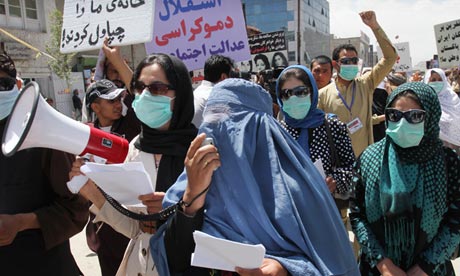
Ali Akbar Rostami, the secretary of the research reports section of the 8 AM Afghanistan newspaper, said during a conversation with the peace line: “In the course of 137 years of journalism in Afghanistan, in the current period, freedom of expression has reached its highest level.”
He still faces many challenges in achieving freedom of expression in Afghanistan, including the threat to journalists by powerful individuals.
“Reporters Without Borders, in a report published in 2014, ranked Iran at 173 in terms of press freedom and wrote: “Iran has moved up one spot in the ranking this year, solely due to the addition of one country. The situation of press freedom has not changed significantly compared to the previous year. Iran plays a crucial role in the crisis in Syria, as a non-negotiable actor in the region. The government, still dominated by men, maintains complete control over information, especially regarding their involvement with their allies in Damascus, from the presence of the Revolutionary Guards in Syria to financial aid to the Assad regime. Many other issues, such as nuclear energy, human rights, and the situation of political prisoners under the label of “actions against national security,” are censored. At the end of 2013, Iran had 50 imprisoned journalists and bloggers, making it one of the top 5 countries in the world in terms of imprisoned journalists. Despite the release of
The following statement is included in the continuation of this report: “Despite the persistence of violence against journalists and especially female journalists, Afghanistan remains at 128th place in terms of overall press freedom, unchanged from last year. In the past year, due to some serious decisions, this country has seen a rise in several rankings. In the coming year, the holding of presidential and provincial council elections, along with the withdrawal of international security forces (ISAF) from the country, will be important challenges for assessing the strength of press freedom in Afghanistan’s young democracy, as well as ensuring the safety of journalists and citizens in general.”
In Iran, the radio and television are under the control of the government and there are no private television networks. However, in Afghanistan, there are currently over 38 national television channels, of which only 3 are government-owned and the rest are completely private. The Education TV, National TV 1, and National TV 2 are considered the government television channels of Afghanistan.
In Iran, internet speed is extremely slow and numerous news websites, as well as social networks such as Facebook and Twitter, are filtered.
Ali Akbar Rostami complained about the slow speed and poor quality of internet in Afghanistan and attributed it to the presence of economic mafias in private companies and lack of healthy competition in this field.
He also reported on the lack of filtering of social networks in Afghanistan and said, “All pornographic websites are filtered in Afghanistan and last year, YouTube was also filtered for 10-15 days in Afghanistan due to the release of a blasphemous film about Islam in Western countries.”
The freedom of sexual minorities
Regarding the laws related to homosexuality, it can be said that Iran is one of the few countries in the world where homosexuality can be punishable by death. Even the new Islamic Penal Code, which has recently been implemented, considers sexual relations between two men or two women as “hadd” (punishable by death).
In modern Afghanistan, no law has been passed against homosexuality, but legal protection has also not been provided for sexual minorities.
It is hard to believe that Afghanistan, as a country, could have a presence of homosexuals, but this minority has never been able to openly exist due to cultural and religious reasons, and this can be explored in the deeply traditional and religious fabric of Afghan society.
Freedom of clothing
Islamic hijab and dress code being mandatory for at least half of the population in Iran (women), may be the most prominent violation of civil liberties. Apart from Iran, the only countries that emphasize on Islamic dress code – and in some cases, even hijab – in today’s world are Saudi Arabia and Somalia.
The newly established system of the Islamic Republic in 1357, according to the order of Ayatollah Khomeini, prohibited women from entering government offices without hijab. This ban was met with opposition and protests from women, which were suppressed by private security forces and supporters of hijab.
In 1984, with the approval of the Islamic Penal Code in the Islamic Consultative Assembly of Iran, a punishment of 72 lashes was determined for not observing hijab in public places. However, this punishment is sometimes converted to a fine, but it still remains in force in the new Islamic Penal Code and is enforced.
Hijab and type of clothing for women in Afghanistan is completely optional.
Formation of meetings and parties
According to Article 27 of the Constitution of the Islamic Republic of Iran: “Formation of gatherings and processions without carrying weapons is free, as long as it is not against the principles of Islam.”
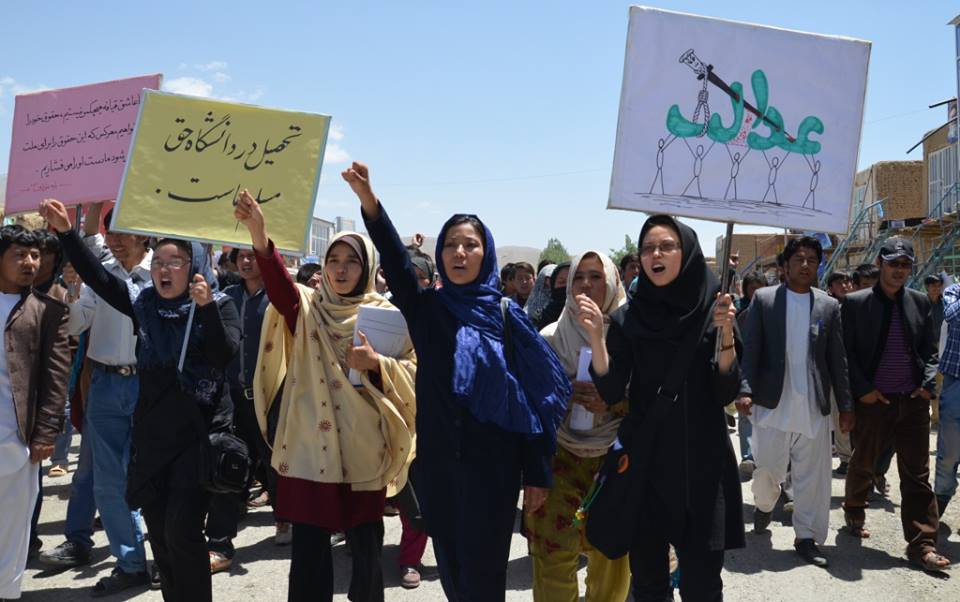
“Freedom of societies and demonstrations is considered one of the most prominent manifestations of democracy and civil liberties in any society. Regarding the treatment and suppression of civil societies in Iran, as the latest example and after the establishment of Hassan Rouhani’s government, we can refer to the protests of Gonabadi Dervishes on 17th and 18th of Esfand month in 1392 (March 2014) during which hundreds of participants in a peaceful gathering were beaten and attacked by the police with tear gas and pepper spray, causing them to be harassed and mistreated.”
Article 36 of the Afghan Constitution states: “Afghan citizens have the right to peacefully assemble and demonstrate, without carrying weapons, in accordance with the law, for legitimate and peaceful purposes.”
Ali Akbar Rostami also said in this regard: “In Afghanistan, if a group or party intends to hold a gathering or march, they must inform the Afghan security institutions 24 hours before the start of the march and after that it is free.”
Article 26 of the Constitution of the Islamic Republic of Iran states: “Parties, societies, political and trade associations, and recognized Islamic or religious minorities are free, provided that they do not violate the principles of independence, freedom, national unity, Islamic criteria, and the foundations of the Islamic Republic. No one can be prevented from participating in them or forced to participate in any of them.”
Despite this, the Commission of Article 10 has always monitored parties that have criticized the government or a part of it, and in recent years, several political parties and organizations, including the Mojahedin-e Khalq Organization and the Participation Front, were declared illegal after protesting the results of the presidential election in Iran in 1389. With the emergence of the new government, we have not yet seen the removal of obstacles to the legal activities of these parties.
Article 35 of the Afghan Constitution states: “Afghan citizens have the right to establish associations in accordance with the law for the purpose of achieving material or spiritual objectives.”
In Afghanistan, there is no obstacle to establishing political parties or civil organizations.
Based on the comparison that you have witnessed above, it can easily be understood that Afghanistan has become a leader in civil liberties in the region today, but undoubtedly both countries have a long way ahead towards a progressive and free society.
Explanation: One of the defense lawyers in Afghanistan, who did not want their name to be mentioned, has assisted the writer in preparing and organizing this report.
 Admin
Admin April 22, 2014