


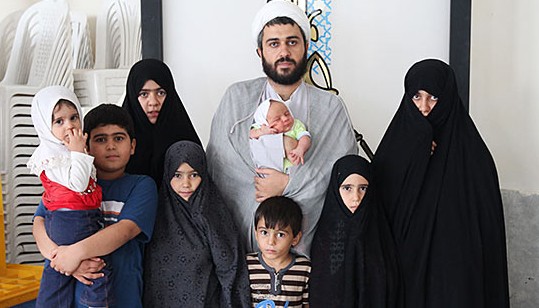
Population policies and inflation rate

The drum of examining the social situation of Iran these days is not silent and every moment a voice of opposition or support for it can be heard: On one hand, according to the opinions of Shia scholars, the policy of population control is considered a threat against the Shia world, and on the other hand, the lower classes of society, contrary to all religious propaganda, see population growth as a serious economic threat for themselves. But what is this policy of population control?
In a simple definition, population policies encompass a set of principles, measures, and documented decisions made by governments that determine the scope of government activities in relation to population issues (or issues that have population consequences); these policies, of course, have a direct relationship with increasing welfare and approaching modern standards of living.
One of the components that defines modernism is individualism. The transition from collectivism to the individual as the central element of human relationships.
In the modern era, when the bridge of courage was found in the book “The Courage To Be”, humans were called “the age of anxiety”. They can only overcome this anxiety through the expansion of individualism, which arises from differentiation. This differentiation is considered one of the most important components of modernity. It is natural that in order to be different, one must focus on “self” instead of “others”.
According to George Simmel, who is considered the first modern sociologist of modernity, “the transition from attention to others to the individual” manifests itself in events such as delayed marriage and a desire for non-traditional cohabitation outside of a large, traditional family structure, as well as a lack of desire for procreation (where a child is seen as another being in opposition to individuality of the mother).
From the other side, society witnessed a widespread change in the role of women during the modern era. Industrialization became a means for women to move from the kitchen to the platform of economic and social activity.
The presence of women in the outside environment of the home, separate from financial independence due to economic activities, made her realize her own “self to self”, a self that was not defined solely by her roles as a wife and mother; a definition and redefinition that ultimately led to what we referred to as the “individual” as the most central element of modern life, as the most central element of modern life.
The presence of women outside the home and their emergence as individuals and equals to men, themselves laid the groundwork for the expansion of literacy and acquisition of knowledge through educational institutions such as schools and universities. As a result of increased literacy and the subsequent internalization of egalitarian values (women = men), a redefinition of the family and societal structures took place, as described by Margaret Segallin in her book “Historical Sociology of the Family,” where collective balloons turned into small balloons in the hands of children. (3) However, these balloons were colorful and joyful, while the larger balloons, on the brink of modernism, became more dominant and internalized as defining factors in society. The modern society demanded a modern state, and the modern state was built upon a new definition of the individual.
This definition itself obligated the government to utilize its resources in support of honoring the individual. In this regard, the focus on the individual as the most essential element of society led governments to strive for reducing their responsibility towards individuals, and adopt population control policies. With the understanding that population control policies strengthened the economic and cultural arms of governments to provide more services to individuals, it was natural that in this equation, families with a smaller population received more government services than larger families.
Based on this principle, it is clear that major goals, which are usually pursued by population policies, are almost the same and widespread everywhere; including controlling population growth rate, which is a way to achieve a population with a size and growth rate proportional to the economic capabilities, regardless of whether it is experiencing growth or recession.
According to this criterion, one of the most rational components is the one that leads to socialization and turns this matter into a public culture. In fact, the most important factor in the success or failure of population policies is the appropriate policy-making for livelihood and economy.
Another factor that governments pursue in population policies is supporting children. The relationship between the number of children and the share that each child receives from parental support does not require much mathematical intelligence; in fact, the economic, social, cultural, and educational costs that governments are committed to providing for the under-age population have a direct correlation with the number of children in each family; with the clear explanation that the more births and consequently population growth, the higher the cost that the government has to fulfill its “minimum” obligations.
On the other hand, another factor that does not seem unrelated to the issue of population control is the support for the elderly; a population that, due to the increase in life expectancy in modern societies, is growing through improving quality of life and public health. They not only need government support, but also due to their increased vulnerability and transition from working age to retirement, they impose a heavy economic burden on the government. Therefore, with population control policies, the elderly will receive a larger share of government support.
History of Population Control and Birth Limitation Policies
The first time in 1341, population programs were seriously considered by the government officials. In 1343, the Maternal and Child Health Department was established in the Ministry of Health and the Family Guidance Charity Association, with the help of the International Population Fund, provided spermicide pills and other preventive measures to some government and non-governmental centers.
In late 1345, with the announcement of the opinions of experts from the Council of the Community settled in America, the following organizations and institutions were established:
The High Council of Health and Family Planning
The High Coordination Council with Government Agencies.
A new department under the name of Population and Family Planning Department has been established in the Ministry of Health.
With the determination of birth limits and its growth in the 1345 census, population control policies became openly and officially incorporated into the fourth and fifth development plans as one of the important programs of the government at the time.
In the year 1346, after the issuance of the Tehran Declaration which recognized family planning as a fundamental human right, population control programs were officially implemented. Approximately 20% of eligible women were covered by these services and the population growth of Iran underwent the following changes:
Population growth in the decade of 45-1335, which was about 3.2%, reached 2.6% in the decade of 55-1345 and as a result of implemented policies, it took a downward trend and the natural population growth decreased from 2.6% to 1.9%.
During the years 1356-1347 (the fourth and fifth plans before the revolution), approximately one billion tomans (equivalent to 150 million dollars at that time) were spent on family planning. In the sixth five-year development plan, around two billion tomans were allocated for this program. (Nearly four times the previous ten-year period) The rate of acceptance of visitors to centers had significantly decreased during the years 1356 to 1359.
Private sector activities in implementing the family planning program.
In the year 1337, the star of the commander of the United Nations, who had been the official expert for years, returned to Iran on a mission from the United Nations Council and established the Higher Academy of Social Services to provide the necessary human resources for implementing family planning programs in the country.
With the collaboration of Hajar Tarbiat, he established the “Iran Family Planning and Health Association” as a modern and public institution, which immediately became a member of the International Federation of Family Planning Associations and benefited from the extensive technical and financial assistance of this federation.
Family organization after the revolution
With the beginning of transformations caused by the revolution from early 1356 and the start of social and political changes, services underwent changes or were halted on a mass scale (such as the discontinuation of family planning programs, the closure of sterilization services in clinics that were flourishing before the revolution, and the transfer of family welfare centers and all their clinics to the country’s Welfare Organization).
Some of the most important actions that took place during and after the revolution can be mentioned, including:
The merger of the Ministry of Health and the Social Welfare Organization.
Closure of mobile units in rural areas and some family planning service providers.
Disruption of distribution of medications and pregnancy prevention tools.
Stop requesting the necessary clinical equipment by the centers.
The Department of Health and Family Planning, which until then had operated independently and had 215 staff and 5 main offices, and its program was implemented independently in clinics, was dissolved and 36 remaining employees were transferred to other departments (the family planning program was provided as part of health services and in conjunction with them). As a result of this new policy, the implementation of educational programs for the general public was suspended and the training of health workers and health assistants was practically stopped.
Among these, the officials’ theory of the Ministry of Health regarding the people’s opinions and their attempts to change them is considered the most important factor in the recession of family planning programs after the revolution.
On the other hand, in the summer of 1358 when only four months had passed since the revolution, Dr. Kazem Sami, the Minister of Health of the interim government, raised the issue of population growth during a meeting with Ayatollah Khomeini and emphasized the need to follow up on the family planning program.
A few months later, in early autumn, the Minister of Health, while submitting a detailed report on the problems of population growth, once again emphasized to Ayatollah Khomeini the necessity of continuing family planning programs and services.
Ayatollah Khomeini also wrote in the margins of the Minister of Health’s report: “The use of birth control methods for the purpose of reducing the population is permissible as long as it does not harm women’s health and their husbands agree with it, in order to solve the problems mentioned in the report.” This document was considered a fatwa by the authorities at the time and was communicated to all relevant departments of the ministry. However, he had previously addressed this issue in the third volume of his fatwas. (6)
Of course, this fatwa also had a historical basis; to the extent that even some scholars in different periods (such as Muhammad Hussein Tabatabai in volume two of the book “Al-Mizan” (7), Muhammad bin Hassan Har Ameli in “Wasail al-Shi’a” (8), Muhammad Hussein Hosseini Tehrani in “Risaleh-ye Nikahieh or Kahan-e Jam’iat Zarbe-ye Sehmegin bar Peykar-e Mosalmin” (9), and others) have considered any form of population control and limitation to be against the philosophy of Islam and the spirit of faith, and have opposed it. And it was considered unjust and against the principles of religion for governments to intervene in this matter. This belief of the Shia clergy was clearly expressed in the words of Ayatollah Khomeini. In his own words, he states: “They say that Iran has a population of 35 million. Its
In continuation of the efforts to change population policies, it was in the late 1990s that some people began to issue warnings against population growth in conferences, and the destructive effects of population growth on social, economic, cultural and health dimensions, including environmental degradation, increased need for educational and school spaces, social abnormalities, unemployment, etc. were reminded. According to the report of the Research Center of the Parliament, in 1989, a program called “National Family Planning Program” was prepared by the Organization of Planning and Budget and was approved by Ayatollah Khomeini, the leader of the Islamic Republic at that time.
The second decade after the revolution was almost parallel to the first and second five-year development plans of the country (1998-1989). Population control was given special priority in these two plans. The support of religious authorities gave legitimacy to the government’s family planning programs and this legitimacy provided a basis for other promotional and advertising activities, such as creating workshops for young couples, education through media, education in high schools and universities, etc.
In fact, from then on, not only were population reduction policies approved and honored, but the institutionalization of population reduction policies became a source of pride for the government and ruling authorities among Iranian families. These propaganda campaigns reached their peak when the President of the International Family Federation encouraged and supported the population control model in Iran in 1994, and developing countries were made aware of this successful model to follow.
Despite these factors and the tendency of Iranian families, especially young couples, towards single-child and self-controlled fertility, it seemed as if the matter had been suspiciously handed over to the government and authority, implying that these policies and pressures from above have caused this issue and now, by removing these pressures and eliminating subsidies for birth control pills and condoms, as well as banning tubectomy and vasectomy, the barrier of preventing pregnancy has been broken and the population has increased. However, the reality is that according to unofficial statistics collected by the Faculty of Social Sciences at the University of Tehran, more than 82% of the population, in response to the question of why they control fertility in their families, have attributed it to economic problems, unpredictable increases in living expenses, and the instability of the country’s economic situation. These shocking statistics have never been officially allowed to be published.
The official start of Iran’s fight against population control.
Population control policies were pursued until the end of the Reformist government, despite all the interventions of the Shia clergy. However, with the emergence of the ninth government and its fundamentalist approaches in various areas, revisions were made in these policies. Mahmoud Ahmadinejad, the then president in 2009, considered the “two children are enough” campaign as a conspiracy of colonialists and said, “With the rich resources we have in our country, we can feed up to three times the population.” He called for a change in these policies.
These remarks and statements by Ahmadinejad about population control, which had been criticized by many experts such as Masoud Pezeshkian, were later confirmed by the current leader of the Islamic Republic (who is considered a key figure in the structure of government in Iran). In a meeting with officials of the Islamic Republic system that took place two years ago in August, he explicitly stated: “This issue of increasing population and such matters are among important topics that all officials of the country – not just administrative officials – clerics, those who have pulpits, must educate the society about. We must move away from the current situation – one child, two children – and reach the number of one hundred and fifty million and two hundred million, as Imam [Khomeini] said and it is true, we must reach those numbers.”
Following this statement, the attack on population control policies intensified; to the point that many Shiite authorities such as Makarem Shirazi, Sabhani, Noori Hamedani, Kharrazi, Safi Golpayegani, and a few others considered these policies against Islam and Shiism and rejected them. This is because a significant number of authorities believe that the decrease in the Muslim population is a conspiracy of the enemy and is equivalent to the decrease in the power of the Islamic world, and as a result, population control policies were pushed aside as being political, Western, and anti-Islamic.
The issue was not only resolved by the opinions of men, but also women who considered themselves servants of authority and religion came forward, so that Sakena Nik, a professor at the seminary and university and director of the Hazrat Khadijah Scientific School, stated in an interview with the Rasa News Agency: “Population reduction policies are set based on political goals and Western globalization, and the population of developed countries is declining due to the collapse of family and the dominance of materialistic values, individualism and hedonism, and therefore Western countries, led by America, encourage population reduction for their own benefit.” She admitted that the Zionist regime is making every effort to sterilize the world’s population and is imposing this project on religious countries with all its might. On the other hand, they export genetically modified and sterilizing seeds to reduce the population of Islamic countries.
There is no shortage of so-called expert opinions that resemble this (that have become the norm in government discourse at gender policy-related conferences over the past year). However, according to statistics, what has thus far regulated family policies and led to a decrease or increase in offspring is not about the reproduction of the Muslim population or the 20 million-strong army, but rather the slope of inflation and recession. Now the question is whether this slope will be “gentle” or “steep”.
1- Tiliesh, Bridge, Bravery, Translation of Morad Farahadpour, Scientific-Cultural Publications, 1375, p. 188.
2- Guide, X, articles on interpretation in social science, translated by Shahnaz Moslemiparast, Joint Stock Publishing Company, 1386 pages 9-128
3- Saghalin, Martin, Historical Sociology of the Family, translated by Hamid Eliasi, p.58
4- To study about this topic, refer to: National Population and Family Planning Program, Handbook No. 1, Ministry of Health, Treatment, and Medical Education – Year 1381.
Family planning programs in the Islamic Republic of Iran, pp. 12-50.
Khomeini, Ruhollah; Resolutions, Vol. 3, p. 283
7- Tabatabaei, Mohammad Hossein, Al-Mizan, Vol. 2, Dar al-Kotob al-Islamiyah, 1370, p. 277
8- Al-Hurr al-Amili, Muhammad ibn al-Hasan, Wasa’il al-Shi’a, Al al-Bayt Foundation: 1374, vol. 21, Rulings of Children, p. 356.
Hosseini Tehrani, Seyyed Mohammad Hossein, “The Marriage Treatise” or “The Impact of Population Reduction on the Muslim Community”, published by Allameh Tabatabai.
Issue 10 of the Women’s Message Newsletter, August 1378, Number 90, Report on the Cairo Conference.
11- The series of seminars on Islamic perspectives in medicine, which started in 1368 at Mashhad University of Medical Sciences and has since been held 5 times, is a prominent example of this claim. In the second session of this conference, held in Mashhad in 1380, civil Tabrizi, Makarem Shirazi, and Musavi Ardabili, in order, attacked the policy of population control, considering it against the standards of Shia and, of course, a serious threat to the Shia religion.
 Admin
Admin June 23, 2014