


Violence
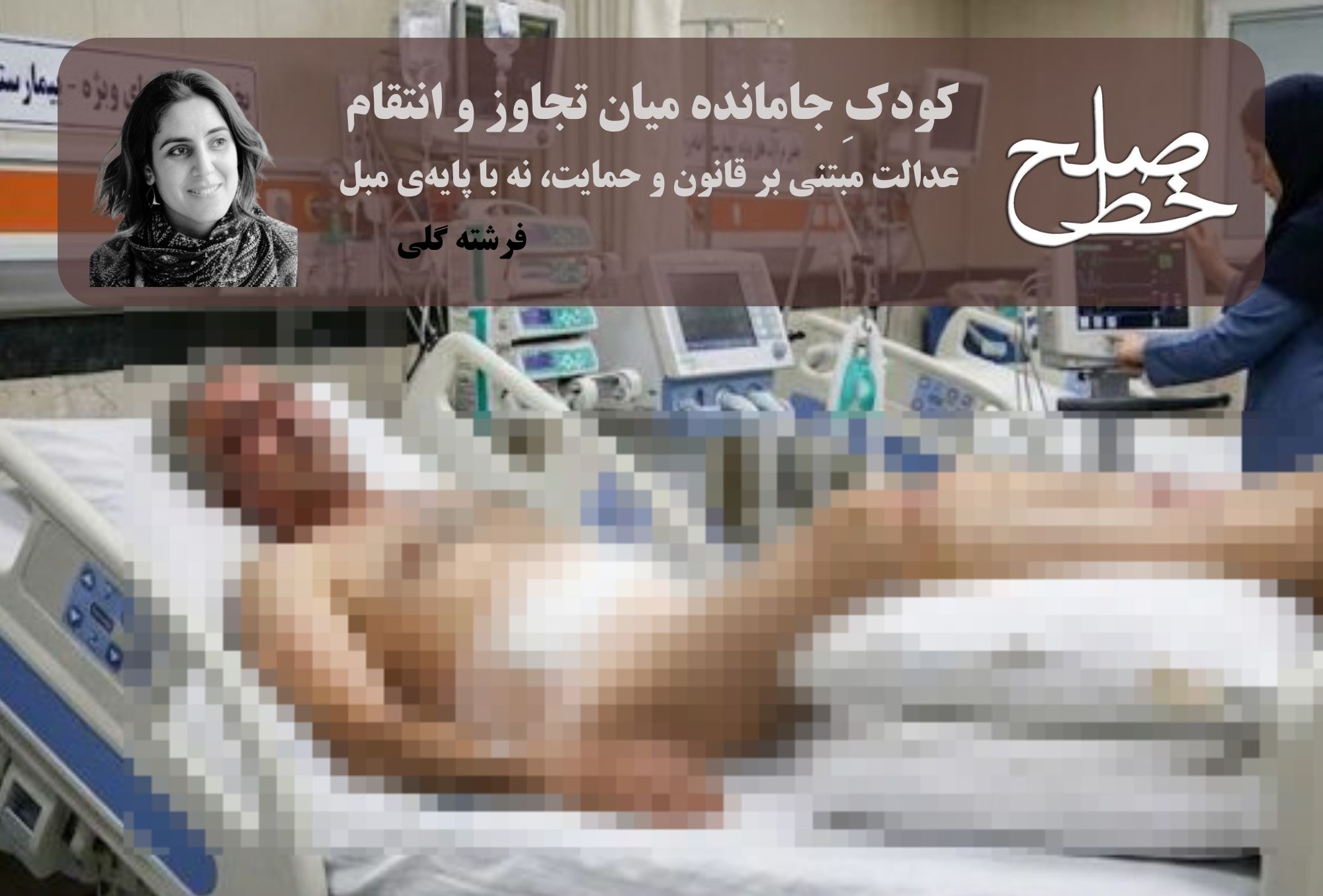
The Child Left Between Rape and Revenge/Fereshteh Goli
Lost in the chaos of Iranian news, a story with catastrophic depth was the story of an old man raping a boy in Tabriz, which led to personal revenge by the boy’s family, who sent the old man to the hospital and into surgery; revenge whose instrument was a wooden sofa leg. In this note, […]...
Read More Created By:
Fereshteh Goli
Created By:
Fereshteh Goli December 22, 2025
Can restorative justice replace revenge? / Totia Partovi Amoli
We witness countless court cases every day that result in the issuance of a verdict and ultimately the punishment of the offender. However, experience has shown that in today’s world, the issuance and execution of sentences does not necessarily mean the realization of justice. In many cases, the victim is still dissatisfied after the end […]...
Read More
Created By:
Toutia Partovi Amoli December 22, 2025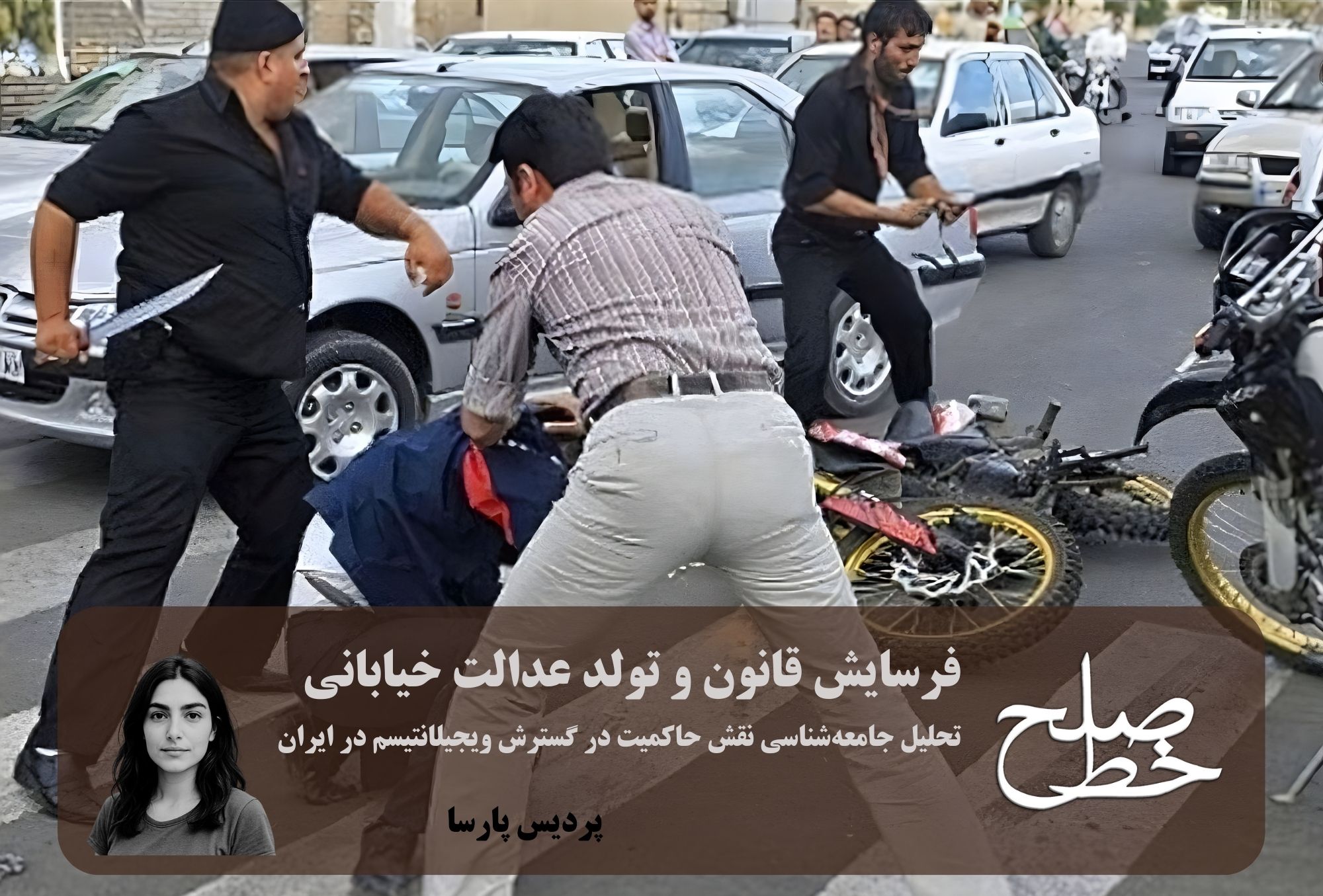
The erosion of law and the birth of street justice/Pardis Parsa
In the turbulent transition of the fifth decade after the 1979 revolution, Iran is facing a fundamental challenge in the field of public order and security that can be called the “erosion of the authority of the law.” The increasing statistics of street fights and personal conflicts in recent years only reveal the tip of […]...
Read More
Created By:
Pardis Parsa December 22, 2025
Femicide in Iran: Unequal Law, Violent Structures, and the Cycle of Impunity / Maryam Hosseini
Femicide in Iran is a crisis phenomenon that reflects deep gender inequalities, legal gaps, and a culture of male dominance. The increase in the number of women being murdered, along with the absence of a strong legal framework that specifically addresses the killing of women based on gender, has raised concerns that some of these […]...
Read More
Created By:
مریم حسینی November 22, 2025
Naser Ghavami: Most Executions Are the Result of Pressure from Governing Institutions on Judges/ Ali Kalaei
With the increasing implementation of public executions in Iran, debates around this form of punishment have intensified. Supporters consider it a necessary tool for deterrence and public example, while critics emphasize its contradiction with the principle of human dignity, human rights standards, and its harmful psychological and social consequences. In this context, Peace Mark Monthly […]...
Read More
Created By:
Admin September 23, 2025
Mahmoud Alizadeh Tabatabaei: The Default Rule is the Prohibition of Public Punishment / Pedram Tahsini
Seyed Mahmoud Alizadeh Tabatabaei, a licensed attorney, political activist, and member of the board of directors of the Central Bar Association, was also a representative in the first term of the Islamic City Council of Tehran (1997–2001). He has represented many Iranian political figures and senior officials, particularly those affiliated with the reformist movement, including […]...
Read More
Created By:
Padram Tahsini September 23, 2025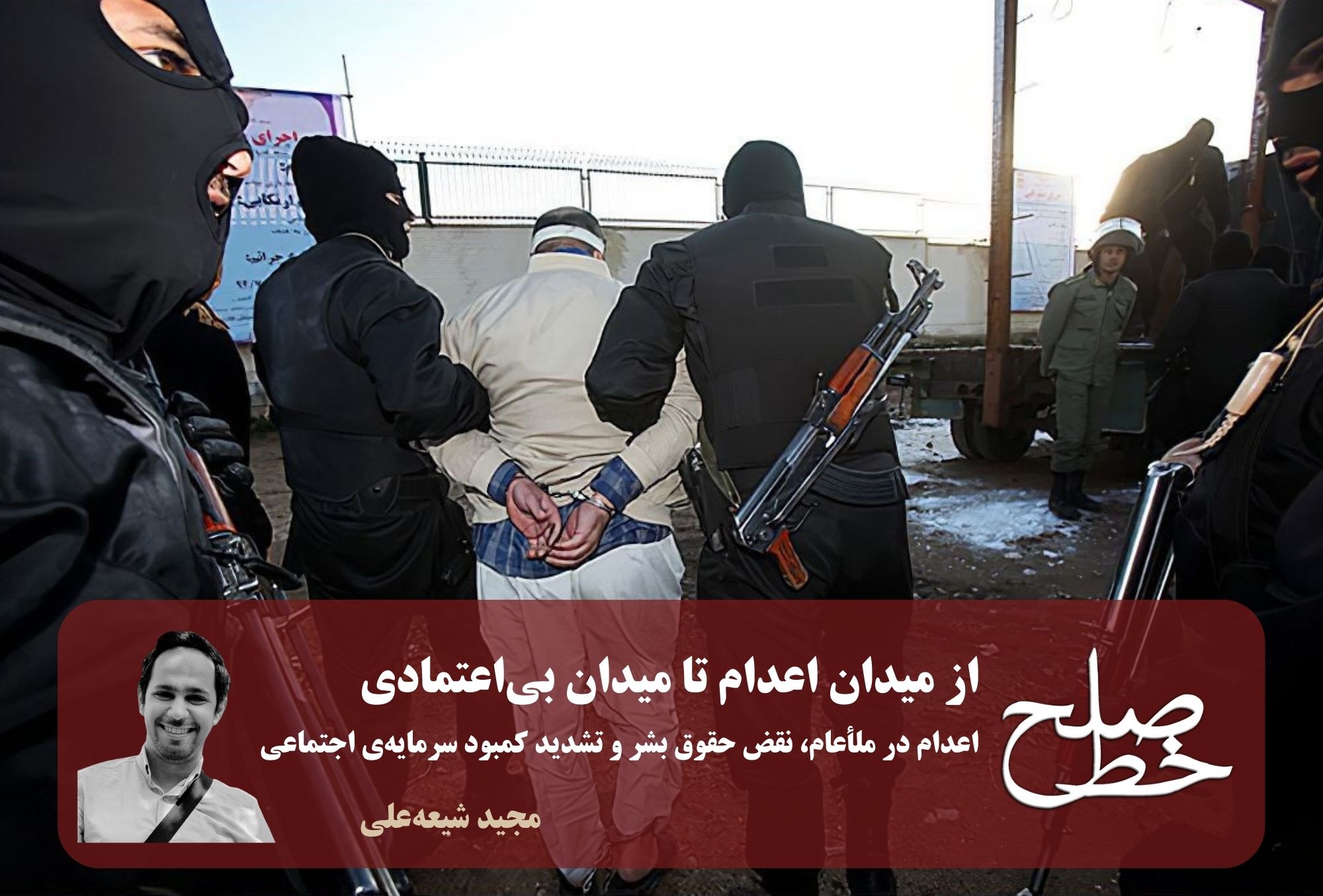
From Execution Square to the Square of Distrust/ Majid Shia’Ali
After several decades of failure in economic development, democratization, and the strengthening of human rights observance, our society is now looking back at its previous experiences. Our society sees that despite experimenting with various revolutionary and reformist strategies, from parliamentary methods to violent confrontations, and experiencing multiple revolutions and social movements, it has still not […]...
Read More
Created By:
Majid Shia’ali September 23, 2025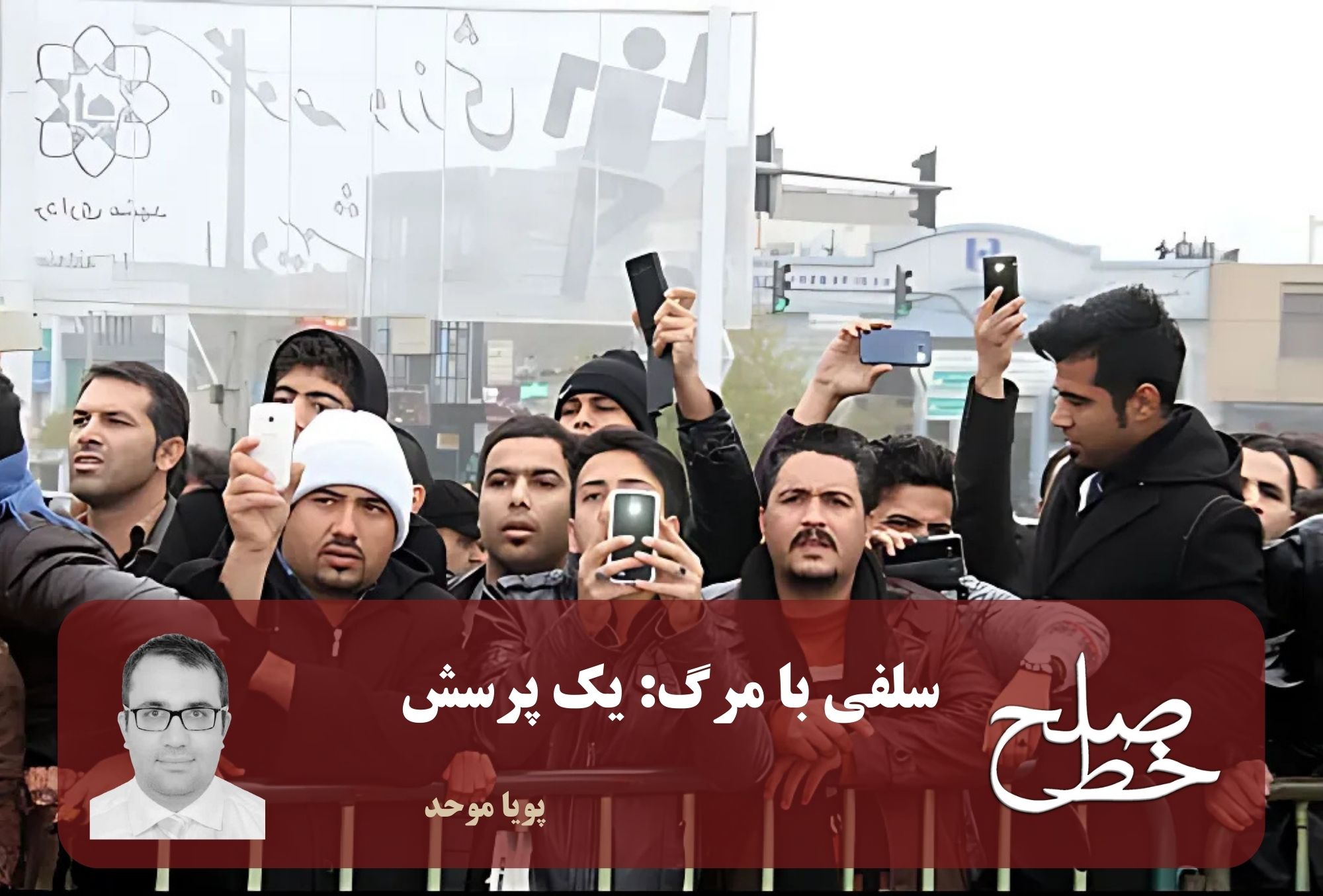
Selfie with Death: A Question/ Pooya Moheb
On a cold morning, the city square is filled with people. A large crane stands in the middle of the square. The rope hanging from the crane sways in the wind. Everyone is in a hurry to find a good spot to watch. A mother gives her child a chocolate to calm them down. Above, […]...
Read More
Created By:
Pouya Movahed September 23, 2025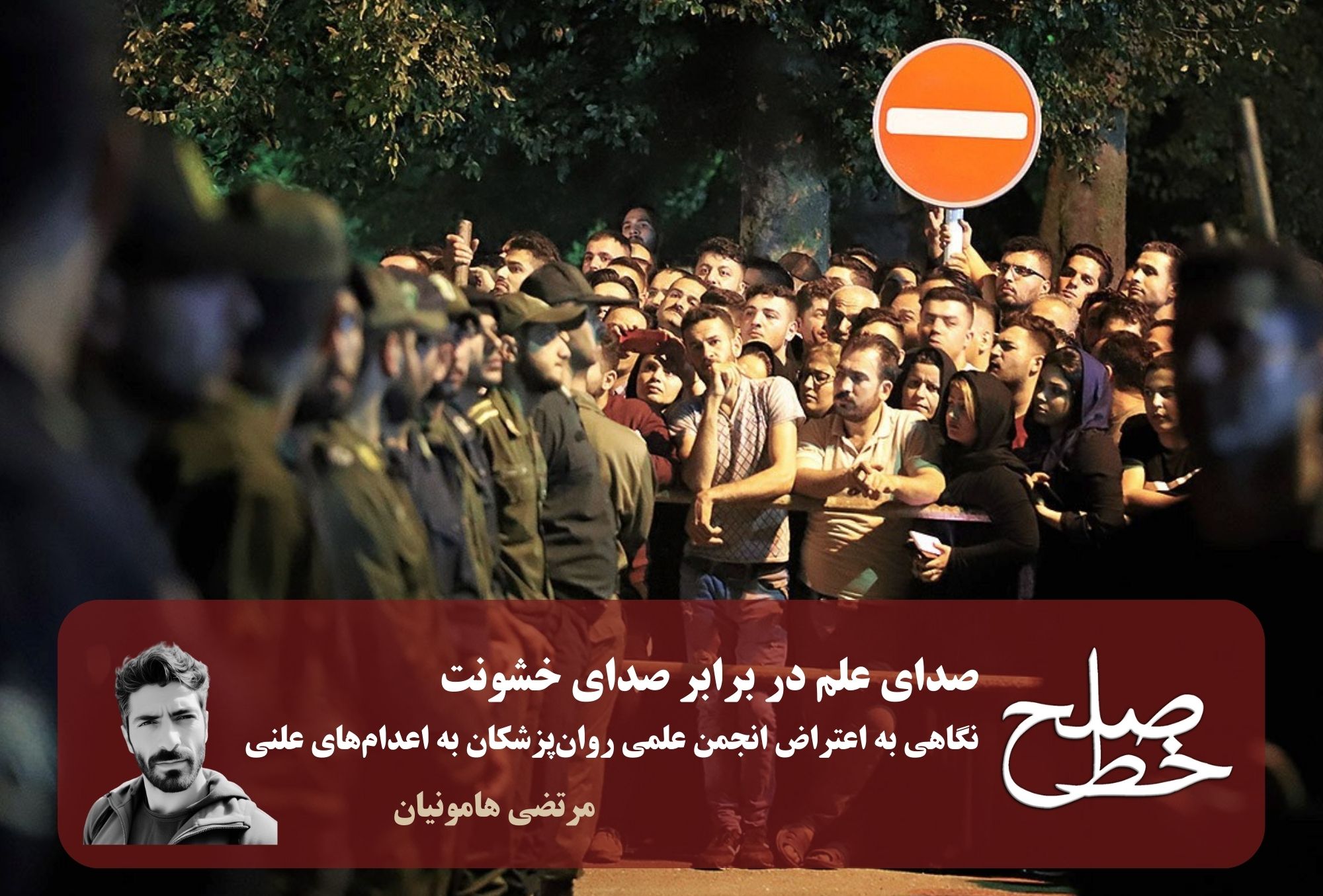
The Voice of Science Against the Voice of Violence/ Morteza Hamounian
The issue of capital punishment has always been a highly contentious matter in Iran. This punishment has been enforced by governments both before and after the February 1979 Revolution, and has consistently been the subject of criticism. At its core, the death penalty is a form of state-sanctioned killing—an act of violence inflicted upon the […]...
Read More
Created By:
Morteza Hamounian September 23, 2025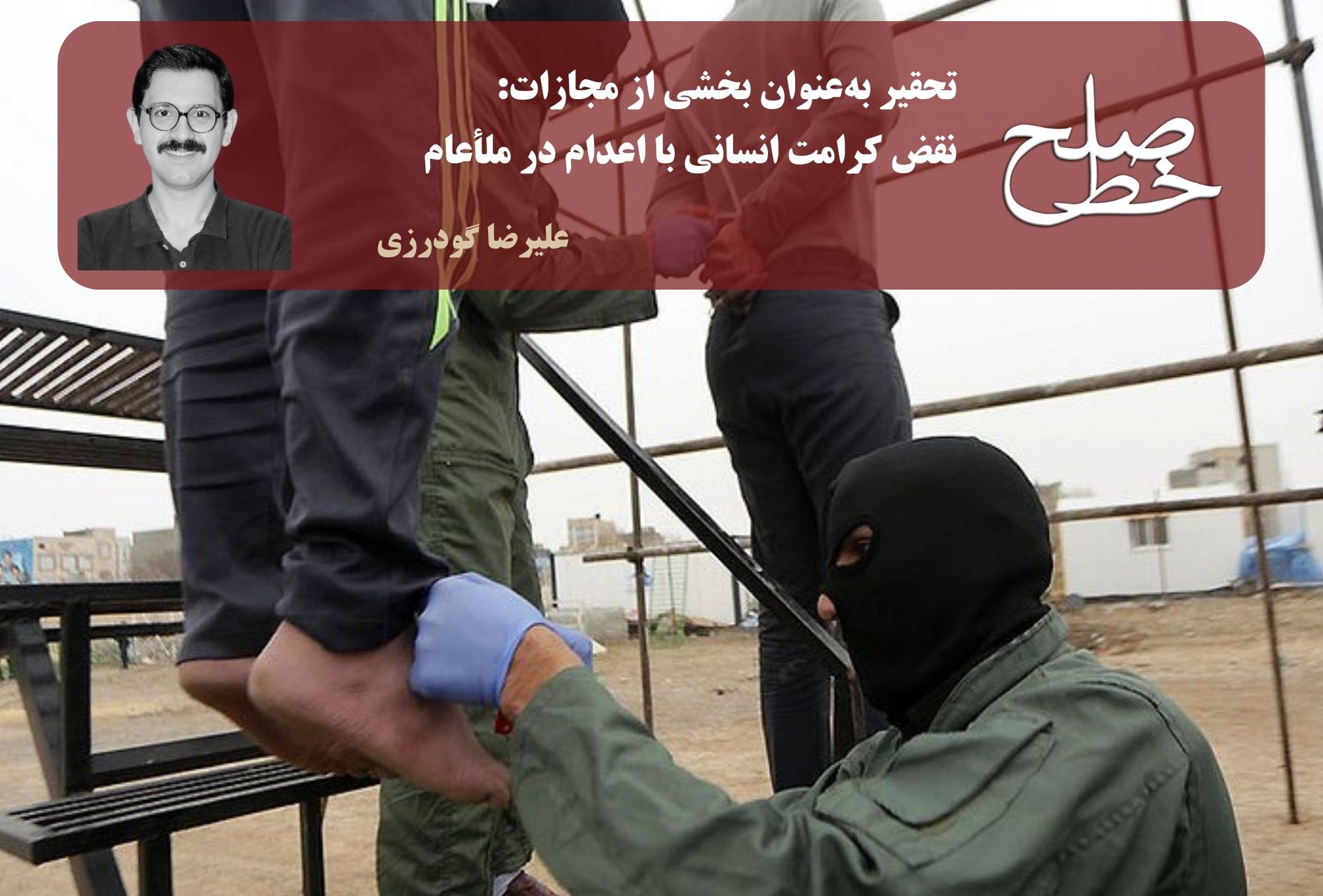
Humiliation as Part of Punishment: The Violation of Human Dignity Through Public Executions/ Alireza Goodarzi
Let us begin by distinguishing between a criminal, a suspect, and anyone else outside these categories. A person living in society may come under legal suspicion of having committed a crime. From that moment on, this individual is referred to as a “suspect.” Once the accusation is proven in a competent court, with all legal […]...
Read More
Created By:
Alireza Goodarzi September 23, 2025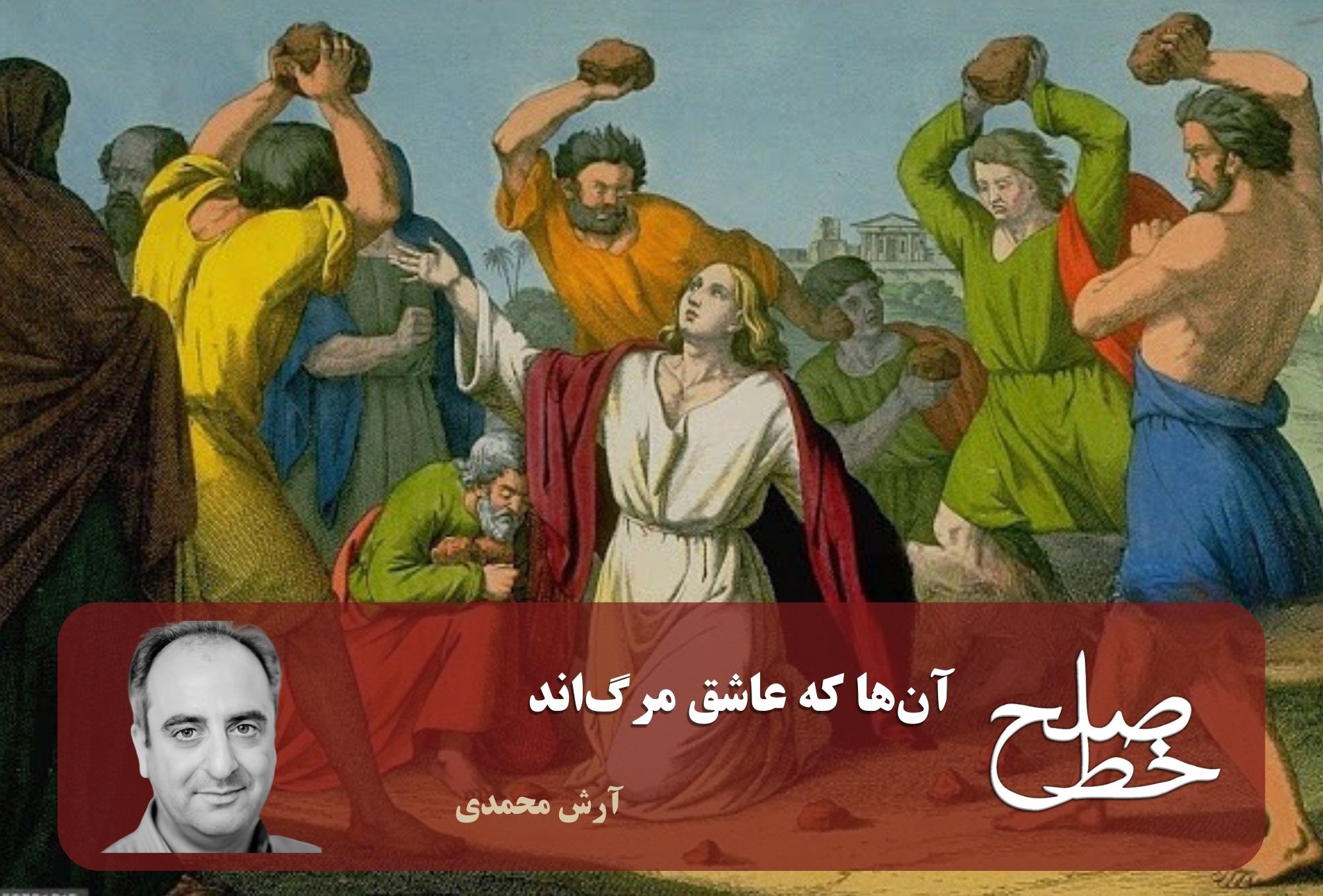
Those Who Love Death/ Arash Mohammadi
I.I was a child—perhaps ten years old. I can’t recall my exact age, but I vividly remember walking past the Baqi Cemetery when I heard a scream. A man and a woman were about to be stoned to death. Out of curiosity, I stopped to watch. The problem was that although a large crowd had […]...
Read More
Created By:
Arash Mohammadi September 23, 2025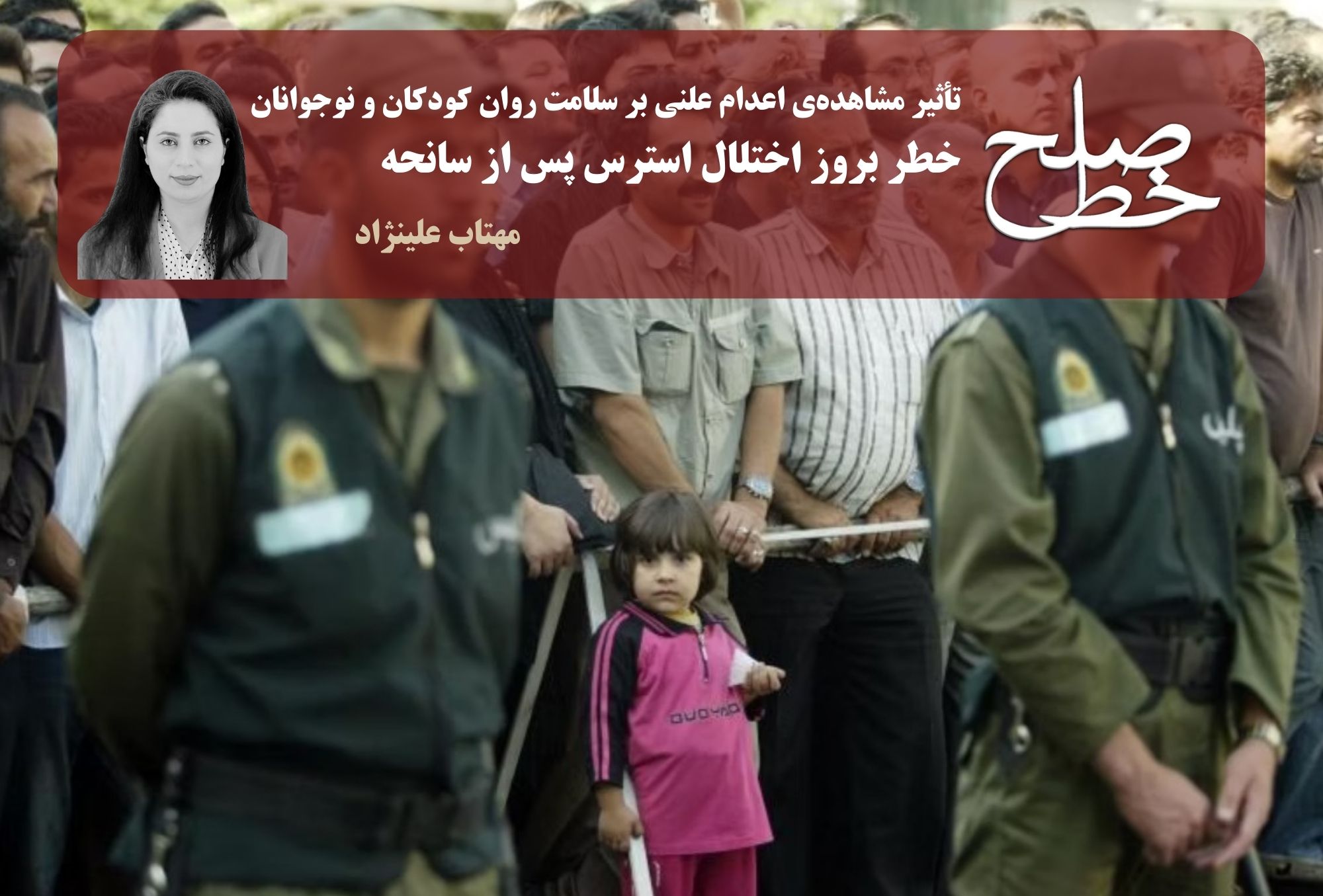
The Psychological Impact of Witnessing Public Executions on Children and Adolescents/ Mahtab Alinejad
On a cold winter morning, in the heavy silence of a city square, a crowd gathers to witness the public execution of a condemned individual. The murmurs of the crowd and the hurried steps of the guards ripple through the air. A 4- or 5-year-old child, puffed corn snack in hand, stands next to his […]...
Read More
Created By:
Mahtab Alinezhad September 23, 2025
