


Murder
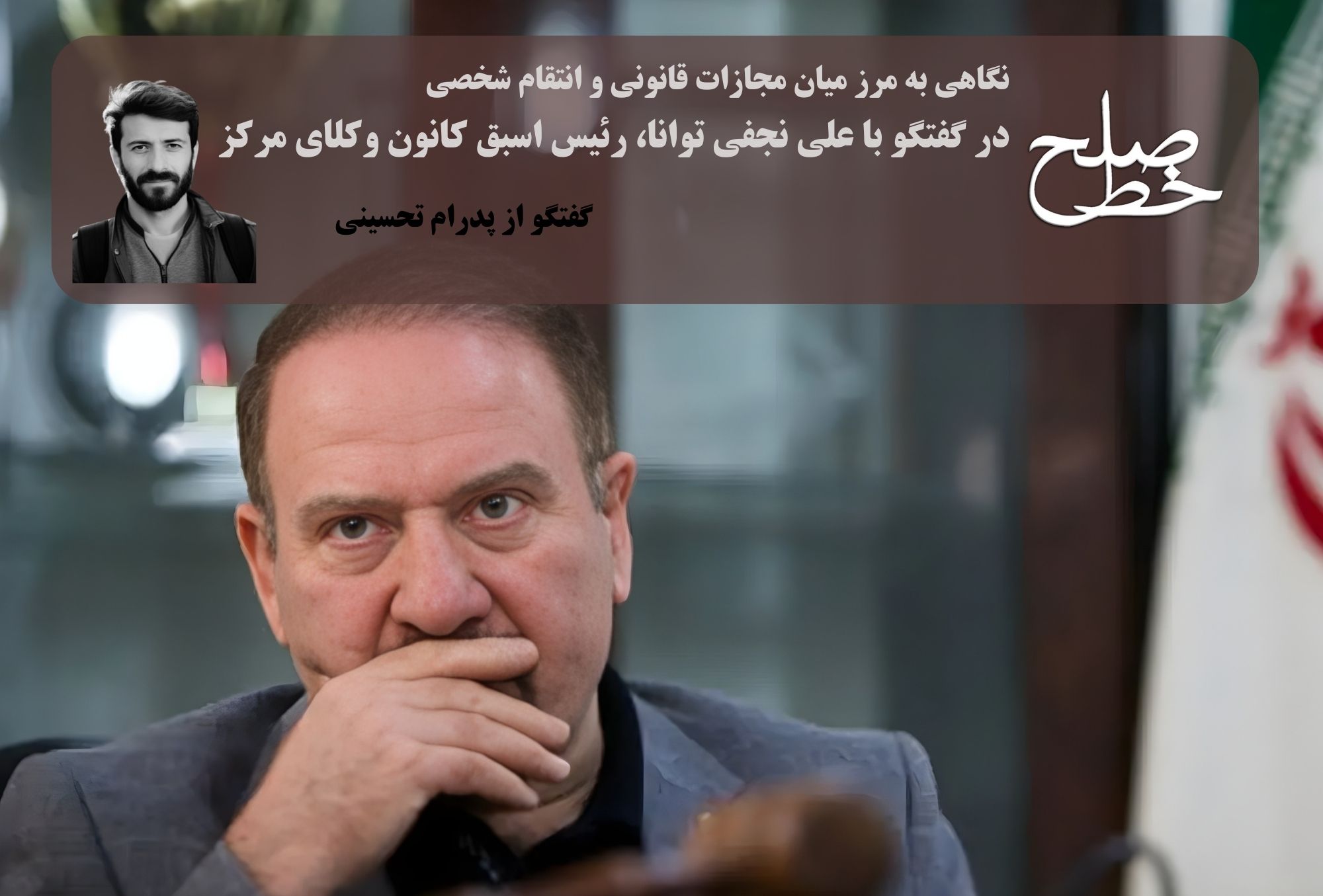
A Look at the Line Between Legal Punishment and Personal Revenge; A Conversation with Ali Najafi Tavana/ Pedram Tahsini
Ali Najafi Tavana was born in 1953 (1332) in the Alamut region of Qazvin. He completed his primary education in Tonekabon and graduated from Hafeziyeh High School in the same city. In 1972 (1351), he was admitted to the Faculty of Law at the University of Tehran, where he earned a bachelor’s degree in judicial […]...
Read More Created By:
Padram Tahsini
Created By:
Padram Tahsini December 22, 2025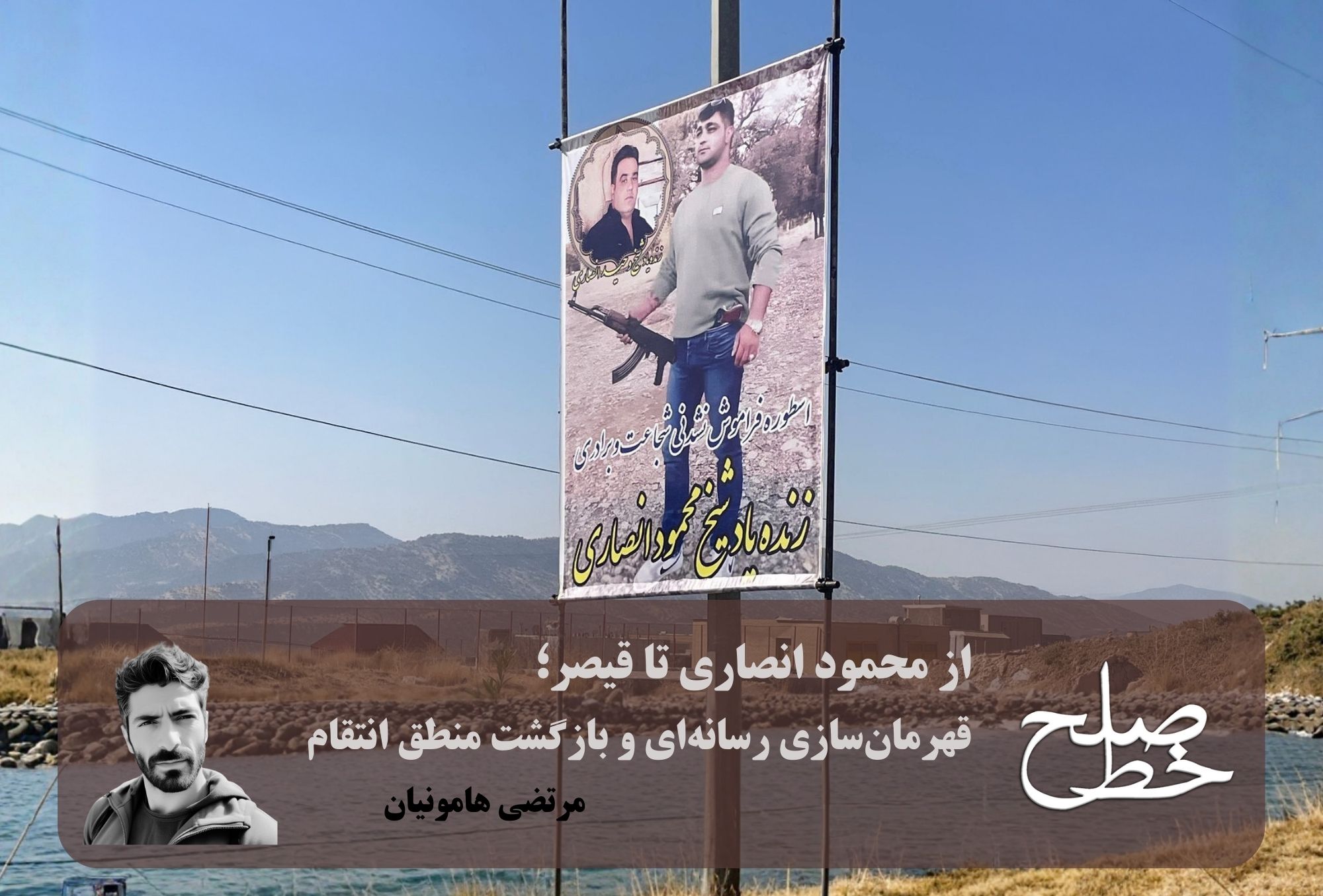
From Mahmoud Ansari to Qaisar; Media Heroism and the Return of the Logic of Revenge / Morteza Hamounian
In Yasuj, the capital of Kohgiluyeh and Boyer-Ahmad province, a doctor is murdered. The accused of the murder says that this doctor (Masoud Davoudi) is to blame for his brother’s death and that he committed medical negligence. So he takes action and kills the doctor. The accused of the murder is sentenced to self-retribution by […]...
Read More
Created By:
Morteza Hamounian December 22, 2025
Arbitrariness in Justice: Violations of Human Rights and the Responsibility of States/Abuzar Zaman
The evolution of criminal justice and the transition from personal revenge and arbitrary justice to modern legal and penal systems is one of the signs of the civilization of human societies. Today, resorting to arbitrary justice is in clear contradiction with the right to a fair trial and human rights and in conflict with the […]...
Read More
Created By:
Abouzar Zaman December 22, 2025
When a murderer becomes a hero/Reza Harisi
In the framework of modern ethics and legal systems based on collective rationality, “murder” is defined as the most fundamental assault on human life and the violation of all social conventions; whether the victim is a young woman who is the victim of an honor killing on suspicion of wrongdoing in emotional and sexual relationships, […]...
Read More
Created By:
Reza Harisi December 22, 2025
Social Crises and the Role of Civil Society Institutions/Parsa Naseri
This article is dedicated to Hoda Saber, a concerned activist and researcher who dedicated her life to raising awareness and being actively involved in social and political arenas. Not long ago, in a southern city of the country, after the execution of the murderer of a doctor in Yasuj, a phenomenon occurred that was […]...
Read More
Created By:
Parsa Naseri December 22, 2025
The collapse of trust between people and medical staff in Iran / Nafiseh Sharafeddini
Trust is a delicate bond between patient and therapist that distinguishes the treatment process from a mere business transaction. But in recent years, we have seen that this pillar in the Iranian medical environment has been severely damaged, giving way to cynicism and misunderstanding. What is happening in the crowded corridors of hospitals and waiting […]...
Read More
Created By:
Nafiseh Sharafaldini December 22, 2025
Can restorative justice replace revenge? / Totia Partovi Amoli
We witness countless court cases every day that result in the issuance of a verdict and ultimately the punishment of the offender. However, experience has shown that in today’s world, the issuance and execution of sentences does not necessarily mean the realization of justice. In many cases, the victim is still dissatisfied after the end […]...
Read More
Created By:
Toutia Partovi Amoli December 22, 2025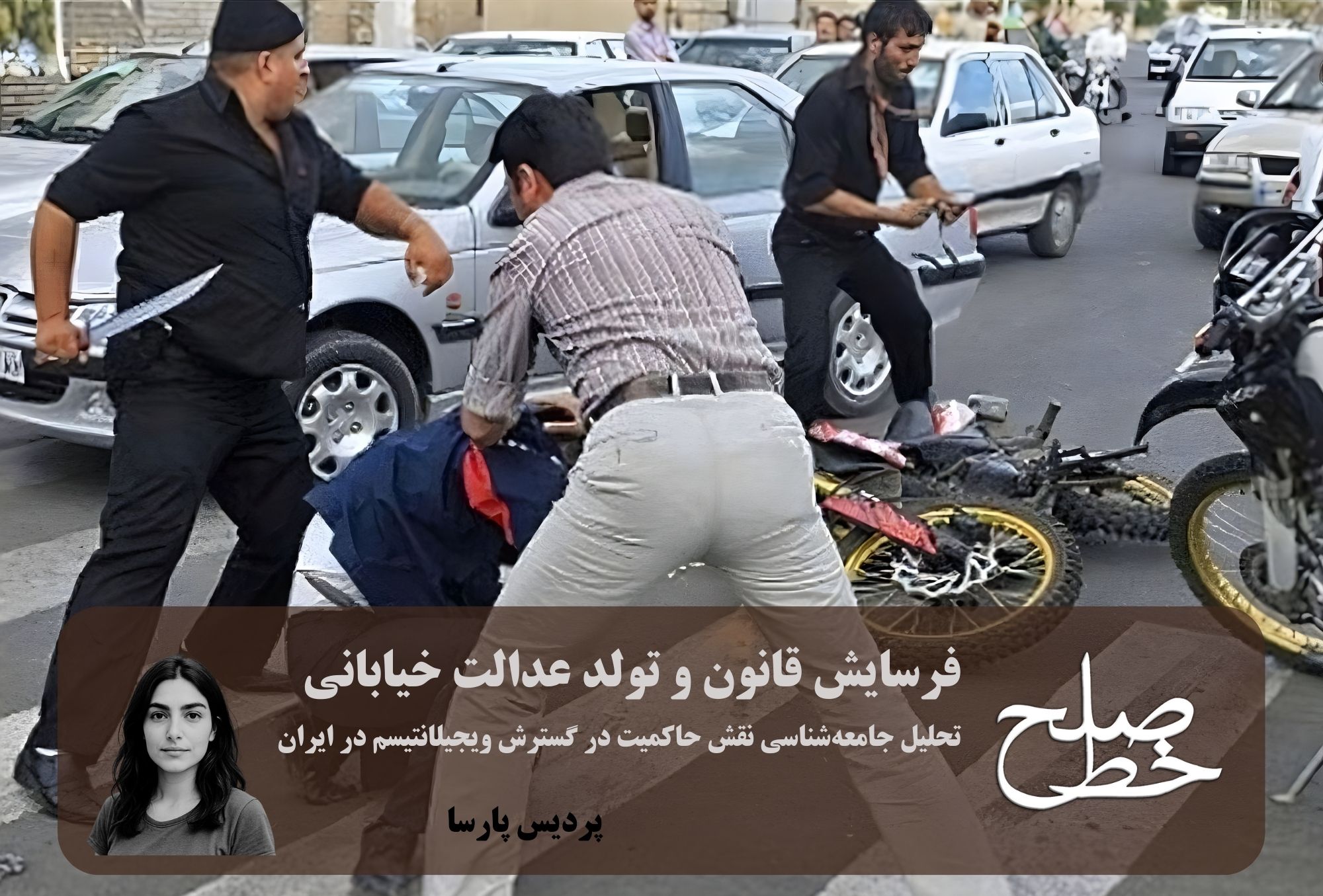
The erosion of law and the birth of street justice/Pardis Parsa
In the turbulent transition of the fifth decade after the 1979 revolution, Iran is facing a fundamental challenge in the field of public order and security that can be called the “erosion of the authority of the law.” The increasing statistics of street fights and personal conflicts in recent years only reveal the tip of […]...
Read More
Created By:
Pardis Parsa December 22, 2025
Femicide in Iran: Unequal Law, Violent Structures, and the Cycle of Impunity / Maryam Hosseini
Femicide in Iran is a crisis phenomenon that reflects deep gender inequalities, legal gaps, and a culture of male dominance. The increase in the number of women being murdered, along with the absence of a strong legal framework that specifically addresses the killing of women based on gender, has raised concerns that some of these […]...
Read More
Created By:
مریم حسینی November 22, 2025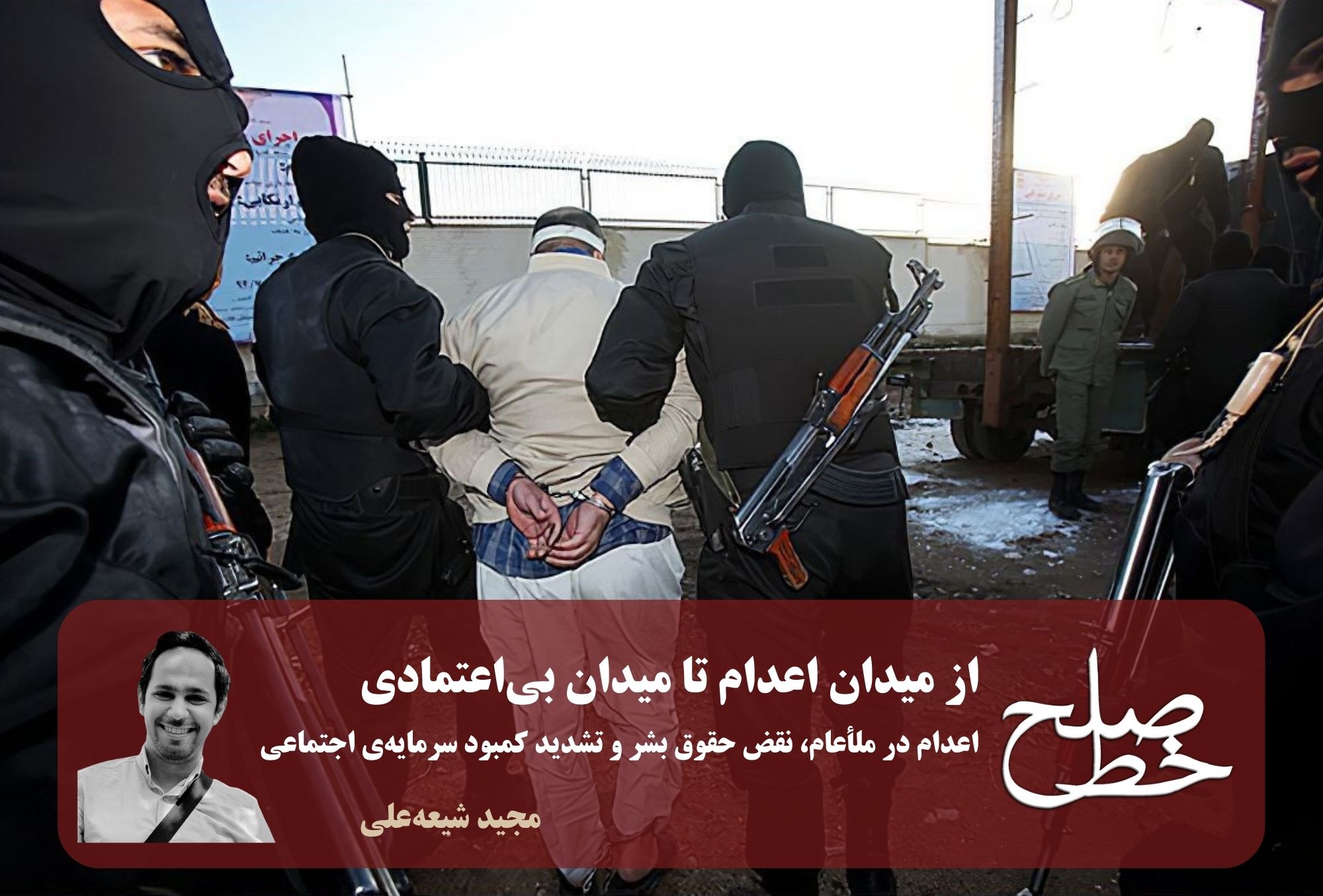
From Execution Square to the Square of Distrust/ Majid Shia’Ali
After several decades of failure in economic development, democratization, and the strengthening of human rights observance, our society is now looking back at its previous experiences. Our society sees that despite experimenting with various revolutionary and reformist strategies, from parliamentary methods to violent confrontations, and experiencing multiple revolutions and social movements, it has still not […]...
Read More
Created By:
Majid Shia’ali September 23, 2025
A Look at the Role of Qisas in Murder Cases and the Distinction Between Justice and Revenge/ Sina Yousefi
In the legal system of the Islamic Republic of Iran, qisas (retaliatory justice) is not only prominently featured in Book Three of the Islamic Penal Code (2013), but its procedural structure and associated privileges are also legally codified. These include defining the scope of cases eligible for qisas, conditions for the equivalence of the weapon […]...
Read More
Created By:
Sina Yousefi September 23, 2025
Execution: Administering justice or reproducing violence? A conversation with Shahab Tajri / Azar Taherabadi
Execution has always been one of the most controversial and challenging topics in criminal justice systems around the world. In Iran, this punishment, especially in recent decades, has not only been a legal and religious issue, but also a political, social, and ethical one. In this regard, questions have been raised that go beyond the […]...
Read More
Created By:
Azar Taherabad April 21, 2025
