


peace line

Is our culture real or is it just a cake? / Mehdi Anbari
In the context of sociological understanding, ethnicity is considered one of the fundamental components in comprehending the concept of nationality in contemporary society. Therefore, an ethnic group refers to a people who are socially distinguished as a result of their shared cultural heritage. Culture and cultural heritage can be considered as one of the most […]...
Read More Created By:
Mehdi Anbari
Created By:
Mehdi Anbari November 22, 2023
Is reducing the three-month military service a solution? / Ehsan Haghi
Since the establishment of the first law on the public duty system in 1304 (1925), which was passed under the title “Compulsory Service Law”, almost one hundred years have passed. During this century, various laws (before and after the 1979 revolution) have been passed regarding military service, in line with social changes and the country’s […]...
Read More
Created By:
Ehsan Haghi November 22, 2023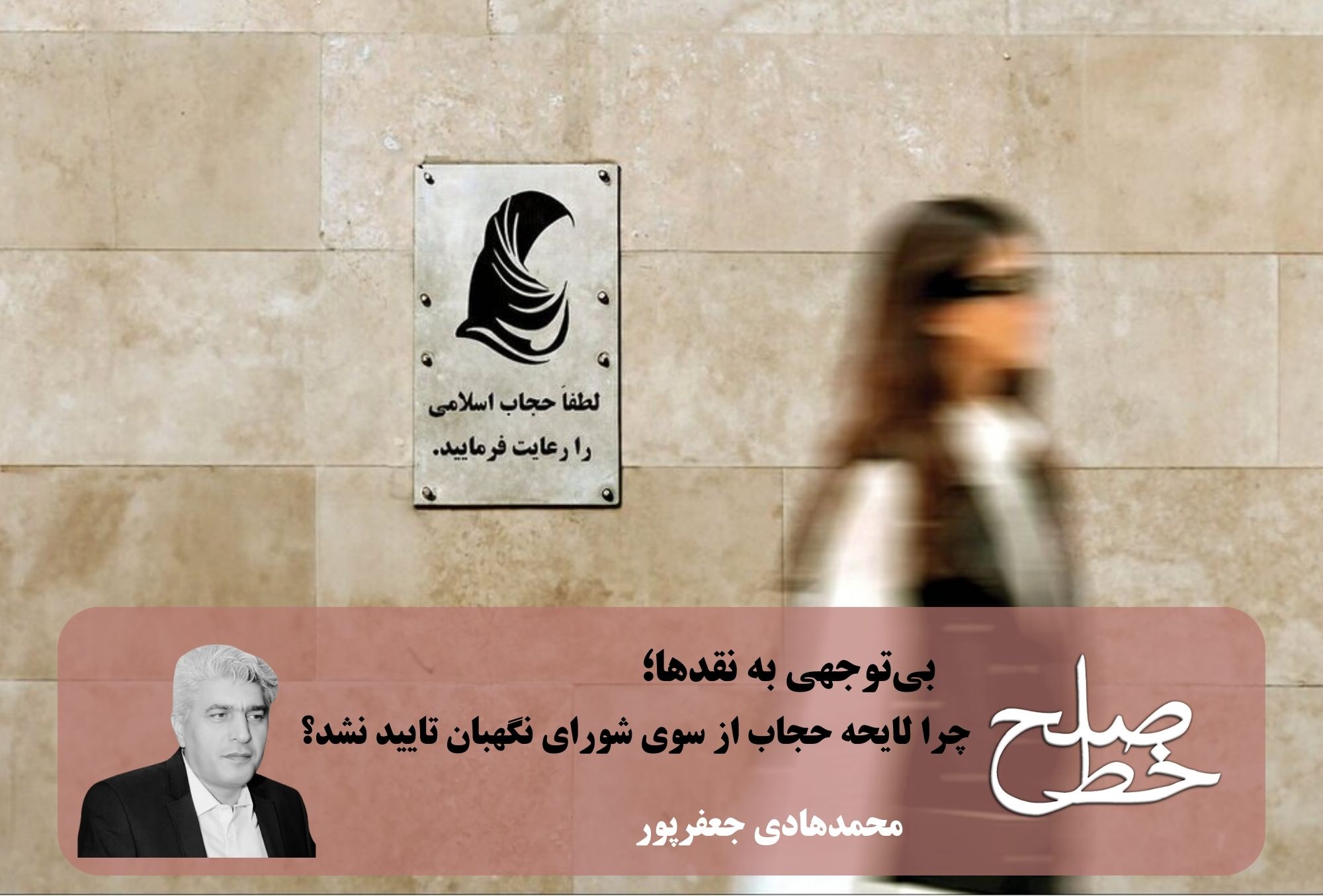
Ignoring criticisms; why was the hijab bill not approved by the Guardian Council?/ Mohammad Hadi Jafarpour
According to the principles of the Constitution and the rules governing the creation of laws, the implementation of the decisions of the Islamic Consultative Assembly requires adherence to certain conditions; including presenting the issue in the open session of the parliament and obtaining the votes of the representatives present in the House of Representatives. This […]...
Read More
Created By:
Mohammad Hadi Jafarpour November 22, 2023 Created By:
Admin November 22, 2023
Created By:
Admin November 22, 2023
Publishing industry, under the oxygen mask; conversation with Hassan Kiaian, manager of Cheshme publishing/ Matin Mostafaei
The circulation of books in the country is decreasing and bookstores are going bankrupt or changing their profession. Newspapers and written media in Iran have also been struggling to survive for several years. Sometimes they have not published one or two issues for various reasons, or have reduced the number of pages. At times, they […]...
Read More
Created By:
Matin Mostafaei October 23, 2023
Publication Manager of Baztab Negar: Censorship in the book industry is more prevalent than in other fields / Ali Kalaii.
“We are both private and bear the burden of government surveillance. This is a statement from a publisher who has been active in the field of publishing for years. According to him, the publishing industry, specifically independent publishing in Iran, does not receive government subsidies or financial aid, but is heavily controlled by the government […]...
Read More
Created By:
Ali Kalaei October 23, 2023
A few brief reflections on the crises of books in Iran / Reza Najafi
Book and reading in Iran are facing multiple crises because, on one hand, they are inheriting global problems such as the decline of the book market due to the emergence of powerful competitors like cinema, television, virtual space, and various computer games, as well as new media such as audio works, and on the other […]...
Read More
Created By:
Reza Najafi October 23, 2023
“Return to the book, the true book!/ Saeed Barabadi”
The file of reading books by people around the world, especially Iranians, has changed significantly due to the coronavirus and long-term quarantines afterwards. However, in order to better understand this change, we must consider and accept the new types of reading in statistics, and acknowledge that all audio and visual products that are currently being […]...
Read More
Created By:
Saeed Barabadi October 23, 2023
Critical Thinking/ Sayed Mohammad Safi
My colleagues from “Peace Line” have asked me to share some points with our esteemed readers about the role of literature in fostering critical thinking and to encourage those interested to explore this necessary matter. How can accessing and researching the ancient literary roots of our culture contribute to the expansion and development of “critical […]...
Read More
Created By:
Seyed Mohammad Sohofi October 23, 2023
Censorship of books with semi-legal tools / Ehsan Haghi
A book is considered one of the most important tools for the transmission and dissemination of ideas. Therefore, one of the important measures of freedom of expression in a society is the freedom of individuals to express their thoughts and beliefs in the form of a book. Like all human rights and freedoms, freedom of […]...
Read More
Created By:
Ehsan Haghi October 23, 2023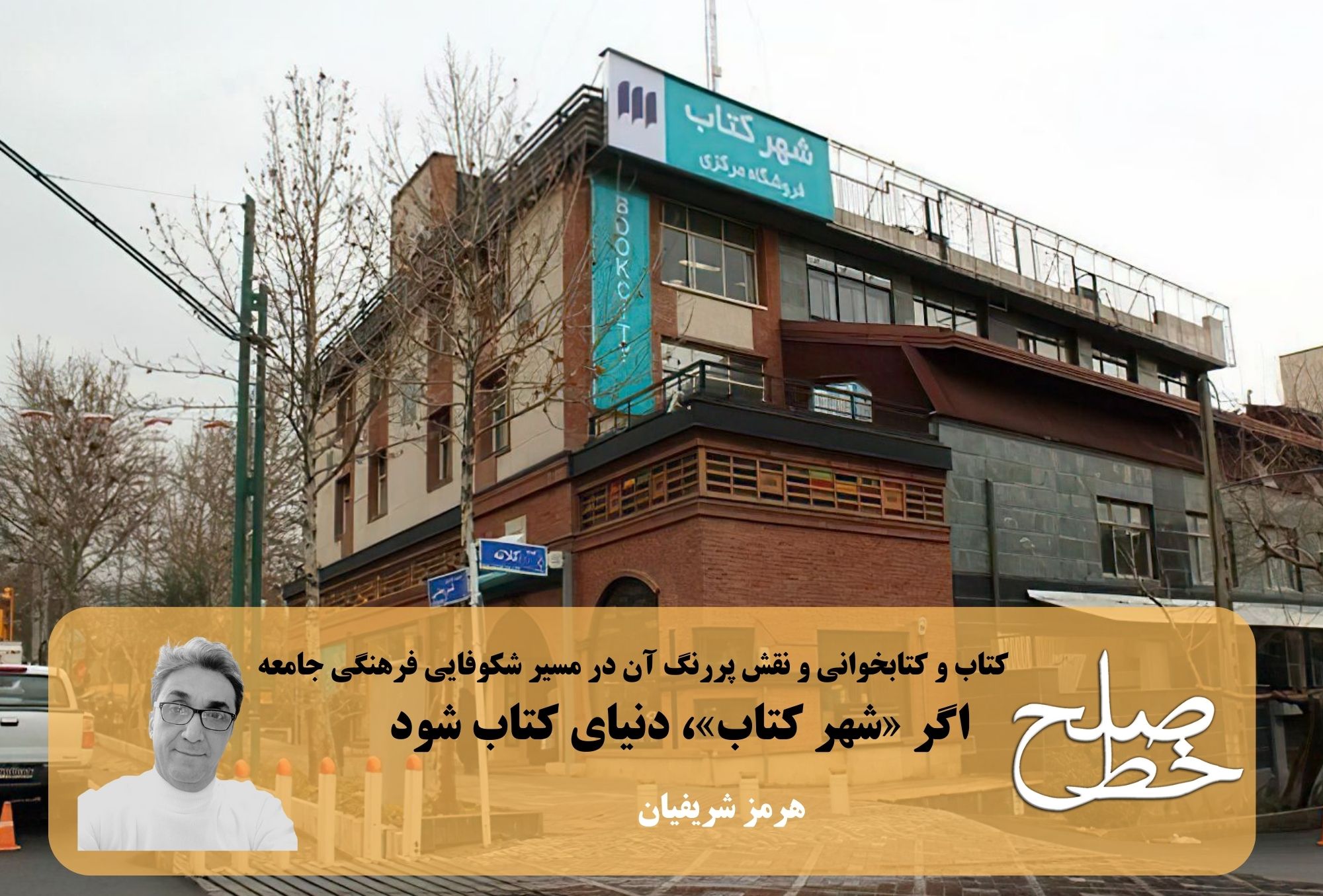
If “City of Books” becomes the world of books/ Hermoz Sharifian
The position and culture of reading books in Iran is so esteemed and respected that parents and teachers in schools, from the very first years of education, introduce books as humans’ best friend and encourage children to read, and of course, they still do so. Of course, verbal encouragement alone is not enough to establish […]...
Read More
Created By:
Hormoz Sharifian October 23, 2023
Our culture and its relationship with democracy / Majid Shia Ali
You have probably encountered views that suggest democracy requires cultural prerequisites and that society lacks these prerequisites culturally. To justify this view, various comparisons are made to belittle Iranian society compared to developed countries. From driving in heavy city traffic compared to driving conditions in Northern European countries, to the proposal of a per capita […]...
Read More
Created By:
Majid Shia’ali October 23, 2023
