


peace line

From “Savola” to “Hyperstar”: A Warning Bell for Iran’s Economy/ Nafiseh Sharafaldini
The withdrawal of foreign investors from Iran’s economy could severely reduce the country’s chances of competing in global markets and might even push Iran’s economy out of the global economic cycle. For this reason, some experts believe that the decline in foreign investment in recent years—particularly the recent withdrawal of major investors—has raised concerns that […]...
Read More Created By:
Nafiseh Sharafaldini
Created By:
Nafiseh Sharafaldini January 20, 2025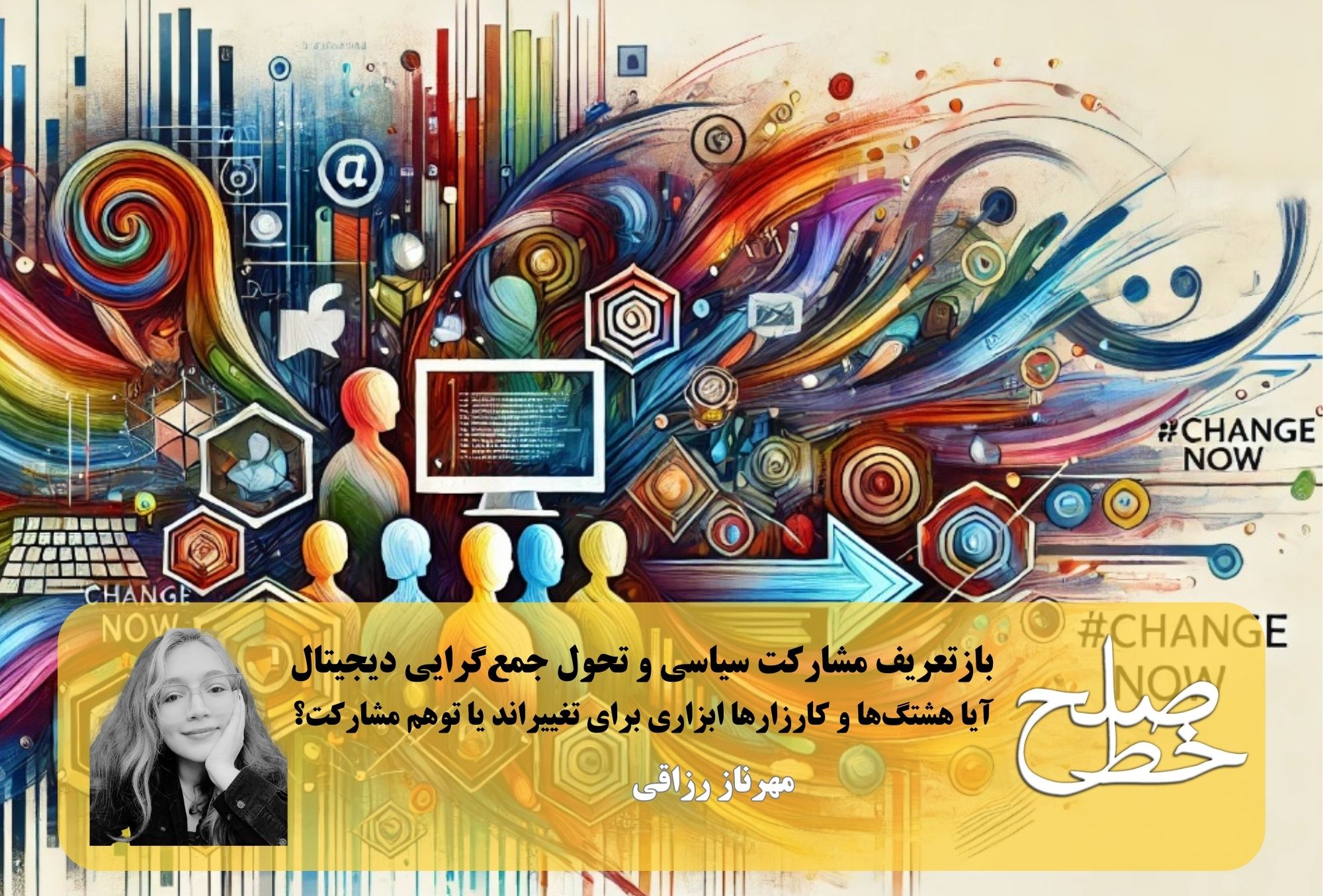
Are Hashtags and Campaigns Tools for Change or Illusions of Participation?/ Mehrnaz Razaghi
Today, social media has become a key platform for activism, enabling everything from public support for political and social causes to the organization of protests. This digital space gained even more significance during the COVID-19 pandemic when people turned to digital media more than ever before. Now, every gathering or protest is not just a […]...
Read More
Created By:
Mehrnaz Razaghi January 20, 2025
Energy: A Commodity or a Political Tool? With Dr. Hashem Oraee, Professor at Sharif University/ Pedram Tahassini
Dr. Hashem Oraee was born in 1957 (1336) in Mashhad. In 1974 (1353), he left for England to continue his education and earned his Ph.D. in Engineering from Cambridge University in 1985 (1364). He is a recipient of the “Pochu Brodsky Prize” from Churchill College at Cambridge University and the “Institution of Engineering and Technology […]...
Read More
Created By:
Aban Ray December 21, 2024
Mohammad Sadegh Mehrjou: Up to 70% of Power Plant Gas is Emitted and Wasted/ Ali Kalaei
Power outages, energy imbalances, and their resulting hardships have become one of the country’s most significant national challenges. The nation is grappling with air pollution, power outages, and cold weather, with the issue of energy imbalance frequently arising. In the midst of this, national energy policies and planning, along with their economic, social, and environmental […]...
Read More
Created By:
Ali Kalaei December 21, 2024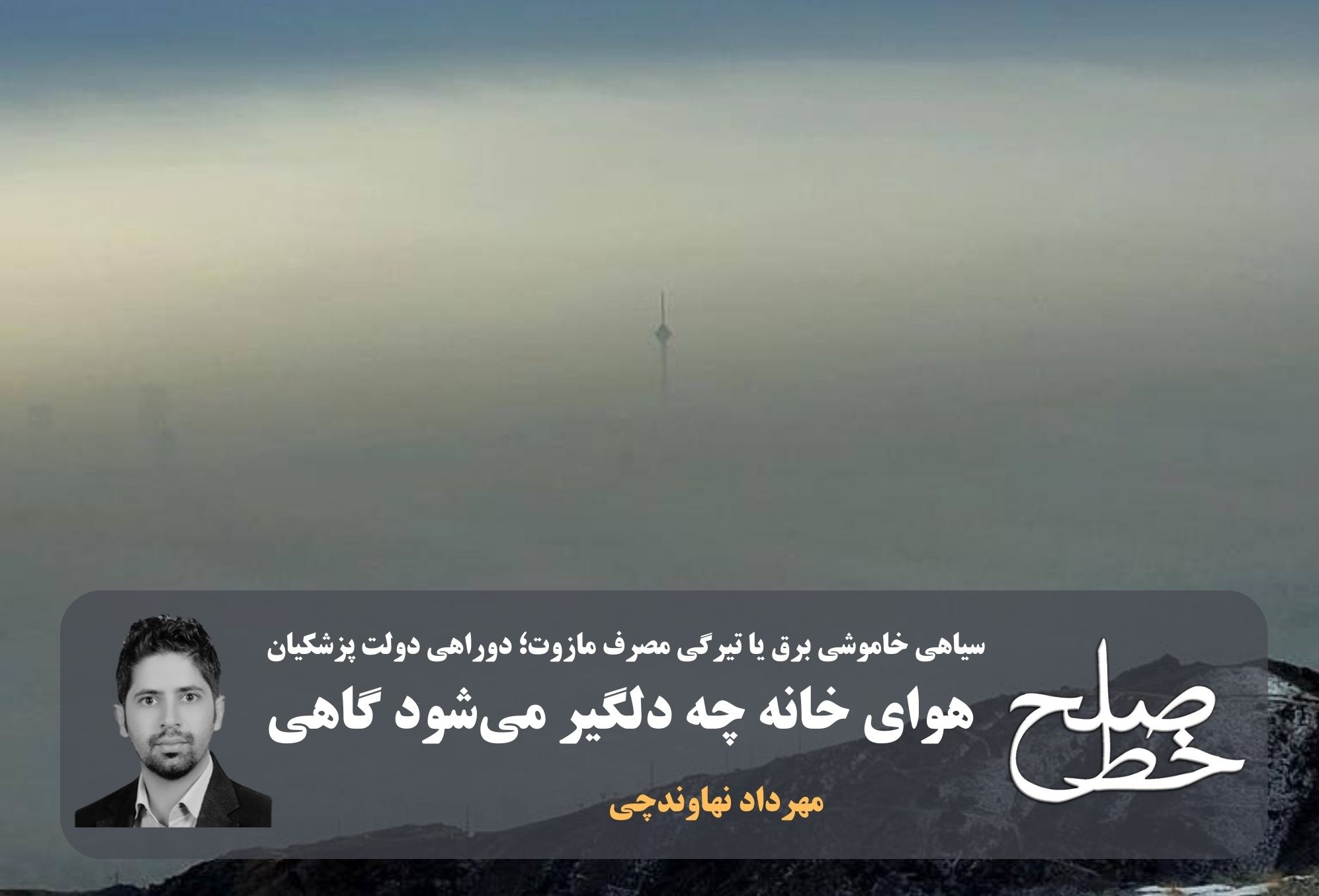
The Atmosphere at Home Becomes Somber at Times/ Mehrdad Nahavandchi
A City with a Dark and Gloomy Sky When we think about the pollution caused by power plants, the first image that comes to mind is often the tall chimneys releasing smoke that darkens the sky. However, the negative environmental impacts of power plants are not limited to air pollution. Generating massive amounts of energy […]...
Read More
Created By:
Mehrdad Nahavandchi December 21, 2024
A Cold Winter, a Silent Market/ Mina Javani
As winter begins, cold weather and rising energy consumption have once again cast the shadow of a power outage crisis over the daily lives of people and their economic activities. These blackouts, often occurring without prior notice, have paralyzed both small and large businesses while placing additional pressure on households. The Hassanabad Market and Tehran’s […]...
Read More
Created By:
Mina Javani December 21, 2024
The Lights of the “Economy” Are Out/ Omid Aghdami
Power outages: both a cause and a consequence of crises Let’s begin the story of power outages with Syria. For those who have not followed developments there, the recent events might seem unexpected. However, anyone who has monitored Syria’s situation since the internal conflicts would inevitably ask: Why haven’t the Syrian people brought this to […]...
Read More
Created By:
Omid Aghdami December 21, 2024
Whose Responsibility is the Generator in the Dowry? The Groom or the Bride?/ Morteza Hamounian
Power outages have a long history in the collective memory of Iranians. Widespread blackouts began during the war and continued until 1988 (1367 SH). However, from 1988 to 2008, the country experienced only occasional and temporary blackouts, specifically in 2001 and 2003 due to unexpected events. In 2008, due to reduced water reserves in dams […]...
Read More
Created By:
Morteza Hamounian December 21, 2024
Reasons for Power Outages in Iran/ Sina Yousefi
In recent months, increased air pollution in some major cities due to extensive use of mazut (fuel oil) in thermal power plants has sparked protests from environmental activists and the public. In response, the head of the Environmental Protection Organization announced a government directive to halt mazut consumption at three power plants in Arak, Karaj, […]...
Read More
Created By:
Sina Yousefi December 21, 2024
The Super-Crisis of Power Outages in Iran: Causes and Consequences/ Ahmad Alavi
Reliable and sustainable access to electrical energy is vital for Iran, serving as a key driver of economic and social growth. Electricity plays a fundamental role in manufacturing, agriculture, services, and information technology. Thus, disruptions in electricity production, transmission, and consumption networks have significant consequences on macroeconomic variables such as economic growth, productivity, employment, investment, […]...
Read More
Created By:
Ahmad Alavi December 21, 2024
Failing the Test of “Good Governance”/ Ehsan Haghi
Today, the timely, non-discriminatory, quality, and continuous access of citizens to public services is considered a hallmark of good governance. As the prominent French jurist Léon Duguit emphasized, the exercise of authority and power by statesmen is valid and legitimate only if it serves the provision of public services. Beyond that, the state has no […]...
Read More
Created By:
Ehsan Haghi December 21, 2024
A Deep Pit Called: Imbalance and Inefficiency in Iran’s Power Industry/ Fereshteh Goli
Given the widespread human reliance on electrical energy and its profound integration into daily life, it would not be an exaggeration to consider it a fundamental human right. A right that governments are obligated to produce and make available to their citizens. However, in Iran, this right has often been neglected and denied for various […]...
Read More
Created By:
Fereshteh Goli December 21, 2024
