


peace line
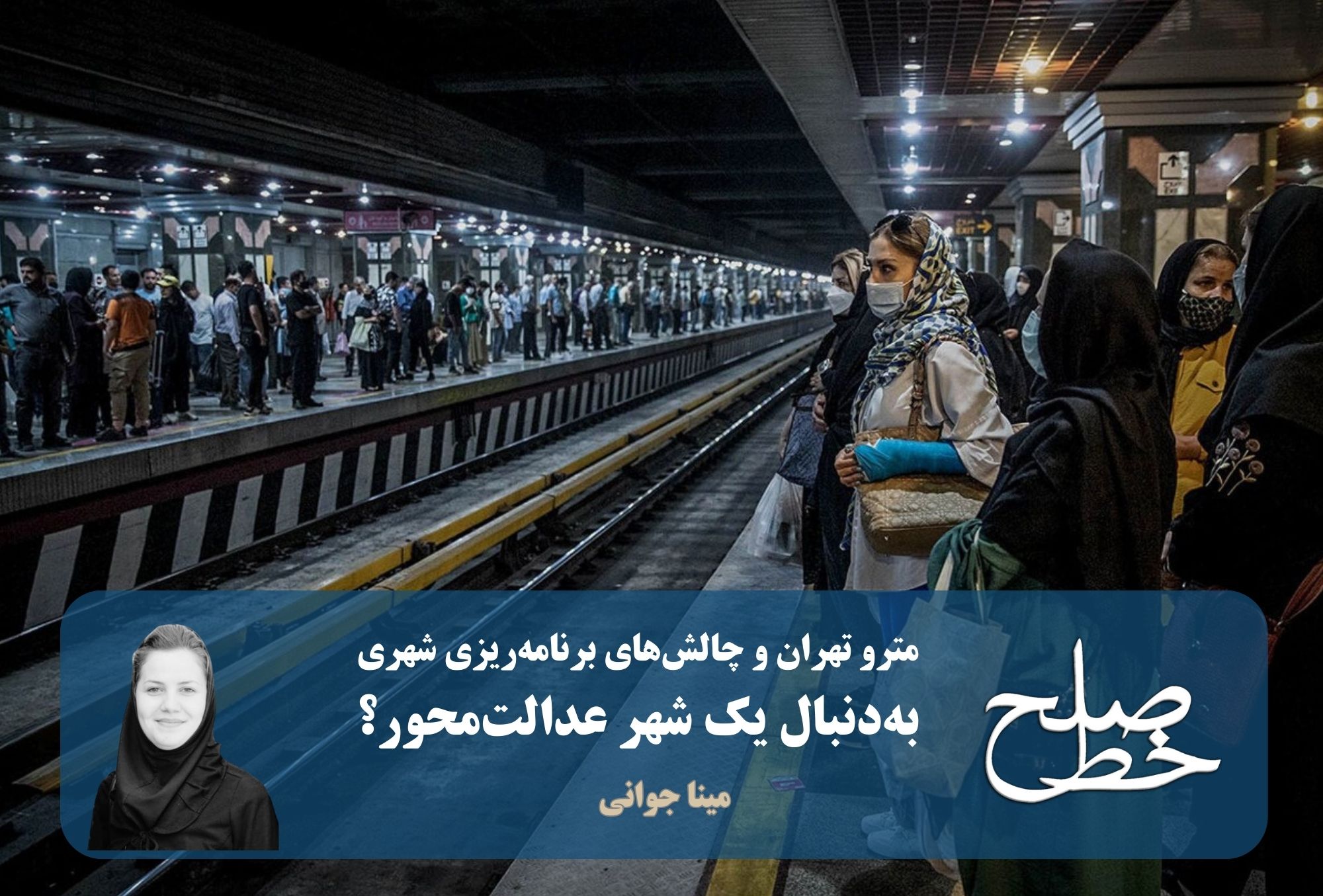
Looking for a justice-centered city?/ Mina Javani
The Tehran metro is no longer just a means of public transportation, but has turned into a battleground where tension, struggle, and survival take place in every corner. Every day, thousands of passengers search for a chance to catch their breath amidst the overcrowding and pressure at stations that cannot accommodate such a large population. […]...
Read More Created By:
Mina Javani
Created By:
Mina Javani March 21, 2025
Book Introduction: “Aristocratic Management”
Book Aristocratic management. “By the pen of Ahmad Fa’al, a researcher and analyst of theoretical issues in politics and sociology, was published in 1403. The author has written this book based on his experiences in the fields of management, oil industry, and political sociology. His first experience relates to his undergraduate studies in management, which […]...
Read More
Created By:
Ahmad Fa’al March 21, 2025 Created By:
Admin March 21, 2025
Created By:
Admin March 21, 2025
“Organizing Greater Tehran or Relocating the Capital?; A Conversation with Dr. Mohammadtaghi Rahnamayi / Pedram Tahsini”
The transfer of the capital was one of the topics that has been discussed since the beginning of the fourteenth government and by the President, in order to create a platform for a specialized discourse about this important concern of the government and the people. Supporters and opponents of this idea have expressed their opinions […]...
Read More
Created By:
Padram Tahsini February 19, 2025
Taqi Azadarmaki: Relocating the capital is a wrong and self-serving project/ Ali Kalaei
For decades, the issue of transferring the capital in Iran has been raised and each time this discussion ends without any clear results, it is pushed to the sidelines. Tehran, as the center of political, economic, cultural, and other activities in the country, faces numerous problems such as overpopulation, air pollution, and concentration of major […]...
Read More
Created By:
Ali Kalaei February 19, 2025
Ardeshir Pisheng: The diversity of mother tongues in Iran is an opportunity, not a threat/ Azar Taherabadi.
Iran is a land with a wide range of linguistic and cultural diversity. Mother languages such as Kurdish, Persian, Turkish, Arabic, Balochi, Turkmen, Gilaki, Mazandarani, and others are not only a part of the country’s historical identity, but also serve as a bridge for cultural interaction, scientific development, and regional diplomacy. While some may see […]...
Read More
Created By:
Azar Taherabad February 19, 2025
“Development Plan for Makran Coasts” or “Internal and External Colonization”? / Shira Ahmad Shirani Naroui
Makran is a region in southeastern Iran that extends from the Strait of Hormuz to the east and begins at Minab, continuing to the Sindh River in Balochistan, Pakistan. This region is of special importance due to its geopolitical location and is recognized as an international waterway. Makran holds strategic value for both Iran and […]...
Read More
Created By:
Shir Ahmad Shirani Naroui February 19, 2025
The Face of the Capital from the Past to Today / Reza Dehlooi
Tehran has been experiencing unbalanced and chaotic growth since the Safavid period, especially since it was chosen as the capital of Iran by Agha Mohammad Khan Qajar. Despite occasional attempts to establish official boundaries and limits for the city, it has continued to expand and develop without proper oversight or control from national authorities. As […]...
Read More
Created By:
Reza Dehlavi February 19, 2025
City as a Territory: Reproducing Inequalities through Spatial Policies in Tehran / Mina Javani
The division between center and periphery is one of the fundamental mechanisms shaping economic, social, and cultural inequalities in modern societies. This distinction, which is reproduced in historical and structural contexts, is not only evident in macro-level policies, but also in the smallest elements of urban life. The recent decision by the Tehran City Council […]...
Read More
Created By:
Mina Javani February 19, 2025
Makran in the trap of politics/ Mohsen Behbahani
A while ago, the government spokesperson announced that the medical government intends to relocate the capital from Tehran to the Makran region and this matter is under consideration. (1) Many countries throughout history have changed their capitals for various reasons, the main reason being the increase in population in the capital and balanced development in […]...
Read More
Created By:
Mohsen Borhanzehi February 19, 2025
The Thought of Possible Transfer of the Capital from Tehran to Makran: Opportunities, Challenges / Ahmad Alavi
The idea of relocating the capital in Iran, especially from Tehran to the Makran region, has recently been raised due to environmental challenges, population density, and Tehran’s vulnerability to natural disasters. This plan aims to achieve goals such as balanced regional development, strengthening geopolitical position, and reducing centralization. However, implementing such a plan can have […]...
Read More
Created By:
Ahmad Alavi February 19, 2025
The game of transferring the capital to Makran has no players/ Parvaneh Ahmadi
In the month of Dey 1403, the government spokesperson announced that relocating the capital to the Makran region is one of the serious options in the country’s major plans. This plan has not been fully rejected or approved in terms of implementation, and according to Jafar Qaempanah, the executive deputy of the president, regarding the […]...
Read More
Created By:
Parvaneh Ahmadi February 19, 2025
