


Kolbari
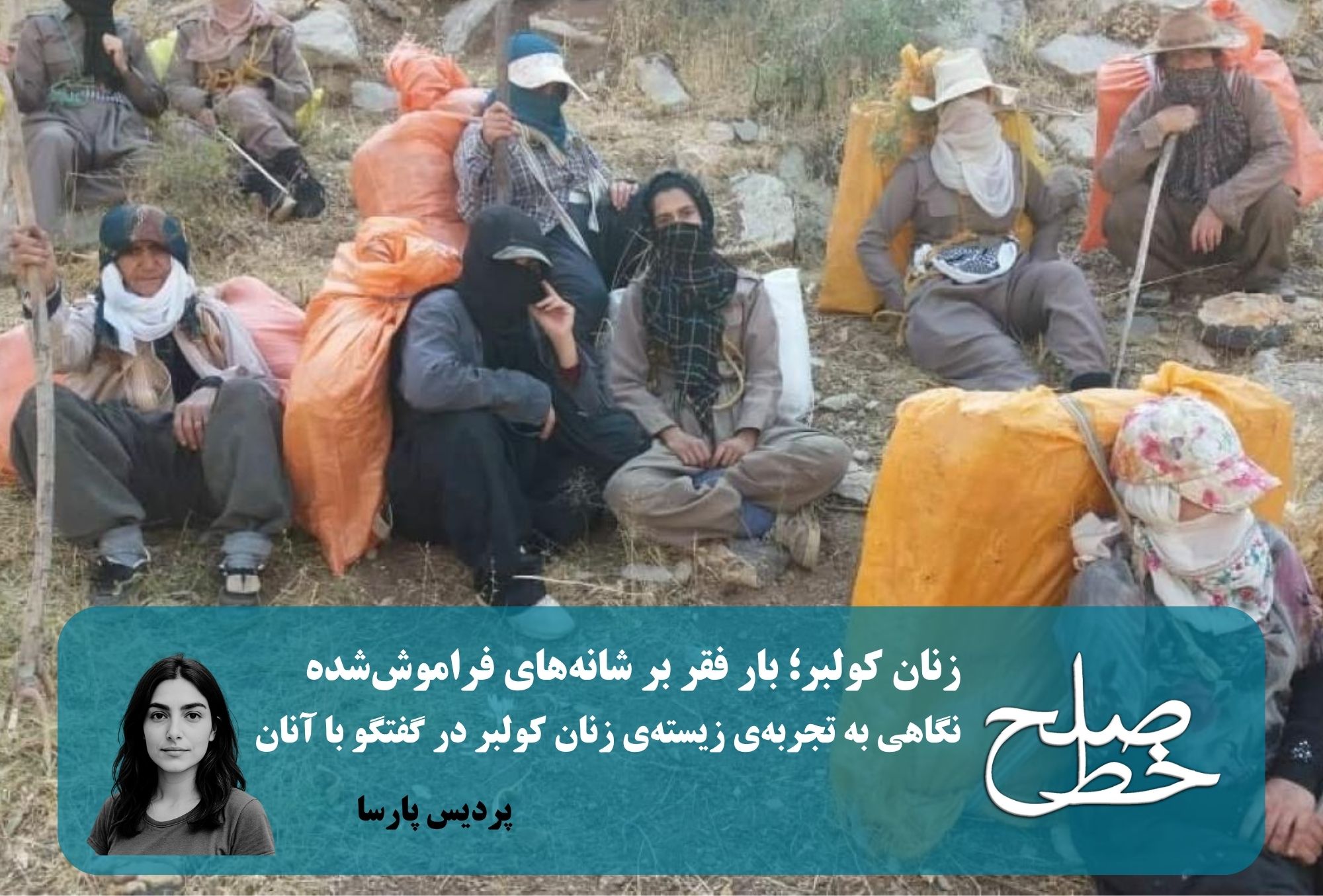
Women Kolbars: The Burden of Poverty on Forgotten Shoulders/ Pardis Parsa
Kolbari, a practice most common in the provinces of Kurdistan, Kermanshah, and West Azerbaijan, is a phenomenon tightly intertwined with structural poverty, underdevelopment, and centralized governance policies. The state, through continuous underdevelopment of non-Shia and non-Persian regions, has exacerbated this issue—particularly in the Kurdish border areas. Years of neglect, historical insecurity, and a securitized view […]...
Read More Created By:
Pardis Parsa
Created By:
Pardis Parsa October 23, 2025
Government’s $7 Billion Control via Regulation of Kulbars: Will Kulbari Finally Be Legalized?/ Nafiseh Sharafaldini
The Pezeshkian administration is set to implement a regulatory framework for overseeing border trade practices, specifically kulbari (manual border transport) and tehlanji (small-scale maritime trade). Under this framework, the government plans to manage $4 to $7 billion worth of annual imports conducted through kulbari. Abdolnaser Hemmati, Minister of Economic Affairs and Finance, announced during a […]...
Read More
Created By:
Nafiseh Sharafaldini November 21, 2024 Created By:
Admin November 22, 2023
Created By:
Admin November 22, 2023
“Mian-buri to death; Koolbari in border areas; the result of people being pushed to the margins due to unemployment/ Bahar Abbasi”“Death in the middle; smuggling in border regions; the consequence of people being marginalized due to unemployment/ Bahar Abbasi”
The term “Kolbar” is a painful one for people due to the occurrence of some bitter events, such as the killing and death of Kolbars in the snowy mountains of Kurdistan. It is a pain that is caused by the lack of jobs, factories and workshops in their hometowns, and the deprivation of any remedy […]...
Read More
Created By:
Bahar Abbasi January 21, 2022
