


Human dignity
The Murder of the Yasouj Doctor Through the Lens of Local Values and Modern Law; A Conversation with Hossein Imani Jajarmi/ Ali Kalaei
The case of the murder of a doctor in Yasouj, the grand funeral of the convicted killer after his public execution, the participation of a local preacher in the ceremony, and ultimately the presence of a member of parliament at the home of the executed man to offer condolences have raised serious questions in the […]...
Read More Created By:
Ali Kalaei
Created By:
Ali Kalaei December 22, 2025
The Collective Psychology of Anger/ Mehdi Anbari
In both narratives, there is a moment when time seems to stop—a moment when the individual or the family realizes they can no longer wait. In one case, a doctor loses his life at work; in the other, a child who should have been within the safest circle of life becomes the victim of profound […]...
Read More
Created By:
Mehdi Anbari December 22, 2025
The collapse of trust between people and medical staff in Iran / Nafiseh Sharafeddini
Trust is a delicate bond between patient and therapist that distinguishes the treatment process from a mere business transaction. But in recent years, we have seen that this pillar in the Iranian medical environment has been severely damaged, giving way to cynicism and misunderstanding. What is happening in the crowded corridors of hospitals and waiting […]...
Read More
Created By:
Nafiseh Sharafaldini December 22, 2025
Mahmoud Alizadeh Tabatabaei: The Default Rule is the Prohibition of Public Punishment / Pedram Tahsini
Seyed Mahmoud Alizadeh Tabatabaei, a licensed attorney, political activist, and member of the board of directors of the Central Bar Association, was also a representative in the first term of the Islamic City Council of Tehran (1997–2001). He has represented many Iranian political figures and senior officials, particularly those affiliated with the reformist movement, including […]...
Read More
Created By:
Padram Tahsini September 23, 2025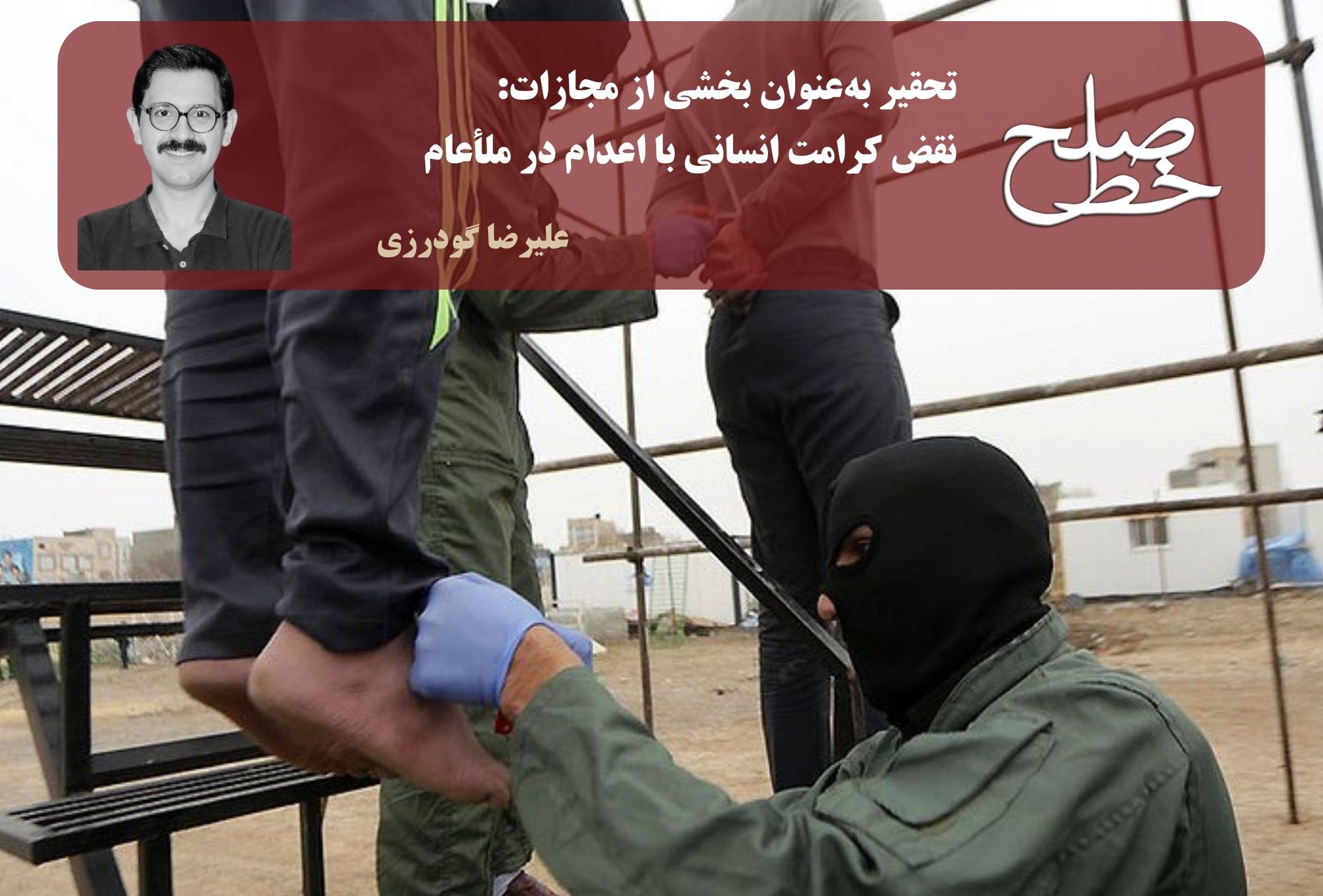
Humiliation as Part of Punishment: The Violation of Human Dignity Through Public Executions/ Alireza Goodarzi
Let us begin by distinguishing between a criminal, a suspect, and anyone else outside these categories. A person living in society may come under legal suspicion of having committed a crime. From that moment on, this individual is referred to as a “suspect.” Once the accusation is proven in a competent court, with all legal […]...
Read More
Created By:
Alireza Goodarzi September 23, 2025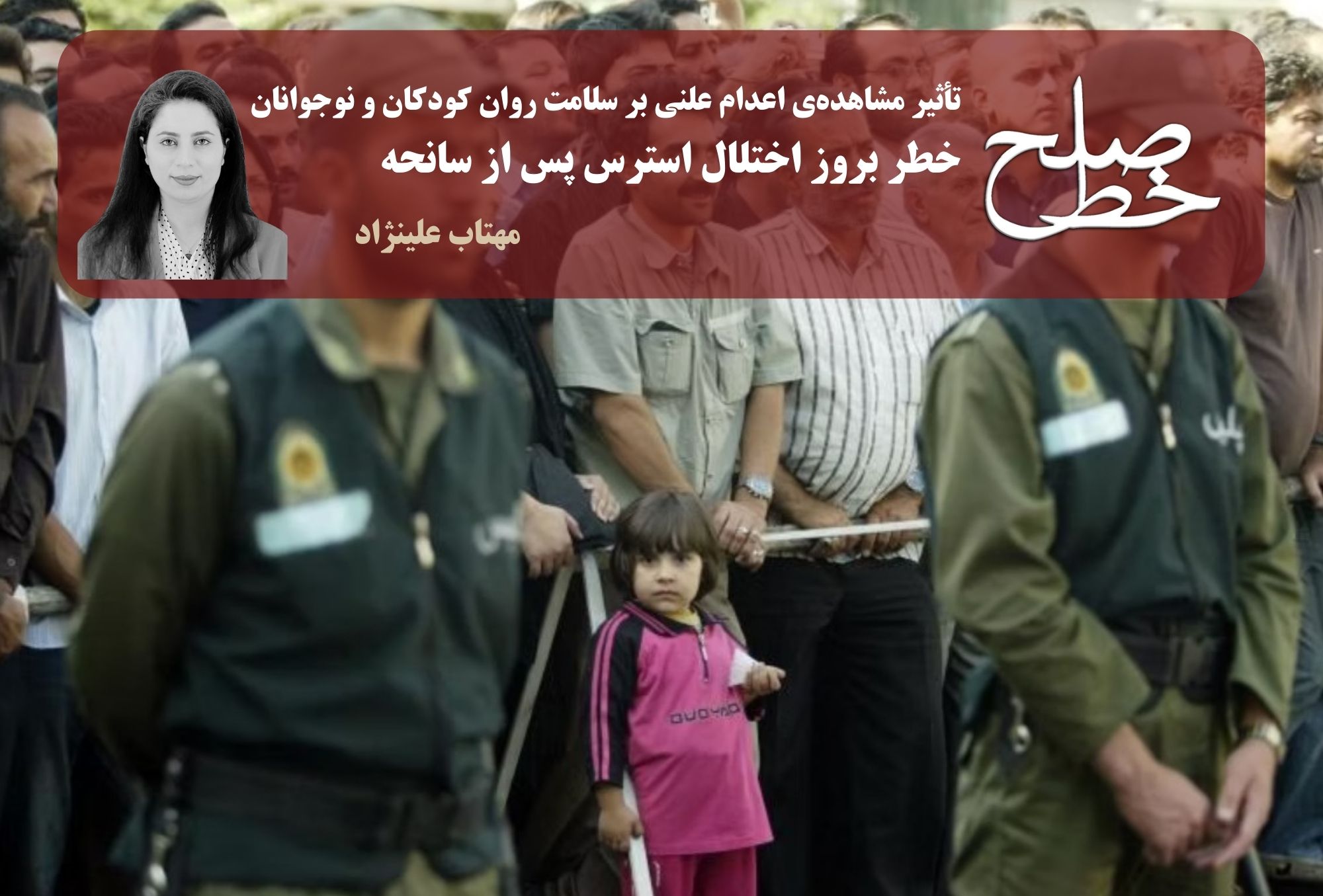
The Psychological Impact of Witnessing Public Executions on Children and Adolescents/ Mahtab Alinejad
On a cold winter morning, in the heavy silence of a city square, a crowd gathers to witness the public execution of a condemned individual. The murmurs of the crowd and the hurried steps of the guards ripple through the air. A 4- or 5-year-old child, puffed corn snack in hand, stands next to his […]...
Read More
Created By:
Mahtab Alinezhad September 23, 2025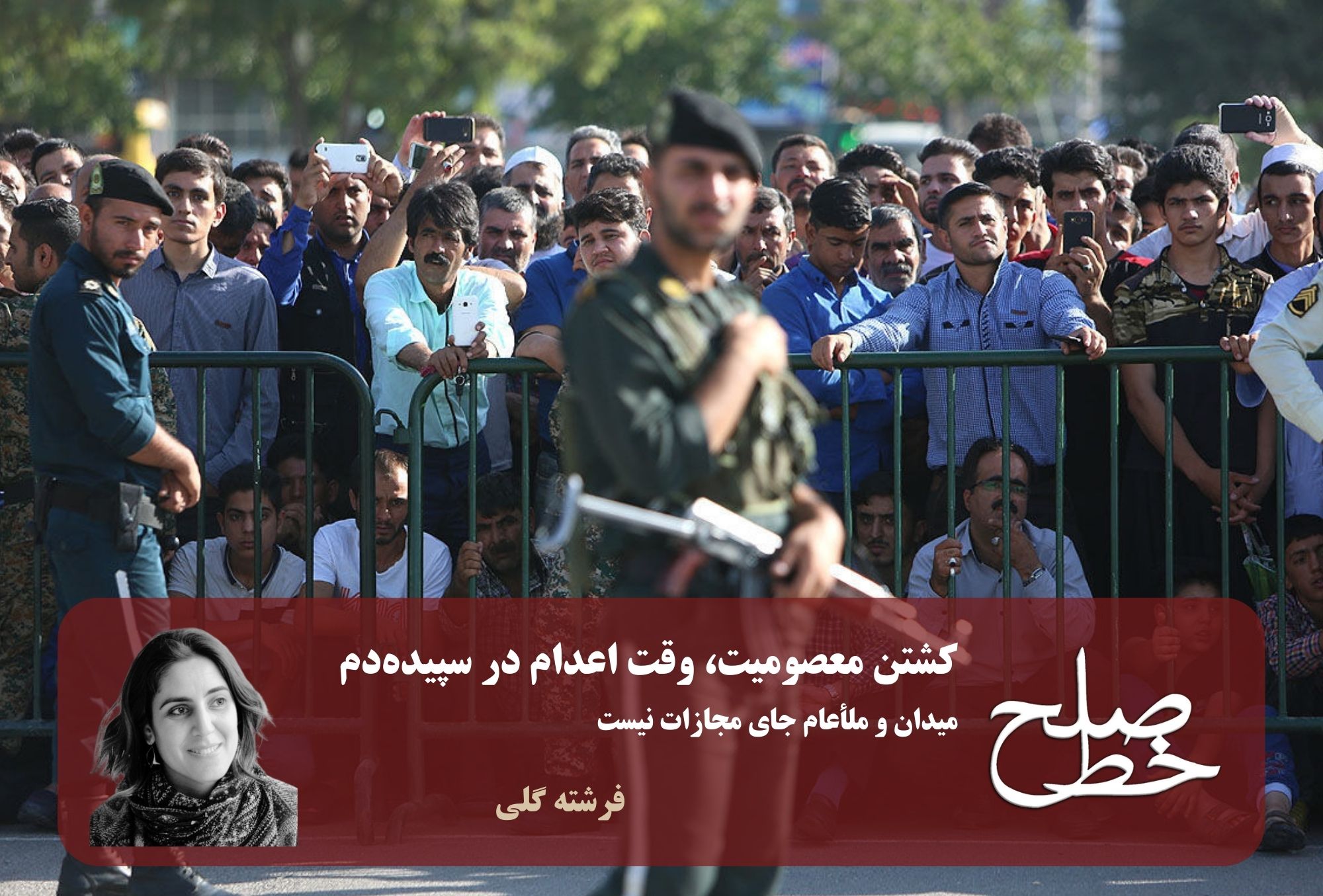
Killing Innocence at Dawn: A Public Execution/ Fereshteh Goli
As the sharp, cold morning wind swept autumn leaves across the cobbled alleyways of the city, a dense, silent crowd had gathered in the main square. Their breath turned into small clouds in the freezing air, merging into one another. Among the crowd stood women whose eyes reflected waves of fear, worry, and anxiety, and […]...
Read More
Created By:
Fereshteh Goli September 23, 2025
Public Execution: Reproduction of Violence Instead of Deterrence/ Toutia Partovi Amoli
Public execution is a punishment that, in some societies, has been used as a tool aimed at deterring crime and instilling fear. Nevertheless, according to statistical studies and scientific findings, carrying out punishment in public not only has no significant effect on reducing violent crime rates but also leads to the normalization and reproduction of […]...
Read More
Created By:
Toutia Partovi Amoli September 23, 2025
Justice or Show? Criticism of the Treatment of a Child Molestation Suspect / Musa Barzin
In early April, Tehran police announced the arrest of a suspect accused of kidnapping and sexually assaulting multiple children. Police and judicial authorities, after examining evidence and clues, including the suspect’s phone, suspect that there may be more victims than initially discovered or admitted by the suspect. In this regard, it was decided to release […]...
Read More
Created By:
Mousa Barzin May 22, 2025
Does fortune-telling and divination tarnish human dignity?/ Sina Yousefi
Fortune-telling and divination, as manifestations of superstitions in modern societies, are considered a serious threat to human dignity beyond just a cultural and social problem. These phenomena take advantage of individuals’ psychological, economic, and social vulnerabilities, targeting their intellectual independence and free will, and reducing them from capable and autonomous beings to dependent and passive […]...
Read More
Created By:
Sina Yousefi March 21, 2025
Individual, Cultural, and Social Effects of Repentance / Kazem Alamdari
About 300 years ago, Francois Voltaire, one of the famous philosophers of the Enlightenment era, believed: “There must be a distinction between sin and crime.” Just looking at articles 114 to 119 of the Islamic Penal Code, which was passed in 2013, and the guidelines for repentance that were recently announced by the head of […]...
Read More
Created By:
Kazem Alamdari July 22, 2024
Human dignity in international human rights treaties / Mohammad Mohabi
This is a caption This is a caption. Mohammad Mohabbai The concept of human dignity, humanity, and human dignity refers to the honor, status, and inherent respect for humans, which has been a subject of great attention for religions, philosophers, and humanistic thinkers since ancient times. In fact, the history of human civilization is a […]...
Read More
Created By:
Mohammad Mohebi July 24, 2016
