


Cultural Rights

Why is cultural criticism necessary? / Mehrdad Naghibi
Criticism of culture is a necessary matter for social dynamism. For over a century, Iranian society has been firmly rooted in various efforts to maintain ancient structures of tyranny, and its extent has reached a critical stage. In such a situation, whether willingly or unwillingly, the issue of cultural analysis becomes necessary, as cultural crises […]...
Read More Created By: Mehrdad Naghibi
 December 22, 2023
The Last Breaths of “Children and Adolescents Intellectual Development Center” / Keyumars Amiri
In the years 1353-1354, when the Sepah-e Danesh (literally “Knowledge Corps”) was a few years old, it had come to our village. We, the children of the village, had recently learned to read and write. Every now and then, we would see a Land Rover car coming from the city to the village, bringing us […]...
Read More
Created By: Kiomars Amiri December 22, 2023
The issue of distinguishing between hero and anti-hero in Iran / Keyumars Amiri
The film “Hero”, written and directed by Asghar Farhadi, tells the story of a young man named “Rahim” who is played by “Amir Jadidi” brilliantly. Rahim has divorced his wife and has a teenage son who stutters. He is in prison because of a 70,000 tomans debt to his former boss and bankruptcy – which […]...
Read More
Created By: Kiomars Amiri September 23, 2023
Why is cultural generalization important? / Mehrdad Naghibi
More than ever, censorship and inspection policies by authoritarian governments have taken complex forms, to the point that in societies under the rule of tyranny and cultural suffocation, censorship and the policy of elimination have become a guillotine. In Iran, the issue of censorship, both in the Shah regime and in the Islamic Republic, has […]...
Read More
Created By: Mehrdad Naghibi September 23, 2023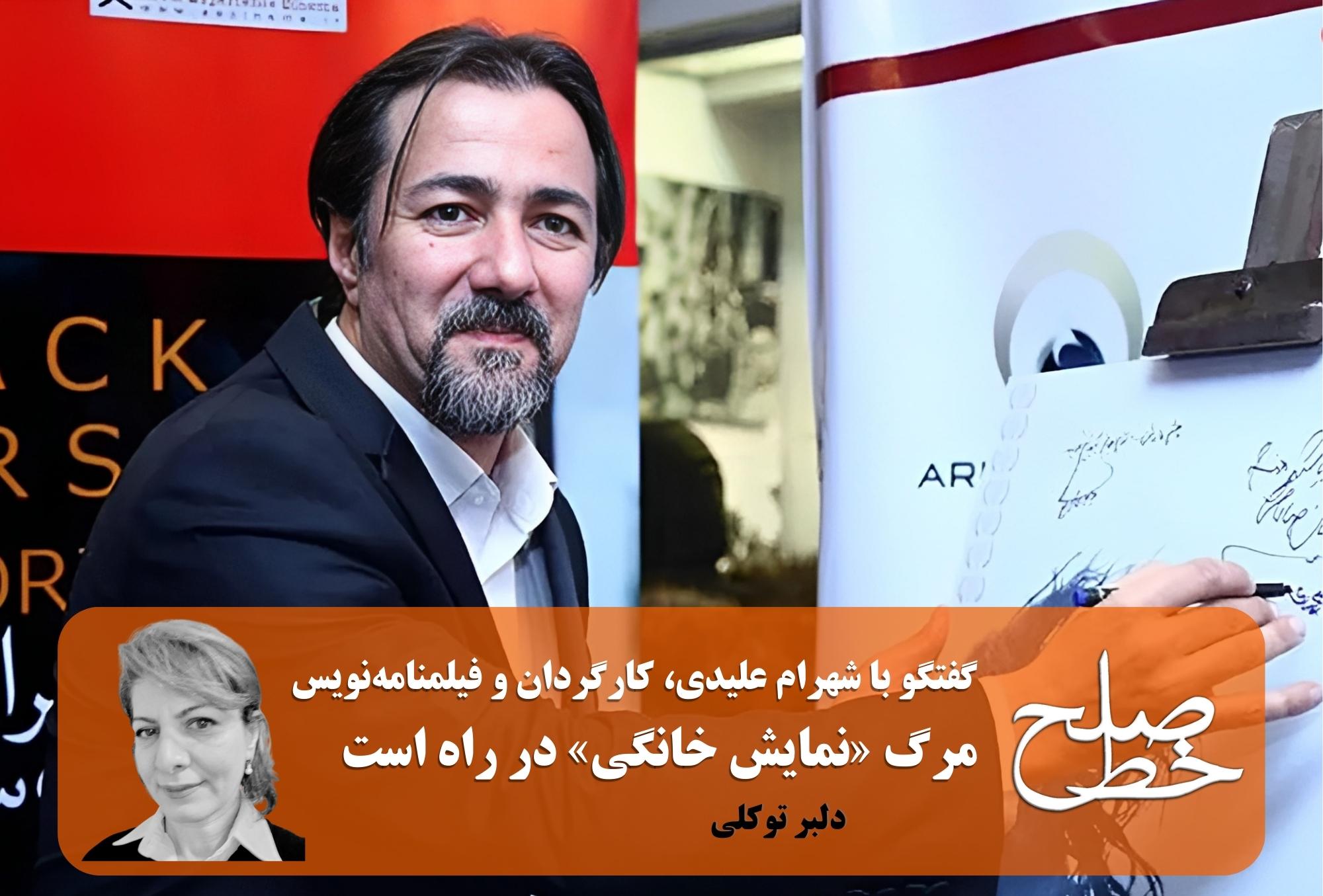
The death of “Home Performance” is on the way; an interview with Shahram Alidi/ Delbar Tavakoli.
» “The Iranian cinema, which is a part of the rich identity and culture of Iran today, has been hunched under the sword of arbitrary censorship for years. It does not want and cannot bear another period of erosion, suffering from the spiritual and financial damages of illogical and boundless inspections of the radio and […]...
Read More Created By: Delbar Tavakoli July 23, 2023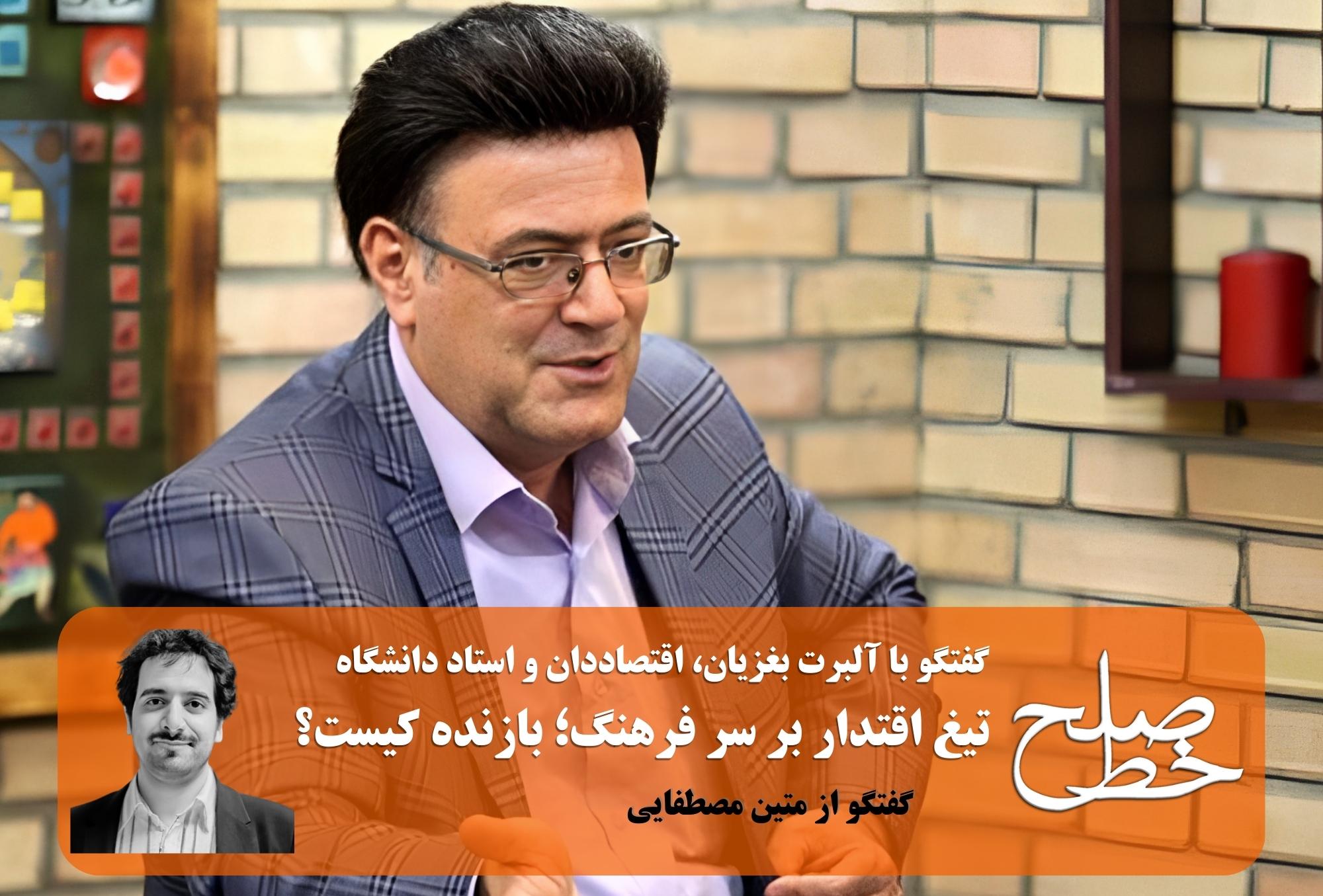
“The sword of power over culture; who is the loser? A conversation with Albert Bghzian/Matin Mostafai”
According to the recent decision of the Supreme Council of the Cultural Revolution, which was approved in the afternoon session on Wednesday, 30 Khordad, under the leadership of Ebrahim Raisi, the responsibility of monitoring the areas of audio and video platforms and the “Home Display” network will now be under the responsibility of the Islamic […]...
Read More
Created By: Matin Mostafaei July 23, 2023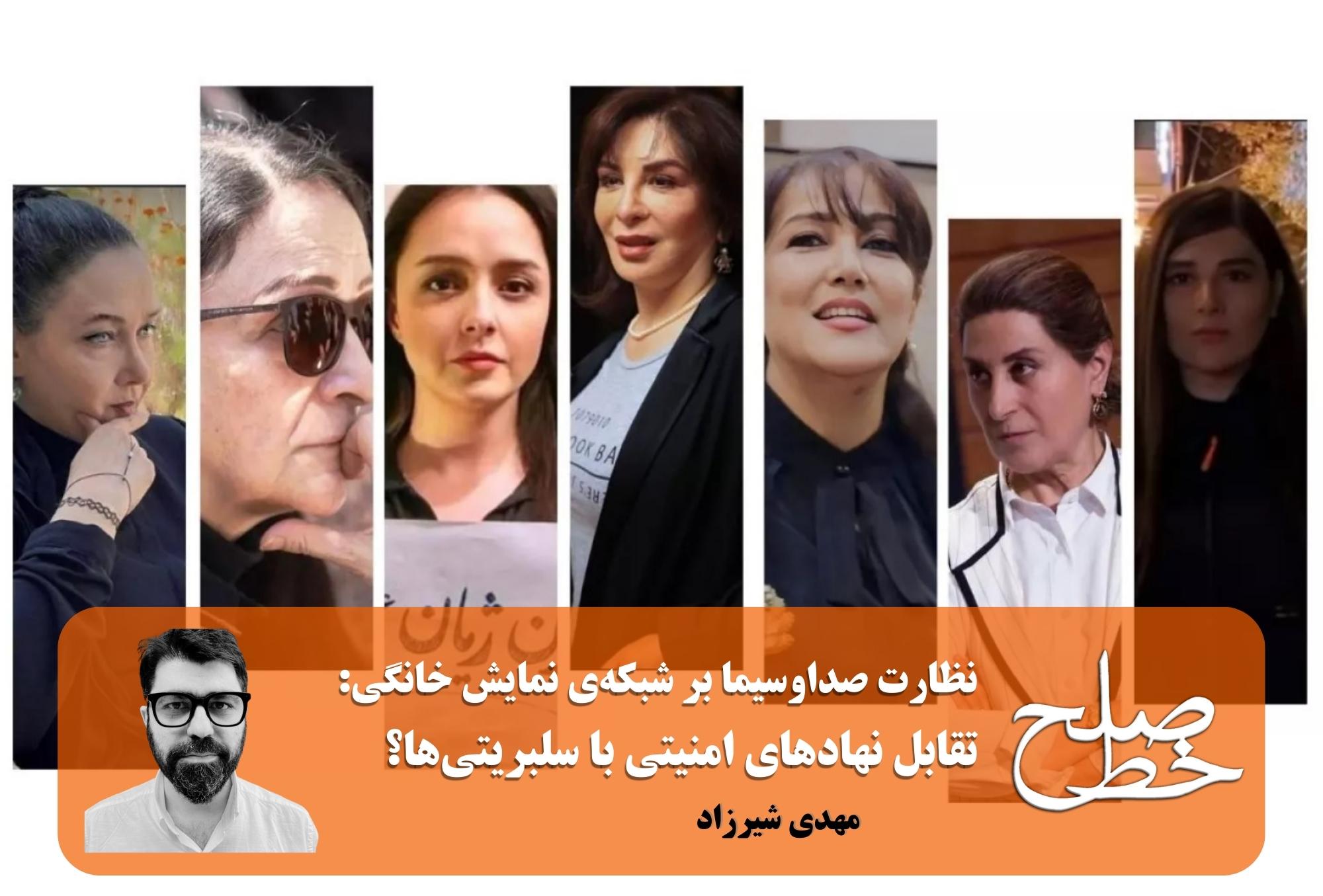
Supervision of the National Broadcasting Network on Home Display Network: Conflict between Security Institutions and Celebrities?/ Mehdi Shirzad
Iranian politicians believe that those who are involved in the art business have a great influence on public opinion and are always seeking to attract them. In every election, campaign headquarters compete to bring in celebrities for their campaign photos. They have probably deduced this from the voting statistics of the winning candidate in each […]...
Read More
Created By: Mehdi Shirzad July 23, 2023
Support for Home Viewing Network: People’s Need and Time; Two Wings of One Flight / Saeed Maleki
Alvin Toffler, the theorist of the “Third Wave”, believes that after the two agricultural and industrial revolutions, humans have now entered the third revolution; the electronic revolution. He says that the emergence of phenomena has caused chaos and the only way to escape it is to choose a strategy of knowledge against these phenomena. Based […]...
Read More
Created By: Saeed Maleki July 23, 2023
A Critique of “Ouj Media Organization” / Ali Kalai
From the very first months after the leadership of Ayatollah Khamenei, he tried to implant a concept called “cultural invasion” in people’s minds. A concept that reflected his way of thinking and his approach towards modern human lifestyle. In Azar 1368 (November/December 1989), he stated in a speech, “Now in our schools, streets, frontlines, and […]...
Read More Created By: Ali Kalaei July 23, 2023
A look at the disappearance of independence in the home entertainment network / Arash Chakari
If we want to summarize the history of Iranian television after 1357 in one sentence, we can write: A huge cultural and artistic gap between the reality of society and the programs produced. A gap that was mostly evident between the years 68 to 78. The atmosphere of revolutionary society and the subsequent eight-year war […]...
Read More
Created By: Arash Chakeri July 23, 2023
The heavy shadow of ideology on the fate of celebrities / Keyumars Amiri
“Celebrity” is a title that is used today for many artists and generally prominent and well-known individuals. These are people who are sometimes known and recognized in society for their talent and art, and due to their artistic and literary activities and presence in both physical and virtual spaces, they have a considerable number of […]...
Read More
Created By: Kiomars Amiri July 23, 2023
The home viewing network, the latest victim of suppression / Marzieh Mohabbey.
In Iran, when television was under the monopoly of the government, all windows of critical thinking were closed and all avenues of influence for thoughts, beliefs, and existing discourses were obsessively blocked. As an arm of the security apparatus, it also took on the mission of suppressing the government’s opposition. Some speakers and journalists were […]...
Read More
Created By: Marziye Mohebbi July 23, 2023
