


Articles

Workers Who Stayed, Worked, and Died/ Fereshteh Goli
Who could have known that day, and its sunset, would be the last for 52 workers at the Tabas coal mine? Who could have predicted that an explosion would turn the Tabas mine disaster into one of the deadliest mining accidents in Iranian history? You might say no one, but many lived in fear of […]...
Read More Created By: Fereshteh Goli
 October 22, 2024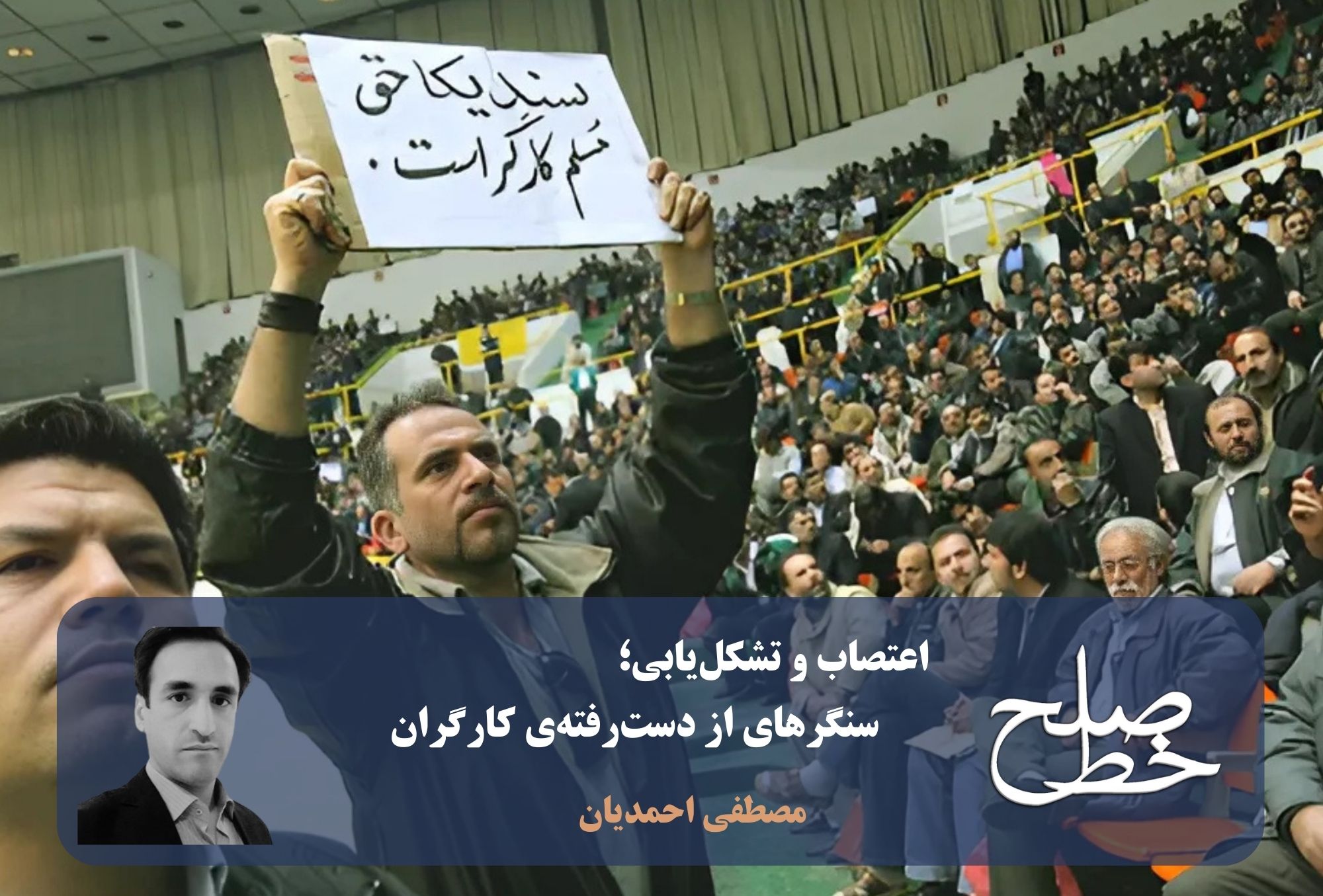
Strikes and Organizing; The Lost Fortresses of Workers / Mustafa Ahmadian
Nearly a century has passed since the fourteen-day nationwide strike of printing workers and the prolonged strike of oil industry workers in Abadan between 1300 and 1404 (1921-1925). These were the first genuine and official strikes in the labor movement in Iran. Subsequently, between 1304 and 1320 (1925-1941), widespread strikes occurred, which faced the harshest […]...
Read More
Created By: Mustafa Ahmadian October 22, 2024
Rethinking the Role and Structure of Unions in Confronting Job Insecurity/ Mehrnaz Razaghi
The effects of “neoliberalism” on the world of work and labor unions are topics of contemporary debate in most countries. According to David Harvey, neoliberalism can be understood as a theory of political economy practices that seeks to enhance human well-being by maximizing entrepreneurial freedoms within an institutional framework characterized by the protection of private […]...
Read More
Created By: Mehrnaz Razaghi October 22, 2024
The Tabas Mine Resumes Operations Without Changes/ Morteza Hamounian
In 2010, the San Jose mine in Chile collapsed. Thirty-three miners were trapped 700 meters underground and five kilometers from the main entrance. As in most mining accidents around the world, the employer’s failure to reinforce the mine’s ceiling was the main cause. Rescue teams arrived on site from the early hours. Alongside the miners’ […]...
Read More
Created By: Morteza Hamounian October 22, 2024
“Tabas” in a Grief That Went Unseen/ Hormoz Sharifian
It seems that the painful events stemming from inefficiency, lack of modernization, negligence, and irresponsibility will not release the long-suffering people of Iran from their grip. It feels like we are condemned to witness devastating disasters every few years, events that inflict deep wounds on the soul and psyche of Iranians, leaving scars that remain […]...
Read More
Created By: Hormoz Sharifian October 22, 2024
Unequal Education: A Threat to Democratization in Iran?/ Majid Shia’ali
The Iranian Parliament Research Center recently published a study indicating that nearly 55% of students ranked in the top 3,000 in the national university entrance exam come from the top two economic deciles. The study warns that access to higher education in Iran, both in terms of quantity and quality, is significantly unequal. One major […]...
Read More
Created By: Majid Shia’ali October 22, 2024
The Feminization of Aging Alongside the Feminization of Poverty/ Elahe Amani
The feminization of aging has presented major challenges for the global community, and Iran is no exception. While other countries have adopted effective strategies to address the feminization of aging and manage this crisis, in Iran, this crisis reveals its grim face in the increasing number of elderly people “abandoned” in parks, streets, and addiction […]...
Read More
Created By: Elahe Amani October 22, 2024
Final Approval of the Hijab and Chastity Bill Amidst Regional Tensions/ Roza Nateghi
The Hijab and Chastity Bill, which had remained dormant since the death of the former president, was recently revived, shocking the public. Ahmad Rastineh, spokesperson for the Cultural Commission of the Islamic Consultative Assembly, and one of the most hardline parliament members, reignited the issue. Rastineh, a staunch supporter of the Hijab and Chastity Bill […]...
Read More
Created By: Roza Nateghi October 22, 2024
The government of “National Unity” and its promises / Majid Shia’ali
Today, a government has come to power in Iran that considers its slogan to be national unity; a slogan that more than two decades ago, the movement for freedom – as part of the opposition to the government inside Iran – demanded through its statements and has been brought up again in political discussions in […]...
Read More
Created By: Majid Shia’ali September 22, 2024
University or secluded courtyard of security forces?/ Sanctified type.
At the same time as the start of the “Women, Life, Freedom” movement in 1401, students across the country in universities acted as the beating heart of social movements and protests, in response to the death of Mahsa Amini. These protests were so widespread that student organizations – including Islamic associations, trade unions, and even […]...
Read More
Created By: Motahreh Goonei September 22, 2024
National Unity: The Key to Sustaining Suppression in Education and Training / Arash Mohammadi
While the slogan of “national unity” has been raised as a key principle in the government of physicians, it seems that this concept is more used as a tool to maintain and perpetuate repression in some government institutions, especially the Ministry of Education. National unity, which could have meant an effort towards convergence and participation […]...
Read More
Created By: Arash Mohammadi September 22, 2024
The story of more than four decades of deprivation of Bahai Iranians from higher education / Humble Genius
The right to access education is one of the fundamental principles in achieving social justice and individual and collective progress. This right is essential, but after the Islamic Revolution in Iran, it was seriously violated for the Baha’is – the largest religious minority group in Iran. With the beginning of the “Cultural Revolution” in the […]...
Read More
Created By: Zinoos Foroutan September 22, 2024
