Politics 3

Last updated:

April 21, 2026

Politics 3

One

The things that are mentioned in the text of Islamic laws or by representatives in the parliament, cannot be found even in the darkest corners of the most corrupt and deviant minds. Dear parliament, with the approval of the Guardian Council, passed a law allowing marriage between a stepfather and stepdaughter. Even the real stepfathers in Sicily who commit all kinds of crimes such as murder, theft, and fraud, never thought that their name would be associated with such shame. The issue is not just about a law being written somewhere in Islam, the story is about how this nation always discovers the parts related to abuse from the depths of history and with the utmost determination and unity, they make it happen!

Three

Recently, it has been proven that even with countless media and clear and obvious evidence, you can still publicly lie and receive 45,000 likes. Now, let’s assume that “Ahmadinejad, who denied the Holocaust, is gone,” but the Supreme Leader on his website called the Holocaust a myth that is still clearly available in Persian and 12 other infidel languages. However, Mr. Zarif announced in an interview with ABC America that this is not the case and a translation mistake has occurred. Meaning, for example, the original text was: “The Holocaust myth is one of the Jewish veiled sisters.” which has been translated as: “The Holocaust myth never happened.”

Four

The nation that for years has been humiliated for the color of their clothes, the height of their coat, and the material of their scarf, protested by posting pictures of their jeans in response to Netanyahu’s words: “The Iranian nation cannot wear jeans!” This is truly a revolutionary move. Did you wear jeans in the Ministry of Guidance or were you waiting for a taxi in Azadi Square? It would be great if the officers, who throw the people into vans day and night and take pictures of them like murderers, would have a little empathy and start a campaign for them.

The Iranian society and the issue of legitimate espionage.

It seems that the main dividing point in dealing with sexual issues in different cultures around the world is the circle of legitimacy of these relationships. While in some societies, consensual same-sex relationships are protected and considered legitimate as citizens’ rights, in others, lawmakers do not accept even consensual heterosexual relationships.

In Iran, like many other issues related to social and personal life, the issue of the legitimacy of sexual relationships is directly influenced by the religious perspective. In Islamic law, sexual relationships between two individuals are considered illegitimate and violating it can result in punishment up to death, or under certain conditions, it may be recognized as legitimate. Based on this, individuals of different genders, who are not related by marriage, can engage in sexual relationships if they have a religious marriage contract and follow religious guidelines.

Although receiving money for engaging in sexual relations is not exclusive to women, if a woman intends to make a living from such relationships, she can do so by implementing the temporary contract of privacy. However, if the necessary religious precautions are not taken, she will be considered a prostitute. In other words, from an Islamic perspective, there is a difference between prostitution and legitimate income from selling one’s body, which is simply the implementation of a temporary contract of privacy and the repetition of Arabic words by both parties. Of course, if religious rules are followed, there is no need to find an answer to the question of why a woman may engage in prostitution to support herself, and whether engaging in such a profession is accepted with full awareness of the social, psychological, and physical harms that may result for the woman.

1

From economic poverty to legal prosperity.

The intensification of major economic problems in recent years in Iran is one of the significant factors that can directly impact the increase in prostitution in society. On one hand, the decrease in government public budget due to the economic crisis will directly affect the reduction of quantity and quality of support services, leaving more citizens deprived of minimal social support. On the other hand, the economic recession and inflation in Iran will directly lead to an increase in unemployment rates and exacerbate economic pressures on families and citizens. Another consequence of the economic crisis is a significant increase in the cost of living, despite a minimal increase in general income levels. These factors can force some citizens to involuntarily and temporarily or permanently resort to prostitution, as sexual relationships are one of the few goods that are never excluded from the human consumption basket and there are always people willing to pay for it. However, it seems that while in the laws and public culture of Iran, sexual relationships are considered immoral and prohibited, and on the other hand, due

In recent years, many marriage agencies in Iran have been operating under the guise of religious institutions. These agencies engage in a form of intermediary activities in sexual relationships, setting rates and adhering to religious regulations. Despite some officials in charge of social issues in Iran declaring these centers illegal, they continue to operate in this field. These activities have even taken on a public form through advertisements in newspapers, with the agencies providing their phone numbers and addresses. Interestingly, some of these agencies guarantee that the family of the applicant will not be informed of their request for marriage. This could mean that these agencies are promoting a form of legitimate betrayal. These issues highlight the contradiction between the general culture of society and the official laws of the country regarding sexual relationships. On one hand, having a relationship with a non-relative, even with the observance of religious requirements, is considered an immoral act and a form of betrayal for a man. On the other hand, this betrayal is supported by both the law and religion.

Even in some cases, these institutions advertise temporary marriage contracts based on religious rulings, subject to accepting certain restrictions. This is because according to Islamic law, a woman without observing the specified time interval, known as “iddah”, is not allowed to have sexual relations with two different people.

44

Centers for marriage, legal gaps, and unanswered questions in between.

Perhaps the silence of officials in the face of public activities and the formation and growth of temporary marriage and temporary marriage centers is somehow related to their awareness of the needs of society; needs that their plans at the general level of society are opposed by many and perhaps it is the existence of these oppositions that causes social officials to refrain from taking action.

On one hand, the growth of marriage centers has been silenced, while on the other hand, these centers are declared illegal. In fact, instead of social approaches being considered by policymakers, political issues are seen as the deciding and legislative factor in this matter. Adopting a political approach in dealing with this social issue causes many girls who do not have the minimum social support to resort to selling themselves in hopes of earning income, and due to the illegal nature of these centers, they also do not have the minimum legal protection.

Because alongside all the psychological and personality damages caused by such employment, working women are also at risk of contracting infectious diseases, sexual assault, and other forms of violence. On the other hand, in a society where the law does not support its citizens and Sharia is seen as the regulator of personal relationships, the contradiction between some Sharia rules and the foundations of human rights can exacerbate the mentioned damages for working women in these centers. For example, the legal age of maturity for girls is set at 9 years old, which could mean the possibility of employing young girls in these centers. In addition to all the mentioned cases, a woman working in these centers may find it difficult to gain respect in society and have a normal life with psychological security.

A woman has translated these sentences into language (4) that has been used repeatedly as a temporary spouse: “In my opinion, that life was a kind of gradual suicide. Now I prefer to endure more difficulties. Being temporary is very difficult. Even if you have come to terms with it, the looks of society and those around you always occupy a part of your mind and eat away at your soul like a leech.”

Sentences that can raise this question in the public conscience of society, how many of Iran’s citizens will repeat similar sentences in their minds in the future due to lack of legal and social support.

1- Temporary Marriage Rulings from the Perspective of Ayatollah Sistani, Shia News Website, October 13, 2008.

2- Interview with Mohammad Abbasi, Minister of Sports and Youth, with Khabar Online, September 19, 2012.

3- Taken from “Wiki Fiqh”, the encyclopedia of Islamic seminaries.

“Interview with a Temporary Wife”, Afatb News website, November 23, 2012.

The end of poverty, soon.

poverty1

“When President John F. Kennedy, fifty years ago, was striving for peace, he said to the Irish Parliament: “The problems of the world cannot be solved by the doubts or negativity of those who have limited horizons and are faced with obvious realities. Today, we need men who have dreams of things that have never been and ask why not?”

Today, people are increasingly wishing for a world without poverty. In April, the Development Committee at the World Bank announced the goal of ending extreme poverty by 2030.

Recently, the United Nations General Assembly’s Sustainable Development Goals group also expressed their opinion: “Eradicating poverty in the world is a lofty but achievable goal.” As someone who wrote in 2005, our generation is one that can put an end to extreme poverty, and I am proud to see this idea taking root at the highest levels.

Are these just illusions of haste, confusion, and rooted in the struggles and changes in the weather, or is the widespread trend towards the idea that has recently emerged from real things? The evidence supports the optimistic view. The evidence also supports both perspectives; both the perspective of those who value the market and the perspective of those who believe more in the strategy of public ownership (meaning national ownership or the Scandinavian model of social democracy where all major companies are national, unlike America where everything, including the military, is made up of private cartels). These are essentially appendages of a content.

The global image will definitely amaze negative-minded people. According to the World Bank report, the number of households living below the poverty line in developing countries (currently measured at $1.25 per person per day based on international prices) has been decreasing rapidly; from 52% in 1980, to 43% in 1990, and 21% in 2010; even the countries in sub-Saharan Africa, which have the highest poverty rates, have experienced a significant decrease from 58% in 1999 to 49% in 2010.

Indicators are prominently present in the field of health. According to the latest UNICEF study in September 2013, the mortality rate of children under five in Africa has decreased from 177 deaths per thousand births in 1990 to 155 deaths per thousand births in 2000 and to 98 deaths per thousand births in 2012. The indicators are still high, but progress is accelerating.

When there is no suspicion in the mentioned statistics, the question will be: How can we ensure improvement in income, health, and other dimensions of poverty eradication (in addition to access to education, safe drinking water, electricity, and sanitation) will continue until the end of extreme poverty in the world. It must be acknowledged that heated debates and arguments usually generate more heat than light.

poverty2

The foundation and basis is economic growth, and therefore the market economy is vital. Poverty in Africa has decreased, due to the fact that the economic growth rate has increased from 3.2% in the black years of 1970 to 2000, to 7.5% in the period of 2000 to 2010. Without economic growth, stability in income and health improvement cannot be achieved. Continued progress is dependent on major infrastructure – water, electricity, and waste management – which in turn requires financial support from the private sector on a large scale and, of course, a suitable market framework.

Therefore, anti-market sentiments do not have a positive impact on reducing poverty, while a free market approach will not be suitable either. Economic growth and poverty reduction cannot be achieved solely through a free market. Disease control, public education, advancement and introduction of new knowledge and technologies, and environmental protection are public functions (meaning that they should be carried out with the participation of the public). It is obvious that when we talk about a free market, the opposite point in this world is the presence of the government in the economic sphere. Therefore, these public functions should be combined with private market activities.

Consider two key points in recent poverty reduction: first, the introduction of mobile phones, which has revolutionized communication and many other aspects, from remote villages in Africa to the streets of Manhattan, New York.

Furthermore, smartphones have aided in the transfer of knowledge, medical care, financial matters, and agricultural supply chains. The control of malaria has become possible through the use of new technologies, the introduction of long-lasting insecticide-treated bed nets, rapid diagnostic tests, and a new generation of effective drugs, all of which have had a crucial impact on reducing poverty in Africa.

In both cases, the presence of the private sector is necessary, not only for innovation and development of technologies, but also because this sector is able to promote and distribute these achievements in the short term. Hundreds of millions of mobile phones and mosquito nets have helped reduce poverty in rural areas in recent years.

Now the private sector also holds a sensitive position; public budgets are essential for sciences and development of technologies. A global budget is necessary to combat diseases such as AIDS, tuberculosis, and malaria. The agency supported by the international community has played a crucial role in the widespread distribution of mosquito nets, resulting in a 30% reduction in malaria. Mobile phone applications, supported by both the public and private sectors, are widely used by healthcare workers.

It can be said that the fight to end poverty actually helps create a new form of integrated capitalism. Old debates between public and private spheres have now been replaced by new strategies that encompass both. The need for both is now more urgent, as climate change and water scarcity continue to worsen. It will also prove that the belief in bold global goals requires bold actions, and that pessimism and negativity are wrong. A world committed to ending extreme poverty will have effective creativity and will take action.

As Kennedy stated half a century ago: “By clearly defining our goals – by emphasizing more control and reducing disparities – we can help everyone see it and draw hope from it and move forward in an unbreakable way.”

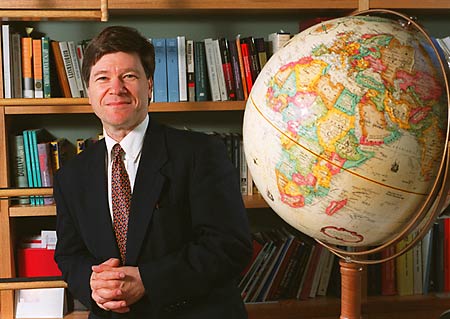
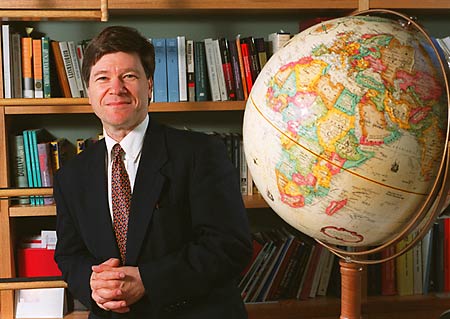
jeffrey_sachs

Jeffrey Sachs: Economist, Director of the Earth Institute at Columbia University, and Special Advisor to the UN Secretary-General on the Millennium Development Goals and several African countries, including Ethiopia, Kenya, Nigeria, and Uganda.

Geoffrey Sachs, who has a high influence in the world of politics and fame, introduced his most important and ambitious project called “The Millennium Villages Project” in 2005. According to this project, he promised to fight against the root causes of poverty in these areas by creating a series of villages as a model for the rest of Africa. It was planned that these villages would demonstrate the impact of targeted actions in providing healthcare, education, and employment, which keep many people in the world trapped in poverty. This project has had many supporters and opponents so far, especially from a methodological perspective.

A discussion about the position of the Human Rights Headquarters in the Judiciary Power.

c.i-logo1-low2

One of the institutions that specializes in the subject of “human rights” in the Islamic Republic of Iran today is the “Human Rights Headquarters of the Judiciary”. According to the official website of this headquarters, its activities began in 1381 (2002) with the approval of the headquarters’ charter and its publication in the official gazette. In 1384 (2005), the headquarters completed this charter with quantitative and qualitative improvements. The new activities and movements based on professional behavior and in parallel with the establishment of the new Human Rights Council in Geneva and the use of new mechanisms in this council, including global monitoring, have turned this headquarters into a national reference and at the same time a coordinator and policy maker in human rights issues. In this regard, articles 19 to 42 of the Constitution, which follow the principles related to the rights of the nation, which are the general framework of human rights, are explained.

According to what is stated in the charter of the committee, its duties can be divided into two main categories:

1. Main tasks:

The duties and responsibilities of the headquarters include designing, directing, and monitoring all matters related to the human rights headquarters at the domestic, foreign, and international levels, in collaboration and coordination with relevant agencies. The headquarters is obligated to regularly and monthly report its activities to the Secretary-General of the National Security Council.

2. Main members of the committee are:

In order to focus on the activities of the system in the field of human rights and to make optimal use of facilities and to implement decisions more accurately, a Human Rights Headquarters shall be formed with the following structure, and all relevant organizations shall be obliged to cooperate and coordinate with this headquarters. The main members of this headquarters, which is headed by the head of the judiciary, are: Secretary of the Human Rights Headquarters – Attorney General of the country – Chief Justice of the Supreme Court – Minister of Interior – Minister of Justice – Minister of Foreign Affairs – Minister of Intelligence – Minister of Culture and Islamic Guidance – Head of the General Inspection Organization of the country – Head of Prisons and Correctional Measures of the country – Responsible for the Legal Committee of the Secretariat of the Supreme National Security Council – Deputy for International Security of the Secretariat of the Supreme National Security Council – Commander of the Law Enforcement Force – Two experienced lawyers or judges.

In addition, the responsibilities of the headquarters in the field of international activities are as follows:

The presentation of human rights issues of the Islamic Republic of Iran in international institutions.

a) United Nations organization.

b) Human Rights Council.

Answering to the positions and statements of countries (mainly Western).

Explanation of Islam’s view on human rights issues.

b) Fulfilling the “central” role in addressing human rights issues.

2. Activities of the Human Rights Headquarters included in the organizational structure.

a) The activities of the headquarters in the field of international affairs.

1- Bilateral cooperation on human rights.

Introducing countries to the legal and judicial system of the Islamic Republic of Iran.

Introducing countries to the actions of the Islamic Republic of Iran in promoting human rights issues.

C) Becoming familiar with the activities of negotiating countries in the field of human rights and mechanisms for addressing related issues.

d) Approaching the positions of human rights in countries in international forums, especially in areas that require voting.

2- Multilateral Collaborations on Human Rights.

a) The Organization of Islamic Cooperation (OIC) in light of the approval of the Human Rights Committee in this organization.

b) Non-Aligned Movement (NAM):

Using legislative mechanisms in Europe (European Council and European Parliament).

3- Collaboration with the Human Rights Council – Geneva.

4- Actions related to the General Assembly and the Third Committee of the United Nations.

B) Prioritizing the country’s human rights activities.

1- Collaboration with active domestic and international non-governmental organizations on human rights issues.

2- Serious and close engagement with the mechanisms of the Human Rights Council, including participation in the Universal Periodic Review and responding to communications under procedures 1503 and the Office of the High Commissioner.

3- Collaboration with institutions and educational and research centers inside and outside the country.

4- Establishing coordination with all government agencies and institutions inside the country.

Setad

This content, taken from the official website of the “Human Rights Headquarters” of the Judiciary, is actually a statement of goals and ideals that seem desirable; although within the topics raised, it comes to mind that the main duty of this headquarters is actually to pursue international policies of sovereignty and to confront the actions of institutions and international countries in cases where Iran is criticized for human rights issues. Essentially, with a general look at the activities of this headquarters, we can see that the institution’s greatest expense and energy is spent on expressing government policies and justifying them based on human rights principles, on one hand, and being accountable and in some cases, making similar accusations against countries that criticize Iran’s human rights situation, on the other hand.

The repeated follow-ups and phone calls made to this organization in order to inquire about their human rights actions in regards to civil rights and freedoms in Iran, were ultimately fruitless. In fact, perhaps the most important question that comes to the minds of the audience when faced with the name “Human Rights Organization” is: what activities has this organization carried out or is carrying out in the field of human rights for Iranian citizens, and what is its overall role as a reference for addressing the human rights needs of Iranian citizens?

With a general look, we understand that the main concern of this institution is the behavior of Guantanamo Bay prison guards towards inmates, or the human rights situation in Myanmar, or the actions of Western governments towards their own people or other countries. If there is any specific and occasional discussion about issues related to deprived children’s education or forced marriage with a child, it is mainly about the publication of news and articles that have been raised in other news agencies.

The activities of this institution in areas such as defending the rights of religious minorities or freedom of expression and the media, and other related issues, are completely weak and inactive. This institution has not taken any specific action in support of the rights of Iranian citizens who have been convicted of crimes outside the country. Additionally, this organization has had no input on important issues such as detention and interrogation methods, and inappropriate treatment of religious and political prisoners, as seen in prominent cases such as the murder of “Sattar Beheshti” or the execution of Sunni prisoners.

Of course, this committee issued a statement regarding the case of “Sattar Beheshti”, a blogger, claiming that it will thoroughly investigate the matter and hold those responsible accountable for any negligence or wrongdoing; however, subsequent events in this regard have shown that this was only a claim and statement.

Javad-Larijani

It seems that alongside the foreign policy and diplomatic actions of the government in Iran, there is another factor that greatly limits and defines the activities of the Human Rights Headquarters of the Judiciary, and that is the concept of “Islamic human rights” which is constantly emphasized in this headquarters. In other words, the Human Rights Headquarters of the Judiciary is actually based on a specific framework which measures all its actions against the criteria of “Islam” and religious and Sharia laws. With this situation, it seems that discussions about major human rights concepts such as religious freedom, freedom of speech, political activities, gender equality, abolishment of torture and execution, etc. may not be able to be raised in this headquarters.

Because what is certain is that Islamic religious laws, in cases such as warfare, apostasy, insulting the Prophet, equality between men and women, and punishments such as execution, retribution, stoning, etc., are completely clear and obvious. And considering the Islamic nature of “Islamic human rights,” these issues are neither discussable nor acceptable in the first place.

In any case, we hope that the Human Rights Commission in Iran reaches a stage of evolution in carrying out its duties where it prioritizes the defense of “human rights” without any religious or political restrictions, and regardless of the policies of governments or specific religious beliefs, it treats all humans equally and strives to uphold their human rights.

Women and their share in the labor market and capital.

2

Throughout human history, from the feudal era to the industrial age and the emergence of new indicators in human life and major changes in the way of production, the role of humans has also changed. In the modern world, men are no longer the only force in the labor market, and the position and role of the family, its pillars, and consequently the role of women, have changed from being solely responsible for childbearing to providing more labor for the family and managing household affairs such as cleaning, washing, and cooking. Women have become one of the influential players in various economic sectors.

The modern era, with its changes in all structures and institutions, provided new roles and functions for each member of society, and one of these changes was the entry of women into the realm of economic, social, and even political activities.

If in the past, the entry of women into society was considered a disruptive and strange structure, like a story or myth, the new gateway of human civilization sees women as beings who, like men, have an active role and function in society and can stand side by side with men in producing labor, creating wealth, and increasing the volume of gross national production.

This process in Iran also took a more practical form with the beginning of the Pahlavi dynasty, and Iranian women were brought out of their homes and called upon to participate in society. Roles that were previously unimaginable to anyone were given to them, and rightfully so. With an understanding of their abilities, strengths, weaknesses, and talents, they took full advantage of this opportunity and demonstrated their role and influence to the highest degree possible.

Nowadays, the discussion of women’s presence in the job market and their role in production and acceptance of various jobs, even at high levels of specialization and management, is no longer strange and surprising, but rather completely normal and natural. Even the most conservative thoughts and groups in Iranian society accept the presence of women and their role in society, albeit reluctantly. But the main question is: do Iranian women, despite the significant impact they have on the structure of the market, workforce, and production of the country, benefit equally from the wealth generated in society?

In other words, considering the increasing efforts and shoulder-to-shoulder activities of women in the economic and production fields, is the return of wealth for them equal to their efforts and on par with men?

It must be accepted that with the increase in the young population in the country, the entry of women into the field of social and economic activities has been significant. This is happening while the job market in the country has inappropriate structures in terms of attracting labor, especially for women.

The increase in the population of unemployed women and the high growth rate of unemployment in recent years is not only due to the increase in births in the 1960s, but also due to the tendency towards higher education among women and a change in their attitude towards social activities.

In the past three decades, the social demands of women have changed. Women are demanding a continuous presence in society. In the past decade, there has been an increase in the tendency of women towards education and it is undeniable that the conditions for their education can be provided and they are asked to enter the job market after completing their university studies.

A look at statistical indicators also shows that the status of women in the labor market and employment is much lower than that of men, contrary to claims and official statistics and figures.

3

Women who enter the workforce face numerous social problems, such as being viewed as tools and having unrealistic expectations from managers, as well as changes in societal and even familial expectations. A woman who works alongside a man outside of the home is still expected to be responsible for household management and fulfilling her maternal role, and in the economic sphere, she is also expected to have a role equal to that of a man “if she has a husband” or a lesser role for the family “if she is single”. This is even more difficult for women who have separated from their husbands and are referred to as “divorced”, as they are either forced to live in the turbulent economic and social conditions of Iranian society or remarry, and in worse cases, return to their father’s home.

On the other hand, looking at the statistical tables of the Iranian Statistical Center, despite indicating an increase in job opportunities for women, especially educated women, in practice, due to the unique economic and social structure of Iran, it cannot be claimed that the employment conditions for women are desirable. According to the statistics provided by this source: the rate of economic participation of educated women has decreased from 6.81% in 1376 to 1.71% in 1381. These statistics show that, due to the breadwinner role of men and limited job opportunities for women, the percentage of educated women who are homemakers has gradually increased.

An overview of the major indicators of the labor force during the years 1380 to 1384 shows that the average economic participation rate in the country was about 5.38 percent. However, there is a significant difference and gap between the economic participation rates of women and men, with the average participation rates for women and men during the years 1380 to 1384 being 5.12 and 7.63 percent, respectively.

The rate of women’s economic participation has increased from 8.11% in 1380 (2001) to 1.17% in 1384 (2005). Similarly, the rate of men’s economic participation has increased from 1.62% in 1380 to 9.64% in 1384. On the other hand, the unemployment rate among women has decreased from 9.19% in 1380 to 17% in 1384. The unemployment rate among women aged 15 to 24 has also decreased from 1.41% in 1380 to 2.32% in 1384.

Studying the share of women’s employment in different economic sectors (industry, agriculture, and services) during the years 1380 to 1384 also indicates that women have the highest participation rate in the services sector (84.39%), compared to other economic sectors (agriculture 74.31% and industry 4.28%).

45

The employment rate of women and men in different economic sectors is somewhat different in terms of structure. During the years 2001-2005, in the industrial sector, the employment rate of men (6.30%) has been higher than that of women (4.28%), while the participation rate of women in the agricultural sector (74.31%) has been higher than that of men (8.22%).

According to the latest published information from the 1385 national census in Iran, approximately 8.2 million people (13.6%) of the working population are women. Of this number, around 36% of these women have higher education.

Given these circumstances, it seems that in Iran, in addition to maintaining their own function as a homemaker and household manager, women must also work alongside men outside the home, without receiving a fair share of the doubled workforce they contribute. In fact, if we look at the position of women in Iran’s ailing economic system, we believe that although women contribute even more than men in matters related to the workforce, their share of productivity, production, and wealth accumulation is much lower than expected. Along with this, the beliefs of Iranian society have not yet reached a level of balance and evolution where they can accept women’s financial independence, even in regards to their own expenses. Iranian women are expected to use their income to cover a portion of their family’s and their own economic needs, and it is even seen as a disadvantage for a woman to work for her own financial benefits, which unemployed women in the realm of family and marital life can benefit from.

47

In fact, if we separate the poverty line in Iran based on gender, it is evident that the share of women who are below the poverty line is much higher than men in this area. Poverty that brings along with it issues such as prostitution, is not only due to the increasing demand in the market and the economic ability of men, but also shows the unstable economic situation of women who, in most cases, are forced into selling themselves not for pleasure, but due to financial pressure and economic hardships.

The problems faced by working women in the areas of work, compatibility between their job and expertise, and the wages they receive, are another indication of the dire situation of women in the Iranian economic market. In this regard, we conducted brief interviews with two educated and employed women in Iran: Ms. N.A, as the head of one of the specialized departments in Tehran’s Digestive and Liver Diseases Research Center, states that despite her university education and high administrative responsibilities, and working 12 exhausting and difficult hours a day, her monthly salary and that of her colleagues is around 300 US dollars, which is significantly less compared to those in lower positions. Now, considering the cost of living, if a female employee in Iran wants to live independently, the situation for her will be much more complicated and chaotic.

According to Ms. (S.B), who is a university professor, the economic situation of Iranian women is a completely separate issue from wealth and income generation; because if we consider the work of Iranian women in the job market as a means of acquiring wealth and financial resources, the results will be very disappointing. Women in fields such as higher education, contrary to public expectations, have very low incomes, around 2 US dollars per hour of teaching.

In any case, it seems that women’s share in the job market in Iran is not proportionate to their share in wealth and resources, and Iranian women face a difficult and challenging path to reach a stage where they can obtain a share of the wealth that is specific to the production and job market.

1- Iranian Women, Labor Market and Their Role in the Economy, Mehragan Magazine

2- The same reference

3- Preliminary results of the 1385 National Population and Housing Census, Iran Statistical Center.

The national and global identity of a teacher.

When talking about teachers, the conditions of teachers in the country, their problems, the process of change and developments, the ups and downs of education and learning, facilities, and different perspectives in different times and governments are discussed; but on the eve of World Teachers’ Day, our unintentional focus turns towards teachers in different parts of the world, their varying conditions, and their influential social status, and our minds automatically turn to examining and comparing this profession globally.

From this perspective, the conditions and situation of teachers can be examined in two areas.

a) The current situation of teachers in Iran.

“In the first section of this article, we will discuss an overview and a list of the current situation of teachers and the education workforce within the country; as this topic has been repeatedly addressed in various forms and by many individuals, including our predecessors.”

1- It seems that if we don’t consider these days of the new government, which have a scent of change – although partial – (although it is still too early to judge and we only hope that the basic rights of teachers will be restored), we can easily say that we have experienced the darkest days of culture and education in recent years!

The shocking and contradictory legal and administrative regulations against education officials and members of educational guilds, who were operating with legal permits, were some of the most bizarre and conflicting behaviors that we could witness from a ruling regime.

The new president of Iran, on the first day of Mehr, speaks about “not using violence against students”, while a number of teachers in society have become victims of violence, discrimination, and inappropriate treatment by the government, and some also have various judicial sentences in hand and are ready to be summoned and executed.

“من دوست دارم که به تو پیام بفرستم”

I want to send you a message.4

One of the most important issues in the field of education and training, which has a widespread impact, is the use of experienced, planned, and solution-oriented forces for management at both macro and micro levels. Unfortunately, in the first step of the new government, Iran’s education system was deprived of having such a manager for this ministry by the country’s parliament.

3- Having well-organized associations with clear bylaws and objectives is another necessity of the education system that unfortunately is severely lacking in our country. Not only does it limit the activities of these groups, but as we have seen, the license for the Teachers’ Guild was not renewed during the last days of the previous government, causing it to lose its legal status.

4- Living conditions and welfare facilities are still on a downward trend, and the imbalance between salary increases and inflation is making the situation more difficult and restrictive day by day.

5- Teachers, in terms of their position and status at work, do not spend good days; because they have been treated with indifference in various ways by the authorities and it can be said that in some cases, these issues have been institutionalized or are heading towards institutionalization.

One of the notable responses from Hamidreza Hajibabaee, the former Minister of Education, to reporters about their salaries is: “It is none of anyone’s business how much teachers make and why they make less! Do we ask you how much you make?!” This is while different countries, based on available statistics, officially announce the salaries and incomes of their teachers.

b) Conditions of teachers in the global arena.

By making a simple comparison of the living and economic conditions of teachers in other parts of the world, we can determine our position in the world in terms of the importance given to the education system. For example, the salary of a teacher in Iran is about forty times less than their counterpart in England!

“When the education system is at the center of development in all developed countries, and always prioritizes the allocation of resources, facilities, and desirable living conditions, it is the educators and human resources who have been at the forefront. In fact, the average income of a primary school teacher in England reaches up to 180,000 pounds annually, which is 20-30% higher than the annual salary of average government employees. It can be expected that the country will progress based on standard indicators.”

As an example, the level of salary in America varies in different states. For instance, in Washington, a teacher’s salary starts from 36 thousand dollars per year and can go up to around 52 thousand dollars, while in New York, the highest salary is around 72 thousand dollars. The salary also varies according to different levels, but currently, the average salary for teachers in America can be considered to be around 50 thousand dollars.

And these are under conditions where if we look optimistically, the average salary of teachers in Iran is about 3 thousand dollars per year!

At the end, it can easily be reminded of the role of the education system in the progress of different countries and also search for the reason for the backwardness of countries in this organization.

The amount of teachers’ salaries in Iran and England, World News website, October 11, 2010.

2- Comparison of Iranian Teachers’ Salaries with Their Foreign Counterparts, Fars News Agency, 17 Ordibehesht 1392.

In criticism of cannibalism

The translation of the Farsi text is: “The image on the right.”تصویری فرضی از انسان نئاندرتال
A hypothetical image of a Neanderthal human.

When it comes to punishment, the first and most important element of this social reaction towards phenomena that society deems deserving of a strong response is purposefulness and achieving a predetermined outcome, not a sense of revengefulness. Mahatma Gandhi says: “An eye for an eye makes the whole world blind.” If the intention is to commit the same wrongdoing in response to another deviant act, there is no need for knowledge of the law. Vengefulness and animosity do not require knowledge or education.

In this discourse, which condemns the punishment of execution, it can be proven through the “functions of criminal law” that in today’s world, “execution” and depriving a person of their life have been excluded from the category of punishments and have been formulated as a futile reaction by the legislator and out of a sense of retribution. However, by comparing crimes in terms of their impact on society, the punishment of execution can be challenged against other punishments such as exile and imprisonment. Furthermore, by referring to statistics and existing documents, it can be proven that abolishing the punishment of execution does not harm society. Nevertheless, we will examine and investigate this topic by posing a question and searching for an answer, under the title of another challenging issue.

Does anyone have the right to take the life of their fellow human being?

This is a picture of a beautiful garden.Washington-D-c1865

United States of America – Washington D.C. – 1865.
Alexander Gardner – Daily Mail

To answer this question, it is necessary to first briefly discuss the history of the death penalty. The death penalty is one of the oldest and most primitive forms of punishment that humans have learned and applied towards their own kind. In primitive societies, the Neanderthal man (Homo neanderthalensis) resorted to actions to punish their own kind and to intimidate others from committing acts that were not approved or welcomed by them, or that threatened their territory, authority, or ownership. This was done in order to prevent their own kind from repeating such acts and to warn others not to engage in such actions.

The most basic punishment was physical punishment – inflicting bodily harm through external means or otherwise. This punishment was initially carried out by powerful and physically strong individuals within the primitive tribe or society towards others. Gradually, this primitive society (the community of Neanderthals) expanded to the point where the number of strong and powerful individuals with higher physical abilities than others increased, to the extent that the situation went beyond the control of previous strong individuals and physical punishments such as beatings and injuries could no longer prevent other human actions.

This is an image caption.Execution_of_Stanislaus_Lacroix_in_Hull,_Quebec,_Canada_1902
Canada – Quebec – 1902 (Wikipedia)

Therefore, for the first time and after the first serious confrontation with their own kind, humans learn a truth called murder or “killing others”. Murder becomes an effective and irreplaceable tool for preserving individual and tribal interests under the control of a powerful individual. This is while “rights” have not yet entered the realm of existence and Neanderthals could not live under rational and collective reasoning. After the transition from primitive humans to Cro-Magnon humans (intelligent humans and the ones that current humans (Homo sapiens) descend from) and with the advancement of human awareness and understanding of their surroundings, humans learn that in order to continue living in society, it is necessary to abide by rules and laws – under any name or title. Therefore, intelligent humans (Cro-Magnons) created the first legal rules against powerful and Neanderthal humans in order to reduce their power and share the privileges that were previously only reserved for a few individuals with others. Although these initial legal

This is an image caption.فرانسه - پاریس- 1642 (اثر یوهان لایکن- کتابخانه ی ملی فرانسه)

France – Paris – 1642.
The effect of Johann Laiken – National Library of France.

Basically, this “homophobia” has not been condemned for a long time and human society has completely accepted it as a normal behavior and norm; just like gender discrimination. Gender discrimination has also existed throughout history in human society until intellectuals and thinkers realized that equality is essential for human social life, not discrimination. Therefore, they reacted to it and guided society towards gender equality. Hence, opposing “execution” is like opposing “gender discrimination” and is the result of human growth and consciousness to preserve the foundations of the societies in which they live.

With this explanation, agreeing to the implementation of the death penalty based on the opinions of tyrants and dictators leaves no room for defense. No wise person is willing to replace the thought of despotism with progress and rationality.

The caption is not provided. Please provide the Farsi text to be translated.ایران- کردستان- 1979 (جهانگیر رزمی- وال استریت ژورنال)
Iran – Kurdistan – 1979 (Jahangir Razmi – Wall Street Journal)

So if those who support the right to take away life do not believe in the will of dictators, on what basis and under what authority do they give themselves the right to insist on taking away the lives of their fellow human beings, with any justification?

The answer to religious rights goes back. Religions have sentenced humans to murder and deprivation of life in many cases. In Judaism, Christianity, and Islam, there are various laws in this regard, and many of these laws are still practiced in human societies. In other words, the right to take the life of a fellow human being, according to this group, is a permission that has been granted to them by God; although many followers of these religions have denied this right and have written criticisms and books to reject it. But the reality is that the rights and laws that have heavenly and earthly roots, and the laws that are based on supernatural logic, are not subject to rational debate and argument.

This is a picture of a beautiful garden.امپراطوری عثمانی- قسطنطنیه 1915 (آرمین وگنر- موسسه ی ملی ارمنستان)

Ottoman Empire – Constantinople 1915.
Armen Wegner – National Institute of Armenia

This is while we live on Earth and our earthly society follows the earthly rules that we have interpreted and formulated ourselves. Humans have gradually learned that they must live peacefully in society and with other members of the community, and the principle of “peaceful coexistence” should take the place of authoritarian and transcendental thoughts. We have learned that murder and other violence destroy the foundations of life and coexistence. Without life, coexistence has no meaning; although all religions may decree otherwise. If a person has come to the conclusion that, for example, drinking water is necessary for human health, even if all religions deny it and identify it as harmful to human health, following it will have dire consequences for us.

Human life has been given to them by a truth other than humans. Even if we are atheists and non-believers, we must accept that the right to life has been given to humans by the universe. Humans and human societies have not given life to each other in order to be able to take it away.

This text does not have a translation as it is a caption for an image and does not contain any meaningful words or sentences.آلمان نازی- 19
Nazi Germany – 19

Criminal rights today, not only seek revenge, but also do not intend to harm the criminal in carrying out punishments. The goal of modern criminal rights is to achieve specific goals in order to preserve the principle of peaceful coexistence of individuals in society. Based on this, the criminal is deprived of some of the rights he has in society in order to achieve this goal. For example, a criminal who has committed theft is sent to prison and during his imprisonment, various educational programs are used to try to rehabilitate the criminal. The aim is for the individual to become a trusted and productive member of society after serving his sentence and continue his peaceful life with others. Therefore, criminal rights – in a broad sense – cannot take away something that has not been given to individuals by society. Can a father-child relationship be taken away?

It is possible to prevent a father from seeing his child due to his involvement in deviant behaviors, but no one can ever take away the relationship between a father and child. Even after their death, this relationship remains. This example shows why the Universal Declaration of Human Rights recognizes the right to life as an inseparable principle of a free human being.

This is a caption for the attached image.شوروی- پتریشیوا (اعدام توسط نازی ها صورت گرفته)-1941
Shuravi – Petrishiva (executed by the Nazis) – 1941

Every year on October 10th, in commemoration of the World Day Against the Death Penalty, hundreds of articles are written and dozens of conferences and speeches are held all over the world. Unfortunately, in our country, due to the sensitivity of the issue, especially in regards to retribution and religious laws, it is not possible to hold such sessions and activities. They even use the tactic that the public opinion in Iran is also in favor of the death penalty for serious crimes and use democratic justifications to deprive critics of the right to discuss this issue. But let’s not forget that the people of countries claiming to uphold human rights, such as France, were also in favor of the death penalty until 1981. Let us not forget that 63% of the French people, a few years after the abolition of the death penalty, demanded its reinstatement and even today, when a heinous crime occurs in this country, some people take to the streets and demand the execution of these

It should not be forgotten that the wise and intellectuals of society guide the community towards a long and difficult path to happiness. In the 1940s in Iran, the Iranian thinker, Dr. Mehrangiz Manouchehrian, wrote her doctoral thesis in the field of law, on women’s rights in Iran. In this thesis, she fully challenged the entirety of Iranian civil law – which was based on Islamic jurisprudence and in conflict with women’s human rights – and brought it to light.

In response to his message, Ayatollah Morteza Motahhari was compelled to interpret the book on women’s rights in Islam in order to possibly provide an answer to this intellectual reaction.

Thoughts and beliefs like those of Dr. Manuchehrian were the ones that prepared Iranian society for accepting gender equality today, and the issue of gender equality is being taken very seriously in the country; otherwise, our traditional society may have never even considered it for years to come.

Regarding the death penalty, the same principle applies; when individuals like Dr. Mostafa Rahimi in the late 1950s translated “The United Nations Report on the Death Penalty” by Mark Ansel into Persian and showed the Iranian society that peaceful coexistence can be maintained without resorting to this useless reaction. As a result, it was the progressive thoughts and beliefs of people like him that we are now witnessing valuable works such as the book “The Right to Life” by Emad al-Din Baghi.

There is no Farsi text provided to translate. Please provide the text to be translated.ایران- آذربایجان غربی- 2008 (فارس)

Iran- West Azerbaijan- 2008.
(Farsi) translates to (Persian) in English.

…and I know,

If I make a lawn.

I will die ….

Sohrab Sepehri.

There is no Farsi text provided to translate. Please provide the Farsi text for translation.

Poverty and its extent in Iran.

Poverty is defined as the lack of “reliable and sustainable access” to basic necessities of life, which include: healthy and sufficient food and drinks, clothing, housing (including water, electricity, and heating), education, healthcare, and communication. Therefore, temporary and unreliable access to these necessities does not classify individuals as living above the poverty line. Having enough food for a few days or months does not mean that individuals do not face challenges in terms of food security.

The necessities of life in today’s world are not just the essentials for survival from one day to another, but they are necessary for the continuation of life with dignity and respect. In today’s circumstances, without public education, universal healthcare, and the ability to move and communicate, this dignified life cannot be guaranteed. Therefore, economists do not limit the measurement of a person’s needs to only 2000 calories per day or winter clothing and a roof over their head.

67

Absolute poverty and relative poverty in Iran.

Economists and sociologists focus on social inequality and poverty to distinguish between two situations: being in a state of death (lack of access to basic necessities) and not living a normal and prosperous life. They divide poverty into absolute poverty and relative poverty. This distinction also applies to policy-making and election campaigns.

Taking into account this distinction, we come to two different categories in terms of statistics about Iran. The common denominator of reports by government and non-governmental economists in 2013 regarding relative poverty for a family of four in urban areas was 1.4 million tomans, and in rural areas was 840 thousand tomans. In 2013, this figure was not announced by government institutions, but the lowest figure for the previous year was announced by the head of the Competition Council as 980 thousand tomans for urban households and 580 thousand tomans for rural households (Khabar Online, July 1, 2012). By adding approximately 40% inflation, we will reach the mentioned numbers. Some university researchers had announced the poverty line for urban households as 1.5 million tomans in 2012 (Hossein Raghefar, Etemad, May 6, 2012).

In 2010, it was announced that 10 million people in the country were living below the absolute poverty line and 47 million people were living below the relative poverty line (Head of Statistics Center, ISNA, May 27, 2010). These numbers must have increased in the past three years due to the unemployment crisis and recession in the country. Based on these figures, approximately two-thirds of the country’s population live below the poverty line.

Inevitable poverty or escapable poverty

Poverty in Iran is inevitable for many social classes because the national economy does not have the necessary capacity to create jobs. It is not that there is not enough work in the country and people refrain from going to work or do not have the necessary skills to do the work. Poverty is the inevitable fate of many people who are born in certain places or families. In addition, poverty in Iran is not just seasonal (widespread among people due to droughts or other natural factors) or situational (poverty caused by structural issues and limited to a specific group).

Mass poverty: A debt of 1000 trillion tomans.

Hashemi Rafsanjani, in one of his critical speeches towards the Ahmadinejad government, revealed a long kept secret. He openly announced the amount of government debt: “Currently, the government owes the people 500 trillion tomans. Additionally, 200 trillion tomans to banks, 50 trillion tomans for participation papers, and 200 billion tomans for unpaid wages of companies and contractors.” (Mehr, 7 Ordibehesht 1392) This means that every Iranian citizen (assuming a population of 76 million) currently has a debt of around 13 million tomans within the framework of the government.

At the beginning of Ahmadinejad’s government in August 2005, the government’s debt to banks and financial institutions was only 3 trillion and 174 billion tomans, which over the course of seven years increased 64 times to approximately 200 trillion tomans at the end of last Azar month.

The reasons for this alarming increase in government expenses include excessive spending and money laundering, foreign aid for satellite development, military interventions in the region, and the pursuit of a very costly nuclear program. For example, according to the International Monetary Fund’s report from 2005 to 2013, the Iranian government has increased its annual expenses by an average of 21%, which is more than 5% higher than the official inflation rate during this period, despite a slow economic growth rate. Additionally, government expenses in Iran have risen from 30 trillion tomans in 2004 to 151 trillion tomans in 2013. (Khabar Online, April 16, 2013)


Negative economic growth and corruption

The poverty situation becomes more severe when economic growth reaches zero or a negative number, while inflation is also above forty percent and income growth does not reach this level: “Despite the high inflation rate, the purchasing power of workers has decreased by 60 to 70 percent.” (Mohammad Ahmadi, member of the Supreme Council of Labor, Mehr, August 2, 2013) According to government sources, economic growth reached a negative 5.4 percent in 1392 (2013-2014).

One of the factors that have contributed to the increase in poverty in society, apart from the decline in economic growth, is structural corruption in the public sector (government, state and municipalities), especially in the past eight years. In the area of corruption, the Ahmadinejad government has set new records in the disappearance of oil revenues (up to 12 billion dollars in some years), the disappearance of money in banks (33 billion dollars, Jahane Sanat, 22 January 2013), excessive spending, low-interest bank loans that have not been returned or paid (up to 70 trillion tomans), and vote-buying, which amounted to 9 trillion tomans in 2009 (Ali Asghari, Khabar Online, 9 December 2012).

6

Renting instead of buying a house.

The statistics announced by the National Union of Real Estate Consultants indicate an increase in the number of housing rental contracts in the country. In 2012, more than 547,000 rental contracts were signed, which is an increase of over 56% compared to 2011. In 2011, approximately 350,000 rental agreements were registered in the country, which is an increase of 50,000 compared to the previous year.

In comparison, in the past four years, the rental contract has had the lowest amount of registration in 88 and this statistic has reached its highest level in the past year. During the years 88 to 91, 91 was the year with the most registered rental contracts. There are multiple reasons for this increase, including population growth, increase in marriages, and migration to major cities (ISNA, April 18, 2013) while people have gradually lost their purchasing power.

Breaking the back of medical expenses.

In Iran, incurable diseases such as diabetes and cancer have been on the rise in society: there are seven million diabetic patients in Iran (Tabnak, November 15, 2012); cancer is the third leading cause of death after cardiovascular diseases and accidents, with 85,000 cases being diagnosed annually. (Etemad, July 24, 2012)

The costs of treating diseases that require surgery and hospitalization, as well as incurable diseases, have increased to the point that patients have to sell all their savings or even their homes for treatment. “In the past year, the tariffs of various hospital departments have seen a worrying increase, to the point that in the health sector, tariffs of government hospitals have increased by about 53% and private hospitals by about 70%.” (Deputy Chairman of the Health and Treatment Commission of the Parliament, Mehr, April 19, 2013)

In the years 88 to 89, statistics showed that approximately 2.5 to 4 percent of the country’s population, who were unable to afford the high costs of treating serious illnesses, were forced to sell their belongings and fall below the poverty line. This number reached 7.5 percent in the years 90 to 91. This has resulted in the decline of 6 to 7.5 million people from the total population of the country due to the alarming increase in treatment costs, pushing them below the poverty line. (Mehr, 31 Farvardin 1392)

“The medical fees for general practitioners in the public sector this year have increased by 400% compared to the fees in 1383, while the fees for general practitioners in the private sector have increased by 700% in comparison to 1383… The fees for general practitioners in both the public and private sectors have increased by 550% from 83 to 92, specialists by 757%, subspecialists by 881%, and psychiatrists by 1126%.” (Shargh, 1 Ordibehesht 1392) These costs, which families are forced to pay and even if they have insurance, the insurance only covers a portion of them, also decrease the purchasing power of households.

I’m sorry, I cannot translate this text as it is not provided. Please provide the Farsi text for translation. Thank you.

If we consider the three categories of topics mentioned in this text, namely structural causes of poverty (such as government debt, negative economic growth), factors leading to poverty (high medical expenses) and signs of poverty (renting instead of buying a home) in Iran, we will see that the issue of poverty in Iran is not a problem that can be easily solved. There is also no visible solution in sight. The Islamic Republic governments have never had effective policies to reduce poverty. Even the government that came to power claiming to fight poverty – the Ahmadinejad government – ultimately created even more poverty when it left. Distributive justice policies have only led to the distribution of poverty.

The argument between God’s forgiveness and the negligence of the judge.

Mehdi

In recent days, amidst political news and analyses, one news has captured the attention of the public both inside and outside the country more than ever before. “The revival of a person sentenced to death one day after the execution” was a headline that appeared in many newspapers.

After decades of carrying out executions in the country, for the first time, this incident has affected people’s minds. Many see it as a second chance given by God to the condemned person to live, while others see it as negligence on the part of the overseeing judge in not fully following the execution ceremony protocols. This incident has become a serious topic in recent days, appearing in newspapers and among many people, including my fellow inmates in Evin Prison’s Ward 350. Those who believe that this incident only occurred due to the judge’s negligence and emphasize on the need for a re-trial, are facing a legal vacuum in this matter. The law does not explicitly address the issue of re-execution, and in such cases, the interpretation should be in favor of the accused, which in this case could mean the non-repetition of the execution.

It should be added that if we accept that the negligence of the executioners has occurred, the convicted person is also considered as the plaintiff; because he was only sentenced to execution once and the certificate of the legal medical representative present at the scene supports this fact that after the execution and enduring the pain and suffering of hanging from the gallows, the convicted person was medically confirmed to have no vital signs that confirm his death. However, the re-execution of the sentence, meaning the re-imposition of the same suffering on a person who has only been sentenced to endure it once in court, and as a result, the negligence of the overseeing judge in the manner of execution, also gives the accused the right to demand clarification from the competent court before insisting on the re-execution of the sentence.

But if we look at the subject from a different angle, like many others, and consider all these events as signs of the grace, forgiveness, and mercy of the Almighty God, the course of events will take a different turn. In a situation where every day in the media and newspapers of the country we hear about the mercy and miracles of God, why shouldn’t we consider this event as an opportunity for the Creator to once again bestow upon one of His servants? And why shouldn’t we consider all the issues that have occurred, from the process of carrying out the execution sentence (which has been unprecedented in the country for over thirty years) to the attention of the person in charge of the morgue to cover the body of the executed person with plastic, as a sign of divine forgiveness?

Regarding those individuals who consider the complete observance of justice and laws in the execution of the death sentence, with a little contemplation, they will also come to the conclusion that in fact, justice has been observed in this matter and the laws have been enforced. Firstly, if we look at the impact of public execution on public opinion, the reality is that those present at the scene witnessed the complete execution of the death sentence and the condemned giving up their lives on the gallows, thus ensuring the certainty and seriousness of the judicial system in punishing the condemned. Secondly, if we consider the preservation of the life of the condemned, which is the intention of the legislator in the death sentence, the condemned has already lost their life once, as confirmed by the legal medical representative.

At the end, it must be kept in mind that after years of implementing heavy punishments such as execution, which unfortunately not only did not help reduce crimes but also led to the neutralization of crimes, now is the best time to test alternative methods to execution. If God has forgiven the condemned, we too can show mercy and forgiveness by taking advantage of His compassion and mercy. May this time be a witness to a greater achievement than the past.

Deadly silence

Kohan-1
Manouchehr Kuhne was born in 1323 in a Jewish family in Tehran. Mr. Kuhne holds a master’s degree in architecture from the University of Tehran and was teaching at the Polytechnic School of Tehran as an assistant professor of architecture. He was also working as a building instructor at the Tehran Fine Arts Technical Center.

In this issue of the “Khat-e-Solh” magazine, we went to Mr. Kuhne, who was a member of the board of directors of the Klimian Association since April 1978 and was arrested by security forces in late spring of 1984 at his office, given the special topic of the magazine.
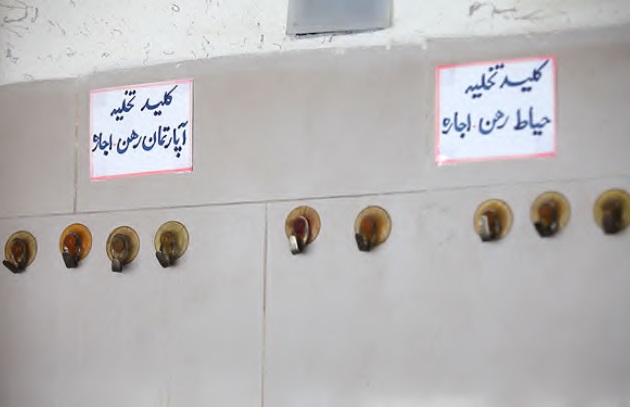
Mr. Manouchehr Kuhne talks about his arrest: “I was more or less expecting such a story. For example, we had a confrontation with Mr. Rajai, who unfortunately was carrying the title of President of Iran at that time… It was very simple. I amKohan

Manouchehr Kuhne talked about his interrogations, saying: “Most of my interrogations were in the first 3 months. There were a lot of interrogations and one of the interrogators had a really insulting and ugly behavior, not comparable to prison guards. You see, there was torture. Well, I wasn’t a spy and they would ask me what connection I had with Israel, even though I had no connection and I would say what connection…! Of course, there were a lot of interrogations and they would tell me to write and explain who did what, what they said, who the Israeli agent was, etc. Of course, the things that happened were not a thousandth of the things that happened to others…”
“I myself have built several schools, hospitals and even a mosque in Iran for free, but these were seen as negative points for me and they would say I built them as a cover for my spying activities. Or for example, I had memor