


Crime against humanity
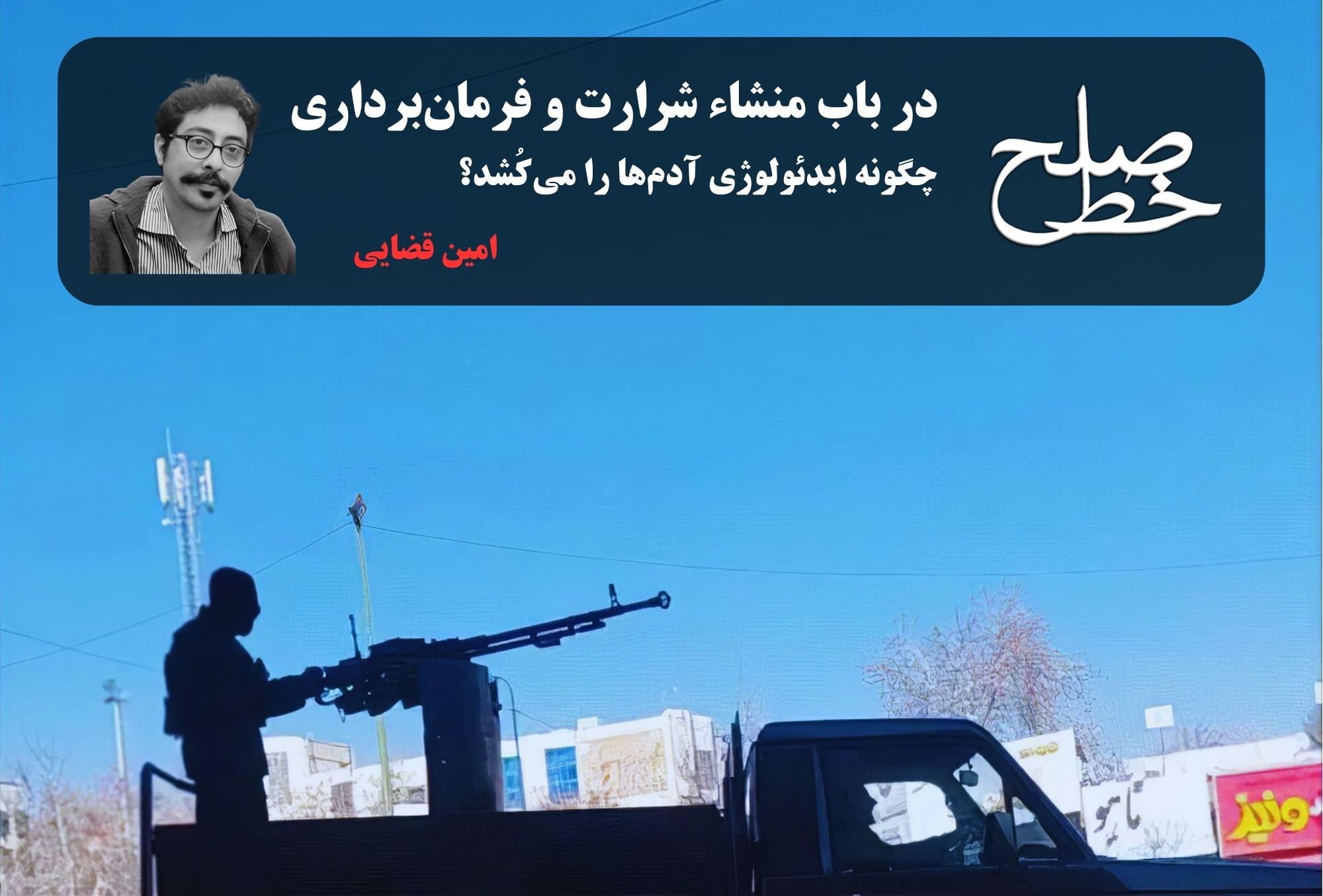
On the Origin of Evil and Obedience/Amin Judiciary
The atrocities of World War II and the participation and complicity of the German people with the Nazi regime, in the guise of a soldier or government agent, in the murder of millions of people in the death camps, posed a fundamental question to sociologists: How could an ordinary German citizen be so obedient and […]...
Read More Created By:
Amin Ghazaie
Created By:
Amin Ghazaie February 20, 2026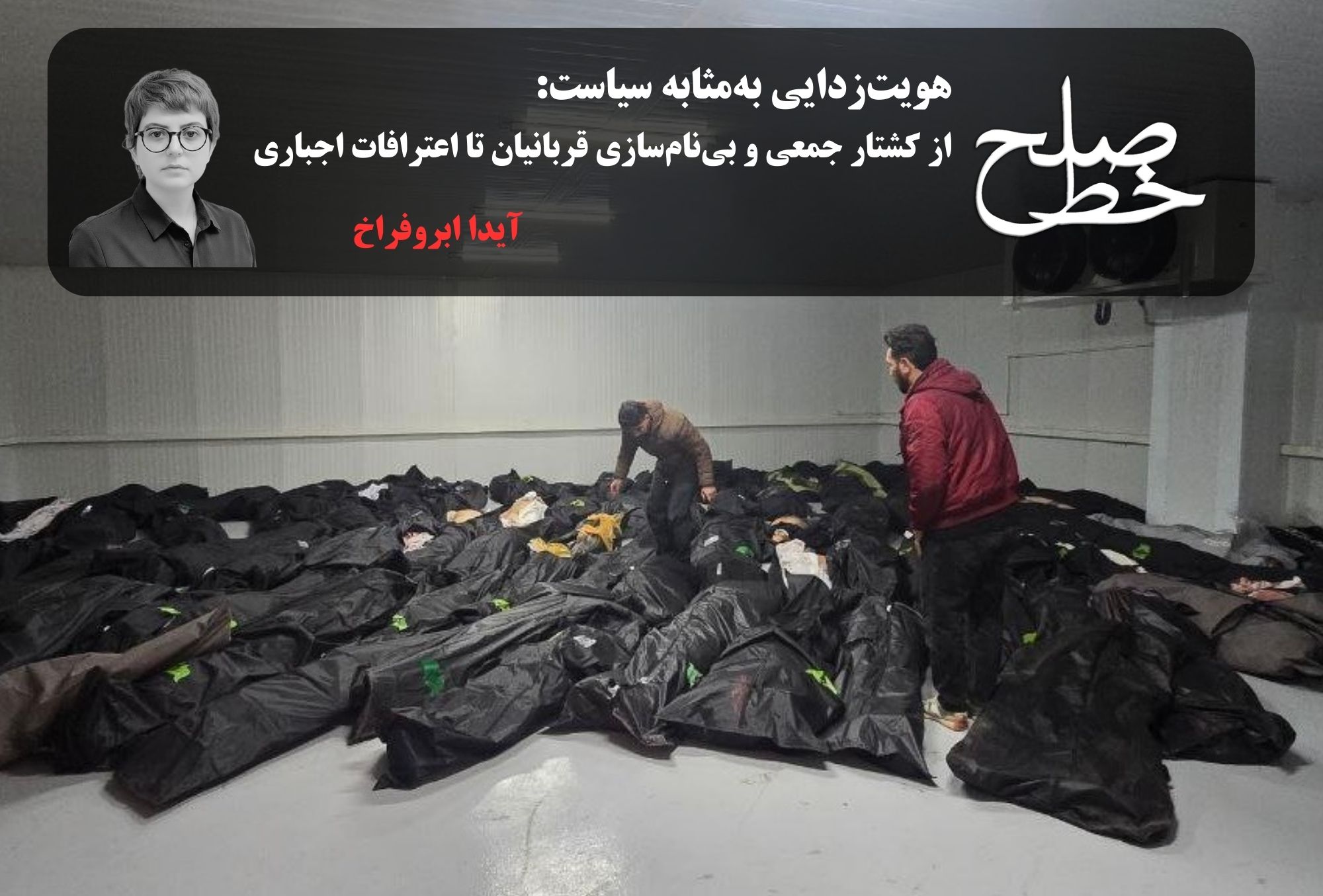
De-identification as Politics/Aida Abrofarakh
In the analysis of state violence, a focus solely on the moment of killing or the number of victims often obscures the deeper mechanisms that enable and anchor widespread violence in a social context. Violence, especially in the form of mass killing, is not a sudden, momentary act, but a gradual process that begins before […]...
Read More
Created By:
Aida Abroufarakh February 20, 2026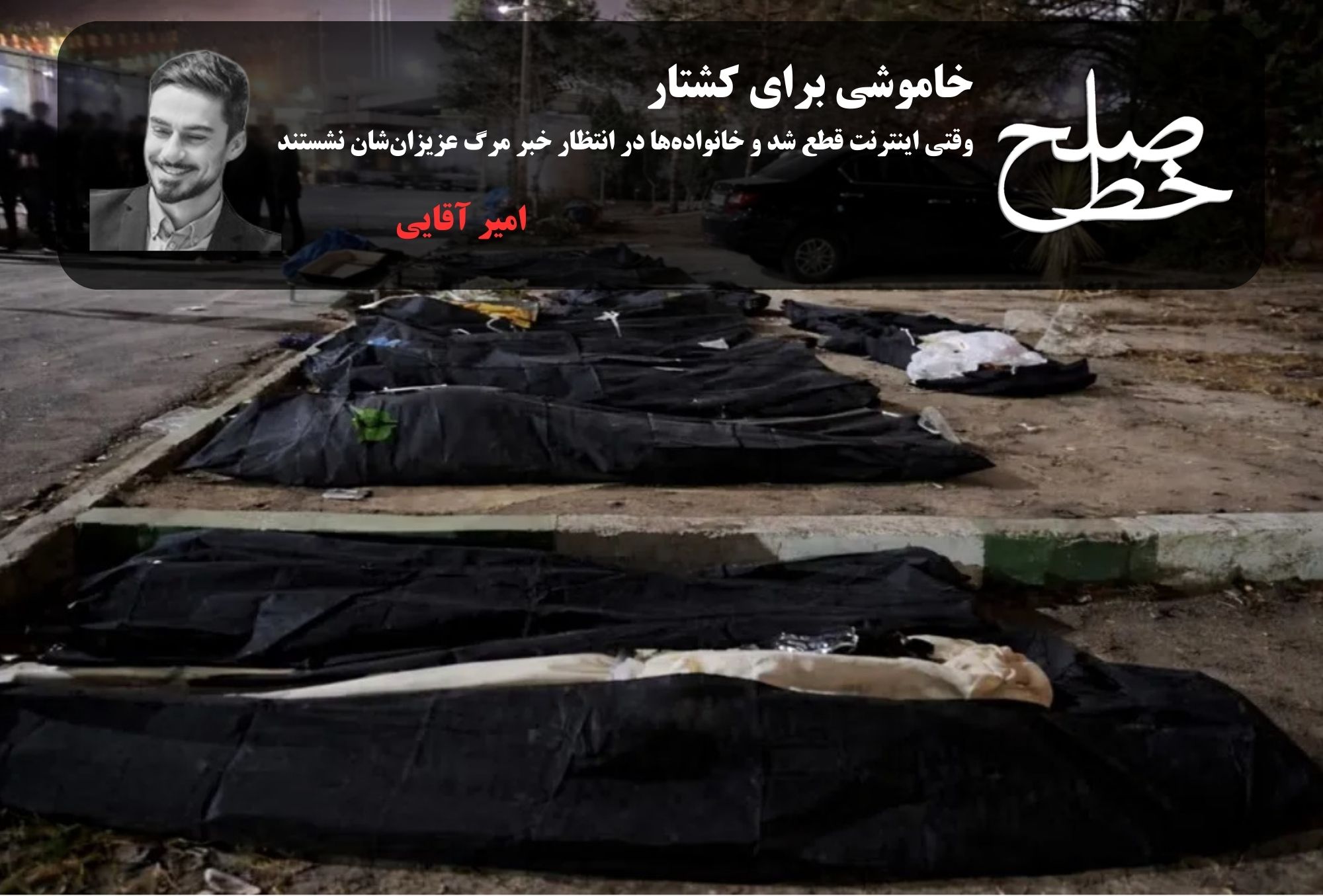
Silence for the Killing/Amir Aghaei
The following text is a scribble by a young man from inside Iran about the internet shutdown during the recent protests. It was originally supposed to be a report on the internet shutdown, but I couldn’t. No matter how much I tried to maintain an impartial tone of reporting, I couldn’t. No matter how much […]...
Read More
Created By:
Amir Aghayi February 20, 2026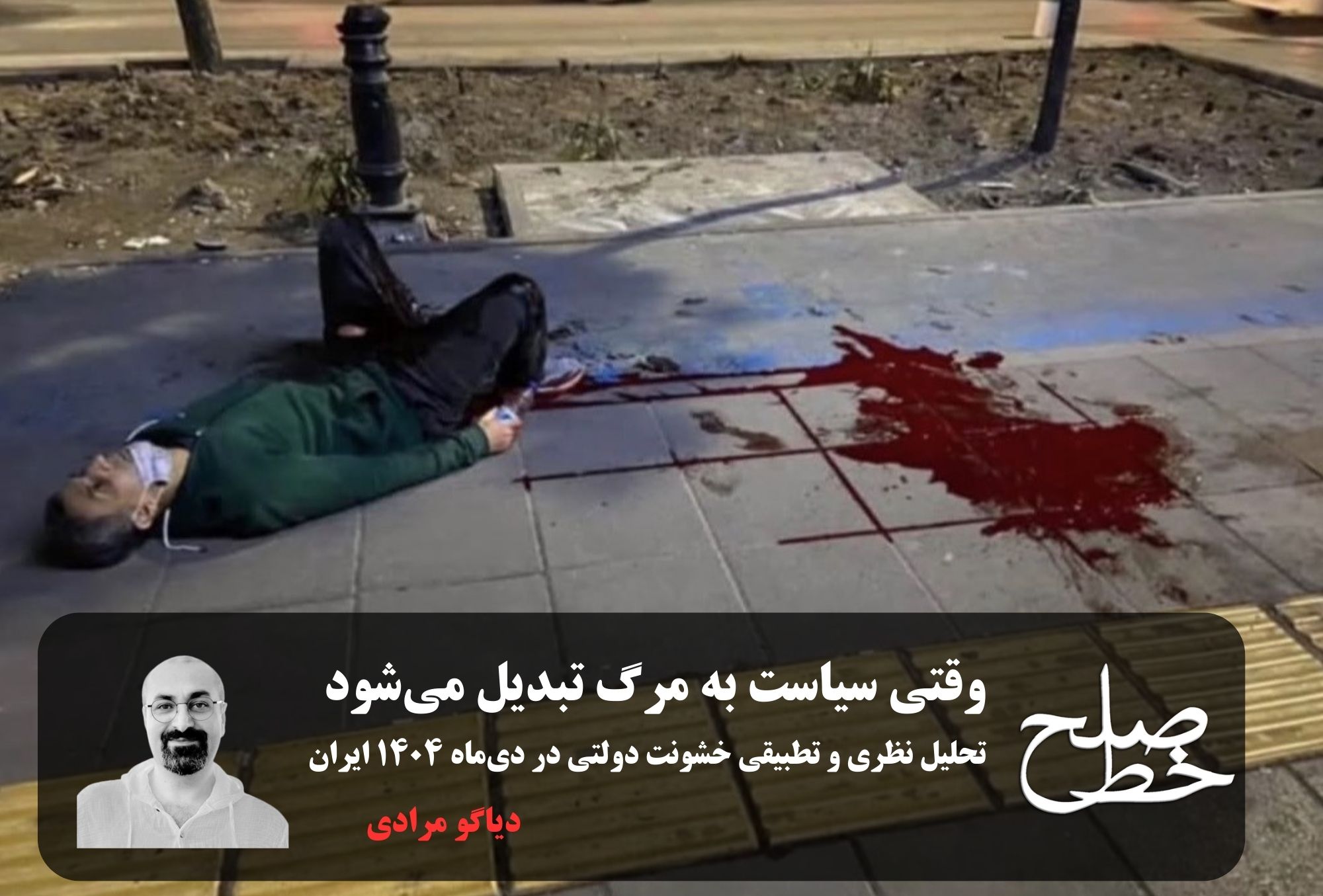
When Politics Turns into Death/Diako Moradi
Introduction: The Problem of State Violence in an Era of Collapsed Legitimacy In the classical tradition of political science, state violence was often analyzed as an exceptional means of containing crisis and restoring order, something that made sense in the context of Weber’s “legitimate monopoly of violence.” In this view, legitimacy was not only a […]...
Read More
Created By:
Diako Moradi February 20, 2026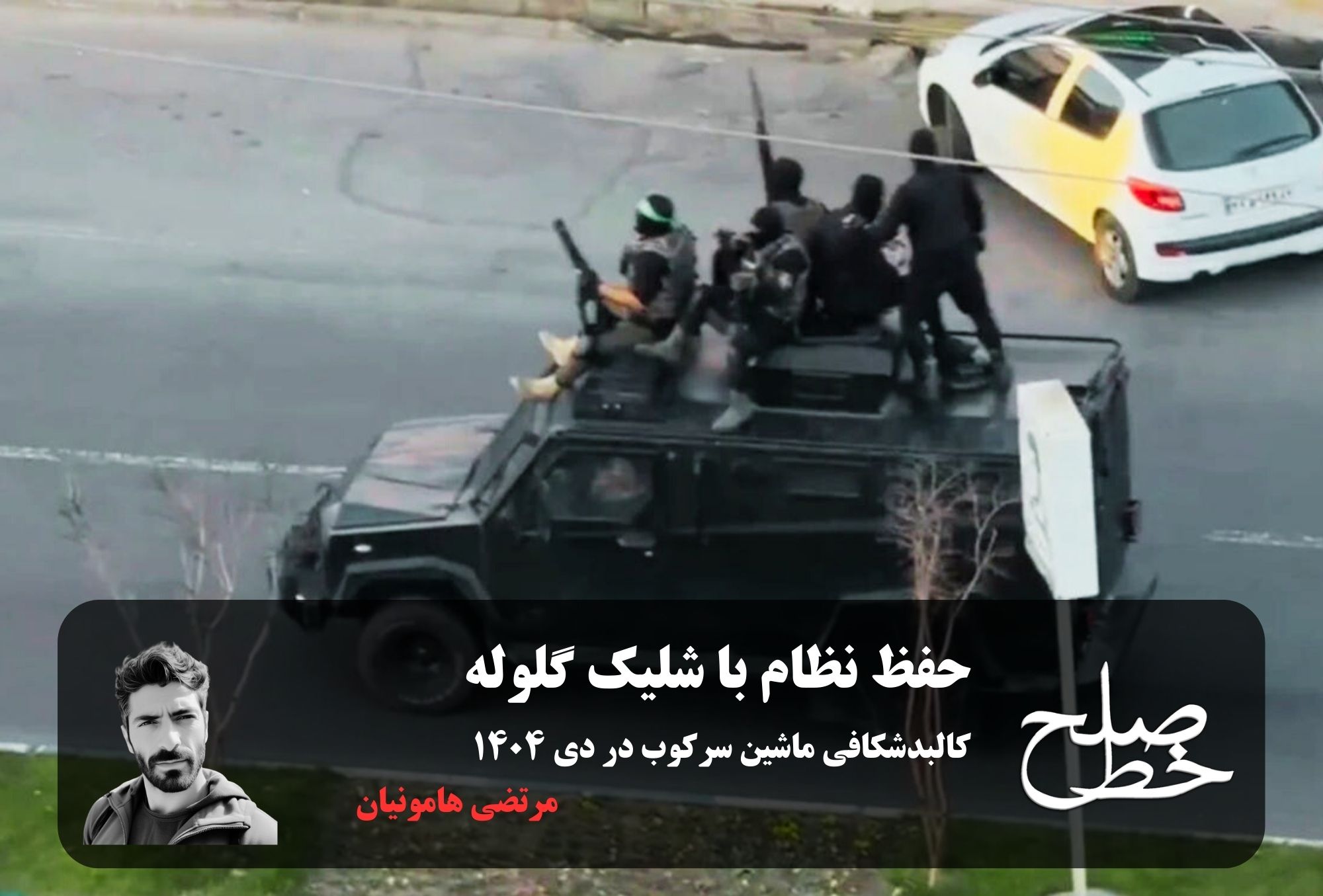
Maintaining the system by firing bullets/ Morteza Hamounian
Everyone had come. With every force they could muster to organize the suppression. In a structure where maintaining the system is an obligation, all their strength is expended to fulfill this obligation; even if this fulfillment comes at the cost of the blood of citizens. In January 1404, Iran witnessed a protest movement that began […]...
Read More
Created By:
Morteza Hamounian February 20, 2026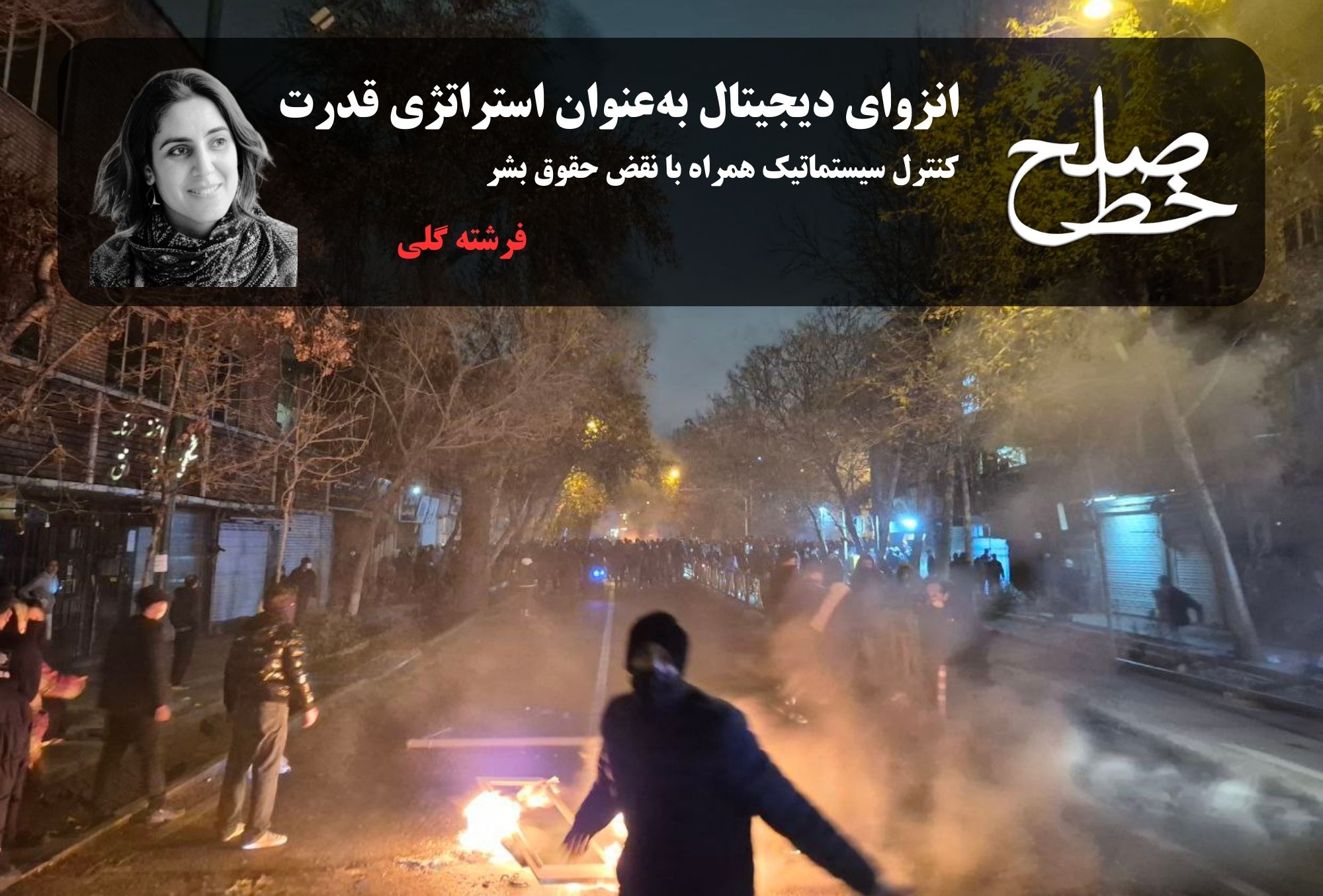
Digital Isolation as a Power Strategy/Fereshte Goli
…and suddenly, total darkness and a heavy silence of ignorance about what had happened on the streets of Iran. Everything was a sign of a disaster. All communication and information channels had been cut off. News was passed around, with a multitude of worrying and frightening speculations broadcast from satellite news networks. On January 18, […]...
Read More
Created By:
Fereshteh Goli February 20, 2026
Narrative Creation in the Communication Void/Sina Yousefi
The recent protests in Iran, accompanied by widespread, violent and unprecedented repression, have once again exposed the established patterns of human rights violations by the government. Along with the killing of protesters, mass arrests and the imposition of severe security restrictions, the broadcast of forced confessions by state media has become a central tool for […]...
Read More
Created By:
Sina Yousefi February 20, 2026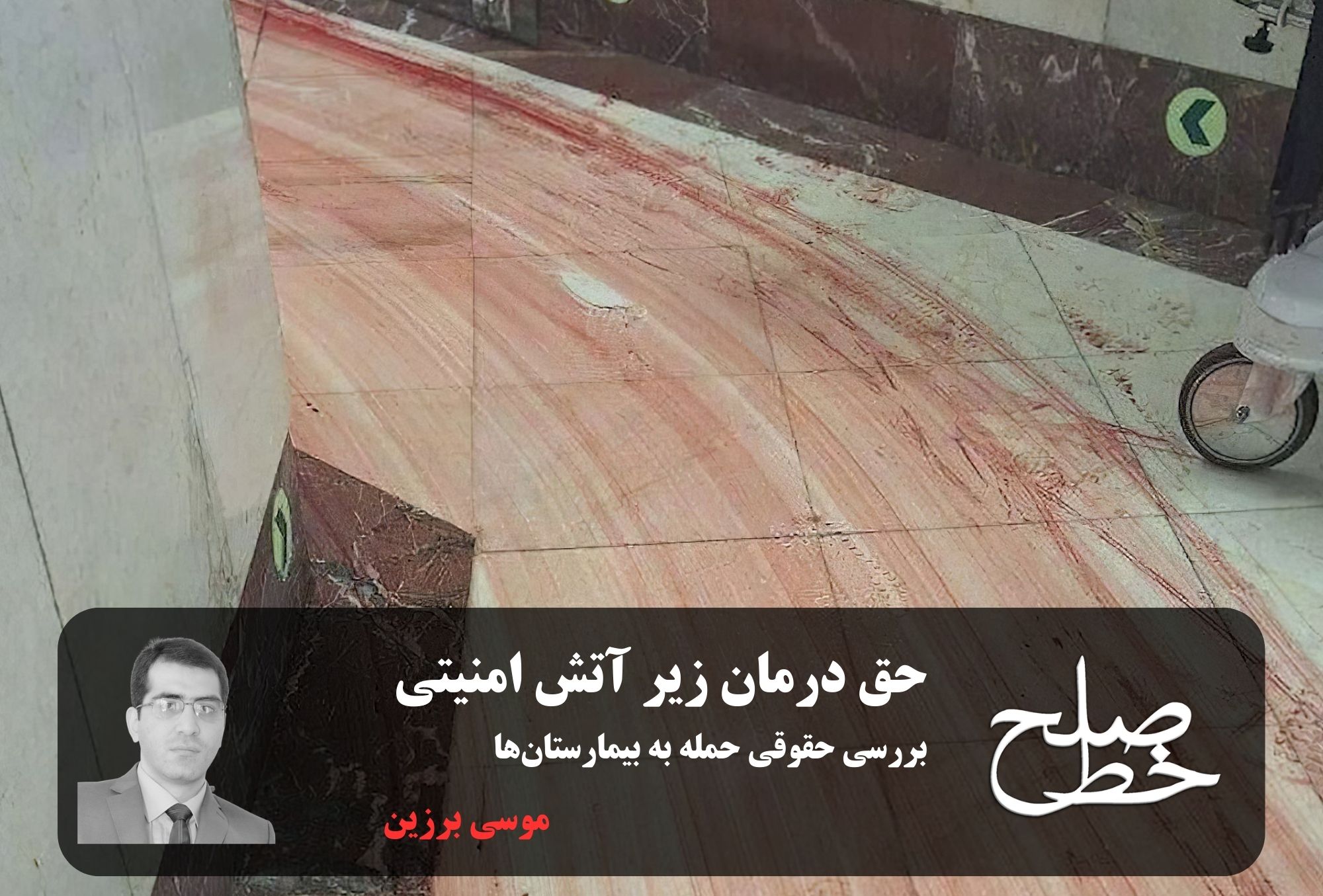
The right to treatment under security fire/Musa Barzin
During the recent protests, we witnessed many bitter incidents and extra-legal actions in Iran. One of these cases was the restriction of treatment for protesters in various forms. According to reports published from the very first days of the protests, police and security forces attacked hospitals where injured protesters had been taken, creating heartbreaking scenes. […]...
Read More
Created By:
Mousa Barzin February 20, 2026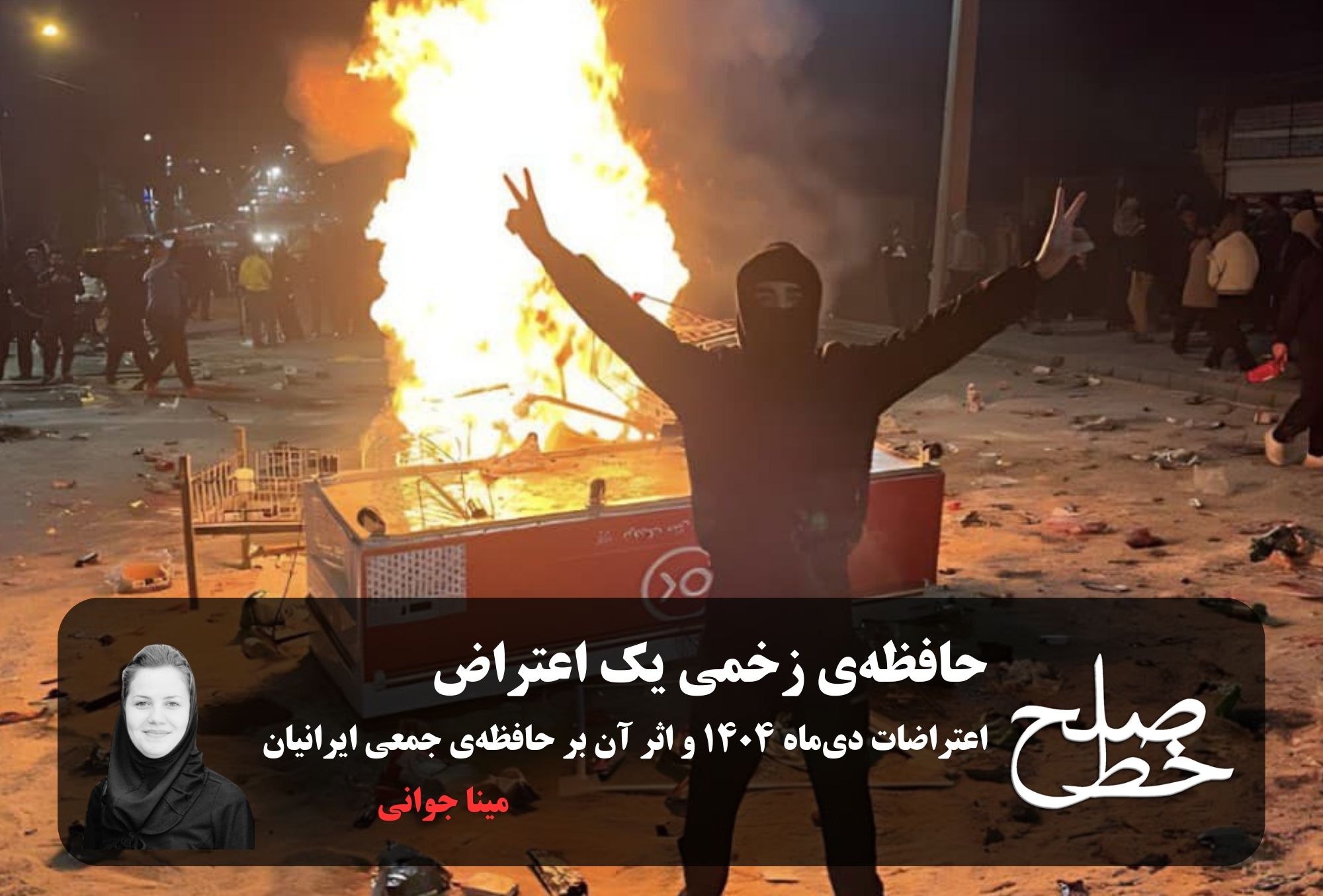
The Wounded Memory of a Protest/Mina Jawani
The protests of January 1404 are remembered neither as a single image nor as a narrative that can be easily retold. What remains is more of a scattering: unfinished scenes, videos that were cut short, streets that emptied sooner than expected. They neither became a moment of triumph nor a complete defeat; they remain in […]...
Read More
Created By:
Mina Javani February 20, 2026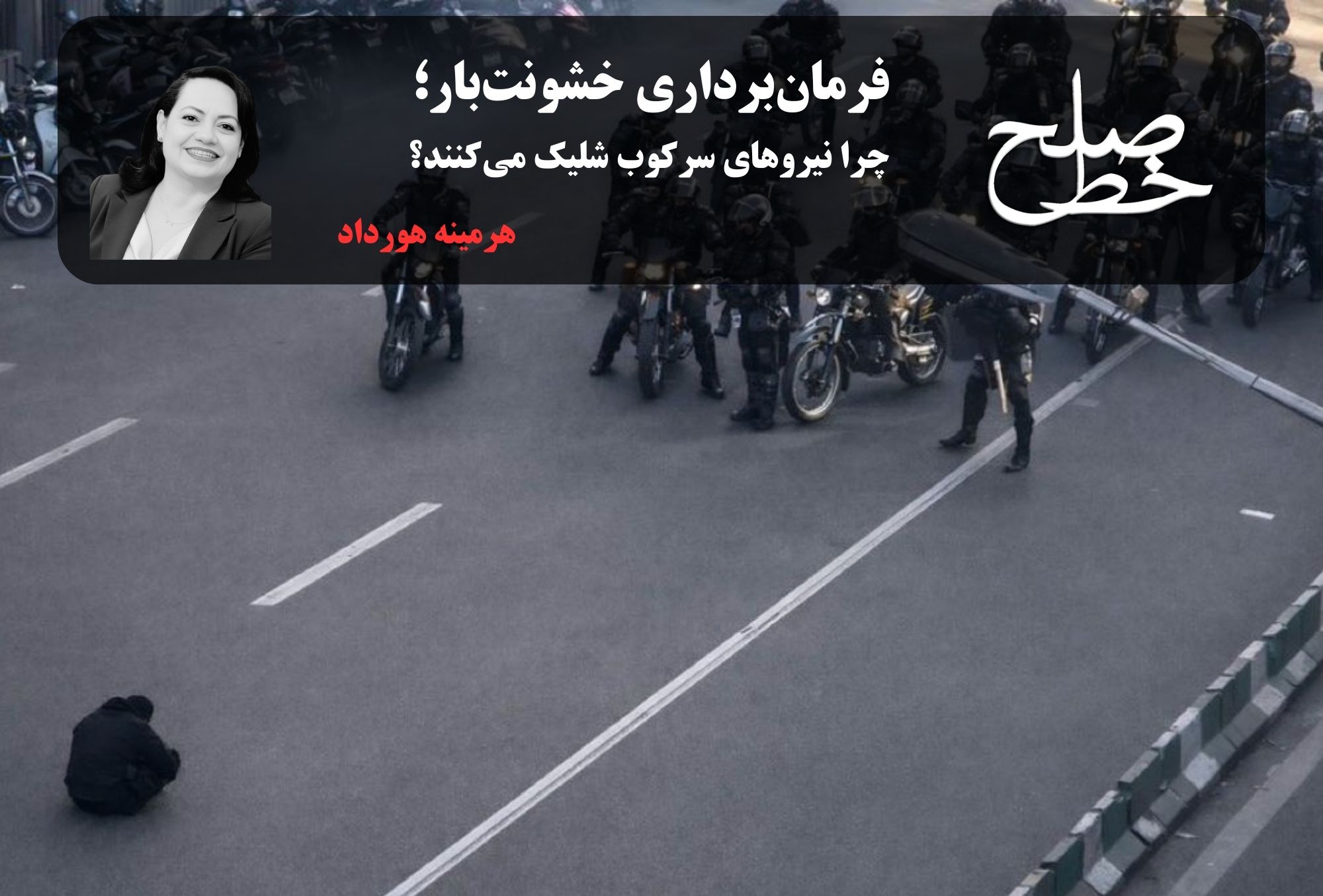
Violent subjugation: Why do the repressive forces shoot? / Hermine Hordad
A young man, caught in the crosshairs of a slave, sits cross-legged on the asphalt in the most defenseless human situation; in front of him stands the Islamic Republic’s suppression machine. A few meters away, a girl and a boy are shielding their chests from forces holding weapons. The statistics are horrifying. It is difficult […]...
Read More
Created By:
Hermineh Hourdad February 20, 2026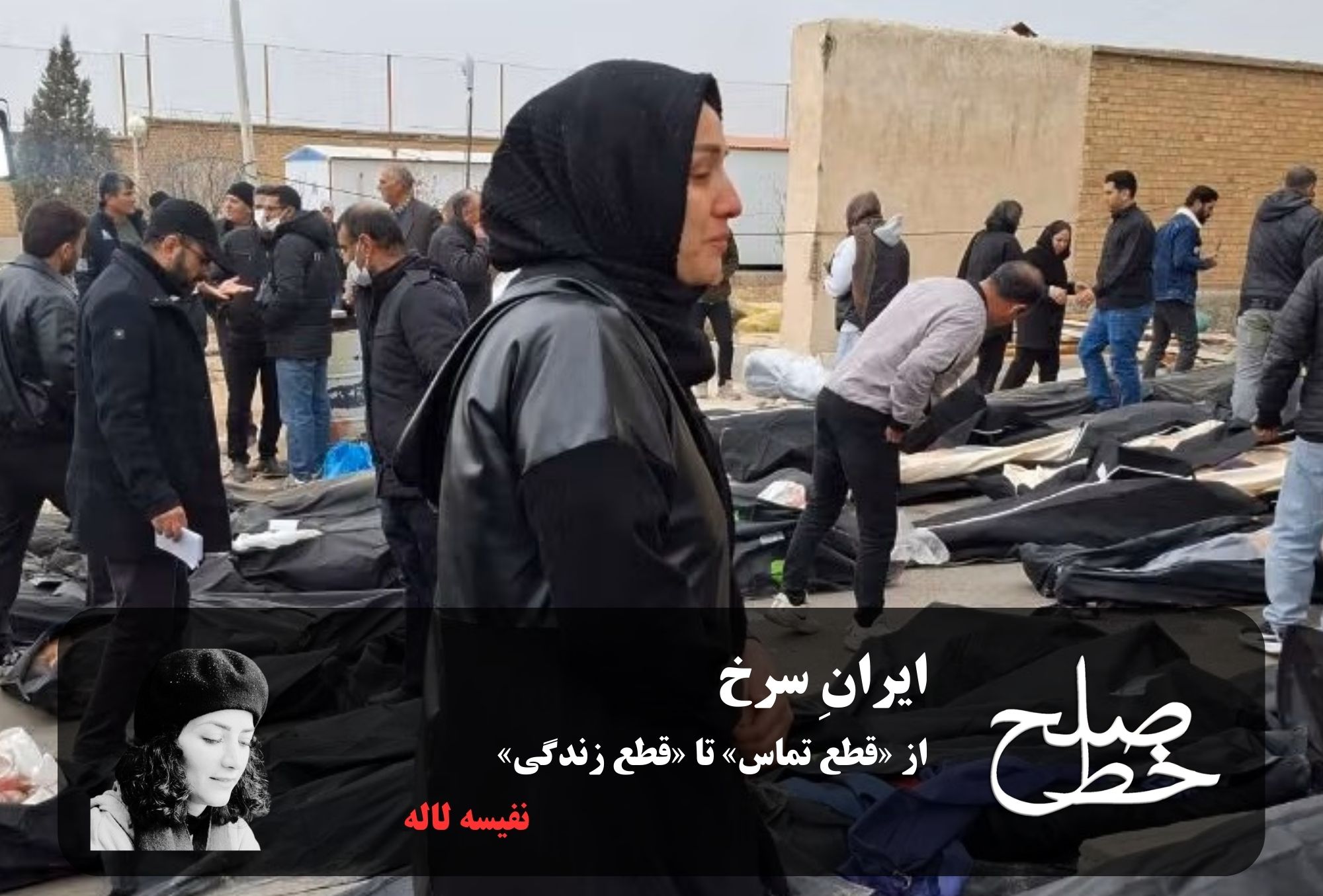
Red Iran; From “Disconnection of Contact” to “Disconnection of Life”/ Nafiseh Laleh
Tehran, evening of January 18, 1404, around 8:00 PM His excited voice echoes in the echo of the desperate voices of the street and my heart skips a beat. The call is cut off around the first minute and remains cut off for the following days and weeks; like ourselves, from life. We do not […]...
Read More
Created By:
Nafiseh Laleh February 20, 2026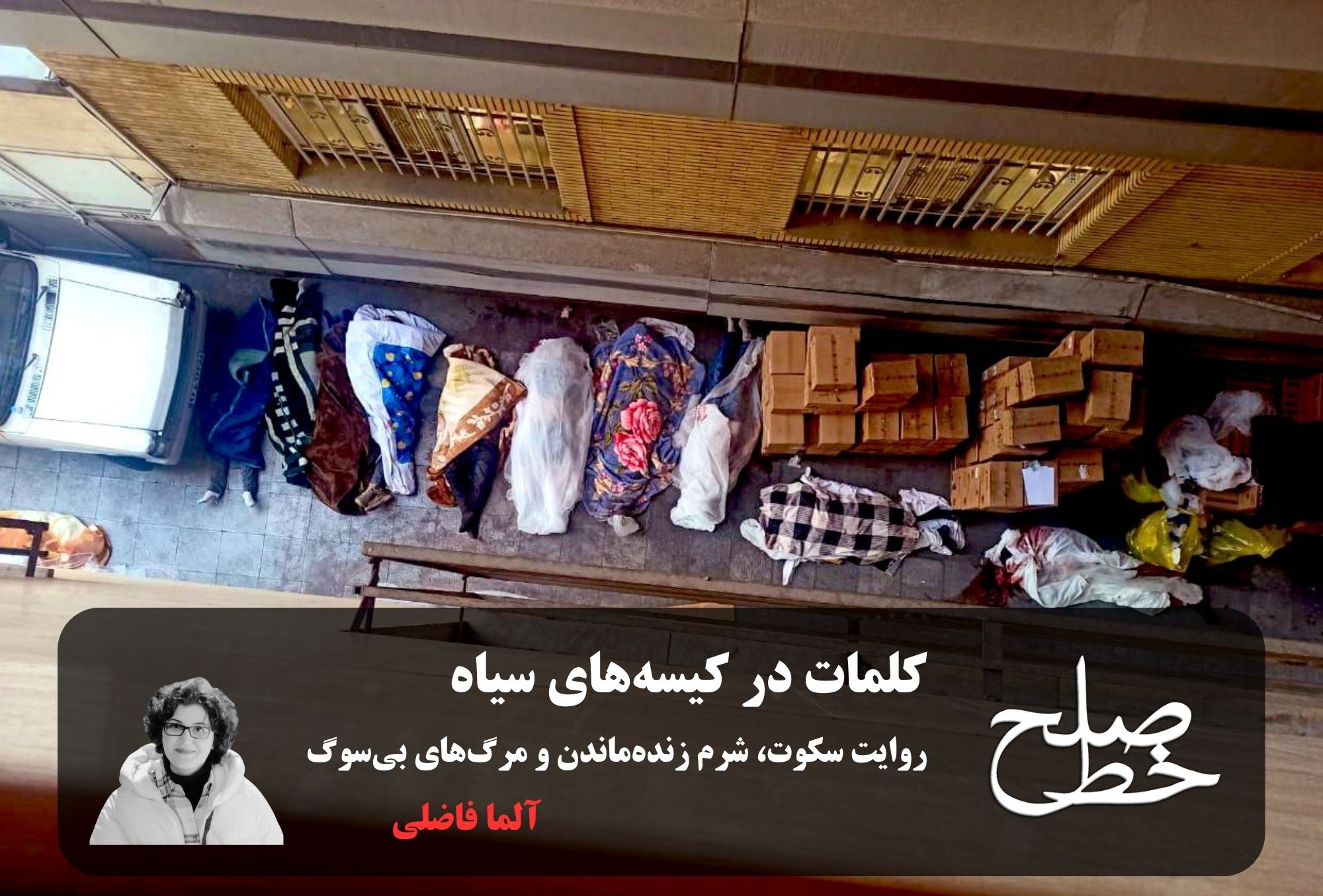
Words in Black Bags/Alma Fazeli
It has been more than sixteen years since the first image of Neda Agha Soltan’s last look was released, and about forty days since the first film of the pile of black bags for human corpses was released. Let me not go back any further, because to write about the experience of these days, I […]...
Read More
Created By:
Alma Fazeli February 20, 2026
