


Art

Experiencing the Beautiful in Tehran/ Mehrnaz Razaghi
Tehran, a city known for the hustle and bustle of modern life, has recently unveiled a new dimension: a platform for experiencing beauty and reimagining artistic identity. This transformation is not only evident in established venues such as the Tehran Museum of Contemporary Art and the long lines for the “Eye to Eye” exhibition but […]...
Read more By:
Mehrnaz Razaghi
By:
Mehrnaz Razaghi December 21, 2024
Interview with Solka: Rap, Gender Equality, and a Battle That Continues / Morteza Hamounian
She’s called “Solka” so much so that even those around her have forgotten her real name is “Sara Bahreini.” Sara, or Solka as she’s known, has numerous tattoos adorning her body and exudes a sleek gangster style. She’s reminiscent of “Griselda Blanco,” except Sara is no criminal—she’s an artist, writing beautiful lyrics with a powerful […]...
Read more
By:
Morteza Hamounian September 22, 2024
Conversation with Solka; Rap, Gender Equality, and the Ongoing Struggle/ Morteza Hamounian
“Solka” is calling out; she is so well known by this name that her acquaintances have forgotten her real name, “Sara Bahreini”. Sara, also known as Solka, has numerous tattoos on her body and has a stylish gangster appearance; something similar to “Griselda Blanco” but the difference is that Sara is not a criminal, she […]...
Read more
By:
Morteza Hamounian September 22, 2024
“Underground Theater”, Selection of Independent Artists / Dina Ghalehbaaf
“In Sync with the People”, “Anti-Dictatorship”, “Independent”, and “Strong” are titles used to describe the “Free Art” movement in Iran. The Free Art movement, which became more radical and widespread after the killing of Mahsa (Zhina) Amini, showed that the artistic community in Iran is aligned and in harmony with the ideals of the “Women’s […]...
Read more
By:
Dina Ghalibaf August 22, 2024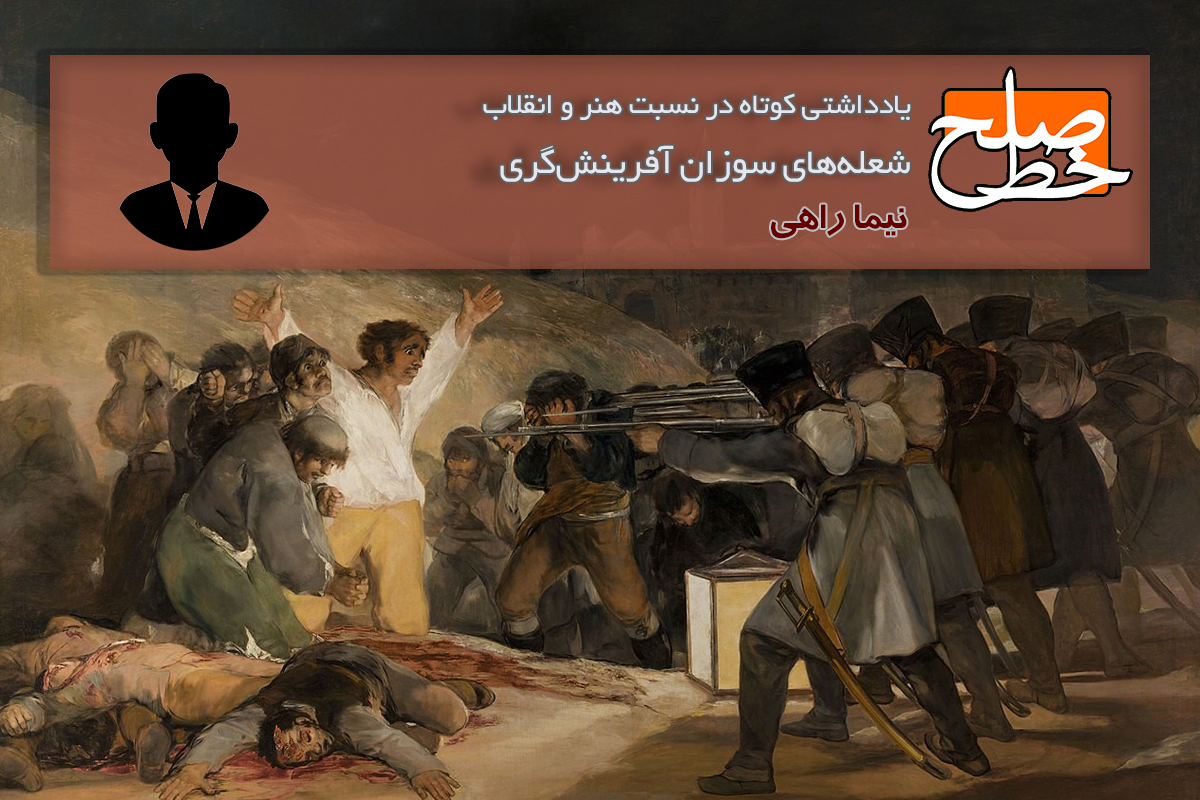
The blazing flames of creation / Nima Rahi
A brief note on the relationship between art and revolution. Socrates did not like tragedy and the reason he gave was very simple: “tragedy is beneficial.” This usefulness later became one of the fundamental principles of tragic writing, theorized by tragedians such as Sophocles. In simple terms, this usefulness referred to promoting a universal perspective […]...
Read more
By:
Nima Rahi November 22, 2022
